
Blog
Why Ventilation Gaps Matter When Using Fiber Cement Boards on Façades
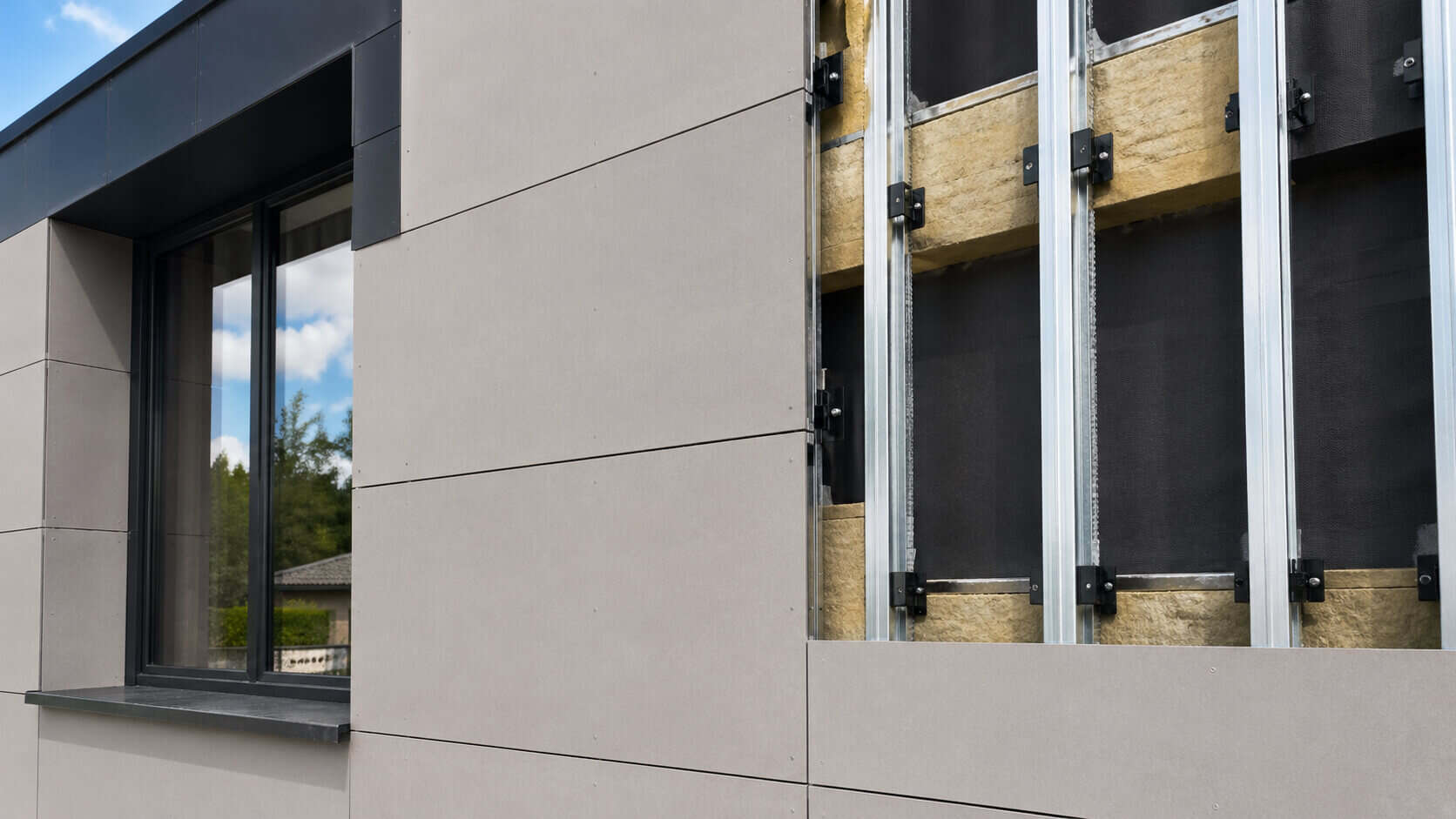
Modern façade systems are not only about the visible exterior finish. What happens behind the surface is just as important.
This is especially true when using fiber cement boards on façades.
A properly designed ventilation gap helps the wall system manage moisture, improve drying, reduce trapped condensation, and support long-term performance. Without this gap, even a strong and durable board can be exposed to unnecessary risk.
Fiber cement boards are widely used in external wall systems, façade backing, rainscreen applications, and external sheathing. However, they should be installed as part of a complete façade build-up. The ventilation gap is one of the most important parts of that build-up.
What Is a Ventilation Gap?
A ventilation gap is a controlled air space behind the outer façade layer.
It is usually created with battens, rails, or a subframe system. This space allows air to move behind the façade and helps moisture escape.
In a typical façade system, the build-up may include:
- Structural wall or frame
- Sheathing or backing board
- Weather barrier or membrane
- Support battens or subframe
- Ventilation gap
- External cladding or façade panel
The exact build-up depends on the project, system design, local regulations, and manufacturer guidance. However, the principle is simple: the wall needs space to breathe and dry.
Why Ventilation Gaps Are Important
External walls are exposed to changing weather conditions.
Rain, wind, humidity, temperature changes, and condensation can all affect the wall system. Even when the façade looks sealed from the outside, small amounts of moisture may still enter the build-up.
This can happen through:
- Open joints
- Window and door details
- Service penetrations
- Fixing points
- Wind-driven rain
- Condensation
- Construction moisture
A ventilation gap helps the system deal with this moisture. It gives the wall a controlled space for drainage, airflow, and drying.
This does not mean the wall is poorly designed. It means the wall is designed realistically.
Moisture Needs a Way Out
One of the main purposes of a ventilation gap is moisture control.
Moisture can enter a wall system in small amounts. If it cannot escape, it may remain trapped behind the façade. Over time, trapped moisture can affect the performance of the wall build-up.
A ventilation gap helps moisture escape by allowing air movement behind the cladding. This supports drying and reduces the risk of long-term dampness.
For this reason, the ventilation gap should not be blocked with insulation, sealant, mortar, debris, or poorly placed trims.
The goal is not just to keep water out. The goal is also to help the wall dry if moisture gets in.
Ventilation Supports Long-Term Façade Performance
Fiber cement boards are durable and suitable for demanding construction applications. However, façade performance depends on the whole system.
A well-designed ventilation gap can help:
- Reduce trapped moisture
- Support drying behind the cladding
- Improve drainage
- Reduce condensation risk
- Protect the wall build-up
- Improve long-term performance
- Support a cleaner and more stable façade system
This is why ventilation gaps are common in rainscreen and ventilated façade systems.
The board, fixings, membrane, subframe, ventilation gap, and external finish should all work together.
Drainage Is Just as Important as Airflow
Ventilation is not only about air.
A good façade build-up should also allow water to drain safely. If rainwater passes behind the outer layer, it should have a clear path downward and outward.
This is especially important around:
- Window openings
- Door openings
- Sills
- Corners
- Parapets
- Base details
- Horizontal joints
- Penetrations
If water is trapped at these points, the risk of staining, dampness, or system deterioration may increase.
A ventilation gap should therefore be part of a broader moisture management strategy. Airflow and drainage should be considered together.
Avoid Blocking the Ventilation Gap
One of the most common mistakes in façade installation is blocking the ventilation gap.
This can happen accidentally during installation. For example, insulation may be pushed too far forward. Sealant may be applied in the wrong location. Battens may be installed without considering airflow. Debris may remain inside the cavity.
The ventilation gap may also be blocked around window reveals, corners, and base details.
Before closing or finishing the façade, check that the gap is continuous and clear.
Avoid blocking it with:
- Excess insulation
- Sealant
- Foam
- Mortar
- Construction debris
- Incorrect trims
- Poorly placed membranes
- Oversized fixings or brackets
A ventilation gap only works if air can move through it.
Pay Special Attention Around Windows and Doors
Window and door openings can interrupt airflow.
This does not mean they are a problem. It means they need careful detailing.
Around openings, the façade build-up may include trims, membranes, flashings, sills, and sealants. These are all important. However, they should be arranged so they do not completely block drainage or ventilation where the system requires airflow.
For example, the area above a window may need proper head flashing. The sill area may need water to shed outward. The reveals should be detailed neatly and securely.
In ventilated façade systems, the design should maintain the logic of ventilation and moisture control around these interruptions.
Ventilation Gaps Help Reduce Condensation Risk
Condensation can occur when warm, moist air meets a colder surface.
In external wall systems, condensation risk depends on climate, insulation, vapour control, air tightness, wall build-up, and ventilation. A ventilation gap can help reduce moisture accumulation by supporting drying behind the façade.
However, ventilation alone is not a full condensation strategy.
The complete wall design should consider insulation, membranes, vapour control layers, air leakage, and local climate. Still, the ventilation gap is an important part of many façade systems because it helps moisture escape instead of staying trapped.
The Gap Must Be Designed, Not Guessed
A ventilation gap should not be created randomly.
Its size, location, continuity, and protection should follow the façade system design, manufacturer guidance, and local regulations. Different façade systems may require different cavity depths, ventilation openings, fire barriers, insect mesh, or drainage details.
This is why installers should not simply “leave some space” and assume it is enough.
The gap must be:
- Continuous where required
- Protected from insects and debris
- Compatible with fire safety requirements
- Open enough for airflow
- Detailed around openings
- Designed for drainage
- Kept clear during installation
A good ventilation gap is intentional.
Fire Safety and Cavity Barriers Must Be Considered
Ventilated façades often include cavities. Cavities require careful fire safety detailing.
Depending on the building type, height, location, and regulations, the system may require cavity barriers, fire stops, or other protective measures. These details should be designed by qualified professionals and installed according to the approved specification.
This is important because ventilation and fire safety must both be respected.
The aim is to allow the façade system to ventilate where required, while also meeting applicable fire safety rules.
Fiber cement boards can be part of fire-conscious façade systems, but the full wall build-up must be correctly designed and installed.
How Fiber Cement Boards Fit Into a Ventilated Façade System
Fiber cement boards can be used in different ways in façade systems.
They may be used as:
- External sheathing boards
- Façade backing boards
- Rainscreen backing layers
- Substrate boards
- Cladding boards, depending on the product and system
In each case, the ventilation gap may have a different role.
If the fiber cement board is used behind an external cladding layer, the ventilation gap may be located between the backing board and the cladding. If the board is used as the visible façade panel, the gap may be behind the panel itself.
The correct detail depends on the wall build-up.
This is why product selection and system design should be considered together.
Simple Checklist for Ventilation Gaps
Before closing or finishing a façade, check the following:
- Is the ventilation gap included in the project detail?
- Is the gap continuous where required?
- Are the top and bottom ventilation points clear?
- Is there a drainage path for incidental moisture?
- Are window and door openings properly detailed?
- Are sills and flashings installed correctly?
- Is the cavity protected from insects and debris?
- Are fire barriers installed where required?
- Is insulation kept out of the ventilation space?
- Are membranes and trims correctly placed?
- Is the gap free from construction debris?
- Does the installation follow the approved system design?
This simple check can prevent many future problems.
Common Mistakes to Avoid
Avoid these common mistakes when using fiber cement boards on façades:
- Treating the ventilation gap as optional
- Blocking the gap with insulation or sealant
- Forgetting drainage paths
- Ignoring window and door interruptions
- Leaving debris in the cavity
- Using trims that block airflow
- Guessing the gap size without guidance
- Ignoring fire barriers and cavity requirements
- Failing to protect openings from insects or debris
- Assuming the board alone solves moisture issues
Most façade problems are easier to prevent than repair.
Final Thoughts
A ventilation gap is a small space with a big role.
When using fiber cement boards on façades, the ventilation gap helps manage moisture, support drying, improve drainage, and protect the wall build-up. It also helps the façade system perform as intended over time.
Fiber cement boards are strong and reliable materials, but they should be installed as part of a properly designed wall system. The board, subframe, membrane, fixings, flashing, ventilation gap, and cladding must all work together.
The principle is simple: do not trap moisture behind the façade.
Give the wall a clear and controlled way to drain, ventilate, and dry. When this is done correctly, fiber cement boards can support durable, practical, and dependable façade systems.
Ventilation gaps are only one part of façade performance. The board material itself also matters, especially when comparing fire behavior, moisture resistance, and exterior suitability. For a broader overview, see our fiber cement board vs cement particle board guide.
👉 Visit the Smartfiber Fiber Cement Board page to explore specs, sizes, and delivery options.
Authored by Smartcon Int’l. Trade & Marketing Ltd. on 25.04.2026. All rights reserved.
Façade specification
Need the right board for your façade system?
Share the façade build-up, exposure conditions, finish and documentation requirements. We can help assess the appropriate board and coordinate supply.