
Blog
How to Avoid Wavy or Uneven Fiber Cement Board Walls
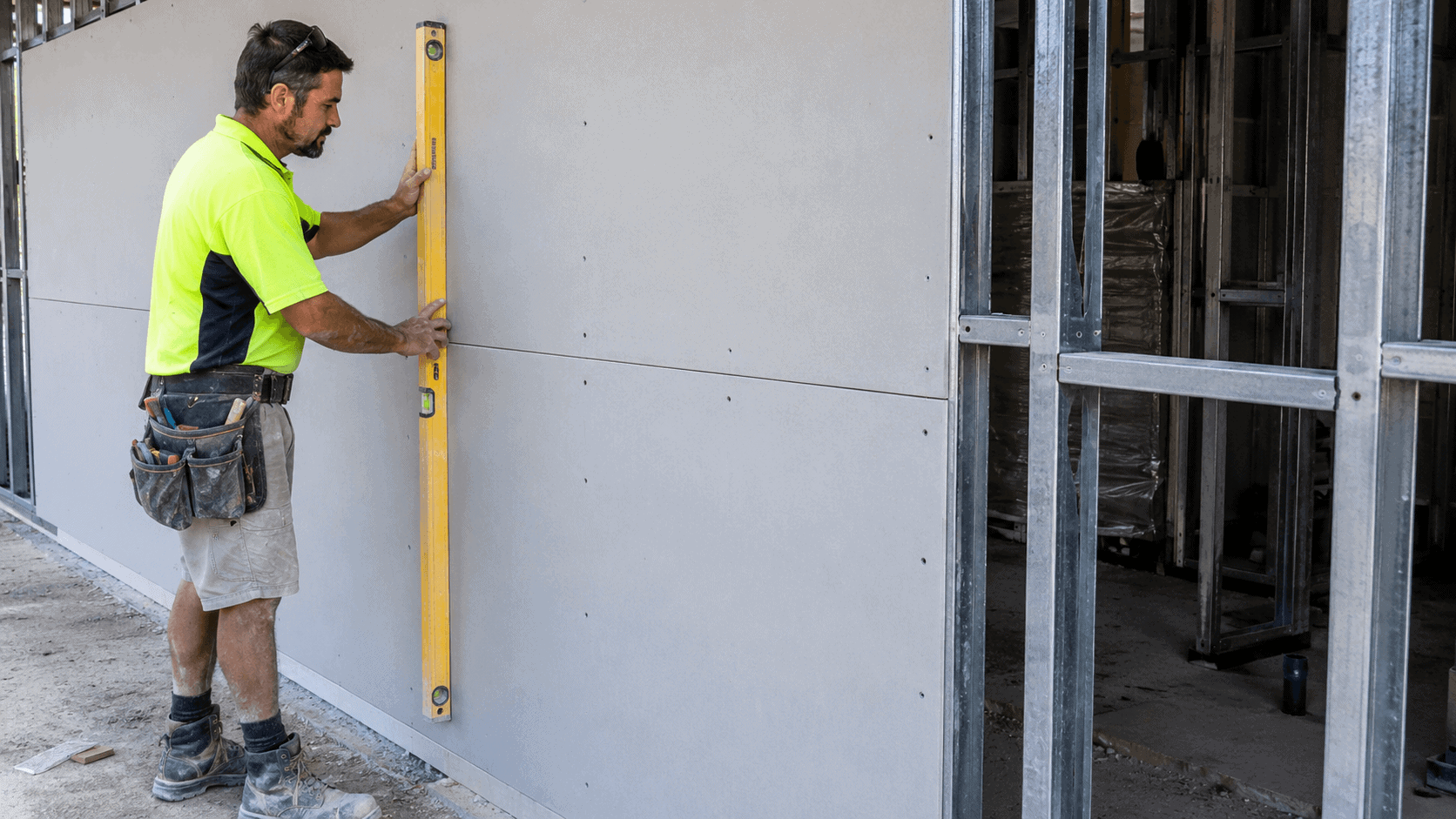
A wavy or uneven fiber cement board wall is usually caused by poor frame alignment, incorrect support spacing, bad fixing, or weak substrate preparation. Fiber cement boards can create clean, flat, and reliable wall surfaces when they are installed correctly. But if the support structure behind the boards is uneven, or if the boards are forced into position, the final wall may look wavy.
This can become a serious problem when the boards are painted, rendered, tiled, or used behind cladding systems. Small installation defects may become much more visible after the final finish is applied.
For contractors, installers, and specifiers, the key point is simple: a flat fiber cement board wall starts with a flat, stable, and well-prepared support structure.
Why Fiber Cement Board Walls Become Wavy
Fiber cement boards are rigid board materials. They are not designed to hide major problems in the frame behind them.
If the wall frame is uneven, the boards may follow that unevenness.
Common causes of wavy or uneven fiber cement board walls include:
- Misaligned studs or battens
- Uneven steel or timber frame
- Incorrect support spacing
- Unsupported board edges
- Overdriven screws
- Loose fixings
- Poor board joint layout
- Board movement
- Moisture exposure before installation
- Boards forced into position
- Damaged or warped supporting members
In most cases, the problem is not the board itself. The problem starts with the preparation and installation method.
Start With a Straight and Stable Frame
The support frame is the foundation of a flat board wall.
Before fixing fiber cement boards, the installer should check that the frame is straight, level, plumb, and stable.
This applies to:
- Steel studs
- Timber studs
- Timber battens
- Metal rails
- Façade subframes
- Modular wall frames
- Internal partition frames
If the frame is not flat, the board surface will not be flat either.
Trying to correct an uneven frame by tightening screws harder is not good practice. It can create stress in the board and make the wall surface worse.
Check Steel Frame Alignment
Steel frames are often used in dry construction, external sheathing, modular buildings, and façade systems.
Steel profiles are usually straight, but they still need correct installation.
Before board fixing, check:
- Stud alignment
- Rail alignment
- Profile spacing
- Vertical level
- Horizontal level
- Frame rigidity
- Support behind board edges
- Support around openings
- Support around service penetrations
If the steel frame is twisted, loose, or badly aligned, the board may show waves after fixing.
The frame should be corrected before boards are installed.
Check Timber Frame Straightness
Timber frames and battens need special attention because timber can move, twist, shrink, or warp.
Before installing fiber cement boards on timber, check that the timber is:
- Dry
- Straight
- Stable
- Properly treated where required
- Correctly spaced
- Securely fixed
- Free from severe twisting or bowing
Wet or warped timber can create an uneven wall surface. It can also move after installation, which may affect the board joints and final finish.
Do not fix boards over timber that is visibly twisted or unstable.
Use Correct Support Spacing
Support spacing affects board flatness.
If supports are too far apart, the board may not be held evenly. This can create visible deflection, vibration, or movement.
Support spacing depends on:
- Board thickness
- Board size
- Application
- Internal or external use
- Wind exposure
- Impact risk
- Final finish
- Manufacturer guidance
Thinner boards usually need closer support than thicker boards.
For external sheathing, façade backing, and high-risk areas, support spacing should be checked carefully before installation.
Choose the Right Board Thickness
Board thickness affects stiffness.
A board that is too thin for the application may be more likely to show movement or unevenness, especially if support spacing is wide.
The correct thickness depends on:
- Wall type
- Support spacing
- Building height
- Exposure level
- Impact risk
- Final surface finish
- Fixing method
- System design
For many wall and façade applications, 8mm and 10mm fiber cement boards are common choices. However, the correct thickness should always match the system requirements.
Do not choose thickness only by price. A cheaper, thinner board may create more problems if it is not suitable for the application.
Support Board Edges Properly
Unsupported board edges are a common cause of uneven walls.
Every board edge should be properly supported according to the system design.
This is especially important at:
- Vertical joints
- Horizontal joints
- Corners
- Window openings
- Door openings
- Service penetrations
- Base details
- Roof edges
- Module joints
If a board edge is left unsupported, it may move, vibrate, crack, or sit unevenly.
Before fixing, check that the board layout matches the frame layout.
Do Not Force Boards Into Position
Fiber cement boards should be installed flat and naturally against the support structure.
They should not be forced, bent, twisted, or pulled into place with screws.
Forcing boards can create stress. This stress may appear later as:
- Surface waves
- Cracks
- Poor joint alignment
- Raised corners
- Loose fixings
- Finish defects
If a board does not sit flat, find the reason before fixing it.
The problem may be the frame, debris behind the board, wrong support spacing, or damaged board edges.
Avoid Overdriving Screws
Overdriven screws can damage the board surface and create uneven stress.
The screw head should hold the board firmly without crushing or breaking the surface.
Overdriving may cause:
- Local depressions
- Cracks around fixings
- Weak fixing points
- Surface irregularities
- Poor finish appearance
- Reduced long-term performance
This is especially important when the board will be painted, rendered, or used behind a smooth finish.
Correct screw depth helps keep the board stable and flat.
Avoid Loose Fixings
Loose fixings are also a problem.
If screws do not hold the board tightly against the frame, the board may move or vibrate. This can create uneven surfaces and joint problems.
Loose fixing may happen because of:
- Wrong screw type
- Wrong screw length
- Weak support material
- Incorrect steel profile thickness
- Split timber
- Damaged screw holes
- Poor installation technique
Fixings must match the board and the support frame.
Steel and timber frames often require different screw types.
Plan Board Joints Carefully
Poor joint layout can make a wall look uneven.
Board joints should be planned before installation starts. They should align with supports and allow correct fixing.
Good joint planning helps prevent:
- Unsupported edges
- Poor alignment
- Random joint lines
- Cracking
- Visible surface defects
- Uneven finishing
- Movement stress
Joints should not be treated as an afterthought.
They are part of the wall system.
Leave Correct Joint Gaps
Fiber cement boards need suitable joint gaps depending on the system.
If boards are installed too tightly, they may press against each other when movement occurs. This can create stress and surface distortion.
Correct joint gaps help manage:
- Thermal movement
- Moisture-related movement
- Frame movement
- Building movement
- Finish movement
The required gap depends on the board, application, and manufacturer guidance.
Do not close joints tightly just to make the wall look neat during installation. The final system needs movement allowance.
Keep the Surface Clean Behind the Board
Debris trapped behind the board can create local bumps or uneven areas.
Before fixing boards, make sure the support frame and contact areas are clean.
Remove:
- Loose screws
- Offcuts
- Dust build-up
- Small stones
- Metal shavings
- Timber splinters
- Packing pieces
- Hardened adhesive
- Mortar or cement lumps
Even a small object behind the board can create visible unevenness after fixing.
Protect Boards Before Installation
Boards should be stored correctly before installation.
Poor storage can lead to staining, edge damage, moisture marks, or board distortion.
To protect flatness and surface quality:
- Store boards flat
- Keep them off the ground
- Use level supports
- Keep boards covered but ventilated
- Avoid standing water
- Do not lean boards badly for long periods
- Protect edges and corners
- Avoid heavy objects on top of boards
A board that is damaged or distorted before installation may not create a clean wall surface.
Check Moisture Exposure
Fiber cement boards are durable, but site moisture can still affect installation quality if boards are stored or handled poorly.
Moisture trapped between stacked boards or repeated wetting before installation may cause surface marks or uneven drying.
Before fixing boards, check that they are:
- Clean
- Dry enough for the next stage
- Free from trapped water
- Free from mud and contamination
- Not visibly damaged
- Suitable for finishing
Moisture management matters more when the final finish is paint, render, adhesive, or coating.
Openings Can Create Uneven Areas
Windows, doors, vents, ducts, and service penetrations can create weak points if not supported properly.
Around openings, check:
- Board layout
- Frame support
- Edge distance
- Screw spacing
- Joint location
- Cut quality
- Corner reinforcement where needed
- Sealing and finishing details
Large cut-outs should not leave unsupported board edges.
If openings are poorly planned, the wall may become uneven around them.
Final Finish Can Reveal Unevenness
Some finishes make uneven boards more visible.
This is especially true for:
- Smooth paint
- Render
- Thin coatings
- Direct lighting
- Long wall elevations
- Large uninterrupted surfaces
- Interior feature walls
- Flat façade panels
A wall that looks acceptable before finishing may show defects after coating or rendering.
That is why board alignment should be checked before finishing begins.
Do not rely on the final finish to hide poor board installation.
Inspect the Wall Before Finishing
Before applying paint, render, tiles, brick slips, stone, or cladding layers, inspect the fiber cement board wall.
Check:
- Is the wall flat?
- Are the boards securely fixed?
- Are screw heads correctly seated?
- Are board joints aligned?
- Are edge gaps correct?
- Are corners straight?
- Are openings supported?
- Are there surface waves?
- Are there loose boards?
- Are cut edges clean?
- Is the surface ready for the next layer?
This inspection should happen before the finishing trade starts.
It is much easier to correct uneven boards before final finishes are applied.
Common Mistakes to Avoid
Avoid these common mistakes when installing fiber cement boards:
- Fixing boards over an uneven frame
- Ignoring twisted timber battens
- Assuming steel frames are automatically aligned
- Using support spacing that is too wide
- Choosing a board that is too thin for the application
- Leaving board edges unsupported
- Overdriving screws
- Using the wrong screws
- Pulling boards into place with fixings
- Installing boards tightly without joint gaps
- Ignoring debris behind the board
- Applying render or paint before checking flatness
- Using final finishes to hide installation defects
- Forgetting to check openings, corners, and penetrations
Most wavy wall problems are preventable with better preparation.
Site Checklist for Flat Fiber Cement Board Walls
Before and during installation, check the following:
- Is the support frame straight and stable?
- Are steel or timber members correctly aligned?
- Is the support spacing suitable?
- Is the board thickness correct?
- Are all board edges supported?
- Are the correct screws being used?
- Are screws seated correctly?
- Are boards sitting naturally flat?
- Are joint gaps correct?
- Is the board layout planned?
- Are openings supported?
- Is the area behind the board clean?
- Are stored boards flat and undamaged?
- Has the wall been inspected before finishing?
This checklist can prevent many flatness problems on site.
Final Thoughts
A wavy or uneven fiber cement board wall is usually not caused by the board alone.
It is often caused by frame misalignment, poor support spacing, incorrect fixing, unsupported edges, or boards being forced into place.
The best way to avoid uneven walls is to prepare the support structure correctly, choose the right board thickness, fix boards properly, and inspect the wall before finishing.
When fiber cement boards are installed on a flat, stable, and well-supported frame, they can provide a clean and reliable surface for modern wall, façade, and dry construction systems.
Need pricing, technical documents, or loading guidance for fiber cement boards? Contact Smartcon with your required thickness, dimensions, quantity, and delivery destination. Our team will help you review the suitable options and provide practical export support from Turkey.
👉 Visit the Smartfiber Fiber Cement Board page to explore specs, sizes, and delivery options.
Authored by Smartcon Int’l. Trade & Marketing Ltd. on 15.05.2026. All rights reserved.
Façade specification
Need the right board for your façade system?
Share the façade build-up, exposure conditions, finish and documentation requirements. We can help assess the appropriate board and coordinate supply.