
Blog
PVDF Coated Aluminium Composite Panels: Why Coating Quality Matters
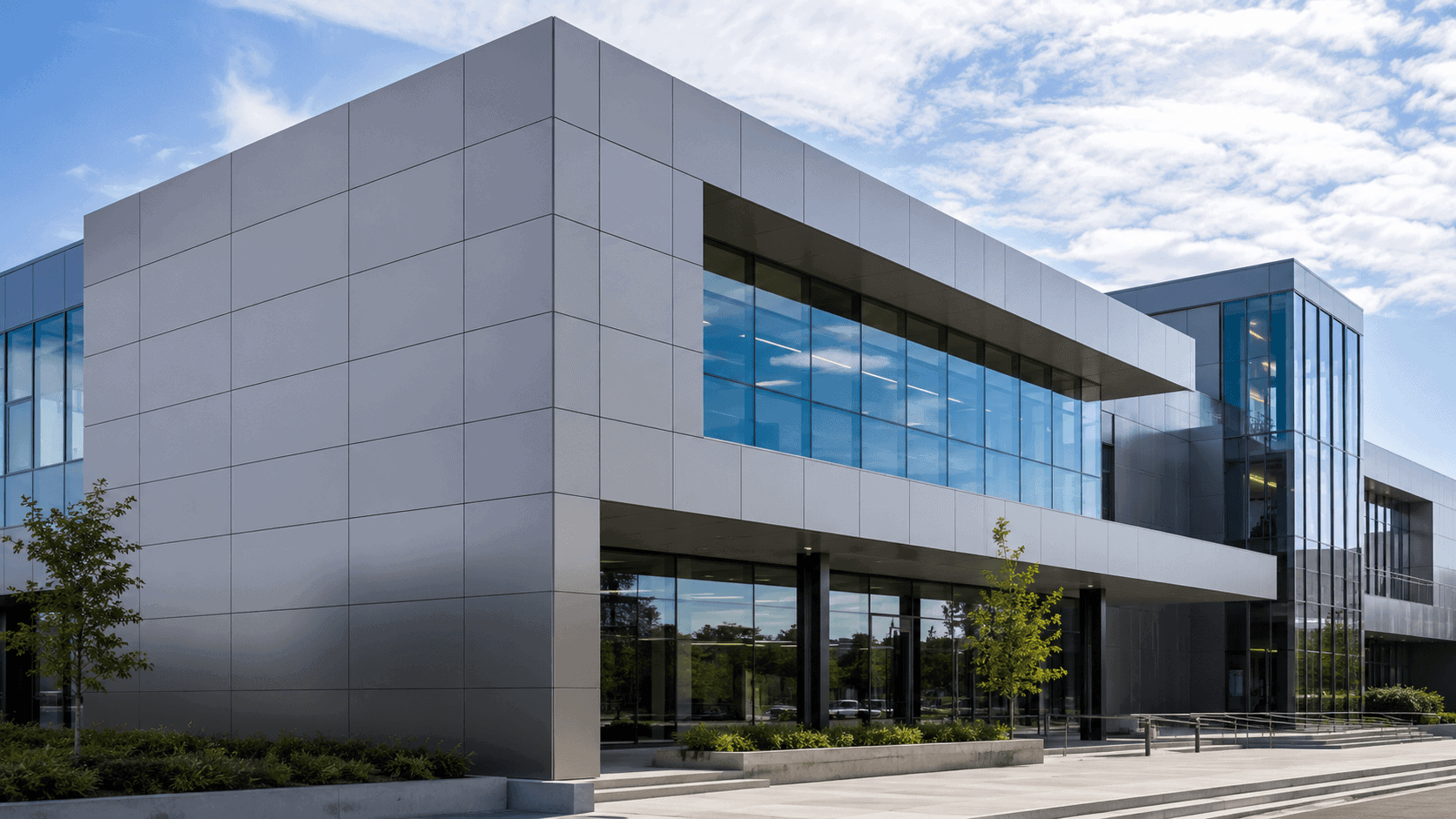
PVDF coated aluminium composite panels are widely used in exterior façade, cladding, signage, and architectural applications where long-term colour stability and weather resistance are important. When buyers compare aluminium composite panels, they often focus on thickness, colour, price, and fire rating. These are all important. However, the coating system is also a major factor.
The coating protects the visible surface of the panel. It affects how the façade looks after years of sunlight, rain, pollution, humidity, and cleaning.
For exterior projects, coating quality should not be treated as a minor detail. It can directly affect appearance, maintenance, and long-term project value.
What Are PVDF Coated Aluminium Composite Panels?
PVDF stands for polyvinylidene fluoride. It is a high-performance resin system used in architectural coatings for aluminium surfaces.
In aluminium composite panels, the PVDF coating is applied to the aluminium skin before or during the panel manufacturing process. This coated aluminium surface then becomes the visible face of the ACP panel.
PVDF coatings are commonly used in architectural metal applications because they offer strong resistance to sunlight, weathering, moisture, and environmental pollution. Sherwin-Williams describes PVDF architectural coatings as systems used for coil and extrusion applications, with performance linked to formulas, pigments, testing, and application processes.
Why Coating Quality Matters in ACP Panels
The aluminium core structure gives the panel strength and shape. The coating gives the panel its visible finish and environmental protection.
A poor-quality coating may look acceptable when the panel is new. But problems may appear after exposure to real weather conditions.
Common coating-related issues include:
- colour fading
- chalking
- loss of gloss
- staining
- surface dullness
- coating damage
- uneven ageing
- reduced façade appearance
These issues are especially important on large façades. Even small colour differences can become visible when many panels are installed side by side.
PVDF Coating and UV Resistance
UV exposure is one of the biggest challenges for exterior cladding materials.
Sunlight can gradually affect colour, gloss, and surface appearance. This is especially noticeable on façades exposed to strong sun, high temperatures, or intense seasonal changes.
PVDF coated aluminium composite panels are preferred for many exterior applications because they offer better resistance to UV exposure than standard coating systems.
This helps the panels keep their colour and appearance for a longer period.
For buildings in sunny regions, coastal areas, or open urban sites, UV resistance should be part of the specification from the beginning.
PVDF Coating and Weather Resistance
Exterior ACP panels are exposed to much more than sunlight.
They may also face:
- rain
- wind
- humidity
- air pollution
- dust
- temperature changes
- coastal salt exposure
- cleaning chemicals
PVDF coating helps improve surface durability under these conditions.
This does not mean the panels become maintenance-free. However, a better coating system can reduce the risk of early surface deterioration.
AAMA 2605 is commonly used in North America as a high-performance specification for organic coatings on architectural aluminium panels and extrusions. The High Performance Coatings resource describes it as a stringent performance specification for coatings used on aluminium architectural applications.
PVDF vs PE Coating on Aluminium Composite Panels
PVDF and PE coatings are not the same.
PE coating usually refers to polyester-based coating. It is often used for interior applications, signage, short-term projects, or lower-exposure areas.
PVDF coating is generally preferred for exterior architectural applications where longer-term weather resistance and colour retention are required.
In simple terms:
PE coating is usually more economical and suitable for less demanding uses.
PVDF coating is usually more suitable for exterior façades and long-term architectural projects.
This does not mean every project needs PVDF. But if the panel will be exposed to strong sunlight, rain, pollution, or coastal conditions, PVDF coating is often the safer choice.
Where Are PVDF ACP Panels Commonly Used?
PVDF coated ACP panels are commonly used in exterior and visible architectural applications.
Typical uses include:
- commercial building façades
- office buildings
- hotels
- retail façades
- shopping centres
- petrol stations
- hospitals
- schools
- airports
- transport buildings
- signage exposed to weather
- architectural feature walls
They are especially useful where the building owner wants a clean, modern appearance that remains stable over time.
Why Colour Retention Is Important
Colour retention is not only an aesthetic issue.
For commercial buildings, façade appearance affects brand image, property value, and long-term maintenance cost.
If a façade fades unevenly, the building can look older than it really is. This may create problems for retail brands, hotels, office buildings, and public projects.
Colour retention is particularly important for:
- dark colours
- metallic finishes
- corporate brand colours
- large flat façades
- south-facing elevations
- coastal projects
- high-UV regions
When colour consistency matters, coating quality should be clearly specified before ordering.
PVDF Coating and Metallic Finishes
Metallic finishes are popular in aluminium composite panels.
They give buildings a premium, modern, and architectural appearance. However, metallic colours can be more sensitive to batch differences, installation direction, and light reflection.
For metallic PVDF coated ACP panels, buyers should check:
- batch consistency
- installation direction
- protective film marking
- coating system
- colour tolerance
- panel orientation
- replacement panel availability
Poor planning can cause visible shade differences after installation.
This is why installers should follow the panel direction arrows and use panels from the same production batch where possible.
Coating Quality Is Not Only About the Paint
A good ACP surface finish depends on more than the final paint layer.
The complete coating system may involve:
- aluminium surface preparation
- chemical pre-treatment
- primer layer
- colour coat
- clear coat, where applicable
- curing process
- quality control testing
If any step is weak, the final coating performance may suffer.
This is why buyers should not compare ACP panels only by colour and price. The coating system, supplier reliability, and technical documentation also matter.
What Should Buyers Ask Before Ordering PVDF ACP Panels?
Before ordering PVDF coated aluminium composite panels, buyers should ask clear technical questions.
Useful questions include:
- Is the coating PVDF or PE?
- What is the coating thickness?
- Is it suitable for exterior use?
- What is the expected colour retention performance?
- Is the finish solid, metallic, wood, stone, or special effect?
- Is there a technical data sheet?
- Are panels from the same colour batch available?
- What maintenance is recommended?
- What warranty conditions apply?
- Is the panel suitable for the project climate?
These questions help avoid misunderstandings and make quotations easier to compare.
Common Mistakes with ACP Coatings
Many ACP coating problems begin during specification or handling.
Common mistakes include:
- selecting PE coating for demanding exterior façades
- choosing colour only from a screen image
- ignoring batch differences
- mixing panels from different production batches
- installing metallic panels in different directions
- leaving protective film on too long
- using harsh cleaning chemicals
- dragging panels during handling
- ignoring coastal or high-UV exposure
- comparing prices without checking coating type
These mistakes can reduce façade quality even when the panel itself is acceptable.
How to Protect PVDF Coated ACP Panels During Installation
Even a high-quality coating can be damaged if the panels are handled badly.
During storage and installation:
- store panels in a dry and protected area
- avoid dragging panels across each other
- keep panels away from sharp objects
- protect corners and edges
- follow cutting and routing guidance
- remove protective film at the right time
- avoid aggressive cleaners
- install metallic colours in the correct direction
- inspect the surface before handover
Good handling protects the coating before the building is even completed.
Maintenance of PVDF Coated Aluminium Composite Panels
PVDF coated aluminium composite panels are low-maintenance, but they should still be cleaned and inspected periodically.
Maintenance should include:
- gentle washing
- checking sealants and joints
- inspecting coating damage
- removing dirt and pollutants
- avoiding abrasive tools
- avoiding strong chemicals
- checking areas near drainage points
Cleaning frequency depends on local conditions. Coastal, industrial, dusty, or polluted areas may require more frequent cleaning.
Regular maintenance helps protect both appearance and long-term performance.
Are PVDF Coated ACP Panels Worth It?
For exterior projects, PVDF coated aluminium composite panels can be worth the higher initial cost.
They are especially suitable when the project requires:
- long-term colour stability
- better UV resistance
- weather resistance
- premium appearance
- reduced maintenance concerns
- strong architectural finish
- durable commercial façade performance
For short-term indoor use or basic signage, a lower-cost coating may be enough.
But for visible exterior façades, coating quality is often one of the factors that separates a good project from a disappointing one.
Conclusion
PVDF coated aluminium composite panels are important for projects where long-term appearance, colour retention, UV resistance, and weather performance matter.
The coating protects the visible surface of the ACP panel and helps maintain the building’s architectural finish over time.
For exterior façades, buyers should not choose ACP panels based only on price, colour, or thickness. The coating type, fire rating, core type, aluminium skin thickness, and technical documentation should all be reviewed together.
For façade, cladding, signage, and architectural applications, Smartcon supplies SmartACP Aluminium Composite Panels with export documentation and international delivery support.
For reliable façade, cladding, signage, and architectural applications, explore SmartACP Aluminium Composite Panels by Smartcon.
Authored by Smartcon Int’l. Trade & Marketing Ltd. on 26.05.2026. All rights reserved.
Façade specification
Selecting aluminium cladding for a façade?
Share the application, finish, fire classification and fabrication requirements. We can help assess the appropriate panel specification and supply route.