
Blog
Protective Film Removal on Aluminium Composite Panels: Timing, Storage, and Common Problems
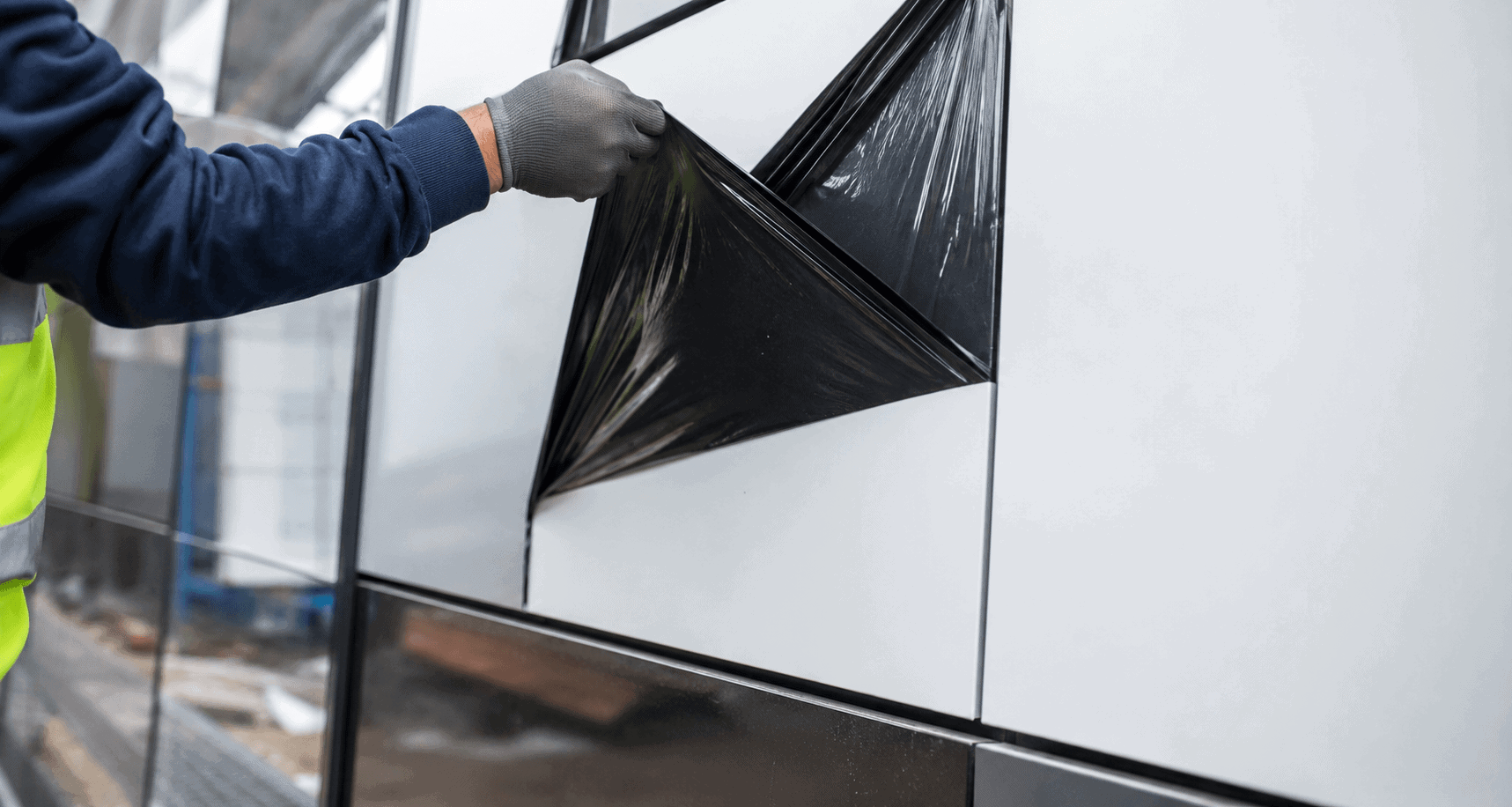
Protective film removal on aluminium composite panels is a small detail that can create big problems if it is ignored. The protective film is designed to protect the panel surface during transport, storage, fabrication, and installation.
However, the film should not stay on the panel forever.
If aluminium composite panels are stored incorrectly or the protective film is removed too late, installers may face adhesive residue, surface marks, uneven colour appearance, difficult peeling, or damaged coating.
For this reason, protective film should be managed carefully from delivery to final installation.
This article explains when to remove protective film from aluminium composite panels, how to store panels correctly, and which common mistakes should be avoided.
What Is Protective Film on Aluminium Composite Panels?
Protective film is a temporary plastic layer applied to the visible surface of aluminium composite panels. Its purpose is to reduce the risk of scratches, dust, fingerprints, and minor surface damage before the panel is installed.
The film helps protect the panel during:
- Transport
- Loading and unloading
- Storage
- Cutting
- Routing
- Folding
- Drilling
- Fixing
- Installation
In many projects, the protective film is very useful. It allows installers and fabricators to handle the panels more safely.
However, it is only temporary protection. It is not designed to be a permanent covering.
Why Protective Film Removal Matters
Protective film removal matters because the film can become harder to remove over time. Heat, sunlight, moisture, pressure, and poor storage can affect the adhesive layer behind the film.
If the film stays on the panel for too long, it may cause problems such as:
- Adhesive residue
- Difficult peeling
- Surface staining
- Film tearing during removal
- Uneven gloss appearance
- Dust sticking to the surface
- Marks from trapped moisture
- Coating damage during forced removal
These problems can be frustrating because they often appear at the end of the project, when the panels are already installed.
At that stage, correction is more difficult, more expensive, and more stressful.
When Should Protective Film Be Removed?
Protective film should usually be removed soon after installation is complete, once the risk of handling damage has reduced.
It should not be left on the panels for a long period after installation.
The exact timing may depend on:
- Panel supplier guidance
- Site conditions
- Sun exposure
- Temperature
- Storage duration
- Type of protective film
- Type of coating
- Project location
- Installation sequence
As a practical rule, the film should protect the panel during installation, but it should be removed before it becomes difficult to peel or leaves residue.
Installers should always check the supplier’s recommendation for maximum film removal time.
Why Late Film Removal Can Cause Problems
Late film removal is one of the most common issues with aluminium composite panels.
Over time, the film adhesive can react with heat, UV exposure, moisture, or pressure. This can make the film stick too strongly to the panel surface.
Late removal may cause:
- Sticky residue on the coating
- Film breaking into small pieces
- Uneven surface appearance
- Extra cleaning work
- Higher labour cost
- Possible coating damage
- Customer complaints after installation
This is especially risky on external façades, shopfronts, and signage panels exposed to direct sunlight.
The longer the film remains exposed, the higher the risk of removal problems.
Avoid Direct Sunlight During Storage
Sunlight can make protective film problems worse.
If aluminium composite panels are stored in direct sunlight, the protective film may heat up and bond more strongly to the surface. UV exposure can also weaken the film itself, making it brittle or difficult to remove.
Good storage practice includes:
- Store panels indoors when possible
- Keep panels away from direct sunlight
- Avoid long-term outdoor storage
- Use covered and ventilated storage areas
- Protect panels from rain and moisture
- Avoid heat build-up under plastic wrapping
If panels must be stored on site, they should be kept shaded, dry, and protected.
Poor storage can damage the panel before installation even begins.
Keep Panels Dry and Ventilated
Moisture can also affect protective film and panel surfaces.
If water becomes trapped between panels, under packaging, or around the protective film, it may create marks or stains. It can also make the film harder to remove.
Panels should not be stored in wet conditions or directly on damp ground.
Good practice includes:
- Store panels on dry supports
- Keep packaging protected from rain
- Avoid water pooling between panels
- Allow ventilation around stored panels
- Do not leave wrapped panels in wet conditions
- Inspect panels after delivery and before installation
Dry and ventilated storage helps protect both the film and the panel coating.
Do Not Store Heavy Materials on Top of Panels
Pressure can create surface marks or make protective film stick more strongly.
If heavy materials are placed on top of aluminium composite panels, the pressure may affect the film, coating, or panel flatness.
Avoid placing:
- Tools
- Pallets
- Other construction materials
- Heavy boards
- Metal profiles
- Buckets
- Packaging waste
- Sharp objects
on top of the panels.
Panels should be stored flat, supported evenly, and protected from unnecessary pressure.
This helps prevent dents, marks, scratches, and film-related problems.
Remove Film Carefully After Installation
Protective film should be removed carefully, not aggressively.
If the film is pulled too sharply or with too much force, it may tear or damage the surface. A controlled removal process is safer.
Good removal practice includes:
- Start from one corner
- Peel slowly and evenly
- Pull at a low angle
- Avoid sharp tools on the coating
- Do not scrape the panel surface
- Remove film before long-term exposure
- Check for residue during removal
- Clean the surface gently if required
Installers should never use knives, blades, or abrasive tools directly on the panel face to lift or remove film.
One careless movement can scratch the coating.
Watch for Film Direction and Panel Direction
Some protective films may include direction arrows or markings. These can help installers maintain the correct panel orientation, especially with metallic, brushed, or directional finishes.
Panel direction is important because colour or reflection may look different if panels are installed in different orientations.
Before removing the film, installers should check:
- Direction arrows
- Batch information
- Panel orientation
- Colour consistency
- Finish direction
- Elevation layout
- Supplier instructions
This is especially important for large façades, metallic colours, dark finishes, and premium shopfronts.
Removing the film too early may make it harder to check panel direction later.
Protective Film and Colour Consistency
Protective film can sometimes hide small differences until the end of the project.
Once the film is removed, installers may notice colour variation, gloss differences, scratches, or marks. Some of these issues may be related to batch variation, panel direction, storage conditions, or handling.
To reduce risk:
- Check panel batch before installation
- Follow direction arrows
- Avoid mixing panels from different batches on the same elevation
- Store panels consistently
- Remove film at the right time
- Inspect panels before final handover
- Keep replacement panels from the same batch when possible
Colour consistency should be managed before installation, not only after the protective film is removed.
Do Not Remove Film Too Early
Removing the film too late can cause problems. However, removing it too early can also create risk.
If the film is removed before cutting, routing, handling, or installation is complete, the surface becomes more exposed to scratches and marks.
Early removal may increase the risk of damage from:
- Tools
- Dust
- Gloves
- Cutting debris
- Metal shavings
- Adhesive
- Sealant
- Scaffolding
- Other panels
- Site traffic
The aim is to remove the film at the right time: late enough to protect the surface during work, but early enough to avoid residue and difficult peeling.
This balance is important.
Protective Film During Cutting and Routing
Protective film can be useful during fabrication.
It helps protect the visible surface while panels are cut, routed, folded, drilled, or prepared for fixing. However, the film should remain clean and intact during fabrication.
Installers and fabricators should avoid:
- Cutting through loose film
- Dragging panels across rough surfaces
- Allowing swarf or metal shavings to scratch the surface
- Leaving dust trapped under film edges
- Applying heat directly onto the film
- Folding panels with damaged or contaminated film
The film supports surface protection, but it does not replace careful fabrication practice.
Cleaning Adhesive Residue
If adhesive residue remains after film removal, it should be cleaned carefully.
The cleaning method should be compatible with the panel coating. Harsh chemicals, abrasive pads, or sharp tools may damage the surface.
Before cleaning the full panel, test the cleaning method on a small and less visible area.
Good cleaning practice includes:
- Follow supplier cleaning guidance
- Use mild approved cleaners where suitable
- Avoid abrasive materials
- Do not scrape with blades
- Use soft cloths
- Rinse or wipe as recommended
- Avoid aggressive solvents unless approved
- Test first on a small area
If residue is severe, the installer should contact the panel supplier before using strong cleaning products.
Common Protective Film Problems
Common protective film problems include:
- Film left on too long
- Film exposed to direct sunlight
- Film becoming brittle
- Adhesive residue after removal
- Film tearing into pieces
- Surface marks after peeling
- Dirt trapped under film edges
- Moisture marks on stored panels
- Scratches caused during removal
- Panel direction ignored after film removal
Most of these problems are preventable with correct storage, careful handling, and timely film removal.
Protective Film Removal Checklist
Before and during protective film removal, check the following:
- Supplier film removal guidance is reviewed
- Panels were stored away from direct sunlight
- Panels were kept dry and ventilated
- No heavy materials were stored on top
- Panel direction has been checked
- Batch consistency has been reviewed
- Installation work is mostly complete
- Major handling risk has passed
- Film has not been left too long
- Removal is done slowly and evenly
- No sharp tools are used on the surface
- Any residue is cleaned with approved methods
- Final surface inspection is completed
This checklist helps reduce surface damage and handover problems.
Why This Detail Matters for Project Quality
Protective film may seem like a small jobsite detail. However, it affects the final appearance of the aluminium composite panel surface.
Architects, developers, contractors, sign makers, and building owners judge the finished project by what they see. Scratches, residue, staining, or uneven appearance can create doubt, even when the panel itself is suitable.
Managing protective film correctly helps protect:
- Surface finish
- Colour consistency
- Gloss appearance
- Panel coating
- Customer satisfaction
- Installation quality
- Project reputation
A clean final surface is part of a professional installation.
Final Thoughts
Protective film removal on aluminium composite panels should be planned carefully. The film protects the panel during transport, storage, fabrication, and installation, but it must be removed at the right time.
If it is removed too early, the surface may become exposed to scratches and site damage. If it is removed too late, the film may leave adhesive residue, become difficult to peel, or affect the final appearance.
The best approach is simple: store panels correctly, keep them dry and shaded, avoid unnecessary pressure, check panel direction, follow supplier guidance, and remove the film carefully after installation.
When protective film removal on aluminium composite panels is managed properly, ACP façades, shopfronts, signage panels, and architectural details can achieve a cleaner, more professional final finish.
Explore our full range of Smartcon Aluminium Composite Panels, designed for architects and modern projects, at: https://smartcongroup.com/products/aluminium-composite-panel/
Authored by Smartcon Int’l. Trade & Marketing Ltd. on 14.05.2026. All rights reserved.
Façade specification
Selecting aluminium cladding for a façade?
Share the application, finish, fire classification and fabrication requirements. We can help assess the appropriate panel specification and supply route.