
Blog
How to Prevent Oil Canning in Aluminium Composite Panel Façades
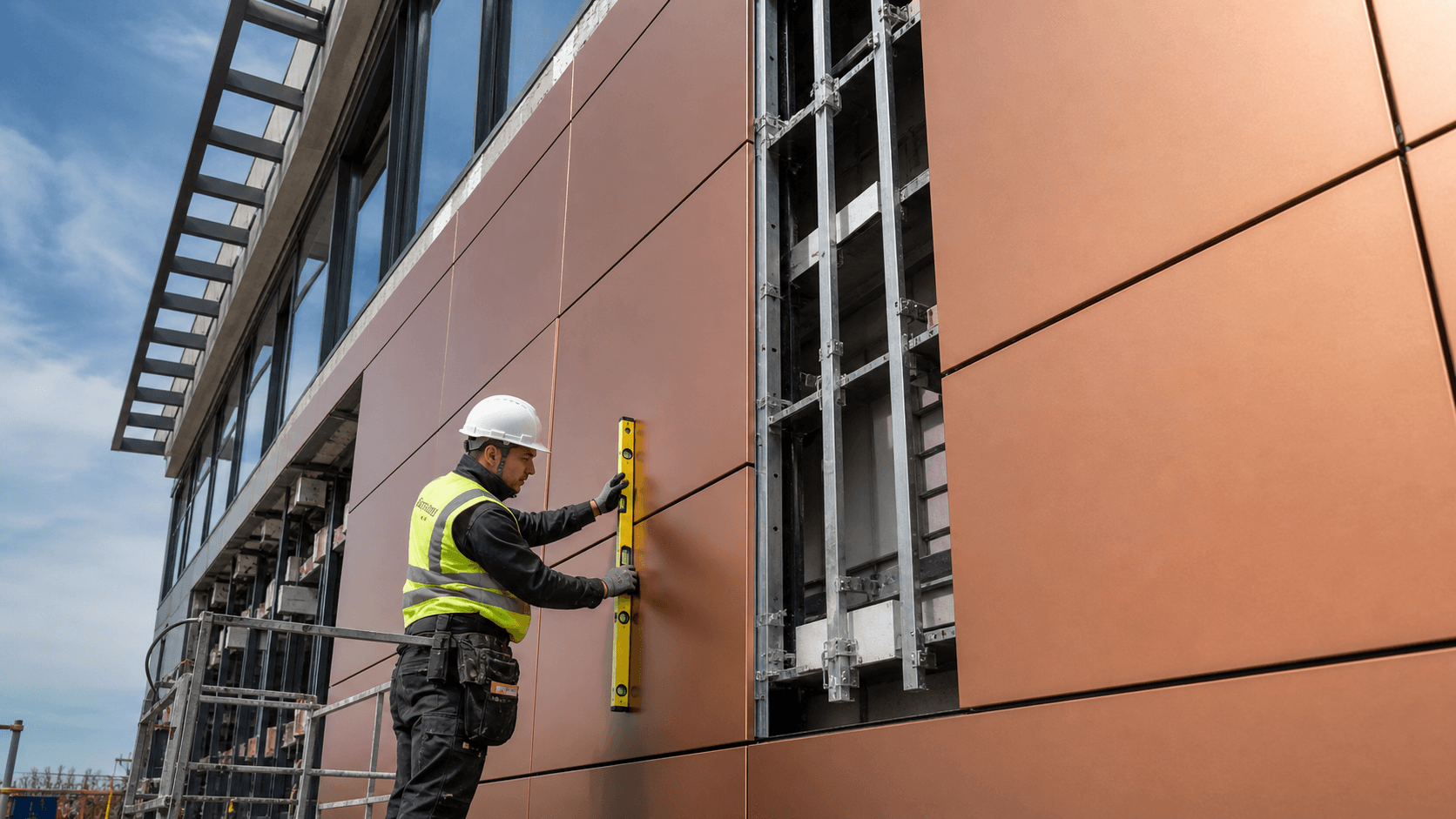
Oil canning is one of the most common visual concerns in metal cladding and aluminium composite panel façades. It usually appears as a wavy, uneven, or slightly distorted surface on the installed panels.
In many cases, oil canning is not a sign that the panel has failed. However, it can affect the visual quality of the façade. For architects, developers, contractors, and building owners, this matters because façade appearance is often judged immediately.
The good news is that oil canning can often be reduced with proper planning, careful subframe preparation, suitable fixing methods, correct handling, and realistic panel sizing.
This article explains how to prevent oil canning in aluminium composite panels in a practical and easy-to-understand way.
What Is Oil Canning in Aluminium Composite Panels?
Oil canning is visible waviness or unevenness on the surface of a metal-faced panel. It can appear as slight ripples, shadows, or waves across the façade.
It is more noticeable when:
- The panels are large
- The surface has a smooth finish
- The colour is reflective or metallic
- Sunlight hits the façade at an angle
- The viewer looks along the panel surface
- The subframe behind the panels is not properly aligned
Aluminium composite panels are designed to provide a flat and clean appearance. However, like many metal-faced cladding materials, they still need correct installation conditions to achieve the best result.
Why Oil Canning Happens
Oil canning can happen for several reasons. Sometimes it is caused by one major mistake. More often, it is the result of several small issues working together.
Common causes include:
- Uneven subframe alignment
- Oversized panels
- Incorrect fixing points
- Over-tightened screws or rivets
- Insufficient allowance for thermal movement
- Poor handling during transportation or installation
- Inaccurate cutting, routing, or folding
- Tension created during installation
- Inconsistent joint gaps
This is why oil canning prevention should start before installation begins. It is not only an installer issue. It is also a design, fabrication, handling, and fixing issue.
Start With a Straight and Stable Subframe
A flat façade starts with a straight subframe.
The aluminium composite panel follows the surface behind it. If the subframe is uneven, twisted, or poorly aligned, the panel may show visual distortion after installation.
Before fixing ACP sheets, installers should check that the subframe is:
- Straight
- Stable
- Properly aligned
- Suitable for the selected fixing method
- Free from unnecessary movement
- Installed according to the façade layout
This step is especially important for external cladding and rainscreen façade systems. Even a small misalignment can become visible once smooth panels are installed across a large elevation.
A good panel cannot hide a poor support structure. Therefore, subframe preparation is one of the most important steps in preventing oil canning.
Choose Suitable Panel Sizes
Large panels can create a clean and modern look. However, very large panels may also increase the risk of visible waviness.
Panel size should be selected according to:
- Project design
- Wind exposure
- Fixing method
- Subframe layout
- Panel thickness
- Location on the building
- Visual expectations
- Fabrication method
For example, a large smooth panel on a sunny external façade may show surface irregularities more clearly than a smaller panel with well-planned joints.
This does not mean large panels should always be avoided. However, they should be planned carefully. The larger the panel, the more important the fixing method, subframe accuracy, and movement allowance become.
Do Not Over-Tighten Screws or Rivets
Over-tightening is a common installation mistake.
Aluminium composite panels need to be fixed securely, but they should not be forced into position. If screws or rivets are too tight, they can create stress around fixing points. This may restrict natural movement and increase the risk of surface distortion.
Installers should avoid:
- Pulling the panel aggressively into position
- Over-tightening screws
- Compressing the panel surface
- Using unsuitable washers
- Creating stress around fixing points
- Ignoring movement requirements
A controlled fixing method is better than a forceful one. The aim is to hold the panel properly while allowing the system to perform as intended.
Allow for Thermal Movement
Aluminium composite panels can expand and contract as temperatures change. This is normal.
If thermal movement is not considered, stress can build up in the panel. Over time, this may affect panel flatness, fixing points, and joint appearance.
To reduce this risk, installers should consider:
- Expansion gaps
- Correct hole sizes
- Fixed and sliding points
- Panel size
- Sun exposure
- Local climate conditions
- Manufacturer installation guidance
In many mechanical fixing systems, one point may control the position of the panel while other points allow movement. This helps prevent unnecessary tension.
Movement allowance is a small detail, but it has a major effect on long-term façade appearance.
Plan Joint Gaps Carefully
Joint gaps are not only visual lines. They also help manage movement, alignment, and façade appearance.
If the gaps are too narrow, panels may not have enough room to move. If the gaps are inconsistent, the façade may look poorly installed even when the panels themselves are good.
Good joint planning helps create:
- Cleaner elevations
- Better alignment
- Reduced stress
- Easier installation
- More controlled visual results
Joint gaps should be planned before fabrication and installation. They should not be adjusted randomly on site.
Consistent joint design is one of the simplest ways to improve the final appearance of an ACP façade.
Handle and Store Panels Properly
Oil canning can begin before the panel is even installed.
Poor storage, rough handling, dragging panels, or placing heavy objects on the surface can damage the panel or create stress. Even small dents or surface pressure marks may become visible after installation.
Good handling practices include:
- Store panels flat and supported
- Keep panels dry and protected
- Avoid dragging one panel across another
- Lift panels carefully
- Protect corners and edges
- Avoid impact during transport
- Do not place heavy materials on top of panels
- Keep protective film in good condition before installation
Careful handling protects both the surface finish and the flatness of the panel.
Check Cutting, Routing, and Folding Quality
ACP fabrication can also affect oil canning risk.
If panels are routed too deeply, folded poorly, or cut inaccurately, stress may be introduced into the panel. This can affect the final shape and appearance, especially in cassette systems.
Installers and fabricators should check:
- Cutting accuracy
- Routing depth
- Fold quality
- Edge condition
- Panel squareness
- Corner details
- Cassette dimensions
- Consistency between panels
A clean façade depends on clean fabrication. This is especially true for cassette panels, corners, returns, column covers, and architectural details.
Use the Right Fixing Method for the Application
Different fixing methods create different visual results.
For example, visible screw or rivet fixing can be practical for signage, shopfronts, and some cladding applications. Cassette systems are often preferred for premium façade projects because they provide a cleaner appearance with concealed or semi-concealed fixings.
Adhesive fixing can also create a smooth visual result, but only when the surface, adhesive system, and application conditions are suitable.
The fixing method should be selected based on:
- Internal or external use
- Panel size
- Wind exposure
- Visual expectations
- Subframe type
- Maintenance needs
- Fire and project requirements
- Installation environment
Choosing the fixing method too late can lead to rushed decisions. It is better to plan the fixing method during the design and fabrication stage.
Avoid Forcing Panels Into Position
Panels should not be forced to compensate for site errors.
If a panel does not align correctly, the reason should be checked. The issue may be the subframe, panel size, fixing position, or joint layout.
Forcing the panel can create stress. This may result in:
- Waviness
- Uneven joints
- Surface distortion
- Poor fixing performance
- Difficult future replacement
A better approach is to correct the cause of the problem before fixing the panel permanently.
Good installation is controlled, not rushed.
Consider Colour and Light Reflection
Oil canning can appear more visible depending on colour, gloss level, and light direction.
Smooth metallic finishes, darker colours, and glossy surfaces may show waves or shadows more clearly than matte or lighter finishes. Long elevations exposed to direct sunlight may also make surface irregularities more visible.
This does not mean these colours or finishes cannot be used. However, expectations should be managed, especially on large external façades.
When appearance is critical, it is useful to review samples, mock-ups, or previous project references before final selection.
Common Mistakes That Increase Oil Canning
Many oil canning problems come from avoidable mistakes.
Common mistakes include:
- Installing panels on an uneven subframe
- Using panels that are too large for the fixing method
- Over-tightening screws or rivets
- Ignoring thermal movement
- Using inconsistent joint gaps
- Poor handling during transport
- Dragging panels during installation
- Incorrect routing or folding
- Forcing panels into position
- Choosing the fixing method after fabrication
Most of these problems can be reduced with proper planning and better site discipline.
Oil Canning Prevention Checklist
Before installation, check the following:
- The subframe is straight and stable
- Panel sizes are suitable for the project
- The fixing method has been selected early
- Joint gaps are planned and consistent
- Thermal movement has been considered
- Fixing points are correctly marked
- Screws and rivets will not be over-tightened
- Panels have been stored properly
- Cutting, routing, and folding quality has been checked
- Installers understand the fixing sequence
- Protective film is still in good condition
- The panel surface has not been damaged during handling
This simple checklist can help prevent many common appearance problems.
Can Oil Canning Be Completely Avoided?
Oil canning can often be reduced, but it may not always be completely eliminated. This is because metal-faced panels naturally react to light, movement, temperature, and installation conditions.
The aim is to control the risk as much as possible.
Good design, correct fabrication, accurate subframes, suitable fixing, and careful handling all help reduce visible waviness.
For most projects, the best results come from planning the complete façade system rather than focusing only on the panel itself.
Conclusion
Oil canning in aluminium composite panel façades is a visual issue that can affect the final appearance of a building. However, it is often preventable or manageable with proper planning and careful installation.
To prevent oil canning in aluminium composite panels, contractors should start with a straight subframe, choose suitable panel sizes, allow for thermal movement, avoid over-tightening fixings, plan joint gaps, and handle panels carefully.
The fixing method also matters. Screws, rivets, adhesives, and cassette systems can all perform well when selected for the right application and installed correctly.
When aluminium composite panels are planned, fabricated, and fixed properly, they can provide a clean, lightweight, modern, and reliable façade solution for commercial buildings, shopfronts, cladding projects, signage, and architectural details.
Explore our full range of Smartcon Aluminium Composite Panels, designed for architects and modern projects, at: https://smartcongroup.com/products/aluminium-composite-panel/
Authored by Smartcon Int’l. Trade & Marketing Ltd. on 02.05.2026. All rights reserved.
Façade specification
Selecting aluminium cladding for a façade?
Share the application, finish, fire classification and fabrication requirements. We can help assess the appropriate panel specification and supply route.