
Blog
How to Prevent Fiber Cement Boards From Moving or Working Loose
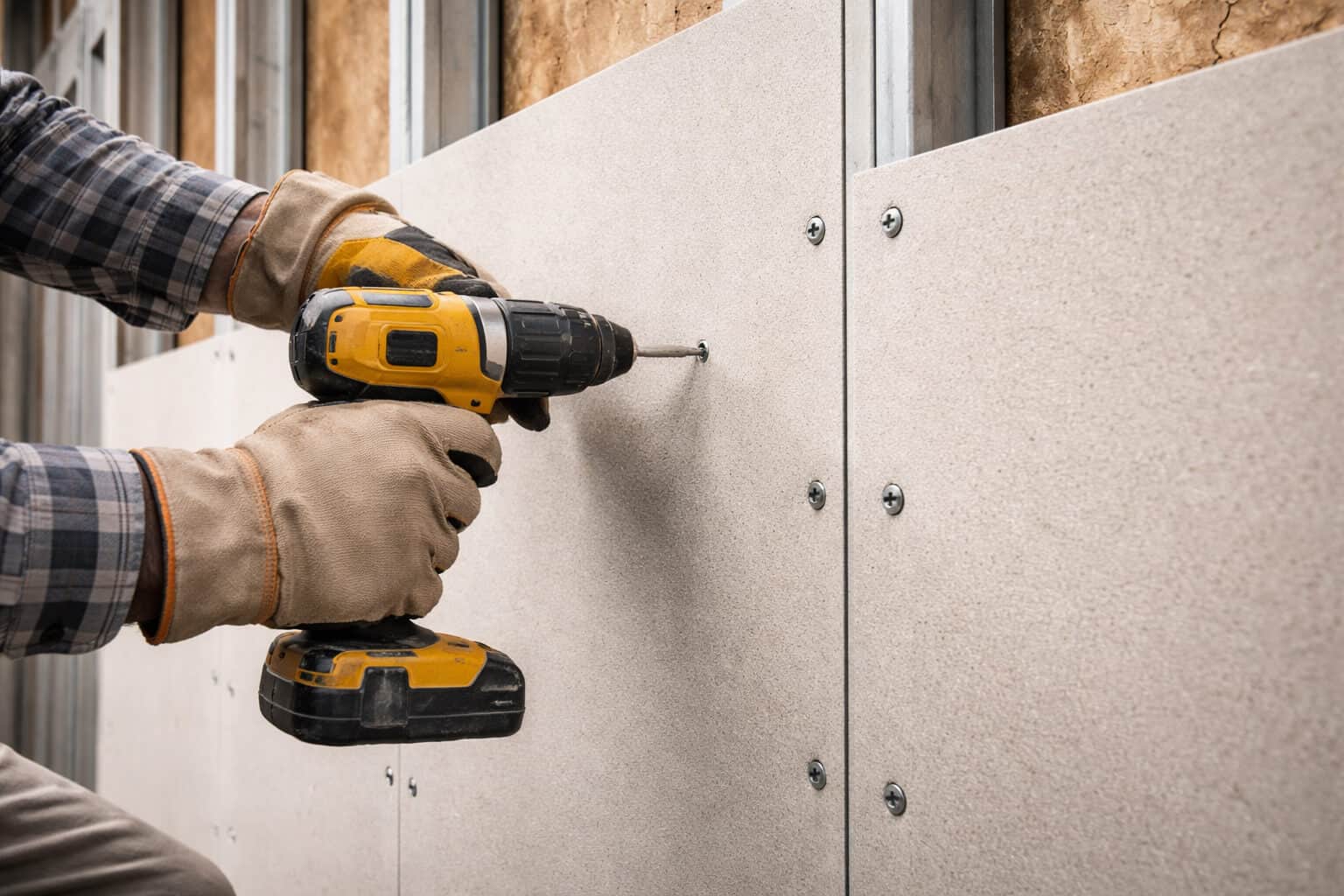
Fiber cement boards are known for being stable, durable, and dependable. But like many building materials, they still need to be installed properly. When boards begin to move, loosen, or feel unstable, the problem is usually not the board itself. It is often the result of poor fixing, wrong fasteners, incorrect framing support, or installation shortcuts on site.
That is good news for architects, contractors, and specifiers. It means the risk can usually be prevented with the right approach from the start.
If you want fiber cement boards to perform well over time, stay firm in place, and give peace of mind after installation, there are a few simple rules that matter most.
Why do fiber cement boards move or work loose?
Fiber cement boards should not move excessively once installed correctly. If movement happens, it usually points to one or more of the following issues:
- Incorrect screw type
- Too few fixings
- Fixings placed too close to the edge
- Fixings placed too far from the edge
- Framing that is uneven or too widely spaced
- No proper support behind board joints
- Overdriving or underdriving screws
- Poor attention to movement gaps and board layout
- Installation onto a weak or unstable substructure
In short, loose boards are usually an installation problem, not a material problem.
Start with a stable substructure
The first step in preventing movement is making sure the board is fixed onto a sound, level, and properly designed substructure.
If the framing underneath is weak, misaligned, or inconsistent, the board above it will never feel fully secure. Even the best board can only perform as well as the support system behind it.
Before installation begins, make sure:
- Studs or rails are straight and aligned
- Support spacing is suitable for the board thickness and application
- The framing is rigid enough for the intended use
- Board edges and joints are properly backed by framing where required
A strong and even structure reduces flex, vibration, and stress on the fixings.
Use the correct fasteners
One of the most common reasons fiber cement boards work loose is the use of the wrong screw or fixing method.
Not every screw is suitable for fiber cement boards. Fasteners should match both the board and the supporting structure, whether that structure is timber or light gauge steel.
The right fastener should provide:
- Good holding strength
- Compatibility with the board material
- Suitability for indoor or exterior conditions
- Corrosion resistance where needed
- A clean and secure finish without damaging the board
Using generic or unsuitable screws may save a little time at first, but it can lead to weak fixing points, board instability, or future maintenance problems.
Fix boards at the correct spacing
Even good screws will not help much if there are too few of them or if they are placed inconsistently.
Boards need to be fixed according to a logical and even pattern. Random fixing points can create uneven pressure across the board. This can increase the chance of localized movement, stress, or poor overall stability.
Consistent fixing helps the board sit firmly and distribute loads more evenly across its surface.
Pay special attention to:
- Edge fixing positions
- Intermediate fixing points
- Distance between fixings
- Board corners and joint areas
A board that is properly supported and evenly fixed is far less likely to loosen over time.
Do not place fixings too close to the board edges
This is a small detail, but it matters a lot.
If screws are fixed too close to the edge, the board can weaken around that area. If they are too far from the edge, the perimeter may not be held firmly enough. Either mistake can reduce long-term stability.
Correct edge distances help keep the board secure without damaging its structure.
This is especially important around corners and joints, where stress tends to build more easily.
Avoid overdriving the screws
A fixing should hold the board securely, but it should not damage it.
If screws are driven too hard, they can crush the surface or weaken the fixing point. If they are not driven far enough, the board may not sit tightly against the frame.
The goal is a firm, controlled fixing that secures the board without creating stress or surface damage.
This is one of the most overlooked causes of loose or unstable boards on site. A rushed installation team can easily create long-term problems simply by using the wrong pressure setting or working too quickly.
Make sure joints are properly supported
Unsupported joints are a major weak point.
When two board edges meet without proper support behind them, the connection becomes more vulnerable to movement. Over time, this can lead to instability, visible joint issues, or a loose feel in the wall build-up.
Where boards meet, the joint area should be planned carefully. It should not be treated as an afterthought.
Well-supported joints help:
- Reduce movement at board edges
- Improve overall rigidity
- Create a more dependable installation
- Lower the risk of cracking or visible finishing problems later
Respect movement gaps and layout planning
Fiber cement boards are reliable and stable, but installation still needs to allow for proper detailing.
Boards should be laid out carefully, with correct joint planning and sensible spacing. Poor layout can create stress points, especially around openings, corners, or repeated narrow cuts.
To reduce the chance of movement problems:
- Plan the board layout before fixing
- Avoid awkward narrow strips where possible
- Keep joints neat and consistent
- Follow appropriate gap requirements for the system
A clean layout is not just about appearance. It also supports performance.
Prevent moisture-related instability
In exterior or wet-area applications, moisture management matters.
If water enters the system because of poor detailing, missing sealing, or incorrect build-up design, it can affect surrounding materials, fixings, and the overall performance of the wall. That can eventually lead to loosening, movement, or visible defects.
For that reason, fiber cement board installation should always be part of a complete and sensible system approach.
This includes paying attention to:
- Waterproofing where required
- Ventilation and drainage in façade systems
- Suitable sealants or joint treatment where specified
- Proper protection of the overall assembly
When the full build-up is designed well, the board is much more likely to stay secure for the long term.
Check the installation before closing the system
Before cladding, tiling, or finishes go on top, it is worth carrying out a simple inspection.
Check that:
- The board sits flat against the frame
- All fixings are secure and consistent
- Joints are aligned properly
- The edges are well supported
- There is no unwanted flex or instability
This step can prevent expensive callbacks later. It is much easier to correct a fixing issue before the next layer covers everything.
The simplest way to keep fiber cement boards secure
If you want to prevent fiber cement boards from moving or working loose, focus on the basics and do them well.
Use a solid substructure. Choose the right fasteners. Fix the boards evenly. Support the joints properly. Avoid rushed installation mistakes.
That is what creates a stable wall build-up and long-term peace of mind.
Fiber cement boards are not a risky or delicate choice. When installed correctly, they are a practical, secure, and reliable solution for modern construction projects.
Conclusion
Fiber cement boards do not usually work loose because they are unreliable. They work loose when key installation details are ignored.
That is why the right installation approach matters so much. A properly fixed fiber cement board should feel firm, stable, and dependable from day one.
For architects, contractors, developers, and specifiers, that is exactly what makes fiber cement boards such a reassuring option. They are straightforward to work with, suitable for a wide range of applications, and capable of delivering long-term performance without unnecessary complications.
When the fixing method is right, the result is simple: less movement, fewer problems, and more confidence in the finished system.
👉 Visit the Smartfiber Fiber Cement Board page to explore specs, sizes, and delivery options.
Authored by Smartcon Int’l. Trade & Marketing Ltd. on 04.04.2026. All rights reserved.
Exterior wall system
Specifying an exterior wall system?
Share the wall build-up, exposure, framing and fire-performance requirements. We can help assess the sheathing specification and next steps.