
Blog
How to Install Tiles Over Fiber Cement Boards Without Failure
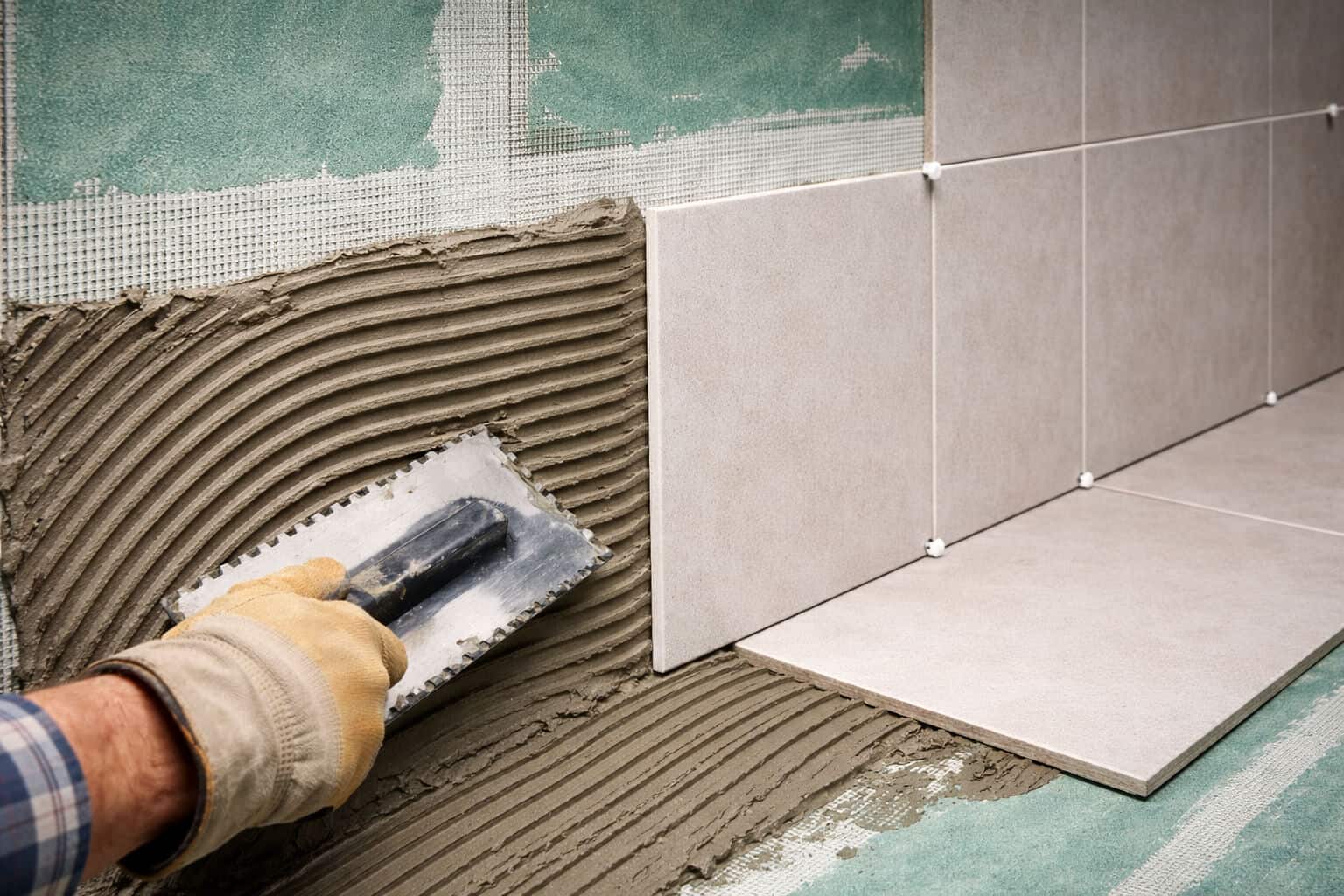
Installing tiles over fiber cement boards is a reliable and widely used solution. But like many construction details, success depends on doing a few key steps correctly.
When done right, this system delivers strong adhesion, long-term durability, and peace of mind. When done wrong, it can lead to loose tiles, cracks, or costly repairs.
The good news is simple: tile failure is almost always preventable.
Can you tile directly onto fiber cement boards?
Yes.
Fiber cement boards are suitable for tiling.
They provide a stable, rigid surface. They also resist moisture better than many traditional boards. This makes them a practical choice for bathrooms, kitchens, and wet areas.
However, suitability does not mean “no preparation needed.”
Correct installation still matters.
Why do tiles fail over fiber cement boards?
Tile failure is rarely caused by the board itself. It usually comes from installation mistakes.
The most common causes are:
- Poor surface preparation
- Wrong adhesive selection
- Incorrect fixing of the boards
- No joint treatment
- Movement in the substrate
- Skipping waterproofing where required
Each of these can weaken the system over time.
Start with a properly fixed board
Before thinking about tiles, check the board installation.
The board must be:
- Firmly fixed
- Flat and aligned
- Supported at joints
- Free from movement
If the board moves, the tiles will fail.
This is one of the most important rules.
Take a moment to check:
- Are all fixings secure?
- Are joints supported properly?
- Is there any flex when pressure is applied?
If the answer is yes, fix the issue before tiling.
Prepare the surface properly
A clean surface is essential.
Dust, debris, or loose particles can reduce adhesion. Even a strong adhesive will struggle on a dirty surface.
Before tiling:
- Wipe the surface clean
- Remove dust from cutting or drilling
- Make sure the board is dry
This step is simple, but often ignored.
Use the right tile adhesive
Not all adhesives are the same.
Choose an adhesive that is suitable for:
- Cement-based boards
- The tile type
- The environment (especially wet areas)
A flexible adhesive is usually a safe choice. It helps absorb small movements and reduces stress on the tiles.
Avoid using unsuitable or low-quality adhesives. This is a common shortcut that leads to failure.
Treat joints before tiling
Board joints should never be ignored.
If joints are left untreated, they can become weak points. Movement or cracking may appear in these areas first.
To reduce this risk:
- Apply joint tape where required
- Use a suitable joint filler or compound
- Keep joints even and controlled
This creates a more stable surface for tiling.
Apply waterproofing where needed
Fiber cement boards are moisture resistant.
They are not fully waterproof on their own.
In wet areas such as bathrooms or showers, waterproofing is essential.
Apply a suitable waterproofing system:
- Before tiling
- According to the manufacturer’s instructions
- With attention to corners and joints
This protects the full system, not just the board.
Use correct tiling technique
Good tiling practice matters just as much as the substrate.
When installing tiles:
- Apply adhesive evenly
- Avoid air gaps behind tiles
- Press tiles firmly into place
- Maintain consistent spacing
Poor technique can lead to hollow spots. Over time, these can cause tiles to loosen or crack.
Allow proper curing time
Do not rush the process.
Adhesives and waterproofing systems need time to cure. If tiles are loaded too early, the bond may weaken.
Follow recommended curing times before:
- Grouting
- Applying loads
- Using the area
Patience at this stage prevents future problems.
Check the system before completion
Before finishing the job, take a final look.
Check that:
- Tiles are firmly bonded
- No movement is present
- Joints are clean and consistent
- There are no hollow sounds behind tiles
This quick check can help catch issues early.
The simplest way to avoid tile failure
If you want to install tiles over fiber cement boards without failure, focus on the basics.
- Fix the boards properly
- Prepare the surface
- Use the right adhesive
- Treat joints correctly
- Apply waterproofing where needed
- Follow good tiling practice
None of these steps are complicated.
But together, they make a big difference.
Conclusion
Tiling over fiber cement boards is not a risky choice. It is a practical and reliable solution when installed correctly. Most failures do not come from the material. They come from skipped steps or rushed work.
For architects, contractors, and developers, the message is simple:
If the installation is done properly, the result is stable, durable, and dependable. And that is exactly what you want from a modern building system.
👉 Visit the Smartfiber Fiber Cement Board page to explore specs, sizes, and delivery options.
Authored by Smartcon Int’l. Trade & Marketing Ltd. on 13.04.2026. All rights reserved.
Wet-area specification
Need a board for a wet-area application?
Share the substrate, waterproofing, tile and installation requirements. We can help assess the appropriate backer-board specification.