
Blog
How to Install Fiber Cement Boards Around Pipes, Cables, and Service Penetrations
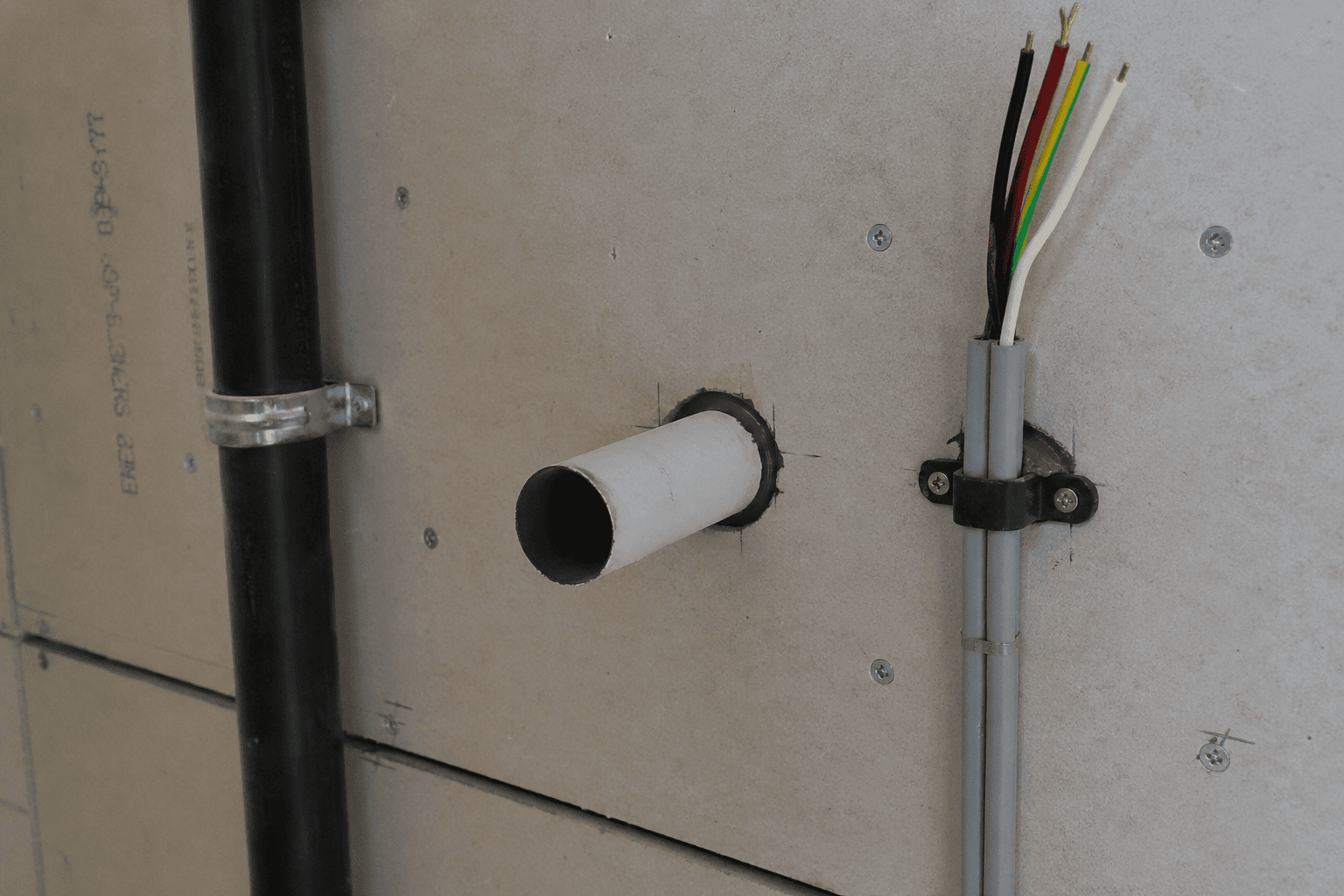
Installing fiber cement boards around pipes, cables, and service penetrations requires careful cutting, spacing, sealing, and detailing. These openings may look like small details on site. But if they are handled poorly, they can become weak points in the wall or façade system.
Pipes, cables, ducts, conduits, and other services often need to pass through boards. The board must be cut cleanly, fixed correctly, and sealed properly around these penetrations.
This guide explains what architects, contractors, installers, and specifiers should check before installing fiber cement boards around service penetrations.
Why Service Penetrations Matter
A service penetration is any opening made through a board or wall system for a pipe, cable, duct, bracket, conduit, vent, or other service.
These openings are common in construction. They may be needed for:
- Electrical cables
- Plumbing pipes
- HVAC ducts
- Drainage pipes
- Ventilation outlets
- External lights
- Security cameras
- Signage fixings
- Mechanical brackets
- Air-conditioning connections
The problem is not the opening itself. The problem is poor detailing around the opening.
If the board is cut roughly or left unsealed, it may allow moisture entry, cracking, movement, or poor finish quality.
Can Fiber Cement Boards Be Cut for Pipes and Cables?
Yes, fiber cement boards can be cut or drilled for pipes, cables, and service penetrations.
However, the openings must be planned and made carefully.
The goal is to create a clean opening without damaging the board edge or weakening the surrounding area.
The installer should avoid random cutting, oversized holes, rough edges, and openings placed too close to board edges or fixings.
A clean, well-supported opening is much easier to seal and finish.
Plan Service Openings Before Installation
The best time to plan penetrations is before the boards are fixed.
Before cutting, check:
- Pipe or cable location
- Opening size
- Board layout
- Joint position
- Support frame position
- Fixing points
- Required sealant or flashing
- Fire and moisture requirements
- Final finish layer
- Access for future maintenance
Planning helps avoid awkward cuts and weak board sections.
It also reduces the risk of drilling through the wrong area after the boards are installed.
Avoid Placing Openings Too Close to Edges
Penetrations should not be placed too close to board edges, corners, or joints unless the system allows it.
If a hole is too close to the edge, the board may crack during cutting, fixing, or service movement.
Poorly positioned openings may also make sealing difficult.
Try to keep service penetrations away from:
- Board edges
- External corners
- Internal corners
- Horizontal joints
- Vertical joints
- Screw fixing points
- Unsupported areas
If the penetration cannot be moved, additional support or special detailing may be needed.
Use the Right Tools for Cutting Openings
The right tool depends on the size and shape of the penetration.
For small round openings, installers may use a suitable drill bit or hole saw.
For larger openings, cutting tools designed for fiber cement boards should be used.
The tool should create a clean cut with minimum chipping.
Avoid aggressive cutting methods that cause vibration, overheating, rough edges, or uncontrolled cracking.
Always follow the board manufacturer’s cutting recommendations and use proper dust control.
Measure and Mark the Opening Carefully
Accurate marking is essential.
Before cutting the board, mark the exact location and size of the pipe, cable, or duct.
Check the measurement twice before cutting.
A practical process is:
- Measure the service position from fixed reference points.
- Transfer the measurement to the board.
- Mark the centre point of the opening.
- Mark the full diameter or shape.
- Check clearance requirements.
- Confirm the opening is not too close to edges or screws.
- Cut slowly and cleanly.
A small measuring error can create a large finishing problem.
Do Not Cut Oversized Holes Without a Reason
Openings should be large enough to allow correct installation and movement, but not unnecessarily large.
An oversized opening is harder to seal. It may also reduce board support around the penetration.
For pipes or ducts, a small clearance may be needed around the service. This helps avoid direct pressure between the board and the service.
However, the gap should still be manageable for sealing and finishing.
The correct gap depends on the service type, movement, sealant, weather exposure, and project detail.
Support the Board Around Large Openings
Large service penetrations may weaken the board area if they are not supported correctly.
If a large opening is needed, check whether extra framing, battens, or support members are required around the penetration.
This is especially important for:
- Large ducts
- Ventilation outlets
- Mechanical penetrations
- External wall penetrations
- Areas with impact risk
- Penetrations close to board joints
- Penetrations in façade systems
A board should not be left unsupported around a large cut-out.
Good support helps reduce vibration, cracking, and movement.
Smooth and Clean the Cut Edges
After cutting or drilling, the edges of the opening should be checked.
Remove loose dust, rough particles, and damaged edges.
A clean edge helps improve sealing and finishing.
Poorly cut edges may create:
- Weak bonding
- Uneven sealant lines
- Moisture entry points
- Surface defects
- Cracks around the opening
Do not ignore the inside edge of the hole. It is part of the installation detail.
Seal Around Service Penetrations
Sealing is one of the most important steps.
Openings around pipes, cables, and ducts can allow moisture, air leakage, dust, or insects to enter the wall system if they are not sealed properly.
The sealant must be compatible with:
- Fiber cement board
- Pipe or cable material
- Weather exposure
- Movement requirements
- Fire requirements, where applicable
- Final coating or finish
For external applications, sealing must be especially careful. Water should not be allowed to enter behind the board or into the wall build-up.
Use Flexible Sealant Where Movement Is Expected
Pipes, cables, brackets, and wall systems can move slightly.
If a rigid filler is used around a moving service, cracks may appear.
A flexible sealant is often more suitable where movement is expected.
This is especially relevant around:
- External pipes
- HVAC penetrations
- Metal ducts
- Cable conduits
- Service brackets
- Areas exposed to temperature change
- Junctions between different materials
The sealant should be applied to a clean, dry, dust-free surface.
Do Not Rely Only on Surface Filler
Surface filler may improve appearance, but it may not provide proper protection.
For service penetrations, the detail may need:
- A backing material
- Flexible sealant
- Collar or sleeve
- Flashing
- Gasket
- Fire-rated sealant
- Waterproofing layer
- Reinforcement around the opening
The correct detail depends on the application.
A pipe through an internal partition is not the same as a duct through an external façade.
Check Fire and Acoustic Requirements
Some penetrations may pass through fire-rated or acoustic wall systems.
In these cases, the opening must be detailed according to the required fire or acoustic performance.
A normal sealant may not be enough.
Fire-rated service penetrations may require approved fire-stopping products, collars, sleeves, or special sealants.
Acoustic walls may require careful sealing to prevent sound leakage.
Specifiers should check these requirements before site work starts.
Protect Penetrations in External Wall Systems
External penetrations need extra attention because they are exposed to weather.
These areas may be affected by:
- Rain
- Wind-driven moisture
- Temperature change
- UV exposure
- Movement
- Condensation risk
- Poor drainage
For external walls, penetrations should be detailed so water is directed away from the opening.
Depending on the system, flashing, collars, membranes, or weatherproof sealants may be needed.
The aim is simple: the wall should not depend on a rough hole and a small amount of filler.
Reinforce Around High-Risk Openings
Some openings may need reinforcement around the cut area.
This is especially important where the board is finished with render, coating, tile, or another surface layer.
Reinforcement may help reduce cracking around:
- Corners of rectangular openings
- Large holes
- Duct openings
- Service boxes
- External penetrations
- Areas near joints
- Areas around windows or doors
For rendered systems, mesh reinforcement around penetrations may be required as part of the full system.
Keep Penetrations Away From Board Joints Where Possible
Board joints are already movement areas.
If a pipe or cable passes too close to a joint, it may make the detail more difficult and increase the risk of cracking or leakage.
Where possible, avoid placing penetrations directly on board joints.
If this cannot be avoided, the joint and penetration detail must be planned carefully.
Do not allow site workers to cut holes through joints without checking the system detail.
Common Mistakes to Avoid
When installing fiber cement boards around service penetrations, avoid these common mistakes:
- Cutting holes without planning the board layout
- Making rough or broken openings
- Oversizing holes unnecessarily
- Placing penetrations too close to edges
- Cutting through unsupported board areas
- Ignoring dust removal before sealing
- Using rigid filler where movement is expected
- Leaving external penetrations without weather protection
- Forgetting fire-stopping requirements
- Ignoring acoustic sealing
- Treating all pipes, cables, and ducts the same way
- Sealing only the visible surface
- Forgetting to inspect the detail before covering it
Most problems around penetrations are preventable with careful planning.
Site Checklist Before Closing the Wall
Before closing or finishing the wall, check the following:
- Are all service openings in the correct location?
- Are the holes clean and properly sized?
- Are the board edges undamaged?
- Is the board supported around large openings?
- Are penetrations kept away from weak areas where possible?
- Are external openings weather-sealed?
- Is the sealant compatible with the board and service material?
- Are fire-rated penetrations treated correctly?
- Are acoustic requirements considered?
- Are collars, sleeves, flashings, or gaskets installed where needed?
- Has the detail been inspected before finishing?
This checklist can prevent costly repairs after the wall is completed.
Final Thoughts
Installing fiber cement boards around pipes, cables, and service penetrations is not difficult, but it must be done carefully.
The most important points are planning, clean cutting, correct support, proper edge preparation, and compatible sealing.
Small service openings can become major weak points if they are ignored. But when they are detailed correctly, fiber cement boards can remain stable, durable, and reliable in both internal and external wall systems.
For architects, contractors, installers, and specifiers, the best approach is to treat every penetration as part of the full wall system, not as a last-minute site cut.
👉 Visit the Smartfiber Fiber Cement Board page to explore specs, sizes, and delivery options.
Authored by Smartcon Int’l. Trade & Marketing Ltd. on 30.04.2026. All rights reserved.
Façade specification
Need the right board for your façade system?
Share the façade build-up, exposure conditions, finish and documentation requirements. We can help assess the appropriate board and coordinate supply.