
Blog
How to Detail Fiber Cement Boards Around Windows and Doors
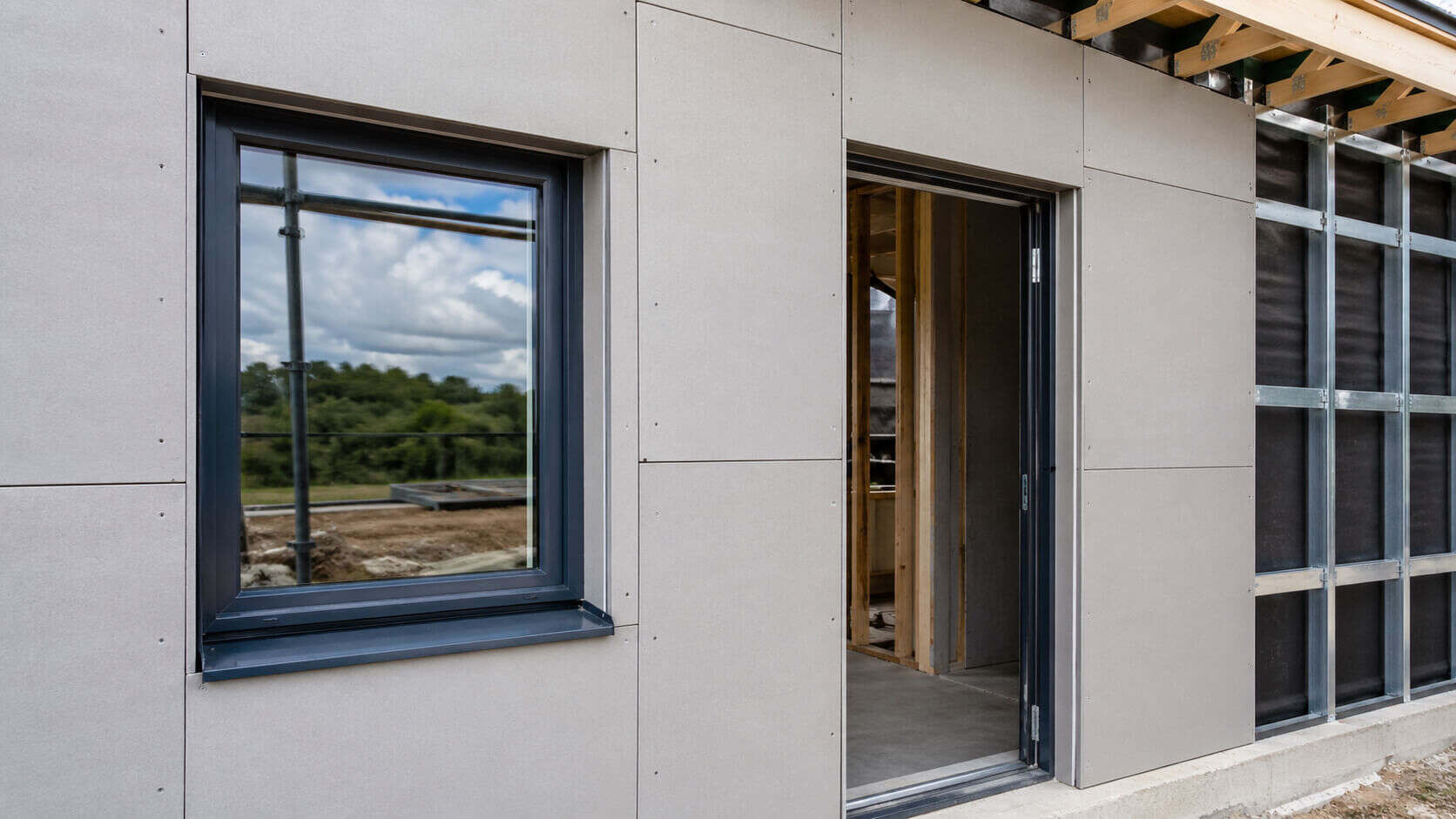
Windows and doors are some of the most important areas in any wall or façade system. They interrupt the surface of the wall, create edges, expose joints, and often become weak points if they are not detailed correctly.
This is why detailing fiber cement boards around windows and doors needs care.
Fiber cement boards are strong, stable, and suitable for many modern construction applications. However, like every board material, they must be installed with the right support, fixing method, movement allowance, and moisture protection.
When the detailing is done properly, fiber cement boards can perform reliably around openings and help create a clean, durable wall system.
Why Window and Door Openings Need Extra Attention
A flat wall area is usually simple to cover with boards. Openings are different.
Around windows and doors, the installer must deal with:
- Cut board edges
- Narrow board strips
- Corners
- Fixing points close to edges
- Flashing
- Sealant lines
- Moisture drainage
- Board movement
- Substrate alignment
These details may look small, but they affect the long-term performance of the installation.
Poor detailing around openings can lead to cracks, water ingress, uneven joints, weak fixings, or untidy finishes. In most cases, the problem is not the fiber cement board itself. The problem is incorrect detailing.
Start With the Opening, Not the Board
Before installing fiber cement boards, check the window or door opening first.
The frame should be properly fixed, aligned, and supported. The surrounding structure should be straight, dry, and ready to receive the board. If the opening is not square, the boards may need unnecessary trimming. This can create narrow pieces and weak edges.
Also check whether the opening has been properly prepared for moisture control. In external wall applications, window and door areas usually need suitable flashing, membranes, tapes, or other moisture management details before the board is fixed.
A fiber cement board should not be used to hide poor preparation. It should be installed over a properly prepared base.
Support All Board Edges Around Openings
One of the most important rules is simple: board edges around windows and doors need proper support.
Unsupported edges are more likely to move, vibrate, crack, or break during fixing. This is especially important around narrow strips, reveals, corners, and areas where the board is cut to fit the opening.
Before fixing, check that the subframe, battens, studs, or backing support are positioned correctly. The board should not be left floating around the opening.
For façade and external sheathing applications, this detail is even more important. Wind load, thermal movement, and moisture exposure can all place stress on the area around the opening.
Avoid Aligning Board Joints With Opening Corners
A common mistake is placing a board joint directly in line with the corner of a window or door.
This may look convenient during cutting, but it can create a weak point. Corners of openings are already stress-sensitive areas. If a board joint also meets that same point, the risk of cracking can increase.
A better approach is to plan the board layout before cutting. Try to avoid placing vertical or horizontal joints directly at the corners of windows and doors. Where possible, stagger the joints away from the opening corners.
This small planning step can improve the durability and appearance of the installation.
Leave the Correct Gap Around Frames
Fiber cement boards should not usually be forced tightly against window or door frames.
A small gap is often required to allow for movement, finishing, sealant, trim, or ventilation, depending on the system. The correct gap depends on the board type, application, frame material, project specification, and manufacturer guidance.
The key point is this: do not install boards too tightly around openings.
Tight installation can create pressure points. Over time, this may lead to cracks, edge damage, or poor sealant performance. A controlled gap gives the installation space to perform as intended.
Seal or Protect Cut Edges Where Required
Cut edges are common around windows and doors. These edges may be more exposed than factory edges, especially in external applications.
Depending on the board and system, cut edges may need to be sealed, primed, coated, or protected before installation. This is especially relevant around window reveals, door jambs, meter boxes, service openings, and other penetrations.
Edge treatment helps reduce moisture sensitivity and improves long-term performance. It also supports a cleaner final finish.
Never assume that a cut edge can be left untreated. Always check the board manufacturer’s installation guidance.
Use the Right Flashing and Moisture Detailing
Openings are one of the most common places for water-related problems.
Rainwater can hit the window, run down the frame, collect at the sill, or move behind the cladding if the system is poorly detailed. This is why flashing and drainage are critical.
In external wall and façade applications, pay special attention to:
- Window head details
- Sill details
- Jamb details
- Membrane laps
- Drainage paths
- Ventilation gaps
- Sealant compatibility
- Weather barrier continuity
The aim is not only to stop water from entering. The wall system should also allow any incidental moisture to drain or dry safely.
Fiber cement boards can work very well in external systems, but they should be part of a complete moisture-managed wall build-up.
Be Careful With Narrow Board Strips
Around windows and doors, installers often create narrow strips of board.
This may happen beside a window frame, above a door, below a sill, or inside a reveal. Narrow strips can be more fragile during handling and fixing. They may also have limited space for correct fastener placement.
Where possible, avoid very narrow pieces. Plan the board layout so that the pieces around the opening are practical to cut, fix, and support.
If a narrow strip is unavoidable, make sure it has proper backing and is fixed according to the manufacturer’s recommendations. Do not overdrive screws or place fixings too close to the edge.
Do Not Overdrive Screws Around Openings
Overdriven screws are a common installation mistake.
This happens when the screw is driven too deep into the board surface. Around windows and doors, this can be especially harmful because the board may already be cut, shaped, or installed in a narrow section.
The screw head should normally sit flush with the board surface, unless the system requires a different fixing detail. It should hold the board securely without crushing the surface.
Overdriving can weaken the fixing point and increase the risk of cracking or surface damage.
Use Compatible Sealants, Trims, and Finishes
Sealants and trims around openings must be compatible with the fiber cement board, the frame, and the final finish.
This is important because different materials move in different ways. A sealant that is too rigid may crack. A poor-quality sealant may lose adhesion. An incompatible coating may fail around edges or joints.
Use products recommended for fiber cement board applications. If the boards will be painted, make sure the sealant is paintable and suitable for the specified coating system.
A neat sealant line or trim detail improves both performance and appearance.
Pay Attention to Window Sills
The sill area is especially important because it receives and drains water.
Fiber cement boards should not be treated as a substitute for a proper sill, drip edge, or flashing detail. The sill must be designed to move water away from the wall surface and away from the board edges.
If water sits on a horizontal edge or runs behind the board, it can cause long-term problems. A good sill detail should help water shed outward and should protect the wall build-up behind the board.
This is one of the areas where installers should follow the project detail carefully.
Check Ventilation in Façade Applications
If fiber cement boards are used as part of a ventilated façade or rainscreen system, the area around windows and doors should not block ventilation.
Air needs to move behind the façade layer so moisture can dry and the wall can perform correctly. Around windows, reveals, and sills, ventilation gaps can easily become blocked by trims, sealant, insulation, or poor detailing.
This does not mean gaps should be left open without protection. It means the façade system should be detailed with proper ventilation and protection against insects, debris, and water entry.
A ventilated façade works best when airflow, drainage, and protection are considered together.
Common Mistakes to Avoid
When installing fiber cement boards around windows and doors, avoid these mistakes:
- Cutting boards without planning the joint layout
- Placing joints directly at opening corners
- Leaving board edges unsupported
- Fixing too close to board edges
- Overdriving screws
- Forcing boards tightly against frames
- Forgetting cut-edge protection
- Ignoring flashing and drainage details
- Using incompatible sealants
- Creating very narrow unsupported board strips
- Blocking ventilation in rainscreen systems
Most of these mistakes are easy to prevent with proper planning.
Simple Installation Checklist
Before closing the wall or finishing the façade, check the following:
- Are the window and door frames properly installed?
- Is the opening square and ready for board installation?
- Are all board edges supported?
- Are joints kept away from opening corners where possible?
- Are gaps around frames correct?
- Are cut edges sealed or protected if required?
- Are flashing and moisture details complete?
- Are screws flush and correctly positioned?
- Are narrow strips properly backed?
- Are sealants and trims compatible?
- Is ventilation maintained where required?
This checklist can help prevent many common problems before they become expensive repairs.
Final Thoughts
Detailing fiber cement boards around windows and doors is not difficult, but it must be done carefully.
Openings are sensitive parts of the wall. They need proper support, correct gaps, good moisture detailing, clean fixing, and compatible finishing materials. When these details are handled properly, fiber cement boards can provide a strong, stable, and reliable solution for external sheathing, façade backing, dry construction, and modern wall systems.
The key is simple: do not treat window and door areas as an afterthought.
Plan the layout, protect the edges, support the boards, manage moisture, and follow the correct installation guidance. With the right detailing, fiber cement boards can perform confidently around even the most demanding wall openings.
👉 Visit the Smartfiber Fiber Cement Board page to explore specs, sizes, and delivery options.
Authored by Smartcon Int’l. Trade & Marketing Ltd. on 25.04.2026. All rights reserved.
Façade specification
Need the right board for your façade system?
Share the façade build-up, exposure conditions, finish and documentation requirements. We can help assess the appropriate board and coordinate supply.