
Blog
Fiber Cement Board Waste Reduction: How to Plan Cuts, Layouts, and Board Usage
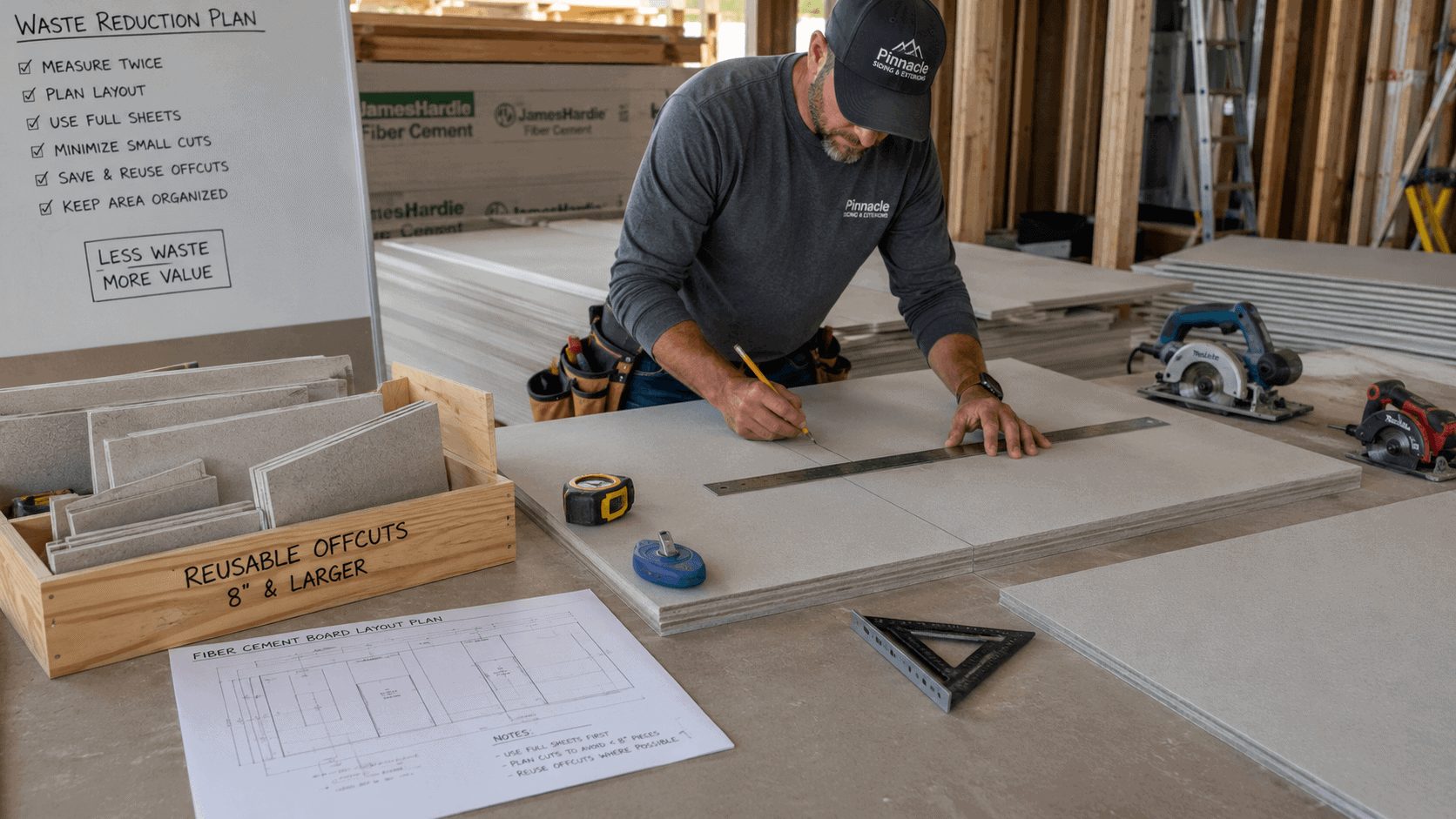
Reducing fiber cement board waste starts before cutting begins.
Many site teams focus on cutting tools and installation speed. But material waste is often created much earlier, during board selection, measurement, layout planning, ordering, storage, and handling.
Fiber cement boards are practical and reliable materials for external sheathing, façade backing, dry construction, modular buildings, wet areas, and internal wall systems. However, like any board product, they need good planning to avoid unnecessary offcuts, damaged sheets, poor layout decisions, and avoidable site costs.
For contractors, installers, developers, and buyers, the key point is simple: a good fiber cement board cutting plan can reduce waste, save money, improve site efficiency, and create a cleaner installation process.
Why Fiber Cement Board Waste Matters
Fiber cement board waste affects more than material cost.
It can also affect:
- Project budget
- Installation time
- Site cleanliness
- Labour productivity
- Delivery planning
- Storage space
- Handling risk
- Waste disposal cost
- Sustainability targets
- Final installation quality
A small amount of waste is normal on most construction projects. Boards must be cut around openings, corners, edges, penetrations, and junctions.
But excessive waste usually means the project was not planned well enough.
Good planning helps installers use more of each board and reduce unnecessary material loss.
Common Causes of Fiber Cement Board Waste
Fiber cement board material waste can happen for many reasons.
Common causes include:
- Poor measurement before ordering
- Wrong board size selection
- No clear cutting plan
- Random board layout
- Incorrect joint planning
- Cutting boards before checking the final dimensions
- Damaged boards during unloading
- Poor storage on site
- Edge damage during handling
- Mistakes around windows and doors
- Unplanned service openings
- Wrong thickness ordered for the application
- Using full boards for small pieces
- Re-cutting due to inaccurate marking
Most of these problems are preventable.
The solution is not only better cutting. The solution is better planning before cutting.
Start With Accurate Measurements
Accurate measurement is the first step in reducing waste.
Before ordering or cutting fiber cement boards, the project team should check the real dimensions of the installation area.
This includes:
- Wall length
- Wall height
- Opening sizes
- Window positions
- Door positions
- Corner details
- Board orientation
- Joint positions
- Base and top clearances
- Service penetrations
- Special cut-out areas
Drawings are useful, but site conditions may vary.
If measurements are taken from outdated drawings or rough assumptions, the board cutting plan may not match the real wall.
This can lead to more offcuts and rework.
Choose the Right Board Size
Board size has a direct effect on waste.
A board size that works well for one project may not be the best choice for another.
Before ordering, consider:
- Wall dimensions
- Repeating module sizes
- Stud or batten spacing
- Door and window layout
- Transport limits
- Handling conditions
- Storage space
- Cutting requirements
- Installation sequence
If the board size fits the wall layout well, waste can be reduced.
If the board size does not match the project dimensions, installers may need more cuts and may create more unusable offcuts.
Match Board Thickness to the Application
Waste is not only about board size. It is also about board thickness.
Ordering the wrong thickness can create unnecessary material loss.
For example, a board that is too thin for the application may be rejected, damaged more easily, or need replacement. A board that is thicker than necessary may increase cost, weight, cutting time, and handling effort.
Board thickness should match:
- Application area
- Support spacing
- Impact risk
- Internal or external use
- Final finish
- Fixing method
- System requirement
- Manufacturer guidance
Correct thickness selection helps reduce errors and improves installation confidence.
Create a Fiber Cement Board Cutting Plan
A fiber cement board cutting plan helps installers decide how each board will be used before cutting starts.
A simple cutting plan should show:
- Board size
- Wall area
- Opening positions
- Joint layout
- Cut pieces
- Reusable offcuts
- Cutting order
- Board orientation
- Waste areas
- Special details
This does not need to be complicated.
Even a basic plan can prevent random cutting and reduce unnecessary waste.
Without a cutting plan, installers may use a full sheet for a small piece and later discover they do not have enough large boards left for the main wall area.
Plan the Board Layout Before Installation
Fiber cement board layout planning is just as important as cutting.
The layout should consider:
- Joint positions
- Board orientation
- Support frame spacing
- Openings
- Corners
- Edges
- Movement gaps
- Final finish
- Visual appearance
- Installation sequence
Good layout planning helps avoid small awkward pieces, unsupported edges, and unnecessary cuts.
A clear layout also helps the finished wall look more professional.
Avoid Random Joint Placement
Random joint placement can increase waste and create installation problems.
Joints should be planned so they align with support members and suit the wall system.
Poor joint planning can cause:
- More offcuts
- Unsupported board edges
- Weak fixing zones
- Poor appearance
- Extra joint treatment work
- More filler or sealant use
- Increased risk of cracking
When joints are planned correctly, board usage becomes more efficient and the wall system becomes more reliable.
Use Offcuts Carefully
Not every offcut is waste.
Some offcuts can be used around:
- Small wall sections
- Window reveals
- Door reveals
- Service zones
- Corners
- Internal partitions
- Short return walls
- Backing pieces
- Small repair areas
However, offcuts should be used carefully.
Do not use small pieces in areas where larger boards are needed for stability, appearance, or system performance.
Offcuts should still meet the installation requirements, including fixing distance, edge support, joint gap, and final finish quality.
Keep Large Boards for Large Areas
One practical mistake is using full boards too early for small areas.
Installers may cut large boards for small pieces at the start of the job. Later, they may not have enough full boards for large wall areas.
A better approach is to plan the sequence.
Use full boards for main wall areas first. Then use suitable offcuts for smaller zones where appropriate.
This simple habit can reduce waste significantly.
Plan Around Windows and Doors
Windows and doors can create a lot of waste if they are not planned correctly.
A poor layout may require awkward cuts, small pieces, or large offcuts around openings.
Before cutting boards around openings, check:
- Opening position
- Board joint location
- Edge distance
- Support around the opening
- Reveal detail
- Sill and lintel detail
- Final finish
- Movement allowance
- Cut-out size
Try to avoid layouts that create very narrow board strips around openings.
Small strips may be harder to fix and more vulnerable to damage.
Plan Service Openings Before Cutting
Service openings can also create waste.
These may include:
- Pipes
- Cables
- Ducts
- Vents
- Louvres
- Electrical boxes
- Drain outlets
- Mechanical openings
If these openings are discovered after the boards are cut or installed, rework may be needed.
Rework often creates waste.
Before cutting, check service drawings and site conditions. Make sure openings are planned, measured, and supported correctly.
A well-planned service opening reduces both waste and installation risk.
Avoid Re-Cutting Due to Poor Marking
Incorrect marking is one of the simplest ways to waste boards.
Before cutting, installers should:
- Measure carefully
- Mark clearly
- Check the direction of the board
- Confirm the visible face
- Check edge clearance
- Confirm opening dimensions
- Re-check before cutting
- Use suitable straight edges or guides
The old rule still matters: measure twice, cut once.
A clean, accurate cut reduces waste and improves the quality of the final detail.
Protect Boards During Storage
Waste is not always created by cutting. Sometimes boards are wasted because they are damaged before they are installed.
Poor storage can cause:
- Edge damage
- Corner breakage
- Surface staining
- Moisture marks
- Board distortion
- Scratches
- Dirt contamination
To reduce waste, store boards:
- Flat
- Off the ground
- On level supports
- Covered but ventilated
- Away from standing water
- Away from mud and heavy traffic
- Protected from impact
- Away from loose metal objects
A damaged board may still be usable in some areas, but damage reduces flexibility and may create more offcuts.
Handle Boards Carefully
Handling damage can create unnecessary waste.
Fiber cement boards should be lifted, carried, and moved properly. Dragging boards across each other or dropping corners can damage edges and surfaces.
Good handling includes:
- Using enough people for large boards
- Carrying boards correctly
- Avoiding impact at corners
- Keeping boards clean
- Avoiding contact with mud or oil
- Protecting visible faces
- Moving boards close to the installation area before cutting
Careful handling protects the board and reduces rejected material.
Cut in a Controlled Area
Cutting boards in a controlled area can reduce mistakes and waste.
A good cutting area should have:
- Stable support
- Enough space
- Good lighting
- Clear measurements
- Dust control
- Safe tool access
- Protection from rain
- Clean storage for cut pieces
- A place to label reusable offcuts
Cutting in a chaotic or dirty area increases the risk of wrong cuts, broken edges, and damaged boards.
A clean cutting setup supports better workmanship.
Label Cut Pieces and Offcuts
On larger projects, cut pieces can easily become confused.
A simple label can help.
Installers can mark:
- Wall area
- Board position
- Piece number
- Orientation
- Visible face
- Opening reference
- Floor or elevation
This helps the installation team use pieces in the right place.
It also prevents usable offcuts from being thrown away by mistake.
Coordinate Ordering With Installation Sequence
Material ordering should match the installation sequence where possible.
If the first delivery includes only the wrong sizes or wrong thicknesses for the first work area, boards may be moved repeatedly or cut inefficiently.
This can increase damage and waste.
Before ordering, consider:
- Which areas will be installed first?
- Which thicknesses are needed?
- Which board sizes match each area?
- How much storage space is available?
- Can boards be stored safely?
- Are there special details that need different boards?
- Is there allowance for normal cutting waste?
Good coordination helps reduce both material waste and site delays.
Do Not Order Too Little
Trying to order the exact board quantity with no allowance can be risky.
Some cutting waste is normal.
Boards may need to be cut around openings, corners, penetrations, and details. Some boards may also be damaged during handling or require replacement.
If the order is too tight, the project may face:
- Delays
- Emergency reorders
- Higher transport costs
- Colour or batch differences where relevant
- Installation interruptions
- Poor use of offcuts
- Pressure to use damaged pieces
A sensible waste allowance should be planned according to the project complexity.
The goal is not zero waste. The goal is controlled and realistic waste.
Do Not Over-Order Without Planning
Over-ordering also creates problems.
Too much material may lead to:
- Higher cost
- Storage problems
- More handling
- Increased damage risk
- Waste disposal
- Unused leftover boards
- Cash tied up in material
The best approach is balanced planning.
Order enough material for the project, including realistic cutting allowance, but avoid ordering blindly.
A good layout plan supports better purchasing decisions.
Reduce Waste in Modular and Repeated Layouts
Modular construction and repeated wall layouts are good opportunities for waste reduction.
If the same wall panel or module repeats many times, the cutting pattern can be optimized.
This can help reduce:
- Offcuts
- Installation time
- Measurement errors
- Rework
- Labour variation
- Site confusion
For repeated layouts, create a standard cutting pattern and use it consistently.
This is especially useful for modular buildings, prefabricated wall panels, site cabins, accommodation units, and repeated façade elevations.
Check Final Finish Before Planning Cuts
The final finish can affect board layout and waste.
For example, painted boards may require cleaner visible joints. Rendered boards may need joint treatment and reinforcement. Cladding substrates may need support and ventilation details. Brick slips or tiles may need compatible surface preparation.
Before cutting, check whether the board will be:
- Painted
- Rendered
- Tiled
- Used behind brick slips
- Used behind stone
- Used behind cladding
- Left as a backing layer
- Covered by another system
The finish may influence joint placement, edge quality, surface preparation, and whether small pieces are acceptable.
Common Mistakes That Increase Waste
Avoid these common mistakes when planning fiber cement board usage:
- Ordering boards without checking the layout
- Choosing board size only by availability
- Cutting before confirming site dimensions
- Using full boards for small pieces too early
- Ignoring window and door layout
- Forgetting service openings
- Leaving offcuts unlabelled
- Storing boards poorly
- Damaging edges during handling
- Re-cutting because of inaccurate marking
- Ignoring support spacing
- Creating unsupported small pieces
- Ordering too little with no waste allowance
- Over-ordering without a cutting plan
- Treating waste as unavoidable
Most waste can be reduced with better planning before installation.
Site Checklist to Reduce Fiber Cement Board Waste
Before ordering and cutting, check the following:
- Are site dimensions confirmed?
- Is the board size suitable for the wall layout?
- Is the correct thickness selected?
- Is there a cutting plan?
- Are openings included in the plan?
- Are service penetrations confirmed?
- Are joints aligned with supports?
- Are small strips avoided where possible?
- Can offcuts be reused safely?
- Are boards stored correctly?
- Is the cutting area controlled?
- Are cut pieces labelled?
- Is the order quantity realistic?
- Is there a sensible waste allowance?
- Is the installation sequence clear?
This checklist can help reduce waste and improve site efficiency.
Final Thoughts
Fiber cement board waste reduction is not only about cutting more carefully.
It starts with accurate measurement, correct board size selection, layout planning, storage, handling, cutting sequence, and realistic ordering.
A clear fiber cement board cutting plan helps contractors reduce offcuts, avoid rework, protect material quality, and control project costs.
When board usage is planned properly, fiber cement boards can support cleaner, faster, and more efficient installation in external sheathing, façade backing, modular construction, dry construction, and internal wall systems.
Reducing waste is good for the project budget. It is also good for site discipline, installation quality, and long-term professional results.
Need pricing, technical documents, or loading guidance for fiber cement boards? Contact Smartcon with your required thickness, dimensions, quantity, and delivery destination. Our team will help you review the suitable options and provide practical export support from Turkey.
👉 Visit the Smartfiber Fiber Cement Board page to explore specs, sizes, and delivery options.
Authored by Smartcon Int’l. Trade & Marketing Ltd. on 24.06.2026. All rights reserved.
Façade specification
Need the right board for your façade system?
Share the façade build-up, exposure conditions, finish and documentation requirements. We can help assess the appropriate board and coordinate supply.