
Blog
Fiber Cement Board Staining: Why Marks Appear and How to Avoid Finish Problems
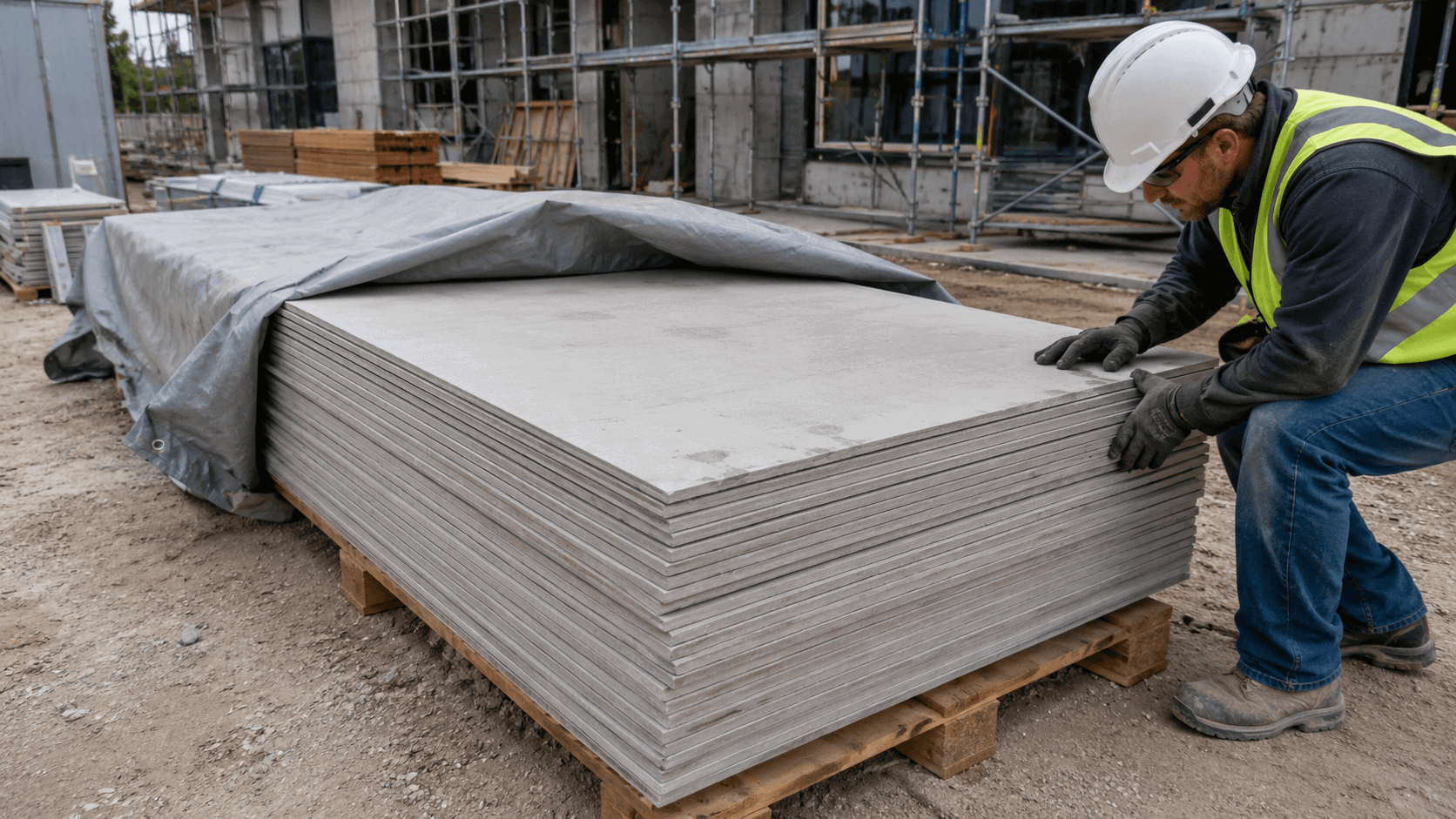
Fiber cement boards are durable, stable, and suitable for many construction applications. They are often used for façades, external sheathing, modular buildings, dry construction, rainscreen systems, tile backing, and cladding substrates.
However, like many board materials, fiber cement boards can sometimes show surface marks before installation or finishing.
These marks may appear as water stains, pallet marks, dirt patches, edge discoloration, handling marks, or light surface differences. In many cases, fiber cement board staining is not a structural problem. It is often related to storage, moisture exposure, packaging, handling, dust, or site contamination.
Still, stains should not be ignored.
Before painting, rendering, tiling, or applying another finish, the board surface should be checked and prepared correctly. This helps avoid poor finish quality and unnecessary site complaints.
What Is Fiber Cement Board Staining?
Fiber cement board staining refers to visible marks or discoloration on the surface of the board.
These stains may look like:
- Water marks
- Dark patches
- Pallet transfer marks
- Dusty areas
- Mud stains
- Rust-colored marks
- Edge darkening
- Packaging marks
- Uneven surface color
- Handling marks
Some marks are only cosmetic and may disappear after cleaning or finishing. Others may show that the boards were stored poorly or exposed to site conditions that should be checked before use.
The important point is to identify the cause before installation continues.
Why Stains Matter Before Finishing
Surface marks may seem minor, especially if the board will later be covered with paint, render, tiles, or cladding. However, visible staining can still create practical problems.
Stains may affect:
- Surface preparation
- Primer performance
- Paint appearance
- Render adhesion
- Tile adhesive bonding
- Final wall appearance
- Client confidence
- Site approval before finishing
If marks are trapped under a finish, they may remain visible or affect the uniformity of the final result. This is why contractors should inspect and clean the boards before finishing work begins.
Common Causes of Fiber Cement Board Staining
Fiber cement board staining can happen for several reasons. Most are related to site conditions rather than the board itself.
Common causes include:
- Rain exposure before installation
- Moisture trapped between stacked boards
- Dirty pallets
- Mud or dust on site
- Packaging marks
- Rust from nearby metal items
- Contact with wet timber
- Cement dust or plaster dust
- Oil, grease, or chemical contamination
- Poor ventilation during storage
- Boards stored directly on the ground
Understanding the cause helps the site team decide whether the board simply needs cleaning, drying, or further inspection.
Water Marks from Rain Exposure
Water marks are one of the most common causes of staining.
If boards are left uncovered in rain, water may sit on the surface or enter between stacked sheets. When this water dries, it may leave visible marks or uneven color.
This does not always mean the board is damaged. However, the boards should be allowed to dry properly before installation or finishing.
To reduce water staining:
- Keep boards covered before installation
- Raise pallets from the ground
- Avoid standing water around the stack
- Allow air circulation around stored boards
- Do not trap wet boards under sealed plastic
- Inspect the top and edge sheets after rain
Good rain protection is often enough to prevent most water-related marks.
Moisture Trapped Between Stacked Boards
Moisture trapped between boards can create darker patches or uneven surface marks.
This may happen when wet boards are covered too tightly or when rainwater enters the stack and cannot dry. It may also happen if boards are stored in a damp area with poor ventilation.
To prevent this:
- Store boards in a dry and ventilated area
- Avoid sealing wet boards under plastic
- Separate wet boards if necessary
- Let boards dry before use
- Do not paint or render damp surfaces
A board may look dry on the outside while moisture remains between sheets. For this reason, the stack should be inspected carefully after heavy rain or long outdoor storage.
Pallet Marks and Packaging Transfer
Sometimes stains come from the packaging or pallet rather than the board.
Wooden pallets, wet timber, plastic wrapping, straps, or protective sheets may leave marks on the board surface. This is more likely when moisture is present.
Pallet marks may appear as lines, patches, or repeated patterns on the board surface.
To reduce this risk:
- Keep pallets dry
- Avoid long-term storage in wet conditions
- Do not allow wet timber to remain in direct contact with boards
- Inspect boards before moving them to the installation area
- Remove damaged or dirty packaging carefully
Pallet and packaging marks are usually preventable with better storage and handling.
Rust and Metal Staining
Rust-colored stains may appear if boards come into contact with corroded metal, dirty straps, steel offcuts, wet fixings, or rusty tools.
These marks are especially important if the board surface will remain visible or receive a light-colored finish.
To avoid rust staining:
- Do not store metal items on top of boards
- Keep steel offcuts away from the board stack
- Use clean tools and fixings
- Avoid dragging boards across rusty surfaces
- Remove metal dust before finishing
- Check straps or packaging after wet weather
Rust stains can be difficult to remove. Prevention is much easier than correction.
Mud, Dirt, and Site Contamination
Construction sites are rarely perfectly clean. Mud, dust, wet cement, plaster, adhesive, and general site dirt can easily mark board surfaces.
This is especially common when boards are stored near active work areas or moved through muddy routes.
To reduce site contamination:
- Store boards away from wet ground and heavy traffic
- Keep the storage area clean
- Avoid placing boards near cutting, plastering, or mixing zones
- Do not walk on boards
- Do not use boards as temporary work surfaces
- Clean boards before finishing
A board surface should be treated as part of the final construction system, not as a temporary site table.
Cutting Dust and Surface Marks
Cutting fiber cement boards can create dust. If this dust remains on the surface and becomes wet, it may leave marks or affect later finishing.
Dust can also reduce adhesion if paint, primer, render, or adhesive is applied over it.
After cutting:
- Remove loose dust from the board surface
- Clean the cut edge if required
- Keep the board dry before finishing
- Do not allow dust to mix with rainwater
- Follow the finishing system recommendations
Surface cleanliness is especially important before painting or applying render.
Can Stained Fiber Cement Boards Still Be Used?
In many cases, stained fiber cement boards can still be used.
The key question is whether the staining is only superficial or whether it indicates deeper damage, contamination, or moisture problems.
Before use, check:
- Is the board still flat?
- Is the surface dry?
- Are there cracks or broken corners?
- Is the stain caused by dirt, water, rust, or chemicals?
- Will the board receive paint, render, tile, or cladding?
- Can the surface be cleaned properly?
- Is the stain in a visible area?
- Could it affect adhesion?
Minor water marks or dust marks may not be serious if the board is dry, sound, and properly prepared. However, boards with chemical contamination, oil stains, deep cracks, or persistent moisture problems should be treated more carefully.
How to Clean Fiber Cement Boards Before Finishing
Cleaning should be simple and controlled.
Before painting, rendering, tiling, or cladding preparation, remove loose dust, dirt, and surface contamination.
A basic cleaning process may include:
- Brushing off loose dust
- Wiping the surface with a clean cloth
- Removing mud or dirt carefully
- Allowing the board to dry fully
- Checking the surface before primer or adhesive
- Following the finish manufacturer’s instructions
Avoid aggressive cleaning methods unless approved by the board or finish supplier. The goal is to prepare the surface without damaging it.
Do Not Hide Stains Without Checking the Cause
One common mistake is to cover stains quickly without understanding why they appeared.
This can create later problems.
For example:
- Painting over moisture may cause finish defects
- Rendering over dust may reduce adhesion
- Covering rust stains may allow marks to return
- Ignoring oil or chemical marks may affect bonding
- Installing wet boards may delay drying inside the system
Before covering a stain, check the cause. A short inspection can prevent longer disputes later.
Best Practice Checklist to Prevent Staining
Use this checklist to reduce fiber cement board staining on site:
- Store boards on a flat and raised surface
- Keep boards away from standing water
- Cover boards before rain
- Allow air circulation around the stack
- Avoid trapping wet boards under plastic
- Keep pallets and timber supports dry
- Do not store metal items on boards
- Keep boards away from mud and site traffic
- Remove cutting dust before finishing
- Inspect boards before painting, rendering, or tiling
- Allow wet boards to dry fully
- Do not cover stains before checking the cause
This checklist is simple, but it helps protect finish quality.
Common Mistakes to Avoid
Many staining problems come from avoidable site habits.
Avoid these mistakes:
- Leaving boards exposed to rain unnecessarily
- Storing boards directly on muddy ground
- Keeping wet boards tightly wrapped
- Using boards as temporary work surfaces
- Placing rusty tools or metal items on boards
- Ignoring dust before painting or rendering
- Applying finishes before the surface is dry
- Assuming all stains are harmless
- Assuming all stains mean product failure
Good inspection and preparation help the installer make the right decision.
Final Thoughts
Fiber cement board staining is usually a site condition issue, not a reason to reject the material immediately.
Water marks, pallet marks, dust, mud, rust, and packaging transfer can often be prevented with correct storage and handling. If staining does appear, the board should be inspected, cleaned, and allowed to dry before finishing work begins.
The best approach is simple: keep boards raised, covered, clean, ventilated, and protected from site contamination.
When fiber cement boards are prepared correctly, contractors can reduce finish problems, avoid unnecessary complaints, and achieve a cleaner final result.
Need pricing, technical documents, or loading guidance for fiber cement boards? Contact Smartcon with your required thickness, dimensions, quantity, and delivery destination. Our team will help you review the suitable options and provide practical export support from Turkey.
👉 Visit the Smartfiber Fiber Cement Board page to explore specs, sizes, and delivery options.
Authored by Smartcon Int’l. Trade & Marketing Ltd. on 01.06.2026. All rights reserved.
Façade specification
Need the right board for your façade system?
Share the façade build-up, exposure conditions, finish and documentation requirements. We can help assess the appropriate board and coordinate supply.