
Blog
Can Fiber Cement Boards Be Used as Permanent Formwork in Concrete Construction?
Introduction
Permanent formwork systems are increasingly preferred over traditional removable formwork because they remain integrated into the structure, adding long-term durability, fire protection, and aesthetic or functional value. This has led to growing interest in using fiber cement boards — known for their dimensional stability, water resistance, and fire performance — as a potential permanent formwork solution.
But can fiber cement boards truly replace conventional plywood, HPL, steel, or PVC-based formwork in structural concrete applications?
Can Fiber Cement Boards Be Used as Permanent Formwork?
Yes — in certain conditions.
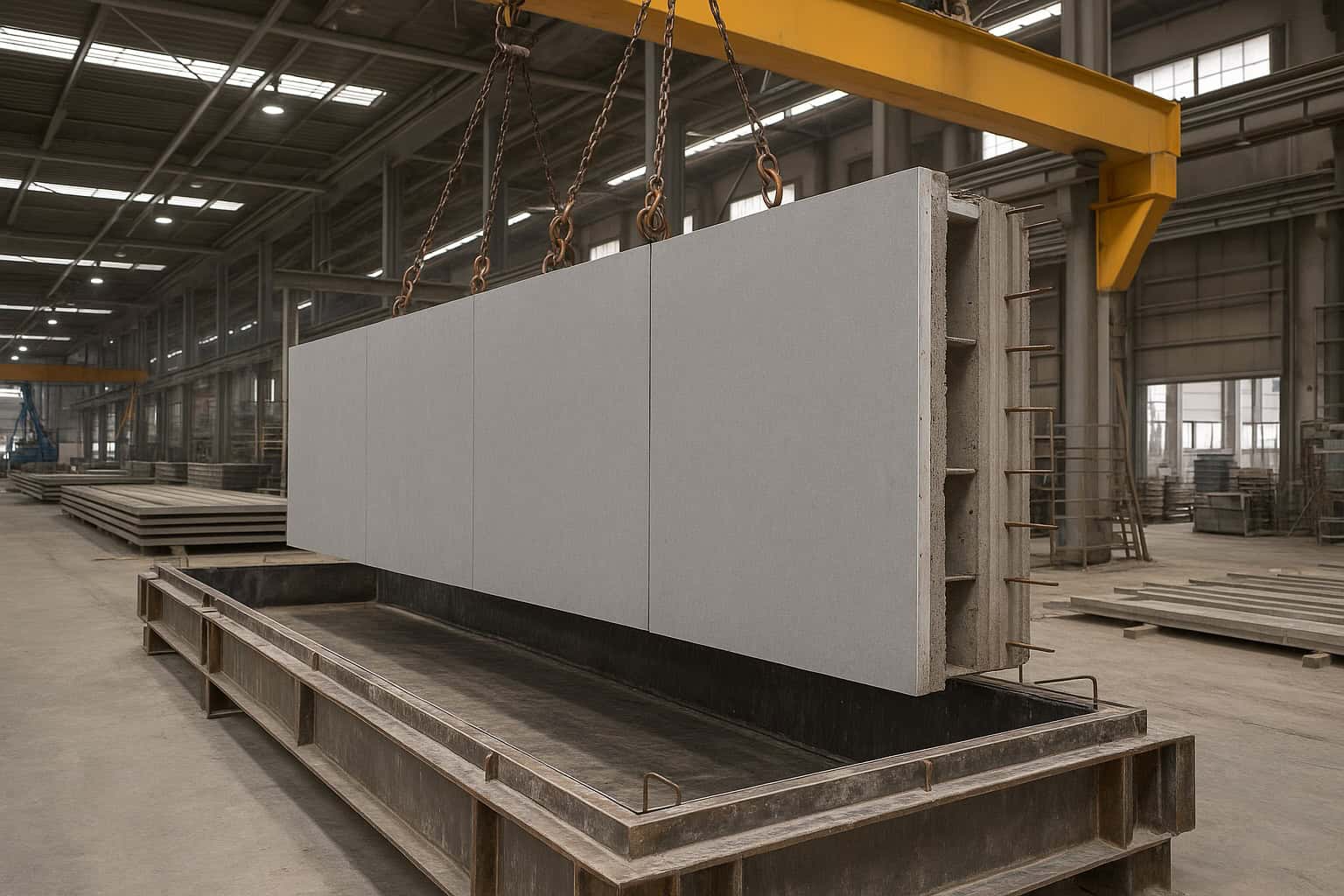
Fiber cement boards can be used as permanent formwork, but only when designed as part of a certified composite system and not as a standalone structural formwork material.
Fiber cement boards are not designed to carry wet concrete pressure on their own. They must be supported by steel, aluminum, or rigid framing systems during casting. After curing, they remain as part of the finished wall, providing the following benefits:
- Fire protection (Class A1/A2 non-combustible)
- Smooth finish for direct painting or cladding
- High moisture and mold resistance
- Acoustic and thermal support (with insulation behind)
Common Real-World Applications
Fiber cement boards are suitable as permanent formwork in:
- Precast modular wall panels
- Tilt-up concrete systems
- Sandwich wall elements with insulation
- Stair and elevator shaft enclosures
- Fire-rated basement or utility rooms
In these applications, the fiber cement board acts as the external or internal finishing layer, while the structural load is carried by the concrete core and steel reinforcement.
Engineering Requirements for Use
When used as permanent formwork, the following must be ensured:
- Board thickness: minimum 10–14 mm recommended
- Substructure: rigid steel or aluminum frame to withstand hydrostatic pressure
- No direct concrete pressure without reinforcement
- Edge sealing to prevent concrete seepage
- Compliance with EN 13501-1, EN 12467, or ASTM E2307 safety standards
- Thermal movement allowance — expansion joints required
Failure to meet these criteria can result in bulging, cracking, or bond failure during curing.
Advantages Over Plywood or HPL
- Does not burn or emit toxic fumes
- No swelling when exposed to wet concrete
- Much longer lifespan — stays as finished layer
- No need for stripping, cleaning, or re-coating
- Compatible with mineral wool or PIR insulation layers
Conclusion
Fiber cement boards can be used as permanent formwork — but only as part of a properly engineered composite wall panel or modular system, not as standalone structural shuttering. When correctly designed and supported, they provide long-term fire safety, durability, and finish quality, making them especially valuable in precast, modular, and industrial concrete construction.
Their use is growing not as an alternative to conventional temporary formwork — but as a value-adding finishing and protection layer that remains permanently integrated into the structure.
👉 Visit the Smartfiber Fiber Cement Board page to explore specs, sizes, and delivery options.
Authored by Smartcon Int’l. Trade & Marketing Ltd. on 18.10.2025. All rights reserved.
Façade specification
Need the right board for your façade system?
Share the façade build-up, exposure conditions, finish and documentation requirements. We can help assess the appropriate board and coordinate supply.