
Blog
Fiber Cement Board Over Existing Walls: What to Check in Renovation Projects
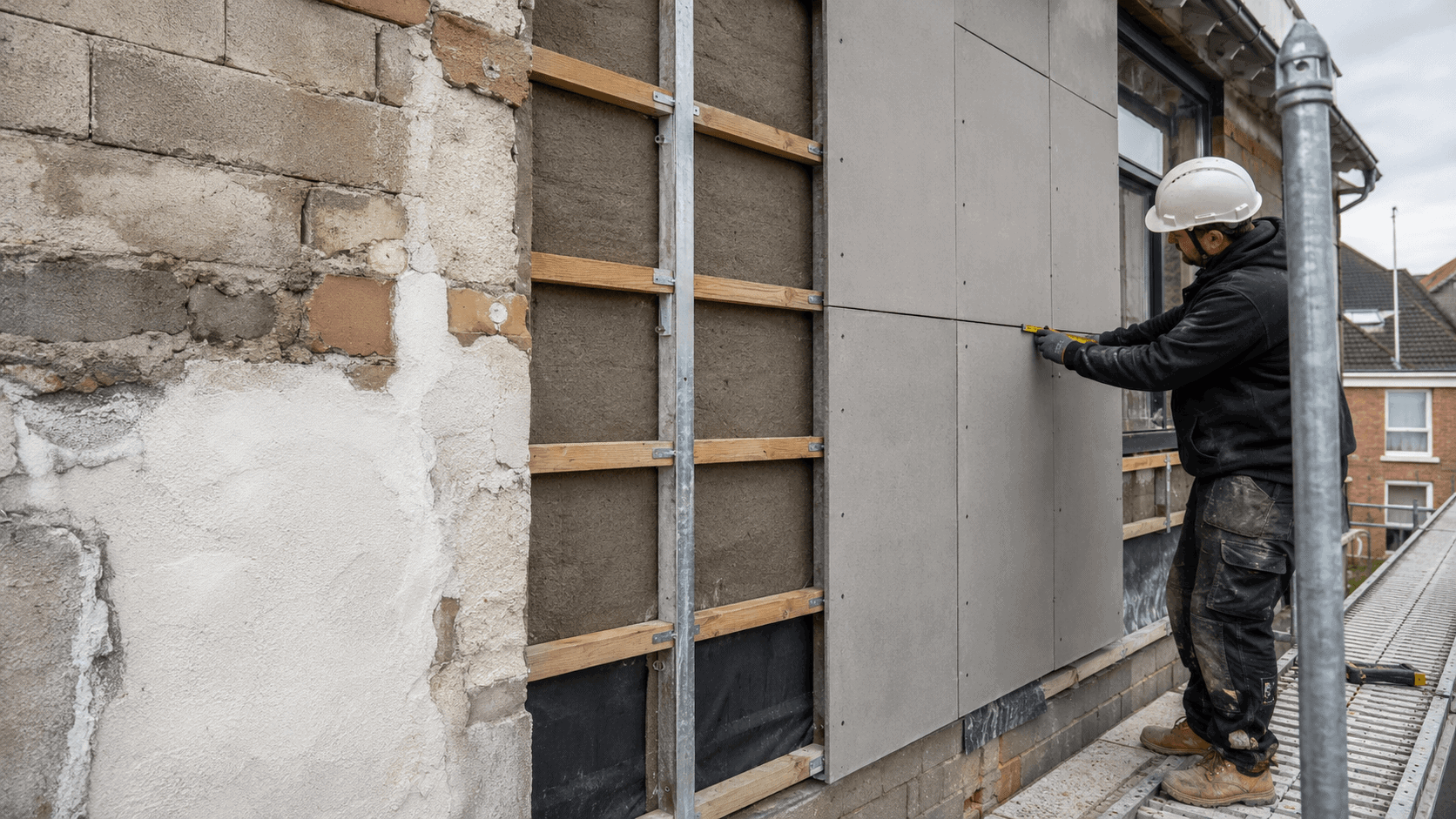
Using fiber cement board over existing walls can be a practical solution in renovation and refurbishment projects.
Old walls are not always flat, clean, dry, or suitable for direct finishing. In many cases, contractors need a new board layer to create a better surface for cladding, render, paint, tiles, or other finishes.
Fiber cement boards can help create a stable and durable surface in many renovation projects. They may be used over existing masonry, concrete, blockwork, old façade surfaces, or internal wall structures when the full system is checked correctly.
However, the existing wall should not be ignored. A fiber cement board is not a magic cover for every old or damaged surface.
For architects, contractors, developers, and specifiers, the key point is simple: fiber cement board can work well in renovation projects when the existing wall is inspected, prepared, and detailed correctly before installation.
Why Use Fiber Cement Board in Renovation Projects?
Renovation projects often involve old, uneven, or mixed wall surfaces.
Fiber cement boards may be used to create a new backing layer for:
- External wall upgrades
- Façade refurbishment
- Internal wall renovation
- Wet-area upgrades
- Cladding systems
- Render systems
- Tiling substrates
- Dry construction linings
- Fire-safe wall improvements
- Modular or prefabricated renovation elements
The board can help create a more consistent surface. It can also make it easier to install new finishes over walls that are no longer suitable for direct application.
However, the performance of the system depends on the condition of the wall behind it.
Can Fiber Cement Board Be Installed Over an Existing Wall?
Yes, fiber cement board can be installed over existing walls in selected renovation projects.
But the existing wall must be checked first.
Important questions include:
- Is the wall structurally sound?
- Is the surface dry?
- Is there any water damage?
- Is there mould or biological growth?
- Is the wall flat enough?
- Is the old finish still bonded?
- Can fixings hold properly?
- Is a subframe needed?
- Is ventilation required?
- Is there enough space for the new build-up?
- Will the new system affect doors, windows, or thresholds?
The answer depends on the project condition.
In many renovation projects, the safest approach is to install fiber cement boards over a suitable support frame or batten system rather than fixing directly to a poor existing surface.
Start With a Site Assessment
A site assessment should happen before boards are ordered or installed.
The project team should inspect the existing wall carefully.
Check for:
- Loose plaster
- Cracked render
- Weak masonry
- Damp patches
- Water stains
- Salt deposits
- Mould
- Rust marks
- Unstable paint
- Hollow areas
- Uneven surfaces
- Old fixings
- Poor previous repairs
- Structural movement signs
If these problems are ignored, they may continue behind the new board layer.
Covering a problem does not solve it.
The existing wall must be suitable for the new system.
Check for Moisture Problems First
Moisture is one of the most important issues in renovation work.
Before installing fiber cement board over an existing wall, check whether the wall has moisture problems.
Look for signs such as:
- Damp patches
- Peeling paint
- Salt marks
- Dark staining
- Mould growth
- Soft plaster
- Musty smell
- Wet insulation
- Water marks around windows
- Leaks from roof or balcony areas
If moisture is already present, it must be investigated before the board system is installed.
Installing new boards over a damp wall can trap moisture and create long-term problems.
Fiber cement boards are durable, but the full wall system still needs proper moisture control.
Do Not Hide Active Leaks
If the existing wall has an active leak, do not cover it with fiber cement board before fixing the source.
Common leak sources include:
- Roof edges
- Parapets
- Balconies
- Terraces
- Window sills
- Door thresholds
- Cracked render
- Failed sealant
- Poor flashing
- Damaged gutters
- Service penetrations
The leak should be repaired first.
If water continues to enter behind the new board layer, the system may suffer from staining, hidden moisture, mould, corrosion, or finish failure.
A renovation detail should solve the problem, not hide it.
Check Wall Flatness
Old walls are often uneven.
They may have waves, bulges, old render patches, damaged plaster, or irregular masonry.
Fiber cement boards need a flat and stable support surface.
If boards are fixed directly over an uneven wall, the final surface may also become uneven.
This can create problems with:
- Board alignment
- Joint quality
- Screw fixing
- Surface flatness
- Render finish
- Cladding alignment
- Tile adhesion
- Visual appearance
If the wall is not flat enough, a batten, rail, or subframe system may be needed.
The board should not be forced to follow a badly uneven substrate.
Existing Masonry Must Be Sound
Fiber cement board over masonry can be useful in refurbishment work.
However, the masonry must be checked before installation.
Check for:
- Loose bricks or blocks
- Crumbling mortar
- Hollow areas
- Large cracks
- Damp patches
- Salt deposits
- Weak fixing zones
- Previous patch repairs
- Movement at corners or openings
Fixings must be able to hold securely.
If the masonry is weak, direct fixing may not be reliable. A suitable support frame or specialist fixing detail may be needed.
Do not assume old masonry can carry the new system without inspection.
Remove Loose or Unstable Material
Loose material should not remain behind a new board layer.
Before installation, remove or repair:
- Loose plaster
- Flaking paint
- Weak render
- Unstable adhesive
- Broken tiles
- Loose mortar
- Dusty surface layers
- Poor previous repairs
- Contaminated surfaces
If unstable material remains, it may affect fixing, flatness, moisture control, or long-term performance.
The board system should be installed over a sound and prepared background.
Decide Between Direct Fixing and a Subframe
One of the most important renovation decisions is whether the board can be fixed directly to the existing wall or should be installed over a subframe.
Direct fixing may be possible when the wall is sound, flat, dry, and suitable for the selected fixings.
A subframe may be better when the existing wall is uneven, mixed, damp-risk, weak, or requires ventilation.
A subframe can help:
- Create a flat fixing plane
- Allow cavity drainage
- Improve ventilation
- Avoid relying on weak surfaces
- Manage uneven masonry
- Create space for insulation
- Support façade or cladding systems
- Improve installation accuracy
The correct choice depends on the condition of the wall and the final system.
Check Fixing Strength
Fixing strength is critical in renovation projects.
Old walls may not hold fixings as well as new construction.
Before installing boards, check:
- Existing wall material
- Fixing type
- Fixing depth
- Pull-out resistance where needed
- Screw or anchor compatibility
- Edge distances
- Support spacing
- Board thickness
- Final finish weight
- External exposure
If the board will support render, cladding, brick slips, stone, or another finish, fixing reliability becomes even more important.
Weak fixings can lead to movement, cracking, loose boards, or finish failure.
Consider the Final Finish
The final finish affects the board specification and installation method.
Fiber cement board may be used behind:
- Paint
- Render
- Tiles
- Brick slips
- Stone cladding
- Ventilated cladding
- Decorative panels
- Wet-area finishes
- Fire-rated linings
Each finish has different requirements.
For example, render may need primer, mesh, base coat, and movement joints. Tiles or brick slips may need compatible adhesive and surface preparation. Cladding may need cavity ventilation and rail alignment.
The board should be specified as part of the full finish system.
Ventilation May Be Required
In external renovation projects, ventilation can be important.
If fiber cement board is installed over an old external wall, a ventilated cavity may help the system dry and reduce trapped moisture risk.
Ventilation may be especially useful where:
- The existing wall has moisture risk
- The façade is exposed to rain
- Cladding will be installed over the board
- A rainscreen system is used
- The old wall is uneven
- Insulation is added
- Drainage behind the façade is needed
A ventilated cavity should include clear airflow and drainage paths.
It should not be blocked by mortar, insulation, debris, or poor detailing.
Check Insulation and Thermal Upgrades
Renovation projects often include insulation upgrades.
Fiber cement boards may be used as part of an external wall upgrade with insulation and cladding.
Before installation, check:
- Insulation type
- Insulation position
- Fire requirements
- Cavity design
- Fixing length
- Thermal bridges
- Window reveal depth
- Door threshold details
- Vapour control strategy
- Moisture movement
- Final façade finish
Adding insulation changes the wall build-up.
The board detail should be coordinated with the insulation, fixings, membranes, and façade system.
Watch Window and Door Details
Renovation work often changes wall thickness.
When boards, battens, insulation, or cladding are added over an existing wall, windows and doors may become deeper within the façade.
This affects:
- Window reveals
- Door reveals
- Sills
- Lintels
- Thresholds
- Flashings
- Sealant joints
- Drainage details
- Appearance
- Maintenance
Poor detailing around windows and doors can lead to water entry, staining, cracks, and weak finish quality.
These junctions should be planned before installation begins.
Check the Base of the Wall
The lower part of an existing wall is often exposed to moisture, dirt, and impact.
Before installing fiber cement boards, check the base area carefully.
Look at:
- Ground level
- Paving level
- Soil contact
- Splashback risk
- Drainage
- Damp-proof course
- Existing plinth
- Base clearance
- Ventilation opening
- Insect mesh
- Lower edge protection
Boards should not be installed directly against soil or standing water.
The base detail should allow water to drain away and the wall system to dry where required.
Check Roof Edges, Parapets, and Upper Junctions
In external renovations, the top of the wall is as important as the base.
Roof edges and parapets can allow water behind the façade if they are not detailed correctly.
Check:
- Copings
- Flashings
- Parapet waterproofing
- Roof edge drainage
- Gutter condition
- Upper termination of the board system
- Ventilation outlet
- Weather sealing
- Junction with existing roof layers
If water enters from the top, it can travel behind the new board system.
The top termination must be protected.
Avoid Trapping Problems Behind the New Board Layer
A new board layer can improve the wall surface, but it can also hide existing problems.
Before covering an existing wall, make sure there are no unresolved issues such as:
- Active leaks
- Damp walls
- Loose render
- Weak masonry
- Mould
- Insect damage
- Corroded metal elements
- Rotten timber
- Failed sealants
- Large structural cracks
Renovation work should improve the wall system, not cover problems that will continue later.
Plan Movement Joints
Old buildings move. New materials also move.
When installing fiber cement boards over existing walls, movement joints should be considered.
Movement may occur because of:
- Existing structural movement
- Thermal changes
- Moisture changes
- Material transitions
- Long wall elevations
- Floor lines
- New cladding systems
- Old cracks in the existing wall
Do not ignore existing movement cracks.
If the existing wall has movement joints, the new board system may need to respect them.
Covering movement joints without planning can lead to cracking in the new surface.
Surface Preparation Before Finishing
Once the fiber cement boards are installed, the surface must be prepared before finishing.
This may include:
- Dust removal
- Checking screw heads
- Cleaning the board surface
- Checking board flatness
- Treating joints
- Sealing edges where required
- Applying primer where required
- Checking moisture condition
- Inspecting openings and corners
Do not apply the final finish until the board surface is clean, stable, and ready.
Good finishing depends on good preparation.
Common Mistakes to Avoid
Avoid these mistakes when installing fiber cement board over existing walls:
- Covering active leaks
- Ignoring damp or mould
- Fixing over loose render or plaster
- Assuming old masonry can hold fixings
- Installing boards over uneven walls without a subframe
- Ignoring wall flatness
- Forgetting ventilation where needed
- Blocking drainage paths
- Failing to coordinate insulation
- Poor window and door detailing
- Ignoring base clearance
- Covering existing movement joints
- Using the wrong fixings
- Applying heavy finishes without checking support
- Treating renovation like new-build installation
Most renovation problems come from poor assessment before installation.
Site Checklist for Renovation Projects
Before installing fiber cement board over an existing wall, check the following:
- Is the existing wall structurally sound?
- Is there any active water leak?
- Is the wall dry enough for the new system?
- Are loose materials removed?
- Is the wall flat enough?
- Is direct fixing suitable?
- Is a subframe needed?
- Can fixings hold securely?
- Is ventilation required?
- Is insulation being added?
- Are windows and doors detailed correctly?
- Is the wall base protected?
- Are roof edges and parapets protected?
- Are movement joints considered?
- Is the final finish compatible with the board system?
- Has the board surface been inspected before finishing?
This checklist helps reduce risk before installation begins.
When Fiber Cement Board Works Best Over Existing Walls
Fiber cement board works best in renovation projects when:
- The existing wall is inspected first
- Moisture problems are solved
- Loose materials are removed
- The fixing method is suitable
- A subframe is used where needed
- The board thickness matches the application
- Drainage and ventilation are planned
- Windows, doors, bases, and roof edges are detailed correctly
- Movement joints are respected
- The final finish is compatible
- Installation guidance is followed
In these conditions, fiber cement boards can provide a practical and reliable surface for renovation and refurbishment work.
Final Thoughts
Fiber cement board over existing walls can be a strong solution for renovation projects.
It can help create a cleaner, flatter, and more reliable surface for modern wall and façade finishes.
However, the existing wall must be checked before installation. Moisture, movement, weak substrates, uneven surfaces, fixing strength, drainage, ventilation, and final finish compatibility all matter.
The safest approach is to treat the project as a full wall system, not just a board covering.
When the existing wall is assessed correctly and the board system is detailed properly, fiber cement boards can support durable, clean, and practical renovation results.
Need pricing, technical documents, or loading guidance for fiber cement boards? Contact Smartcon with your required thickness, dimensions, quantity, and delivery destination. Our team will help you review the suitable options and provide practical export support from Turkey.
👉 Visit the Smartfiber Fiber Cement Board page to explore specs, sizes, and delivery options.
Authored by Smartcon Int’l. Trade & Marketing Ltd. on 24.06.2026. All rights reserved.
Façade specification
Need the right board for your façade system?
Share the façade build-up, exposure conditions, finish and documentation requirements. We can help assess the appropriate board and coordinate supply.