
Blog
Fiber Cement Board Joint Gaps: How Much Space Should You Leave and Why?
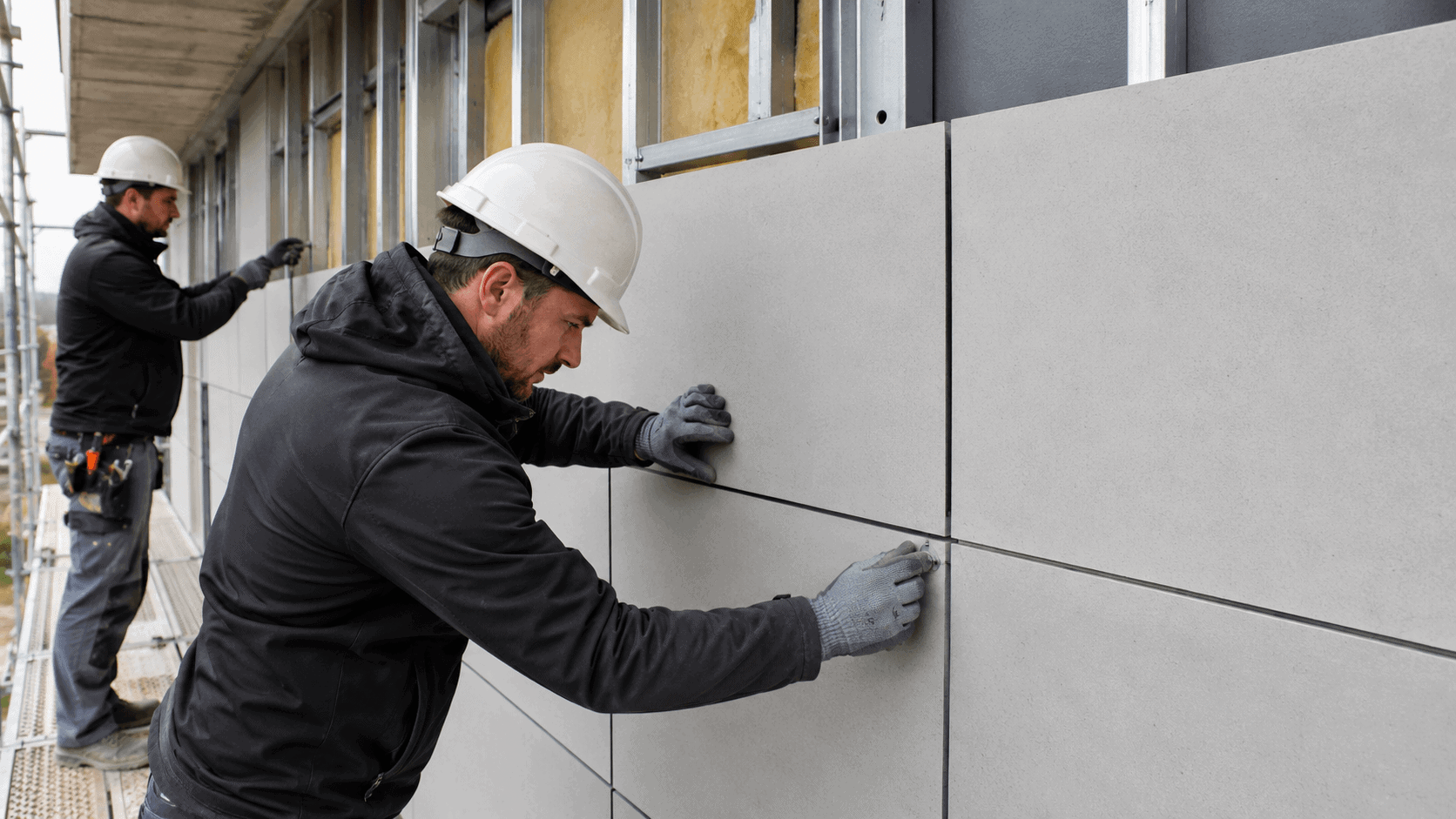
Fiber cement board joint gaps are small spaces left between boards, around edges, and near building details during installation. They may look like minor details, but they play an important role in the final performance and appearance of the wall or façade system.
If fiber cement boards are installed too tightly, the boards may have no room for normal movement. This can create stress at the edges, joints, corners, fixings, and finishing layers. Over time, poor joint spacing can contribute to cracking, uneven joints, surface defects, or premature repair work.
The correct joint gap depends on the board type, thickness, application, fixing method, frame system, climate, finish type, and manufacturer guidance. However, one rule is always useful: fiber cement boards should not be forced tightly together without considering movement, support, and finishing requirements.
This guide explains why fiber cement board joint gaps matter, where gaps are needed, and what contractors should check before installation.
Why Fiber Cement Board Joint Gaps Matter
Fiber cement boards are strong, stable, and reliable building boards. They are widely used for façades, external sheathing, modular buildings, dry construction, cladding substrates, wet areas, and fire-safe wall systems.
However, like most construction materials, they still need correct detailing.
Joint gaps help with:
- Board movement
- Installation tolerance
- Edge protection
- Joint filling
- Sealant application
- Weather management
- Frame movement
- Crack prevention
- Cleaner finishing
- Long-term performance
A small, planned joint gap is usually much better than a tight joint created by forcing boards into position.
How Much Space Should You Leave Between Fiber Cement Boards?
There is no universal gap size for every fiber cement board project. The required spacing should always follow the board manufacturer’s technical guidance and the project specification.
As a practical rule, installers should avoid tight butt joints. The boards need enough space for normal movement, finishing material, and site tolerance.
The exact gap may vary depending on:
- Board thickness
- Board size
- Interior or exterior use
- Visible façade or hidden sheathing
- Joint filling method
- Sealant method
- Frame type
- Support spacing
- Climate conditions
- Building movement
- Fire or acoustic system requirements
In many projects, the goal is not to leave the biggest possible gap. The goal is to leave a controlled, consistent, and suitable gap for the system being installed.
Do Not Install Fiber Cement Boards Too Tightly
A common mistake is pushing boards tightly together because it looks neat at first. This may seem logical during installation, but it can create problems later.
Tight joints may cause:
- Edge pressure
- Cracking at board joints
- Difficulty applying joint filler
- Poor sealant performance
- Movement stress
- Uneven finished surfaces
- Chipped board edges
- Premature maintenance issues
Fiber cement boards should be installed with planned spacing, not forced into position.
Joint Gaps Help Manage Movement
Buildings move slightly over time. Frames can settle, temperature can change, humidity can change, and external walls may be exposed to wind, rain, sun, and seasonal weather.
Fiber cement board joint gaps help the wall system manage these normal changes.
Movement can come from:
- Temperature changes
- Moisture changes
- Frame movement
- Building settlement
- Wind pressure
- Installation tolerance
- Expansion of adjacent materials
- Movement around openings
A correct joint gap helps prevent the board edges from pressing against each other.
Joint Gaps Are Not Only About Expansion
Some installers think joint gaps are only about expansion. That is not the full picture.
Joint gaps also allow space for:
- Joint filler
- Sealant
- Backing material
- Tape or mesh in selected systems
- Finishing coat
- Movement control
- Straight alignment
- Clean edge detailing
If there is no space, it may be difficult to finish the joint properly.
Internal Walls vs External Walls
Joint gap requirements can be different for internal and external applications. Interior dry construction walls are usually less exposed to weather, while external façades and sheathing boards may face rain, wind, UV exposure, freeze-thaw conditions, and temperature changes.
For internal use, joint gaps are often linked to finishing quality, board alignment, and crack prevention.
For external use, joint gaps may also affect:
- Water drainage
- Ventilation
- Sealant performance
- Weather protection
- Movement allowance
- Cladding system durability
This is why installers should not use the same assumption for every application.
Joint Gaps in External Sheathing Applications
When fiber cement boards are used as external sheathing, the boards are usually part of a larger wall system. They may sit behind insulation, membranes, rainscreen cladding, render, brick slips, or other finishes.
In these applications, joint gaps should be planned with the full system in mind.
Before installation, check:
- Board manufacturer guidance
- Wall system design
- Weather barrier position
- Frame support
- Joint treatment method
- Fixing pattern
- Edge support
- Drainage and ventilation
- Finish layer requirements
The board joint should support the system, not create a weak point.
Joint Gaps in Visible Façade Applications
When fiber cement boards are used as visible façade panels, joint gaps affect both performance and appearance. The gap is often part of the architectural design.
Visible façade joints should be:
- Consistent
- Straight
- Well aligned
- Properly supported
- Suitable for movement
- Compatible with the fixing method
- Planned with the full elevation
Uneven joint gaps can make the façade look poorly installed, even when the boards themselves are good quality.
Joint Gaps Around Windows and Doors
Windows and doors are important areas because openings create edges, corners, narrow board strips, and junctions with other materials.
Joint gaps around openings should allow for:
- Frame movement
- Sealant application
- Drainage
- Flashing details
- Board edge protection
- Clean finishing
- Avoiding narrow weak strips
- Movement between different materials
Boards should not be forced tightly against window or door frames. A controlled joint is usually safer and cleaner.
Joint Gaps at Corners
Corners are exposed and highly visible. Poor spacing at corners can lead to chipped edges, uneven returns, or messy finishing.
At corners, check:
- Board edge condition
- Corner trim or profile
- Folded or finished detail
- Joint width
- Fixing distance from the edge
- Movement allowance
- Sealant compatibility
- Alignment with adjacent boards
Corners should be planned before boards are cut and fixed.
Perimeter Gaps Are Also Important
Board joints are not only between board sheets. Perimeter gaps around walls, ceilings, floors, frames, and adjacent materials also matter.
Perimeter gaps may be needed where boards meet:
- Floors
- Ceilings
- Concrete edges
- Steel frames
- Timber frames
- Window frames
- Door frames
- Columns
- Parapets
- Other cladding materials
Perimeter gaps help avoid pressure between different materials and allow the correct finishing detail to be applied.
Movement Joints Must Not Be Ignored
A fiber cement board joint is not the same as a building movement joint. If the building has a designed movement joint, the board installation should respect it.
Boards should not bridge movement joints unless the system has been specifically designed to allow it.
Ignoring movement joints may lead to:
- Cracking
- Buckling
- Joint failure
- Finish failure
- Sealant tearing
- Board stress
Movement joints should continue through the board layer and finish system according to the project detail.
Support Board Edges Properly
Joint gaps work properly only when the board edges are supported. If board edges are unsupported, the joint may become weak or uneven.
Before fixing boards, check:
- Stud or batten position
- Edge support
- Board layout
- Fixing points
- Frame alignment
- Joint location
- Avoiding floating edges
- Correct backing where required
A clean joint needs both correct spacing and correct support.
Keep Joint Gaps Consistent
Consistency is important. Even if the gap is technically acceptable, irregular spacing can make the installation look untidy.
Consistent joint gaps help with:
- Better appearance
- Easier joint filling
- Easier sealing
- Straight alignment
- Cleaner finishing
- Less rework
- Better quality control
Installers should use spacers, layout marks, or setting-out lines where needed.
Do Not Rely on Filler to Hide Poor Spacing
Joint filler, sealant, tape, or finishing compound should not be used to cover poor installation. These materials work best when the joint has been prepared correctly.
Poor joint spacing can make finishing harder and may reduce long-term performance.
Avoid:
- Very tight joints
- Uneven gaps
- Broken board edges
- Unclean dust-filled joints
- Unsupported edges
- Overfilled joints
- Gaps that are too wide for the chosen finish
- Random joint placement
The quality of the joint starts before filler or sealant is applied.
Clean the Joint Before Finishing
Before applying any filler, sealant, coating, or finishing material, the joint should be clean. Dust from cutting, drilling, or sanding can reduce adhesion and affect the final finish.
Before finishing, remove:
- Cutting dust
- Loose particles
- Dirt
- Moisture
- Broken edge fragments
- Packaging debris
- Site contamination
Clean joints support better adhesion and a neater finish.
Match the Joint Treatment to the Application
Different applications may require different joint treatments. A joint in a dry interior wall may not be finished the same way as a joint in an external façade or wet-area board system.
Possible joint treatments may include:
- Open drained joints
- Sealant joints
- Filled joints
- Taped joints
- Profiled joints
- Covered joints
- Rendered system joints
- Cladding system joints
The correct method depends on the full wall build-up and finish system.
Joint Gaps and Fire-Rated Systems
If the wall system has a fire-rating requirement, joint gaps and joint treatment become even more important. The board alone does not define the complete fire performance of the wall.
For fire-conscious applications, check:
- Approved system detail
- Board type
- Board thickness
- Fixing pattern
- Joint treatment
- Cavity barriers
- Sealant or filler type
- Fire-rated product compatibility
- Local regulation requirements
Do not change joint details in a fire-rated wall system without checking the approved specification.
Joint Gaps and Moisture Management
In external applications, joint gaps can also affect moisture behavior. Poorly planned joints may trap water, block drainage, or allow moisture to reach areas that are not designed for it.
Before installation, check:
- Weather exposure
- Drainage route
- Ventilation cavity
- Sealant compatibility
- Flashing details
- Board edge protection
- Joint finish
- Adjacent materials
Good joint design helps the wall system manage water more reliably.
Common Fiber Cement Board Joint Gap Mistakes
Avoid these common mistakes:
- Installing boards tightly together
- Ignoring manufacturer guidance
- Using inconsistent gap widths
- Forgetting movement allowance
- Bridging building movement joints
- Leaving unsupported board edges
- Not cleaning joint dust before finishing
- Using the wrong joint filler or sealant
- Overfilling joints
- Creating narrow weak board strips
- Forgetting perimeter gaps
- Ignoring window and door frame movement
- Treating interior and exterior joints the same way
- Using filler to hide poor layout
Most joint problems can be avoided with simple planning before installation begins.
Fiber Cement Board Joint Gap Checklist
Before fixing fiber cement boards, check:
- Is the board layout planned?
- Are joint locations marked?
- Are board edges supported?
- Is the gap size suitable for the system?
- Has manufacturer guidance been checked?
- Are perimeter gaps considered?
- Are movement joints respected?
- Are window and door openings detailed?
- Are corners planned?
- Is the frame straight and stable?
- Are boards being forced into position?
- Is the joint treatment method confirmed?
- Is the finish system compatible?
- Are joints clean before filling or sealing?
This checklist helps installers reduce cracking, uneven joints, and finishing problems.
Practical Site Advice
Before installing a full elevation or wall area, it is useful to test the spacing and finishing method on a small section. This helps confirm whether the joint gap works with the board, frame, filler, sealant, coating, or façade finish.
A small trial area can help identify:
- Gap consistency
- Edge quality
- Filler behavior
- Sealant appearance
- Board alignment
- Fastener position
- Surface finish
- Final visual effect
This is especially useful for visible façades, shopfronts, and high-standard finish areas.
Final Thoughts
Fiber cement board joint gaps may look like small details, but they can have a major effect on installation quality, appearance, and long-term performance.
Boards should not be forced tightly together. The correct gap depends on the board type, project detail, fixing method, application, finish system, and manufacturer guidance.
Good joint gaps help manage movement, support finishing materials, improve alignment, reduce edge stress, and create a cleaner final result.
For contractors, façade installers, modular builders, architects, developers, and procurement teams, the key message is simple: plan fiber cement board joint gaps before installation starts. A controlled gap is a sign of good workmanship, not a mistake.
Need pricing, technical documents, or loading guidance for fiber cement boards? Contact Smartcon with your required thickness, dimensions, quantity, and delivery destination. Our team will help you review the suitable options and provide practical export support from Turkey.
👉 Visit the Smartfiber Fiber Cement Board page to explore specs, sizes, and delivery options.
Authored by Smartcon Int’l. Trade & Marketing Ltd. on 15.06.2026. All rights reserved.
Exterior wall system
Specifying an exterior wall system?
Share the wall build-up, exposure, framing and fire-performance requirements. We can help assess the sheathing specification and next steps.