
Blog
Fiber Cement Board Installation Checklist: What to Check Before Closing the Wall
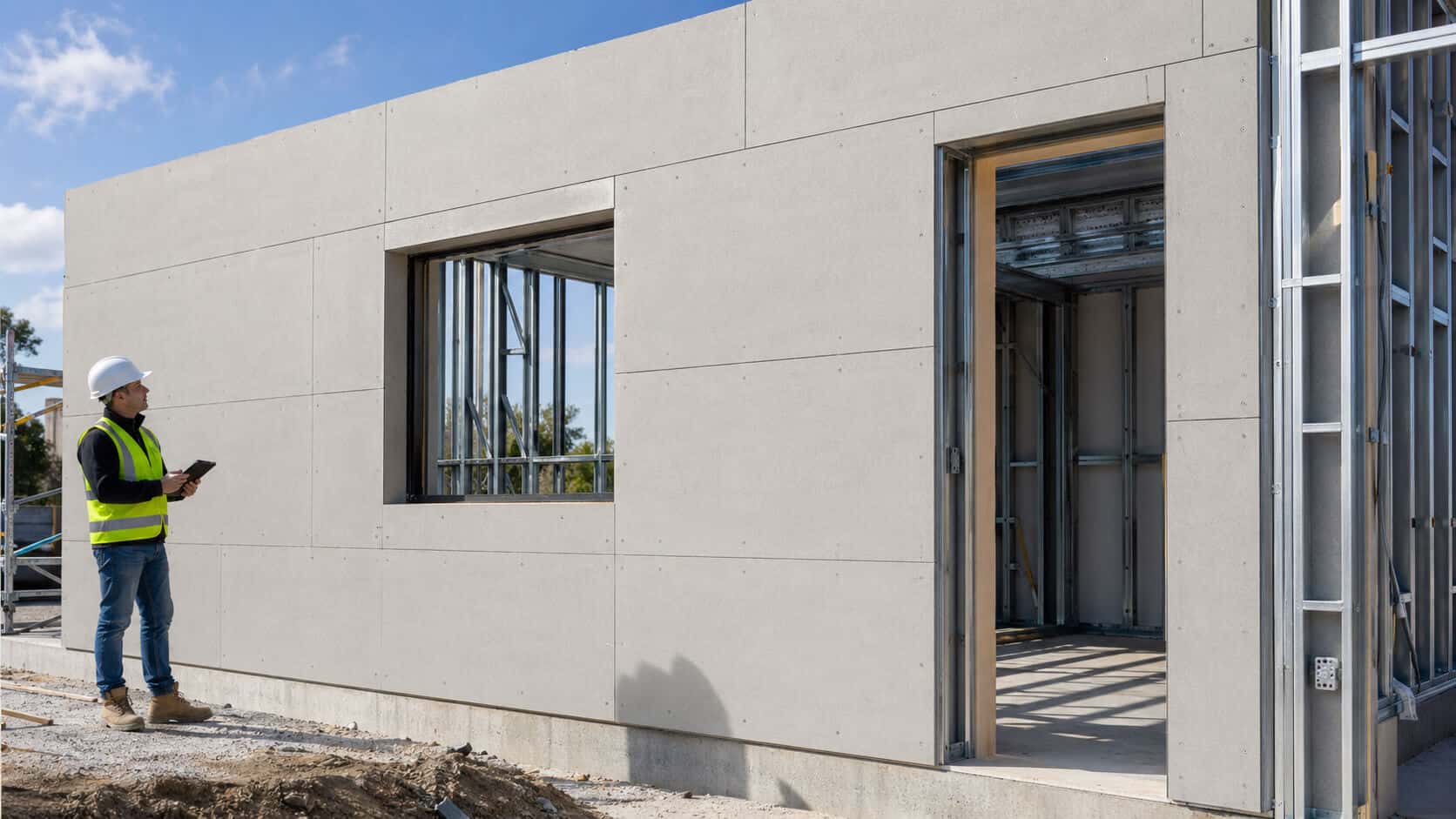
Installing fiber cement boards is not difficult when the site team follows the correct sequence. However, small mistakes can become difficult to correct once the wall is closed, covered, finished, painted, or handed over.
That is why a clear fiber cement board installation checklist is useful before the next trade begins work.
This checklist helps contractors, installers, site managers, and specifiers review the most important details before closing the wall. It can be used for external sheathing, façade backing, dry construction, wall lining, modular buildings, and other board applications.
The aim is simple: check the basics early, prevent problems later, and make sure the boards are installed as intended.
Why an Installation Checklist Matters
Fiber cement boards are strong, stable, and suitable for demanding construction applications. But like every board material, their performance depends on proper installation.
A checklist helps the site team confirm that:
- The substrate is ready
- The boards are correctly fixed
- The edges are supported
- The joints are planned properly
- Moisture details are complete
- The surface is ready for the next layer
- Common installation mistakes have been avoided
This is especially important before closing the wall, because many details will no longer be visible later.
1. Check the Substrate Before Fixing the Boards
Before installing fiber cement boards, inspect the substrate carefully.
The frame, battens, studs, or backing surface should be straight, stable, clean, and suitable for the board application. If the substrate is uneven, the boards may not sit flat. This can create stress, visible waves, open joints, or poor fixing performance.
Check that the structure is properly aligned before board installation starts. Do not rely on the board to correct a poor substrate.
Ask these questions:
- Is the frame straight and level?
- Are battens or studs correctly spaced?
- Is the backing surface clean and dry?
- Are damaged or loose parts repaired?
- Are all required supports already installed?
A good installation starts before the first board is fixed.
2. Confirm the Correct Board Type and Thickness
Before closing the wall, confirm that the correct fiber cement board has been used.
The board type and thickness should match the project requirement. A board used for external sheathing may not have the same specification as a board used for internal lining, wet areas, façade backing, or floor applications.
Check the project documents, product datasheet, and specification.
Make sure that:
- The correct board thickness has been used
- The board is suitable for the application
- The product matches the approved material
- The installation follows manufacturer guidance
- Any project-specific requirements have been followed
This step is simple, but it prevents serious specification mistakes.
3. Review Board Layout and Joint Positioning
Board layout affects both performance and appearance.
Before closing the wall, inspect the position of the boards and joints. The layout should look controlled, not random. Joints should be neat, practical, and suitable for the wall system.
Pay extra attention around windows, doors, corners, service openings, and narrow wall sections.
Check that:
- Board joints are straight and consistent
- Joints are not placed in weak or awkward positions
- Small unsupported board strips are avoided where possible
- Openings are properly detailed
- Board edges are supported where required
- The layout allows for movement and finishing
Good board layout reduces cracking risk and improves the final appearance.
4. Check Edge Support
Unsupported board edges are one of the most common causes of future problems.
Edges may move, vibrate, crack, or fail to hold fixings properly if they are not supported. This is especially important around cut boards, openings, external corners, internal corners, and service penetrations.
Before closing the wall, check all edges carefully.
Look for:
- Unsupported vertical board edges
- Unsupported horizontal board edges
- Loose corners
- Narrow board pieces without backing
- Cut edges around openings
- Edges near pipes, vents, or service holes
If an edge needs support, correct it before the next layer is installed.
5. Inspect Fixings and Fastener Placement
Fixings should hold the board securely without damaging it.
Incorrect fixing can cause movement, cracking, surface damage, or poor long-term performance. Before closing the wall, check the type, position, spacing, and depth of the fixings.
Make sure that:
- The correct screws or fasteners have been used
- Fixings are not too close to the board edge
- Screw heads are not overdriven
- Fixings are placed consistently
- Loose or missing fixings are corrected
- Corrosion-resistant fasteners are used where required
The screw head should normally sit neatly against the board surface. It should not tear, crush, or sink too deeply into the board.
6. Check Gaps Between Boards
Fiber cement boards should not be forced tightly together unless the specific system allows it.
Controlled gaps help the installation accommodate movement, joint treatment, sealant, coating, or system tolerances. The correct gap depends on the board type, application, project detail, and manufacturer instructions.
Before closing the wall, check that gaps are:
- Consistent
- Clean
- Not blocked with debris
- Suitable for the joint detail
- Wide enough for the required sealant or finishing system
- Not excessively large or uneven
Poor joint gaps can make the final finish difficult and may affect long-term performance.
7. Inspect Corners, Windows, and Door Openings
Corners and openings need extra care.
These are areas where boards are cut, edges are exposed, and movement can concentrate. If they are not detailed properly, problems may appear later as cracks, uneven lines, weak fixings, or water-related damage.
Check around:
- Window openings
- Door openings
- External corners
- Internal corners
- Sills
- Lintels
- Reveals
- Narrow strips beside frames
Make sure the boards are supported, aligned, correctly gapped, and neatly fixed.
8. Confirm Cut Edges Are Treated Where Required
Cut edges are common during board installation.
Depending on the application and product guidance, cut edges may need sealing, priming, coating, or protection. This is especially important in external wall systems, wet areas, façade applications, and exposed edges.
Before closing the wall, inspect all visible cut edges.
Check:
- Window and door reveals
- Service penetrations
- Corners
- Top and bottom board edges
- Site-cut boards
- Any edge exposed to moisture or finishing work
Do not assume that cut edges can always be left untreated. Follow the manufacturer’s recommendations and project specification.
9. Check Moisture Protection and Weather Details
Moisture management is critical in wall systems.
Fiber cement boards can perform well in demanding conditions, but the wall must be designed and installed correctly. Boards should also be protected from rain before installation. Before closing the wall, confirm that all moisture-related details are complete.
Check for:
- Weather barriers
- Flashing
- Membrane laps
- Drainage paths
- Sealant details
- Sill protection
- Head flashing above openings
- Ventilation gaps where required
The aim is to prevent trapped moisture and allow the wall system to drain or dry as designed.
10. Review Service Penetrations
Pipes, vents, cables, ducts, and other penetrations should be checked before the wall is closed.
Poorly detailed penetrations can create weak points in the board system. They may also allow air leakage, water ingress, or poor finishing later.
Check that:
- Holes are cleanly cut
- Penetrations are correctly sized
- Edges are supported where needed
- Gaps are sealed according to the project detail
- Services are not forcing the board out of alignment
- Moisture protection is maintained around the penetration
This is a small detail, but it can prevent large problems.
11. Check Surface Condition Before Finishing
Before painting, coating, tiling, cladding, or covering the boards, inspect the board surface.
The surface should be clean, dry, and ready for the next stage. Dust, oil, loose material, or damaged areas may affect adhesion and finish quality.
Check for:
- Dust from cutting or drilling
- Surface damage
- Broken corners
- Overdriven screws
- Loose board areas
- Dirty or wet surfaces
- Uneven joints
- Open cracks or gaps
Repair minor defects before the next layer is applied.
12. Confirm Ventilation Where Required
In ventilated façade and rainscreen systems, ventilation is not optional.
The air gap behind the outer layer allows moisture to dry and helps the system perform correctly. Before closing the wall or covering the façade build-up, check that ventilation paths are not blocked.
Look at:
- Bottom ventilation openings
- Top ventilation openings
- Cavity continuity
- Insect mesh or protection details
- Obstructions caused by insulation, sealant, or trims
- Window and door reveal areas
Good ventilation supports long-term façade performance.
13. Check Fire, Acoustic, or Project-Specific Requirements
Some projects require extra performance checks.
For example, the wall system may need to meet specific fire, acoustic, moisture, or impact requirements. The fiber cement board is only one part of the complete system, so the installation must match the approved build-up.
Before closing the wall, confirm:
- The correct board has been installed
- Required layers are in the correct order
- Fire-rated details are not interrupted
- Acoustic layers are continuous
- Cavity barriers or fire stops are installed where required
- The installation matches the approved drawing
Do not leave these checks until after the wall is closed.
14. Photograph the Installation Before Closing
This is a simple but very useful step.
Take photos before the wall is covered, painted, tiled, or closed. Photos create a record of the installation and help confirm that the work was completed properly.
Take photos of:
- Board layout
- Fixing pattern
- Window and door details
- Corners
- Moisture protection
- Service penetrations
- Fire stops or cavity barriers
- Any corrected issues
This documentation can help contractors, site managers, and clients avoid misunderstandings later.
15. Final Walkthrough Checklist
Before closing the wall, complete one final walkthrough.
Use this quick checklist:
- Is the substrate straight and stable?
- Is the correct board type and thickness installed?
- Are board joints neat and correctly positioned?
- Are all board edges supported?
- Are fixings correct and not overdriven?
- Are gaps consistent and suitable?
- Are windows and doors properly detailed?
- Are corners neat and supported?
- Are cut edges treated where required?
- Are moisture details complete?
- Are penetrations properly sealed?
- Is the surface clean and ready for finishing?
- Is ventilation maintained where required?
- Are project-specific requirements checked?
- Has the installation been photographed?
If the answer to any question is no, correct the issue before moving to the next stage.
Common Mistakes to Avoid
Many fiber cement board problems start with small site mistakes.
Avoid these common issues:
- Installing boards over uneven framing
- Using the wrong board thickness
- Ignoring manufacturer guidance
- Leaving edges unsupported
- Overdriving screws
- Fixing too close to board edges
- Forcing boards tightly together
- Forgetting moisture protection
- Leaving cut edges untreated where protection is required
- Blocking ventilation cavities
- Using incompatible sealants or coatings
- Closing the wall without taking photos
Most of these mistakes are easy to avoid with a simple inspection process.
Final Thoughts
A fiber cement board installation checklist helps the site team prevent avoidable problems before they become hidden inside the wall.
The board itself may be strong and reliable, but the final performance depends on correct installation. Substrate preparation, board layout, edge support, fixing quality, joint gaps, moisture protection, ventilation, and finishing all matter.
Before closing the wall, take the time to inspect the details.
A careful checklist protects the contractor, supports the specifier, reassures the client, and helps the fiber cement board system perform as intended.
Before installation details are finalized, the board material itself should also be selected carefully. If you are comparing cement-based board options, our fiber cement board vs cement particle board guide gives a wider technical overview.
👉 Visit the Smartfiber Fiber Cement Board page to explore specs, sizes, and delivery options.
Authored by Smartcon Int’l. Trade & Marketing Ltd. on 25.04.2026. All rights reserved.
Façade specification
Need the right board for your façade system?
Share the façade build-up, exposure conditions, finish and documentation requirements. We can help assess the appropriate board and coordinate supply.