
Blog
Fiber Cement Board Impact Resistance: Where Extra Protection Is Needed
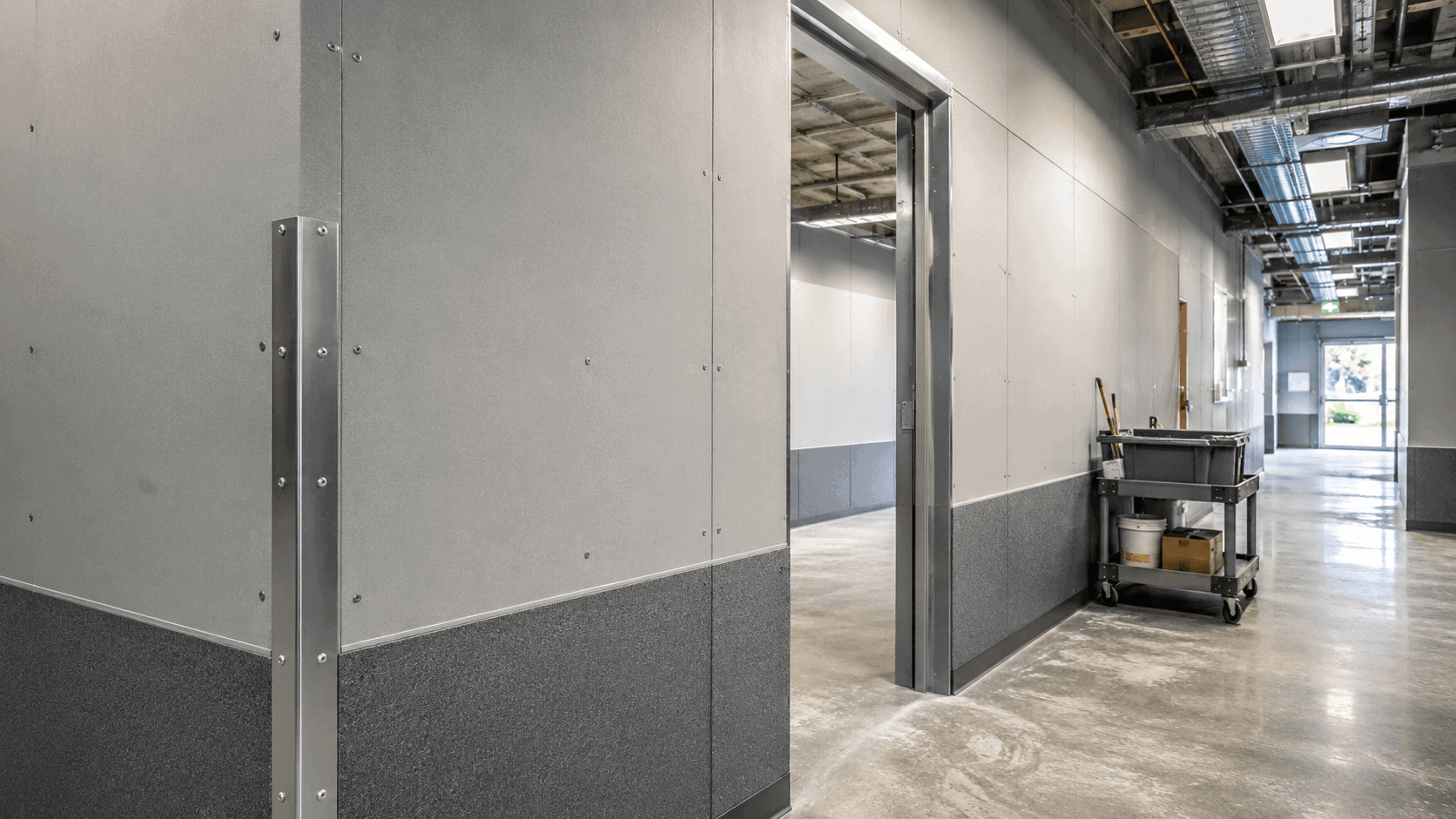
Fiber cement board impact resistance is an important consideration in walls, façades, modular buildings, corridors, schools, and other high-traffic areas. Fiber cement boards are durable and practical building boards. They are often selected for dry construction, external sheathing, façade backing, wet areas, and fire-safe wall systems.
However, no board should be specified without considering how the building will be used.
Some areas face more impact than others. A quiet internal wall does not face the same risk as a school corridor, public entrance, service area, or lower external wall. In these areas, board thickness, support spacing, fixing method, trims, and protective details become more important.
For specifiers, contractors, and developers, the key point is simple: fiber cement boards can perform reliably in demanding areas when impact risk is considered from the beginning.
Why Impact Resistance Matters
Impact resistance is the ability of a wall or board system to resist damage from knocks, pressure, hits, or repeated contact.
On construction projects, impact can come from many sources:
- People walking through corridors
- Trolleys and carts
- Cleaning equipment
- Furniture movement
- Site tools
- Pallets and materials
- Doors opening against walls
- Public use
- Vehicles near lower wall areas
- Maintenance work
Impact damage may not always affect the whole wall. Sometimes it appears as small cracks, dents, broken corners, damaged edges, loose fixings, or surface marks.
These problems can affect appearance, durability, and maintenance costs.
Where Fiber Cement Boards Need Extra Protection
Not every fiber cement board application needs the same level of protection.
Some areas are naturally more exposed to impact.
These include:
- School corridors
- Hospital corridors
- Modular building entrances
- Public buildings
- Commercial interiors
- Stairwells
- Service rooms
- Utility areas
- Lower external wall zones
- Loading areas
- Site cabins
- Accommodation units
- Wet areas with frequent use
- Around doors and openings
In these locations, the wall system should be designed with impact risk in mind.
Impact Resistance Is a System Issue
Impact resistance does not depend only on the board.
The full wall system matters.
A strong board can still perform poorly if it is fixed to a weak frame, spaced too widely, or left unsupported at the edges.
Impact performance depends on:
- Board thickness
- Board density
- Support spacing
- Frame stability
- Screw type
- Screw spacing
- Edge support
- Joint treatment
- Surface finish
- Corner protection
- Final use of the building
This is why impact resistance should be considered as part of the complete wall build-up.
Board Thickness Matters
Board thickness is one of the first things to check when impact resistance is important.
Thicker boards usually provide more stiffness and better resistance to damage than thinner boards.
For low-risk internal applications, thinner boards may be suitable. But for high-traffic areas, exposed walls, and public spaces, thicker boards may offer more reassurance.
The correct thickness depends on:
- Application area
- Support spacing
- Impact risk
- Wall height
- Final finish
- Internal or external use
- Manufacturer guidance
- Project specification
Do not choose board thickness only by price. In impact-prone areas, a slightly stronger board can reduce repairs and complaints later.
Support Spacing Affects Impact Performance
Support spacing is critical.
If studs, battens, or rails are spaced too far apart, the board may flex or move more under impact.
Closer support spacing can help improve wall stability.
Before installation, check:
- Stud spacing
- Batten spacing
- Rail spacing
- Board thickness
- Board orientation
- Edge support
- Fixing centres
- Application requirements
The board should be supported enough to resist movement and vibration.
A board fixed over wide unsupported areas may feel less solid and may be more vulnerable to damage.
Frame Stability Is Essential
The support frame must be strong and stable.
This applies to both steel frame and timber frame systems.
If the frame moves, twists, or deflects, the board system may become weaker under impact.
Before installing boards, check:
- Frame alignment
- Frame rigidity
- Stud or batten quality
- Steel profile thickness
- Timber moisture condition
- Fixing points
- Support around openings
- Support at corners
- Support at board joints
A stable frame helps the board resist impact more effectively.
The board is only as reliable as the structure behind it.
Screw Fixing Must Be Correct
Correct fixing helps keep the board stable.
Poor fixing can reduce impact resistance because the board may move, vibrate, or become loose.
Check the following:
- Correct screw type
- Correct screw length
- Correct screw spacing
- Correct edge distance
- Corrosion-resistant fixings where required
- No overdriven screws
- No loose screws
- No damaged screw holes
Overdriven screws can weaken the board surface. Loose screws can allow movement.
Both problems reduce the quality of the wall system.
Edge Support Is Very Important
Edges are vulnerable to impact damage.
This is especially true around:
- Board joints
- Corners
- Door openings
- Window openings
- Service penetrations
- Base of walls
- Cut edges
- Module joints
Unsupported edges can crack, chip, or move more easily.
The board layout should be planned so that edges are properly supported by studs, battens, rails, or suitable backing pieces.
If an edge is left unsupported in a high-impact area, future damage is more likely.
Corners Need Extra Protection
Corners are one of the first areas to get damaged.
External corners may be hit by people, tools, trolleys, furniture, or site equipment.
In high-risk areas, corner protection may be needed.
This may include:
- Corner trims
- Metal angle profiles
- Reinforced corner beads
- Protective strips
- Stronger joint treatment
- Thicker boards
- Better edge support
Corners should not be treated as cosmetic details only. They are functional protection points.
A well-protected corner can reduce visible damage and maintenance work.
Lower Wall Areas Face More Impact
The lower part of a wall often faces more contact than the upper part.
This is common in:
- Corridors
- Schools
- Hospitals
- Warehouses
- Offices
- Modular accommodation
- Service zones
- External base areas
Lower wall areas may be hit by shoes, bags, cleaning equipment, trolleys, or vehicles.
For these areas, consider:
- Thicker boards
- Closer support spacing
- Protective skirting
- Kick plates
- Stronger finishes
- Impact-resistant coatings
- Base trims
- Better edge protection
The lower wall zone should be detailed according to real building use.
Doors and Openings Are High-Risk Areas
Walls around doors and openings often suffer more impact.
Doors can slam, handles can hit walls, and people may carry items through narrow openings.
Around doors and openings, check:
- Board edge support
- Screw spacing
- Corner reinforcement
- Trim details
- Door stop position
- Sealant quality
- Movement allowance
- Final finish durability
A door handle hitting the wall repeatedly can damage even a good wall system if no protection is provided.
Small protection details can prevent repeated repairs.
Modular Buildings Need Impact Planning
Modular buildings often face impact during production, transport, lifting, installation, and daily use.
Fiber cement boards used in modular construction should be selected with this process in mind.
Impact risks may occur during:
- Factory handling
- Crane lifting
- Truck transport
- Module connection
- Site installation
- Internal fit-out
- Later building use
For modular buildings, check:
- Board thickness
- Edge protection
- Fixing quality
- Transport protection
- Corner protection
- Openings and cut-outs
- Module-to-module joints
- Lower wall areas
A board system that performs well in the factory must also survive transport and site installation.
Public Buildings Need More Durable Details
Public buildings usually need stronger wall details because they are used by many people.
Examples include:
- Schools
- Hospitals
- Sports facilities
- Offices
- Student accommodation
- Hotels
- Retail spaces
- Public corridors
- Transport facilities
In these buildings, walls may face frequent contact and accidental impact.
The specification should consider long-term maintenance, not only initial installation cost.
A durable wall build-up can help reduce future repair work.
External Walls Can Also Face Impact
Impact resistance is not only an internal issue.
External walls may be hit by:
- Landscaping equipment
- Maintenance tools
- Bicycles
- Waste bins
- Vehicles
- Site materials
- Scaffold parts
- Wind-blown objects
- Foot traffic near entrances
Lower external wall zones are especially exposed.
For external areas, impact protection should be considered together with moisture control, base detailing, drainage, and weather exposure.
Final Finish Can Improve or Reduce Protection
The final finish affects the durability of the wall surface.
Some finishes may add protection. Others may make damage more visible.
Common finishes include:
- Paint
- Render
- Tile
- Brick slips
- Stone cladding
- Protective coatings
- Cladding panels
- Skirting or trim systems
A smooth painted wall may show dents and marks more clearly. A protective coating or stronger finish may reduce visible wear.
The finish should match the use of the area.
Impact Resistance and Fire Performance
Fiber cement boards are often selected for fire-safe construction.
However, do not confuse impact resistance with fire performance.
A board may have good fire performance, but the wall system still needs proper detailing for impact-prone areas.
Likewise, an impact-protected wall still needs the correct fire design if fire performance is required.
Specifiers should check both:
- Fire requirements
- Impact requirements
The complete system should satisfy the project’s performance needs.
Maintenance Should Be Considered Early
High-impact areas need realistic maintenance planning.
A wall in a quiet office room may need little maintenance. A school corridor or modular accommodation unit may need more regular inspection.
During specification, consider:
- How often the area will be used
- Who will use the space
- Whether trolleys or equipment will pass through
- Whether furniture will be moved frequently
- Whether cleaning machines will contact the wall
- Whether replacement or repair access is needed
Good design reduces future maintenance, but it does not remove the need for sensible care.
Common Mistakes to Avoid
Avoid these common mistakes when impact resistance matters:
- Choosing board thickness only by price
- Using thin boards in high-impact areas
- Ignoring support spacing
- Leaving board edges unsupported
- Forgetting corner protection
- Overdriving screws
- Using the wrong fixings
- Ignoring door handle impact
- Treating lower wall zones like low-risk areas
- Forgetting modular transport damage risk
- Applying fragile finishes in busy areas
- Ignoring maintenance requirements
- Assuming the board alone solves every impact problem
Most impact-related damage can be reduced with better planning.
Site Checklist for Impact-Prone Areas
Before approving or installing fiber cement boards in impact-prone areas, check:
- Is this a high-traffic area?
- Is the board thickness suitable?
- Is the support spacing close enough?
- Is the frame stable?
- Are board edges supported?
- Are the correct screws specified?
- Are corners protected?
- Are lower wall areas protected?
- Are door zones detailed correctly?
- Is the final finish durable enough?
- Is transport protection needed?
- Are service openings reinforced?
- Is maintenance access considered?
This checklist helps match the board system to real building use.
When Extra Protection Is Needed
Extra protection should be considered when fiber cement boards are used in:
- Schools
- Hospitals
- Corridors
- Stairwells
- Public buildings
- Modular buildings
- Student accommodation
- Lower external walls
- Entrances
- Service rooms
- Wet areas
- Loading zones
- Areas with trolleys or carts
- Areas with frequent maintenance access
In these areas, stronger detailing can prevent avoidable damage.
Final Thoughts
Fiber cement board impact resistance depends on more than the board itself.
The full system matters: board thickness, support spacing, frame stability, screw fixing, edge support, corner protection, final finish, and building use.
In low-risk areas, standard board details may be enough. In high-traffic or impact-prone areas, extra protection should be considered from the beginning.
When fiber cement boards are correctly selected, fixed, supported, and protected, they can provide a durable and dependable surface for modern construction.
👉 Visit the Smartfiber Fiber Cement Board page to explore specs, sizes, and delivery options.
Authored by Smartcon Int’l. Trade & Marketing Ltd. on 15.05.2026. All rights reserved.
Façade specification
Need the right board for your façade system?
Share the façade build-up, exposure conditions, finish and documentation requirements. We can help assess the appropriate board and coordinate supply.