
Blog
Best Screws and Fasteners for Fiber Cement Boards: Avoid These Mistakes
Introduction
Choosing the right fixing system is critical when installing fiber cement boards. While the material is durable and stable, using the wrong screws or fasteners can cause cracks, surface damage, water ingress, or even system failure over time. This is especially true in exterior façades, where movement, wind load, and weather exposure increase the risk of failure.
This guide explains the best screws, fasteners, and fixing techniques for fiber cement boards — and the common mistakes you must avoid.
What Kind of Screws Are Best for Fiber Cement Boards?
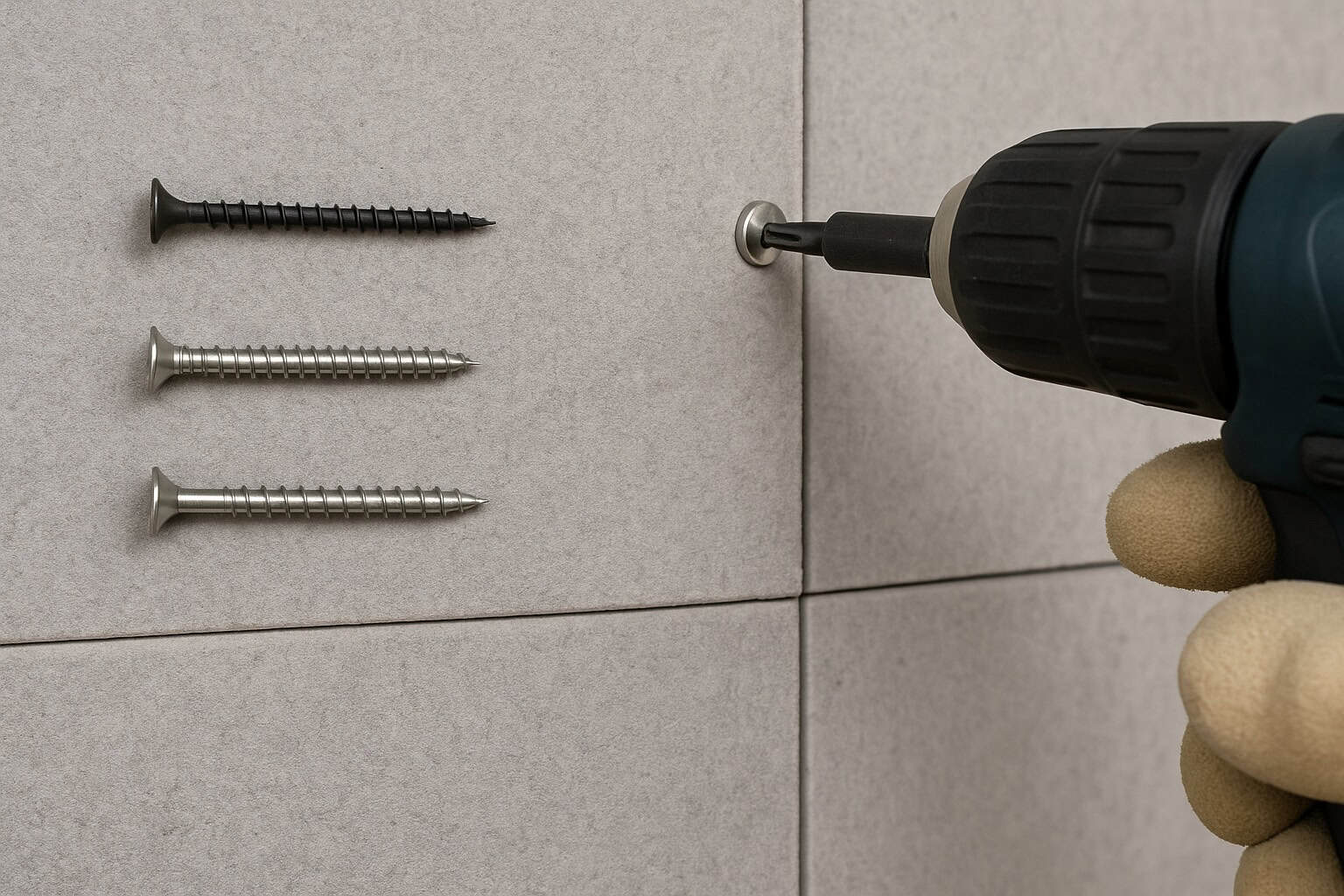
The ideal fiber cement board fixing screws should include the following features:
- Corrosion-resistant material (stainless steel or Class 3/4 zinc-coated)
- Self-tapping or self-drilling tip
- Countersunk flat head or wafer head
- Ribs or nibs below the head to prevent surface bulging
- Minimum 3.5–4.2 mm diameter and correct length for substrate penetration
Stainless steel screws are preferred for humid, coastal, or exterior façade applications to prevent rust over time.
High-quality coated screws are acceptable for dry interior use.
Mechanical vs. Hidden Fastening Systems
Exposed Screws (Most Common & Cost-Effective)
- Screws remain visible
- Must be aligned perfectly for a clean façade
- Requires color-matched screw caps or head coating
Hidden Fastening (Premium Architectural Finish)
- Uses brackets, clips, or adhesive systems
- No visible screws on the façade
- Requires manufacturer-approved substructure and installation method
Common Mistakes to Avoid
- Using wood screws or gypsum screws — these easily break or rust
- Over-tightening the screws — causes micro-cracks or board deformation
- Fixing too close to the edge — maintain at least 20–30 mm from edges
- No pre-drilling on dense boards — recommended for boards over 10 mm thick
- Mixing different screw types in one façade — causes uneven movement and stress
- Using non-ventilated metal profiles — traps heat and moisture behind the board
Installation Tips for Best Results
- Maintain a 2–3 mm expansion gap between boards
- Use a level and screw alignment guide for straight horizontal screw lines
- Do not paint over screws before confirming stability and joint sealing
- Always follow the manufacturer’s screw spacing guidelines
- For façade applications, use a ventilated substructure system
Conclusion
Selecting the correct fiber cement board fixing screws is not just a technical detail — it directly determines the longevity, safety, and appearance of the finished structure. Stainless steel or corrosion-resistant self-tapping screws with countersunk heads are the recommended choice. Avoid inappropriate screw types, improper spacing, and over-tightening to prevent costly failures.
A correct fixing method ensures not only structural safety — but also a clean, professional visual result that lasts for decades.
👉 Visit the Smartfiber Fiber Cement Board page to explore specs, sizes, and delivery options.
Authored by Smartcon Int’l. Trade & Marketing Ltd. on 18.10.2025. All rights reserved.
Façade specification
Need the right board for your façade system?
Share the façade build-up, exposure conditions, finish and documentation requirements. We can help assess the appropriate board and coordinate supply.