
Blog
Fiber Cement Board External Corners: How to Detail Corners Without Cracks
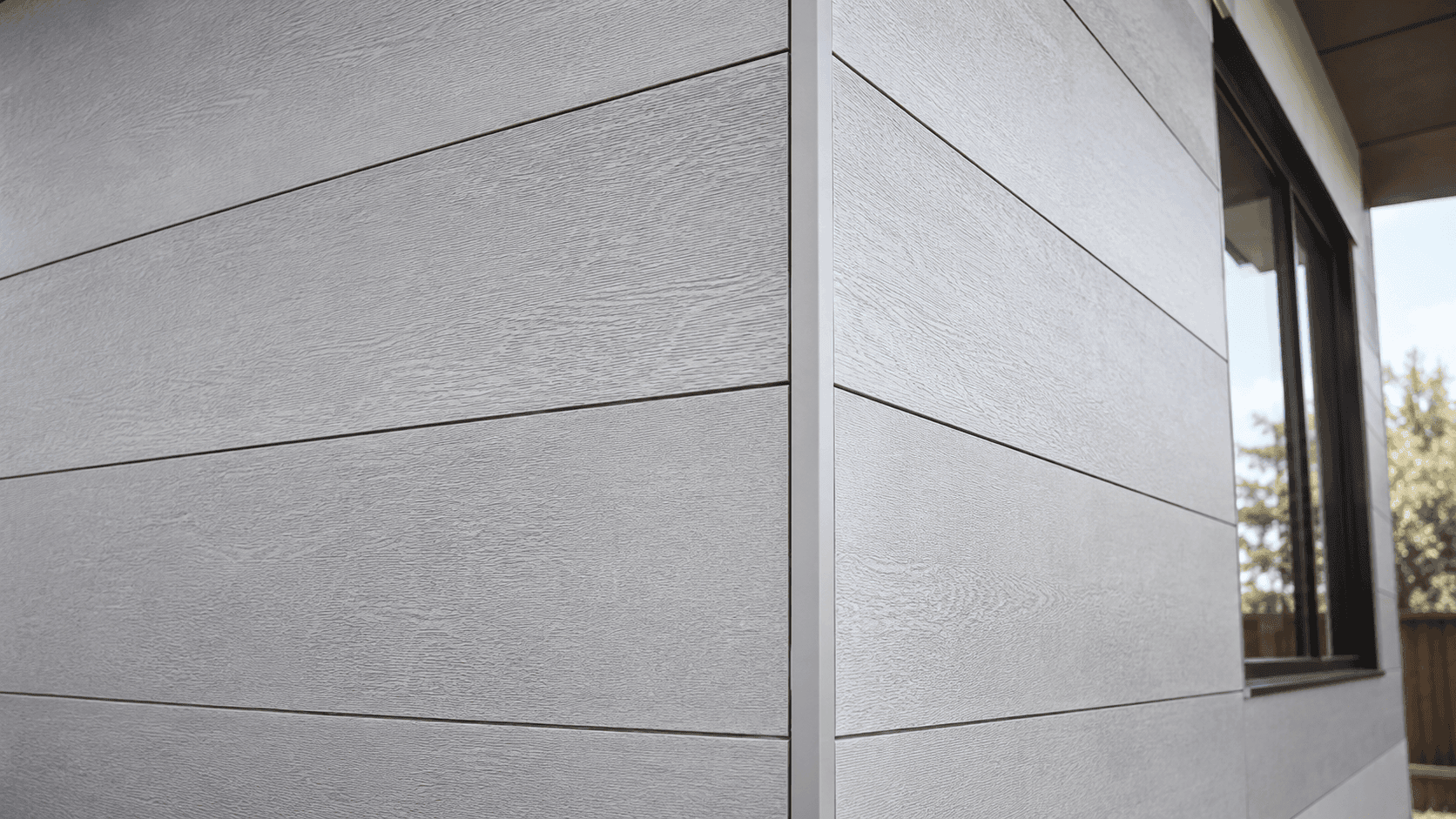
External corners are among the most visible parts of a wall or façade. They are also among the easiest areas to damage if the board layout, fixing pattern, support frame, or finishing system is not planned correctly.
Fiber cement boards are strong, stable, and practical boards for modern construction. However, like every board material, they must be detailed properly at corners. A weak corner detail can lead to cracks, open joints, chipped edges, poor alignment, or visible finishing problems.
The good news is simple: most corner problems can be avoided with careful planning before installation starts.
This guide explains how to detail fiber cement board external corners in a practical way. It is written for contractors, installers, architects, developers, and site teams who want clean, durable, and reliable corner details.
Why External Corners Need Special Attention
An external corner is where two wall faces meet at an outside angle. This area is more exposed than the flat surface of the wall.
External corners often face:
- Higher impact risk
- More handling during installation
- Greater visual attention
- More movement between two wall planes
- Increased moisture exposure on façades
- Higher risk of edge damage
- More pressure from finishing layers
For this reason, the corner should not be treated as a simple meeting point between two boards. It should be planned as a complete detail.
A good external corner detail protects the board edges, supports the fixing points, allows controlled movement, and gives the final finish a clean line.
Common Reasons Fiber Cement Board Corners Crack
Corner cracks usually do not happen because the board itself is unsuitable. They normally happen because of poor detailing or installation mistakes.
The most common causes include:
- Boards fixed too close to the edge
- Screws overdriven into the board surface
- No proper support behind the corner
- Boards tightly butted without movement space
- Weak or unsupported narrow board strips
- Damaged board edges left untreated
- Poor joint treatment before finishing
- Incorrect corner bead or trim selection
- Moisture entering exposed edges
- Impact damage during or after installation
When these issues are prevented, fiber cement boards can perform very well at corners.
Start With a Stable Corner Frame
A clean fiber cement board external corner starts behind the board.
Before fixing the boards, check that the corner frame, battens, studs, or support rails are straight, stable, and properly aligned. If the background is uneven, the boards may be forced into position. This can create stress at the corner and increase the chance of cracks later.
The corner should have enough support for both board edges. Each board edge should land on a suitable fixing surface. Do not rely on the board itself to create the corner strength.
For external sheathing and façade applications, this is especially important. Wind, temperature changes, moisture, and movement can all put pressure on corner details.
Before installation, check:
- Is the corner line straight?
- Are both wall faces aligned?
- Is there enough fixing support behind each board edge?
- Are the battens, rails, or studs securely fixed?
- Is the corner strong enough to resist movement?
- Is the fixing surface clean and dry?
If the frame is not right, the board installation will not be right either.
Provide Full Edge Support at the Corner
One of the biggest mistakes at external corners is leaving board edges unsupported.
Fiber cement board edges should not be left floating at corners. Unsupported edges can vibrate, move, chip, or crack when the wall is finished or exposed to impact.
A strong corner detail usually requires proper edge support behind both boards. This may be a stud, timber batten, metal rail, or other suitable support depending on the wall system.
The aim is simple: every board edge at the corner should be properly supported and fixed according to the project requirements.
Good edge support helps to:
- Reduce movement at the corner
- Keep the corner line straight
- Prevent board vibration
- Improve fixing strength
- Protect the finishing layer
- Reduce the risk of cracks
If there is not enough support behind the corner, add it before fixing the boards. Trying to solve this later with filler or coating is not a reliable solution.
Do Not Force Boards Tightly Together
Fiber cement boards should not be forced tightly into corners.
Boards can move slightly due to temperature, humidity, building movement, and normal site conditions. If boards are pressed tightly against each other with no allowance for movement, stress can build up at the corner.
This stress may later appear as cracking in the joint, coating, render, or finishing layer.
Always allow the correct joint gap according to the board manufacturer, façade system, or project specification. The correct gap depends on the application, board thickness, fixing method, and finishing system.
As a practical rule, never assume that a tighter joint is better. A neat, controlled gap is usually safer than a forced joint.
A correct corner gap helps to:
- Allow controlled movement
- Reduce stress between board edges
- Protect the finishing layer
- Improve long-term appearance
- Prevent pressure cracking
The gap should be consistent, clean, and suitable for the joint treatment or trim system being used.
Avoid Narrow Board Strips at External Corners
Narrow strips of fiber cement board can be weak, especially around corners, openings, and edges.
If a very narrow board strip is used at an external corner, it may be more likely to crack, chip, or move. It may also be harder to fix correctly because there is limited space for screws.
This issue usually starts during layout planning. If boards are installed without checking the final corner position, the last piece may become too narrow.
To avoid this, plan the board layout before cutting and fixing. Adjust board positions so that the corner pieces are wide enough to be stable and easy to fix.
Before installation, ask:
- Will the board finish at the corner with a strong piece?
- Is the corner strip too narrow?
- Can the board layout be adjusted?
- Will the screw positions be too close to the edge?
- Will the finish look balanced?
Good board layout reduces waste, improves appearance, and helps prevent cracking.
Fix Screws Carefully Near External Corners
Screw fixing is one of the most important parts of corner detailing.
If screws are placed too close to the edge, the board edge may crack. If screws are overdriven, the surface may be damaged. If screws are too far from the edge, the corner may not be held firmly enough.
Always follow the required screw distance, screw spacing, and fixing pattern for the board and wall system.
Near external corners, installers should be especially careful with:
- Screw distance from board edges
- Screw spacing along the support
- Correct screw type
- Correct screw length
- Corrosion resistance for external use
- Screw head position
- Avoiding over-tightening
The screw head should normally sit neatly and firmly without crushing the board surface. Overdriven screws can weaken the board face and create small stress points that may later become visible.
If pre-drilling is required by the board type or fixing system, do not skip it. Pre-drilling can help reduce edge stress and improve fixing accuracy.
Protect Board Edges Before Finishing
External corners expose board edges to more risk than flat wall areas.
During installation, board edges can be damaged by handling, cutting, transport, tools, impact, or weather. If these damaged edges are left untreated, the corner may become weaker and the final finish may look poor.
Before applying any finishing layer, inspect the corner edges carefully.
Look for:
- Chips
- Cracks
- Open edges
- Broken corners
- Dusty cut edges
- Uneven cuts
- Moisture marks
- Loose material
Small edge damage should be repaired according to the recommended finishing system. Severely damaged boards or corner pieces should not be hidden under filler and paint. In many cases, replacement is safer than trying to cover a weak corner.
For painted or coated applications, edge sealing and priming may be required depending on the board and coating system. The goal is to protect the board edge and help the finish bond correctly.
Use Corner Beads, Trims, or Profiles When Required
In many wall and façade systems, external corners need a corner bead, trim, profile, or protective angle.
These accessories help create a straight corner line and protect the board edge from impact. They can also help control the finish and improve the appearance of the corner.
The correct accessory depends on the application.
For example:
- Rendered systems may use suitable corner beads.
- Painted board systems may use clean corner trims.
- Ventilated façades may use aluminium or metal corner profiles.
- Interior dry construction may use finishing beads or corner protection.
The important point is compatibility. The corner accessory should match the board, fixing method, joint treatment, coating, and exposure conditions.
Do not select a corner bead or trim only because it looks good. It must also work with the full wall system.
A good corner profile can help:
- Protect exposed edges
- Keep the corner straight
- Reduce impact damage
- Improve the final appearance
- Support a clean finish
- Reduce cracking risk
Match the Corner Detail to the Final Finish
The correct external corner detail depends heavily on the final finish.
A corner that will be painted may need a different approach from a corner that will receive render, tile, cladding, or a ventilated façade profile.
Before fixing the boards, confirm the final finish. This helps the installer choose the right joint gap, edge preparation, corner bead, screw position, and surface treatment.
For painted finishes, surface smoothness and edge quality are very important. Any corner defect may remain visible after painting.
For render systems, the corner bead, mesh, base coat, and board preparation must be suitable for the system.
For façade applications, ventilation, drainage, trims, and weather exposure must be considered.
For tiled areas, waterproofing, adhesive compatibility, and corner movement must be planned.
The board is only one part of the wall system. The corner detail should connect the board, fixing, joint treatment, and final finish into one reliable solution.
Keep Moisture Away From Weak Corner Details
Fiber cement boards are often used in external and moisture-exposed areas. However, corner details still need proper moisture protection.
External corners can collect water if they are poorly detailed. Rain, condensation, water run-off, or poor sealing can affect the joint or finishing layer.
Moisture problems are more likely when:
- Board edges are left exposed
- Joints are poorly sealed
- Trims are badly fitted
- Water is trapped behind the board
- The façade has no proper drainage or ventilation
- Damaged edges are covered without repair
- The coating system is incomplete
For external façades, always think about water management. The corner should help shed water, not trap it.
This is especially important at parapets, façade returns, balconies, window reveals, and roof edge areas. These zones often combine corners, joints, water exposure, and movement in one place.
Prevent Impact Damage During Construction
Many external corner problems happen before the building is even finished.
Corners can be hit by scaffolding, tools, pallets, ladders, site traffic, or other trades. A damaged corner may then be painted or rendered over, only to become a visible problem later.
Protect corners during construction whenever possible.
Good site practice includes:
- Avoid stacking heavy materials against corners
- Keep traffic away from newly installed boards
- Protect finished corners from impact
- Inspect corners before finishing
- Repair damage before coating
- Do not cover broken edges with filler only
A clean installation can still fail visually if the corner is damaged before handover.
Common External Corner Mistakes to Avoid
External corner cracking is often caused by simple mistakes. Avoiding these mistakes will improve both performance and appearance.
Do not leave board edges unsupported.
Do not use very narrow board strips at the corner.
Do not force boards tightly together without a proper gap.
Do not place screws too close to the board edge.
Do not overdrive screw heads into the board surface.
Do not ignore chipped or cracked board edges.
Do not use indoor accessories for exposed external applications.
Do not apply render, paint, or coating over dusty or damaged edges.
Do not assume filler can solve poor framing.
Do not skip moisture protection at exposed corners.
These points may sound basic, but they are exactly the details that protect the final result.
Practical Site Checklist for Fiber Cement Board External Corners
Before installation, check the frame, support, board layout, and final finish.
During installation, check screw position, board gaps, edge quality, and alignment.
Before finishing, check for cracks, chips, dust, moisture, loose screws, and damaged corners.
After finishing, check the corner line, coating quality, joint condition, and impact protection.
A simple site checklist can prevent many expensive repairs later.
For best results, the installer, site manager, and finishing team should all understand the corner detail before work begins. This avoids confusion between trades and helps create a cleaner final wall.
Final Thoughts
Fiber cement board external corners can be clean, durable, and reliable when they are detailed correctly.
Most corner cracks are not caused by the board itself. They are usually caused by weak support, poor screw fixing, tight joints, narrow board strips, damaged edges, or incompatible finishing details.
A good external corner detail should be supported, aligned, protected, and finished as part of the full wall system.
When the frame is stable, the board layout is planned, the edges are protected, and the correct corner trim or finishing system is used, fiber cement boards offer a safe and practical solution for modern façades, external sheathing, and dry construction projects.
The key is not to treat the corner as a small detail. In real construction, corners are where quality becomes visible.
Need pricing, technical documents, or loading guidance for fiber cement boards? Contact Smartcon with your required thickness, dimensions, quantity, and delivery destination. Our team will help you review the suitable options and provide practical export support from Turkey.
👉 Visit the Smartfiber Fiber Cement Board page to explore specs, sizes, and delivery options.
Authored by Smartcon Int’l. Trade & Marketing Ltd. on 24.06.2026. All rights reserved.
Façade specification
Need the right board for your façade system?
Share the façade build-up, exposure conditions, finish and documentation requirements. We can help assess the appropriate board and coordinate supply.