
Blog
Fiber Cement Board Edge Damage: How to Prevent Chips, Cracks, and Broken Corner
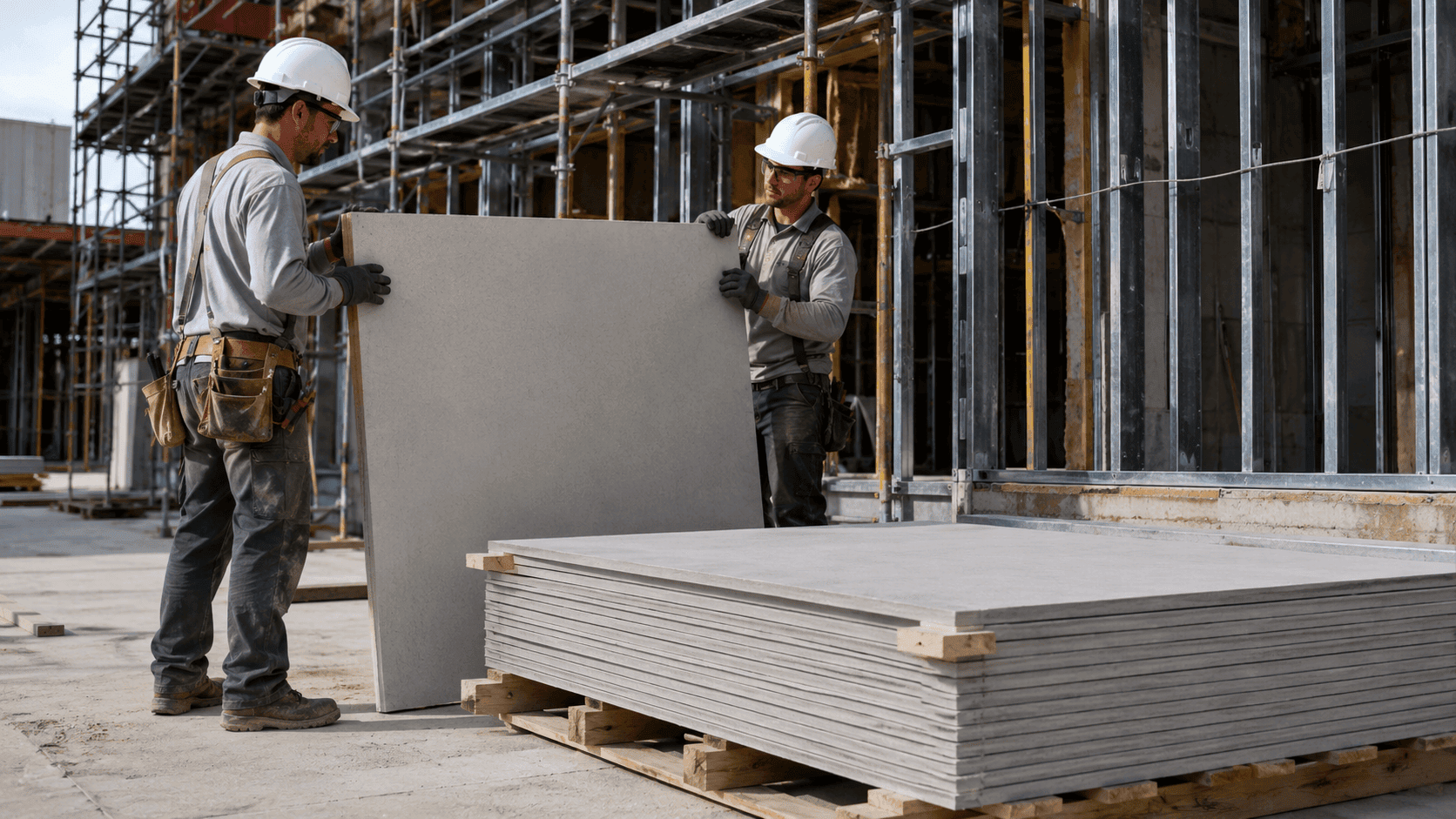
Fiber cement boards are strong, durable, and suitable for many demanding construction applications. They are commonly used in façades, external sheathing, modular construction, dry wall systems, rainscreen façades, and backing board applications.
However, like all sheet materials, fiber cement boards must be handled correctly.
One of the most common site problems is fiber cement board edge damage. This may appear as chipped edges, cracked corners, broken board ends, or small fractures near fixing points.
In many cases, this damage is not caused by the board itself. It is caused by poor storage, rough handling, incorrect lifting, unsupported cutting, or careless movement around the construction site.
The good news is simple: most edge damage can be prevented with good site practice.
Why Fiber Cement Board Edge Damage Matters
Edge damage may look minor at first. However, it can create several practical problems during installation and finishing.
Damaged edges can affect:
- Board alignment
- Joint appearance
- Screw fixing quality
- Surface finish
- Paint or render preparation
- Cladding installation
- Final visual quality
- Client confidence
Even a small broken corner can create a poor impression on site. It may also lead to unnecessary material waste if the board must be cut again or replaced.
For this reason, protecting the edges and corners should be part of normal site handling.
Common Causes of Edge Damage
Fiber cement board edge damage usually happens before the board is fixed.
The most common causes include:
- Dropping boards during unloading
- Dragging boards across rough surfaces
- Carrying boards incorrectly
- Storing boards on uneven supports
- Leaving corners exposed to impact
- Using damaged pallets
- Cutting boards without full support
- Over-tightening screws near the edge
- Moving boards through narrow site areas
- Stacking heavy materials on top of boards
These problems are preventable when the site team understands how to handle boards properly.
Inspect Boards When They Arrive on Site
Edge protection starts at delivery.
Before accepting or moving the boards, inspect the pallets carefully. Check whether the packaging is damaged, whether corners are protected, and whether any boards show visible cracks or broken edges.
During delivery inspection, look for:
- Damaged pallet corners
- Broken board edges
- Cracked sheets
- Wet or weakened packaging
- Boards sliding out of alignment
- Signs of forklift impact
- Loose straps or torn wrapping
If damage is visible, take photos before moving the boards. This helps clarify whether the damage happened during transport, unloading, or later site handling.
Good documentation protects both the supplier and the contractor.
Store Boards on a Flat and Stable Surface
Poor storage is one of the easiest ways to damage board edges.
Fiber cement boards should be stored flat on a stable, level surface. The support underneath the boards should be strong and continuous enough to prevent bending, twisting, or pressure points.
Avoid storing boards:
- Directly on uneven ground
- On broken pallets
- On small isolated blocks
- Near standing water
- In areas with heavy site traffic
- Where other trades may hit them
If the stack is not properly supported, board edges and corners may carry uneven stress. This can increase the risk of cracks or corner breakage when the boards are lifted.
Keep Boards Raised from the Ground
Boards should be raised from the ground using proper pallets or timber supports.
This helps protect the boards from moisture, mud, dirt, and accidental impact. It also makes lifting and handling safer.
However, the supports must be properly positioned. If the board stack is raised unevenly, the weight may not be distributed correctly.
A raised stack is helpful only when it is also level and stable.
Do Not Drag Boards Across the Ground
Dragging is one of the most common causes of chipped edges.
Fiber cement boards should be lifted and carried. They should not be dragged across concrete, gravel, scaffolding, pallets, or other boards.
Dragging can damage:
- Long edges
- Corners
- Finished surfaces
- Board faces
- Factory-cut edges
If boards are too heavy to move safely by hand, use suitable lifting equipment or enough workers. Rushing this step often causes avoidable damage.
Carry Boards Correctly
Correct carrying technique matters.
Large boards should be carried vertically by two people when possible. This reduces bending and makes the board easier to control.
When carrying boards:
- Keep the board balanced
- Avoid twisting the sheet
- Do not allow corners to hit the ground
- Do not rest the board edge on rough surfaces
- Use gloves for better grip
- Keep the walking route clear
Before moving boards, check the route. Remove obstacles and make sure there is enough space to turn corners safely.
Many broken corners happen because workers try to carry boards through tight or cluttered areas.
Protect Corners During Site Movement
Corners are especially vulnerable.
Even if the main board surface is strong, a sharp corner can chip if it hits scaffolding, concrete, steel framing, or another board.
To reduce corner damage:
- Keep boards stacked neatly
- Avoid leaning boards against rough walls
- Do not leave loose boards in traffic areas
- Move boards slowly through doorways and corridors
- Use temporary corner protection if needed
- Avoid unnecessary double handling
The fewer times boards are moved, the lower the risk of edge damage.
Support Boards Properly During Cutting
Cutting can also damage edges if the board is not properly supported.
When cutting fiber cement boards, place the board on a flat and stable surface. The cut line should be supported to reduce vibration and movement.
Unsupported cutting may lead to:
- Chipped cut edges
- Corner cracks
- Rough board ends
- Breakage near the final part of the cut
- Poor dimensional accuracy
Always use suitable cutting tools and follow the board manufacturer’s recommendations. A clean cut is easier to finish and install.
Avoid Fixing Too Close to the Edge
Fixing too close to the board edge can increase the risk of cracking.
Screws should be placed according to the manufacturer’s fixing guidance. Edge distance, screw type, screw spacing, and frame support all matter.
Common fixing mistakes include:
- Screwing too close to corners
- Over-tightening screws
- Using the wrong screw type
- Fixing into unsupported edges
- Skipping pre-drilling where required
- Forcing screws through the board
If the edge cracks during fixing, the problem may not be the board. It may be the fixing method.
Correct screw placement helps protect the board and improves long-term performance.
Do Not Over-Tighten Screws
Over-tightening can damage the board surface and edges.
A screw should hold the board securely without crushing the surface or creating stress around the fixing point.
If screws are driven too deeply, they may create local damage. This can become more visible after painting, rendering, or finishing.
For better results:
- Use the correct driver setting
- Avoid excessive pressure
- Keep screws straight
- Stop when the screw head is properly seated
- Do not force the screw if resistance is too high
Good fixing practice protects both the board and the final finish.
Keep Edges Clean Before Finishing
Damaged or dirty edges can affect finishing quality.
Before painting, rendering, tiling, or applying another finish, inspect the board edges. Remove dust, mud, loose particles, and debris.
If the edge is rough after cutting, prepare it according to the project requirements and manufacturer guidance.
Clean edges help create:
- Better joint lines
- Better finish adhesion
- Cleaner visual results
- Lower risk of complaints
Surface preparation is not only about the board face. Edges matter too.
What to Do If a Board Edge Is Damaged
Not every damaged board must be thrown away.
The correct decision depends on the location and severity of the damage.
Ask these questions:
- Is the damage small or deep?
- Is the board cracked through?
- Will the damaged area be visible?
- Is the damage near a fixing point?
- Can the damaged edge be cut away?
- Will the board still be properly supported?
- Will the finish hide or expose the damaged area?
Minor edge chips may sometimes be managed during cutting, jointing, or finishing. However, boards with deep cracks, broken corners, or structural weakness should not be installed in critical areas.
When in doubt, consult the supplier, installer, or project specification.
Site Checklist to Prevent Edge Damage
Use this checklist before and during installation:
- Inspect boards at delivery
- Photograph any visible damage
- Store boards flat and level
- Keep pallets raised from the ground
- Avoid uneven supports
- Do not drag boards
- Carry boards with enough workers
- Keep corners away from impact
- Clear movement routes before lifting
- Support boards during cutting
- Use suitable cutting tools
- Follow correct screw edge distances
- Do not over-tighten screws
- Keep edges clean before finishing
- Remove damaged boards from visible or critical areas
This simple checklist can prevent many avoidable site problems.
Common Mistakes to Avoid
Many edge damage problems come from avoidable mistakes.
Avoid the following:
- Accepting boards without checking the pallet
- Moving boards too quickly after delivery
- Storing boards in busy traffic areas
- Dragging boards across the ground
- Leaning boards against sharp surfaces
- Cutting boards without enough support
- Fixing screws too close to the edge
- Using too much screw pressure
- Ignoring small cracks before installation
- Installing visibly damaged boards in exposed areas
Small mistakes can create visible defects later. Careful handling protects both the product and the reputation of the installer.
Final Thoughts
Fiber cement boards are dependable construction materials when they are stored, handled, cut, and installed correctly.
Edge damage is usually preventable. Most chips, cracks, and broken corners are caused by poor handling, rough site movement, unsupported cutting, or incorrect fixing.
By protecting the edges from delivery to installation, contractors can reduce waste, improve finish quality, and avoid unnecessary complaints.
Good site practice does not make the job slower. It makes the installation cleaner, safer, and more professional.
Need pricing, technical documents, or loading guidance for fiber cement boards? Contact Smartcon with your required thickness, dimensions, quantity, and delivery destination. Our team will help you review the suitable options and provide practical export support from Turkey.
👉 Visit the Smartfiber Fiber Cement Board page to explore specs, sizes, and delivery options.
Authored by Smartcon Int’l. Trade & Marketing Ltd. on 01.06.2026. All rights reserved.
Façade specification
Need the right board for your façade system?
Share the façade build-up, exposure conditions, finish and documentation requirements. We can help assess the appropriate board and coordinate supply.