
Blog
Fiber Cement Board Surface Dust After Cutting: Why It Must Be Removed Before Finishing
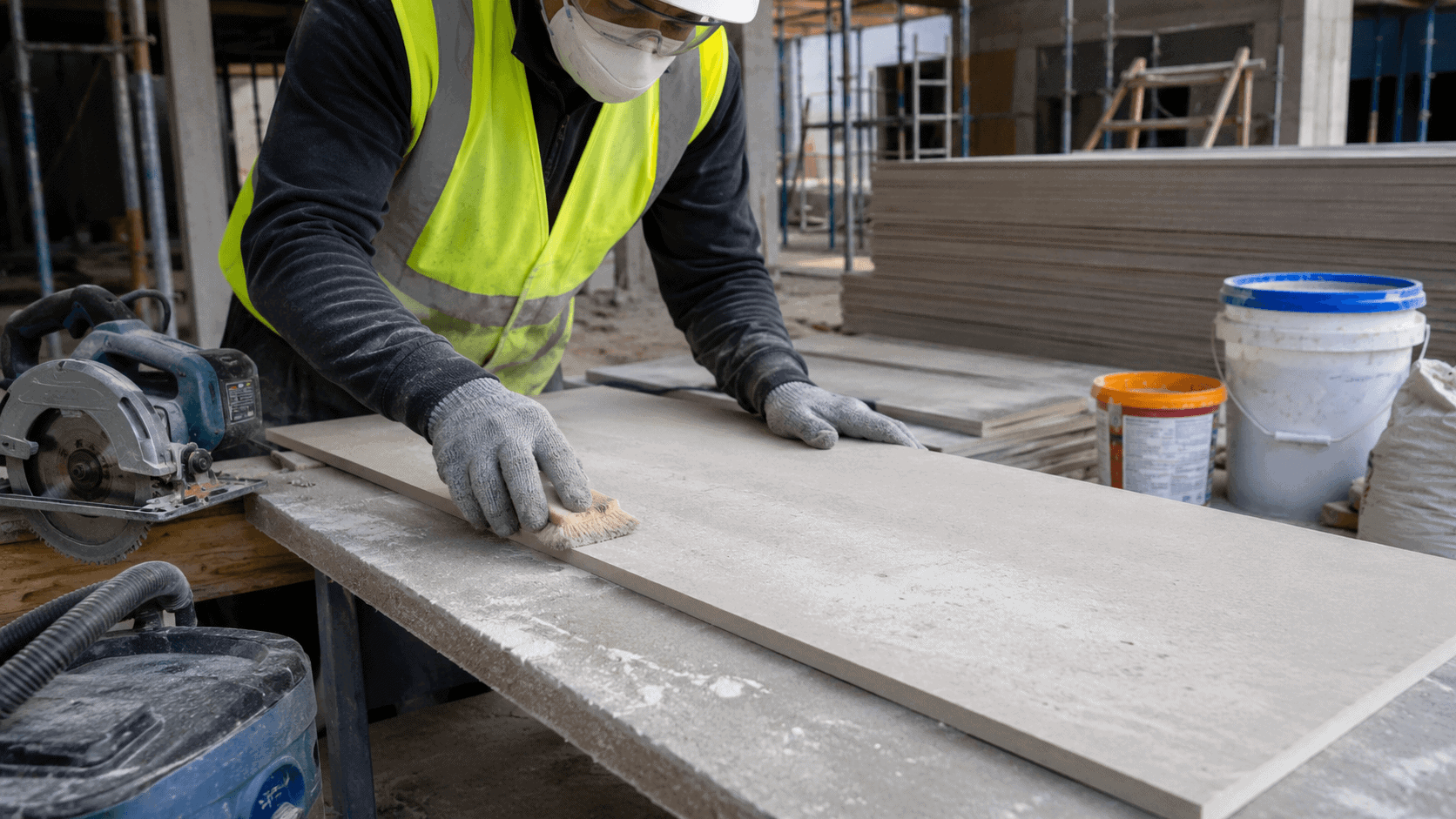
Fiber cement board surface dust after cutting should always be removed before painting, coating, sealing, tiling, rendering, or applying adhesive. Cutting fiber cement boards can create fine dust on the board surface, edges, joints, and surrounding work area. If this dust is not cleaned properly, it may affect adhesion, surface appearance, and final finish quality.
This may look like a small site detail. But in real construction work, small details often create large finishing problems.
For installers, contractors, and specifiers, the key point is simple: a clean fiber cement board surface gives the final finish a better chance to bond, cure, and perform correctly.
Why Cutting Dust Matters
Fiber cement boards are commonly cut on site to fit wall layouts, openings, corners, penetrations, and edge details.
After cutting, fine dust may remain on:
- Board faces
- Cut edges
- Screw areas
- Board joints
- Corners
- Penetrations
- Nearby installed boards
- Floor and work surfaces
This dust should not be ignored.
If dust remains on the surface, it can create a weak layer between the board and the next material. This may affect primer, paint, render, adhesive, sealant, or joint filler.
In simple terms, the finish may be bonding to the dust instead of the board.
What Can Happen If Dust Is Not Removed?
Leaving cutting dust on fiber cement boards can cause several site problems.
These may include:
- Poor paint adhesion
- Uneven primer absorption
- Weak bonding of adhesive
- Poor sealant performance
- Visible surface marks
- Dust trapped under coatings
- Render or base coat problems
- Joint filler defects
- Patchy surface appearance
- Reduced finish quality
These issues are often avoidable with proper cleaning before finishing.
Dust Can Affect Paint and Coatings
Paint and coatings need a clean surface.
If fiber cement board dust remains on the surface, the paint may not bond evenly. This can lead to patchy appearance, weak adhesion, or early coating problems.
Before painting, the surface should be:
- Clean
- Dry
- Dust-free
- Free from oil and grease
- Free from loose particles
- Prepared according to coating instructions
Do not paint directly over cutting dust.
Even if the first coat seems to cover the surface, dust can still weaken the bond underneath.
Dust Can Affect Primer Performance
Primer is often used before painting, rendering, tiling, or applying other finishes.
Primer helps create a better bond between the board and the finishing system. But primer cannot work properly if it is applied over a dusty surface.
Dust can stop primer from penetrating or bonding evenly.
This may cause:
- Uneven suction control
- Weak surface preparation
- Poor finish adhesion
- Patchy drying
- Reduced system performance
Before applying primer, remove dust from the board face, cut edges, and joints.
Dust Can Weaken Adhesive Bonding
Adhesives are often used with fiber cement boards in applications such as tiling, brick slips, stone finishes, or other bonded systems.
Adhesive needs direct contact with the board surface.
If dust remains between the adhesive and the board, the bond may be weaker.
This is especially important for:
- Tile adhesive
- Brick slip adhesive
- Stone cladding adhesive
- Sealants
- Joint fillers
- Render base coats
- Waterproofing layers
A dusty board surface can reduce adhesion and increase the risk of failure.
Dust Can Create Problems Around Joints
Board joints are already important areas in fiber cement board installation.
If dust remains inside or around the joint, joint filler, sealant, tape, or mesh may not bond correctly.
Before treating joints, check that:
- Joint gaps are clean
- Edges are dust-free
- Loose particles are removed
- Screw areas are clean
- The surface is dry
- The correct joint treatment system is used
Poor joint cleaning can lead to cracking, weak bonding, or visible defects after finishing.
Dust Can Affect Sealants
Sealants need a clean surface to bond properly.
If sealant is applied over dust, it may not stick well to the board or service penetration edge.
This can create gaps, leaks, or weak sealing around:
- Board joints
- External corners
- Internal corners
- Pipe openings
- Cable penetrations
- Window junctions
- Door openings
- Base details
- Movement joints
Sealant failure is often blamed on the sealant. But sometimes the real problem is poor surface cleaning before application.
Cut Edges Need Special Attention
Cut edges often collect more dust than board faces.
After cutting, the edge may have loose particles, rough spots, or fine dust.
Before sealing, painting, coating, or fixing next to the edge, it should be cleaned carefully.
Cut edge preparation may include:
- Removing loose dust
- Light smoothing if required
- Checking for chips or cracks
- Applying edge sealer where required
- Keeping the edge dry before finishing
A clean cut edge improves the quality of the final detail.
Dust Around Service Penetrations
Service openings are common in fiber cement board systems.
These may include openings for:
- Pipes
- Cables
- Conduits
- Ducts
- Vents
- Electrical boxes
- Mechanical services
After cutting or drilling openings, dust often remains inside the hole and around the edge.
This dust should be removed before sealing or fitting collars, sleeves, flashings, or gaskets.
A dusty penetration edge can make sealing weaker and less durable.
Dust Before Render or Base Coat
When fiber cement board is used behind render, surface cleanliness is very important.
Render systems may include primer, base coat, reinforcement mesh, and finish coat.
If dust remains on the board, the render system may not bond correctly.
Before applying render layers, check:
- Board surface is clean
- Dust is removed from joints
- Primer is applied where required
- Screw heads are clean
- Board edges are prepared
- The surface is dry and stable
Render should not be used to hide poor surface preparation.
Dust Before Tiling or Brick Slips
Tiling and brick slip systems depend heavily on adhesion.
If adhesive is applied over dust, the bond may be weaker.
This is important because tiles, brick slips, and stone finishes add weight to the surface.
Before applying adhesive, the installer should make sure:
- The board is dust-free
- The surface is dry
- Primer is used if required
- The adhesive is compatible
- The board is properly fixed
- Joints are treated correctly
- The finish weight is suitable
Dust removal is a small step, but it supports the whole bonded system.
How to Remove Dust From Fiber Cement Boards
Dust removal should be done carefully.
The correct method may depend on the board, finish, site conditions, and manufacturer recommendations.
Common practical steps include:
- Remove loose dust from the surface.
- Clean the board face after cutting.
- Pay attention to cut edges and holes.
- Clean joints before filling or sealing.
- Keep the surface dry.
- Avoid spreading dust onto finished areas.
- Check the surface before applying primer or adhesive.
The surface should be visibly clean before finishing begins.
Avoid Cleaning Methods That Damage the Surface
Cleaning should remove dust without damaging the board.
Avoid aggressive methods that may scratch, soak, or weaken the surface.
Be careful with:
- Excessive water washing
- Harsh chemicals
- Heavy scraping
- Grinding the face unnecessarily
- Dirty rags that spread contamination
- Compressed air used without dust control
- Cleaning methods that create more dust
The goal is not to overwork the surface. The goal is to remove loose dust and prepare the board correctly.
Use Dust Control During Cutting
Cleaning after cutting is important. But reducing dust during cutting is also good practice.
Installers should use suitable cutting methods, tools, and dust control systems.
Good dust control can help:
- Keep the board surface cleaner
- Protect nearby installed boards
- Improve site cleanliness
- Reduce contamination before finishing
- Support better health and safety practice
- Reduce cleaning work later
Dust should be managed during cutting, not only after cutting.
Health and Safety Should Not Be Ignored
Cutting fiber cement boards can create fine dust.
Installers should follow proper health and safety guidance, including suitable personal protective equipment and dust control methods.
This may include:
- Cutting in a controlled area
- Using appropriate tools
- Avoiding unnecessary dust spread
- Wearing suitable respiratory protection
- Using eye protection
- Keeping the work area clean
- Following manufacturer safety guidance
- Following local workplace safety rules
Dust control is not only about the finish. It is also about safe working practice.
Clean Before Inspection and Finishing
Before any finishing work starts, inspect the board surface.
Check:
- Is the board face clean?
- Are cut edges dust-free?
- Are screw areas clean?
- Are joints clean?
- Are service openings clean?
- Is the surface dry?
- Are there oil, grease, mud, or rust marks?
- Is primer required?
- Is the finishing product compatible?
This quick inspection can prevent finishing problems later.
Common Mistakes to Avoid
Avoid these common mistakes when dealing with fiber cement board cutting dust:
- Painting over a dusty surface
- Applying primer without cleaning the board
- Applying adhesive over loose dust
- Leaving dust inside joints
- Sealing dusty service penetrations
- Ignoring dust on cut edges
- Using dirty gloves after cutting
- Letting dust become wet on the board surface
- Cleaning only the visible face and ignoring holes or joints
- Using aggressive cleaning methods that damage the surface
- Cutting boards near already finished surfaces without protection
- Assuming dust will disappear under the final finish
Most dust-related problems are easy to prevent with basic site discipline.
Site Checklist Before Finishing
Before painting, coating, rendering, tiling, or sealing fiber cement boards, check the following:
- Has cutting dust been removed?
- Are the board faces clean?
- Are cut edges clean and prepared?
- Are joints dust-free?
- Are screw heads and fixing areas clean?
- Are service penetrations cleaned before sealing?
- Is the surface dry?
- Are oil, mud, grease, and rust marks removed?
- Is primer required?
- Is the finishing system compatible?
- Has the surface been inspected before work continues?
This checklist is simple, but it can protect the final finish.
Final Thoughts
Fiber cement board surface dust after cutting should never be ignored.
Dust can affect paint, primer, adhesive, render, sealant, joint filler, and final surface appearance. It can create a weak layer between the board and the finishing material.
The solution is simple: cut carefully, control dust, clean the surface, inspect the board, and only then apply the next layer.
A clean board surface supports better adhesion, better finishing, and more reliable long-term performance.
For installers and specifiers, dust removal is not a cosmetic detail. It is part of proper fiber cement board installation.
👉 Visit the Smartfiber Fiber Cement Board page to explore specs, sizes, and delivery options.
Authored by Smartcon Int’l. Trade & Marketing Ltd. on 15.05.2026. All rights reserved.
Façade specification
Need the right board for your façade system?
Share the façade build-up, exposure conditions, finish and documentation requirements. We can help assess the appropriate board and coordinate supply.