
Blog
Exterior vs Interior Use of Fiber Cement Boards in Container Homes
Introduction
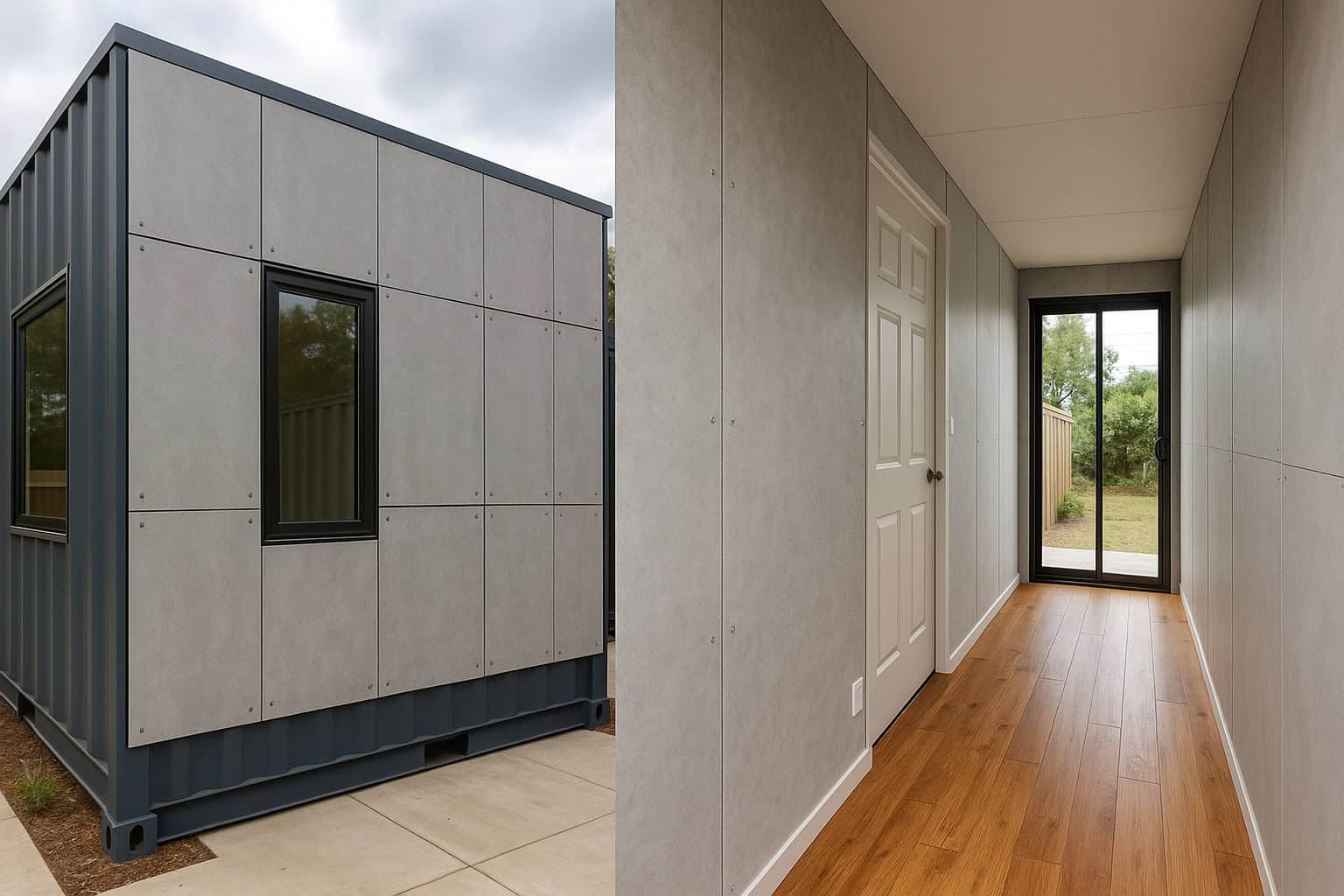
Container homes are rapidly growing in popularity as modular, durable, and modern living solutions. To turn a steel container into a comfortable and safe living environment, selecting the right cladding and lining material is critical. Fiber cement boards are among the most reliable choices for both exterior façades and interior wall linings — but their specifications and performance expectations vary significantly depending on where they are used.
This article explains the key differences between exterior and interior applications of fiber cement boards in container homes — and what professionals must consider before installation.
Exterior Use: Façade Protection and Thermal Stability
In exterior applications, fiber cement boards act as a protective façade layer. They must withstand long-term exposure to weather, UV radiation, heat, humidity, impact, and wind pressure.
Key characteristics required for exterior use:
- Minimum 8–12 mm thickness recommended
- UV- and weather-resistant surface coating
- Installed with a ventilated façade system (air gap behind the board)
- Fixed to metal or aluminum subframes using corrosion-resistant screws
- Must be resistant to freeze–thaw cycles in cold regions
Main advantages:
- Shields the container from heat, reducing thermal expansion of steel
- Prevents condensation when installed with proper ventilation
- Fire-resistant and impact-durable
- Can deliver a modern architectural finish
Interior Use: Wall Lining and Moisture Safety
Inside the container, fiber cement boards are used primarily for wall and ceiling finishing, especially in areas where moisture, fire resistance, and dimensional stability are critical.
Key characteristics for interior use:
- Typical thickness: 6–10 mm
- Installed directly over steel framing or with added insulation
- Suitable for painting, tiling, or smooth finishing
- No UV protection needed, but mold-resistant finishing is preferred in wet zones
Main advantages:
- Does not warp or swell under humidity (unlike MDF or plywood)
- Higher fire resistance than gypsum board
- Excellent substrate for tiles in bathrooms and kitchens
- Provides a smooth and professional finish for interior living spaces
Which Application Is More Demanding?
Exterior use requires a higher technical specification due to exposure to sunlight, rain, wind, mechanical impact, and temperature fluctuations.
Interior use focuses more on fire safety, hygiene, finish compatibility, and moisture control, especially in compact container environments.
Conclusion
Fiber cement boards offer exceptional performance in both exterior and interior container home applications, but the board specifications, fixing requirements, and installation method must match the use case.
- Exterior ⇒ durability, ventilation, weather resistance, UV protection
- Interior ⇒ fire safety, moisture stability, finishing compatibility
When correctly specified and installed, fiber cement boards significantly extend the lifespan, insulation comfort, and visual quality of modern container homes.
👉 Visit the Smartfiber Fiber Cement Board page to explore specs, sizes, and delivery options.
Authored by Smartcon Int’l. Trade & Marketing Ltd. on 18.10.2025. All rights reserved.
Façade specification
Need the right board for your façade system?
Share the façade build-up, exposure conditions, finish and documentation requirements. We can help assess the appropriate board and coordinate supply.