
Blog
Fiber Cement Board Compatibility with Primers, Fillers, Sealants, and Coatings
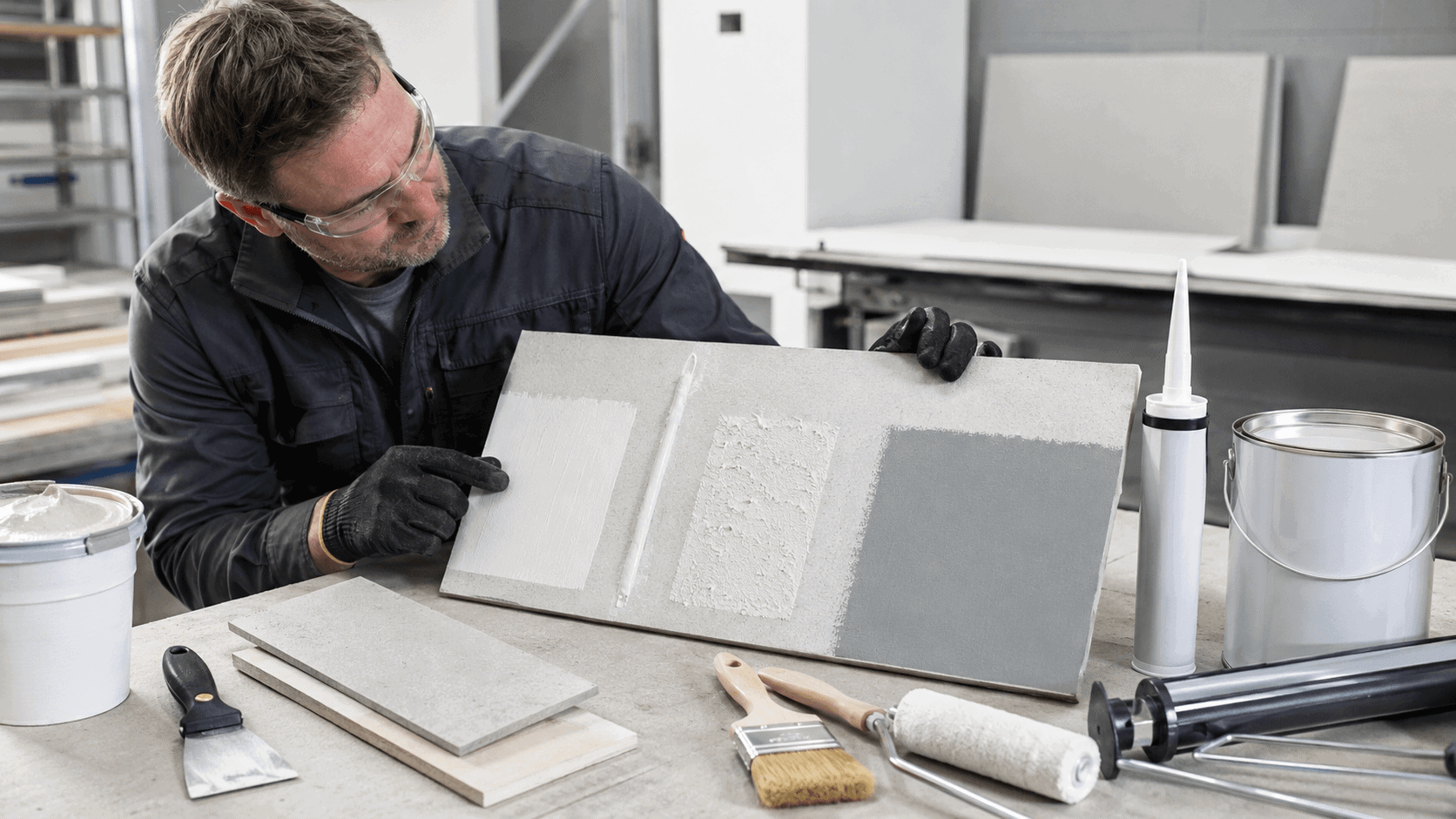
Fiber cement boards are widely used in façades, external sheathing, dry construction, modular buildings, wet areas, cladding substrates, and fire-conscious wall systems. They are strong, stable, and practical building boards, but the final performance of the installation also depends on the products used with them.
Primers, fillers, sealants, paints, renders, adhesives, and coatings all need to be compatible with the fiber cement board surface and the full wall system. If the wrong product is used, the board may still be strong, but the finish, joint, sealant line, or coating layer may not perform as expected.
This guide explains what contractors, painters, installers, architects, and buyers should check before combining fiber cement boards with primers, fillers, sealants, and coatings.
Why Compatibility Matters
A fiber cement board is not used alone. In real projects, it usually becomes part of a complete system.
It may be combined with:
- Screws
- Joint fillers
- Sealants
- Primers
- Paints
- Coatings
- Adhesives
- Render systems
- Waterproofing layers
- Flashings
- Tapes
- Profiles
- Cladding finishes
Each product must work with the board surface, the environment, and the intended application.
Good compatibility helps improve:
- Adhesion
- Finish quality
- Joint performance
- Moisture management
- Weather resistance
- Movement tolerance
- Long-term appearance
- Installation confidence
- Maintenance performance
Poor compatibility can create avoidable site problems.
Compatibility Is About the Complete System
Compatibility does not only mean “Can this product stick to fiber cement board?”
It also means:
- Is it suitable for cement-based surfaces?
- Is it suitable for interior or exterior use?
- Can it handle movement?
- Can it handle moisture exposure?
- Is it suitable for the finish system?
- Does it need a primer?
- Is it breathable where needed?
- Is it flexible enough?
- Is it compatible with coatings?
- Is it compatible with adjacent materials?
- Does the manufacturer approve the application?
A board may be suitable for the project, but the wrong filler, primer, sealant, or coating can reduce the quality of the final result.
Start with the Board Surface
Before applying any product, the fiber cement board surface should be checked carefully.
The surface should be:
- Dry
- Clean
- Stable
- Dust-free
- Free from oil or grease
- Free from loose particles
- Free from heavy contamination
- Suitable for the chosen finish
- Installed correctly
- Supported properly
Surface preparation is often more important than the brand of the finishing product.
If the surface is dusty, wet, damaged, or contaminated, even a good primer or coating may not perform well.
Primers for Fiber Cement Boards
Primers are often used before painting, coating, rendering, or applying certain finishing systems. They help prepare the board surface and improve adhesion.
A suitable primer can help:
- Reduce surface absorption
- Improve paint adhesion
- Support a more even finish
- Bind minor surface dust
- Improve coating consistency
- Reduce patchy appearance
- Prepare the surface for final coats
For fiber cement boards, primers should normally be suitable for cementitious or mineral substrates.
Why Alkali Resistance Matters
Fiber cement boards are cement-based materials. This means the surface may be alkaline, especially when new.
For painted finishes, it is usually important to use a primer that is compatible with alkaline or cement-based surfaces.
Using the wrong primer may lead to:
- Poor adhesion
- Peeling
- Patchy finish
- Uneven colour
- Reduced coating life
- Surface defects
For this reason, contractors should check whether the primer is suitable for cementitious boards before application.
Interior vs Exterior Primers
Interior and exterior primers are not always the same.
For interior applications, the primer may mainly support adhesion and surface uniformity.
For exterior applications, the primer may also need to handle:
- UV exposure
- Rain
- Humidity
- Temperature changes
- Surface movement
- Coating compatibility
- Long-term weathering
Do not use an interior-only primer on external fiber cement board applications unless it is specifically approved for that use.
Fillers for Fiber Cement Boards
Fillers may be used for screw heads, minor surface imperfections, small chips, joint areas, or preparation before painting.
The filler should be compatible with:
- Cement-based surfaces
- The chosen paint or coating
- The expected movement
- Interior or exterior exposure
- Board surface condition
- Joint type
- Application thickness
Not every filler is suitable for fiber cement boards.
Where Fillers Are Commonly Used
Fillers may be used for:
- Screw head finishing
- Small dents
- Minor surface damage
- Small chips
- Joint preparation
- Edge imperfections
- Paint preparation
- Interior wall lining finishes
However, fillers should not be used to hide serious installation problems.
If the board is loose, unsupported, cracked, wet, or badly aligned, filler will not solve the real issue.
Avoid Using the Wrong Filler
A filler that works well on one surface may not work well on fiber cement boards, especially outside.
Before using a filler, check:
- Is it suitable for cementitious substrates?
- Is it suitable for exterior use if needed?
- Can it be painted over?
- Does it shrink?
- Is it flexible or rigid?
- What thickness can it be applied in?
- Does it need primer?
- Is sanding required?
- Is it compatible with the final coating?
Using the wrong filler can lead to cracking, lifting, visible patches, or poor paint appearance.
Sealants for Fiber Cement Board Details
Sealants are often used where fiber cement boards meet other materials or where movement needs to be managed.
Sealants may be used around:
- Window frames
- Door frames
- Perimeters
- Corners
- Movement joints
- Penetrations
- Flashings
- Adjacent cladding materials
- Junctions with concrete, steel, timber, or aluminium
Sealants should be selected carefully because they must often handle movement, weather, and adhesion to different materials.
Sealant Compatibility Checks
Before applying sealant, check:
- Is the sealant suitable for fiber cement boards?
- Is it suitable for cement-based surfaces?
- Is it suitable for exterior use?
- Does it need a primer?
- Can it handle expected movement?
- Is it UV-resistant?
- Is it paintable if needed?
- Is it compatible with the adjacent frame or flashing?
- Is a backing rod required?
- Is the joint width suitable?
A good sealant detail depends on both the product and the joint design.
Flexible Sealants and Movement
Fiber cement board installations may experience movement from temperature changes, moisture changes, frame movement, and building movement.
Where movement is expected, the sealant must be flexible enough for the joint.
Rigid materials should not be used in movement joints unless the system has been specifically designed for that purpose.
A sealant that cannot move properly may split, pull away, or lose adhesion.
Paints and Coatings for Fiber Cement Boards
Fiber cement boards can provide a good surface for painting when prepared correctly. However, the coating must be suitable for the board, the environment, and the desired finish.
When choosing paint or coating, check:
- Is it suitable for fiber cement boards?
- Is it suitable for cementitious surfaces?
- Is primer required?
- Is it suitable for interior or exterior use?
- Is it UV-resistant?
- Is it breathable where required?
- Is it flexible enough?
- Is it compatible with the filler or sealant?
- What surface preparation is required?
- How many coats are needed?
The coating system should be treated as a complete system, not just a topcoat.
Breathability and Moisture
In some wall systems, it is important that coatings allow moisture vapour to escape. A coating that traps moisture may contribute to blistering, peeling, or staining problems.
This is especially important if boards have been exposed to rain, stored incorrectly, or installed in a system where drying potential matters.
Before coating, check that the boards are dry and that the coating is suitable for the application.
Coating Over Fillers and Sealants
Paint and coating compatibility with fillers and sealants is very important.
Some sealants are paintable. Others are not. Some fillers may absorb paint differently from the board surface, causing visible patches.
Before painting over fillers or sealants, check:
- Is the filler fully dry?
- Is the sealant paintable?
- Is primer needed?
- Will the finish appear uniform?
- Will the coating crack over flexible sealant?
- Is the surface clean?
- Has a small test area been completed?
A small test area can prevent large finish problems later.
Adhesion Testing Is a Smart Step
Before applying primer, paint, filler, sealant, render, or coating across a large area, it is wise to test a small area first.
A test area can show:
- Adhesion quality
- Surface absorption
- Colour consistency
- Filler visibility
- Sealant behaviour
- Drying time
- Finish smoothness
- Compatibility problems
This is especially useful for visible façades, premium painted finishes, large wall surfaces, and commercial interiors.
Render and Skim Systems
Some fiber cement boards may be used as backing boards for render, skim, or decorative finish systems, depending on the project and full system approval.
Before applying render or skim systems, check:
- Board suitability
- Surface preparation
- Primer requirement
- Mesh requirement
- Joint treatment
- Moisture exposure
- Movement allowance
- System approval
- Manufacturer guidance
- Compatibility with fixings and profiles
Render systems should not be applied randomly over boards without checking the complete build-up.
Waterproofing Layers and Wet Areas
Fiber cement boards may be used in wet-area applications depending on the board type and wall system. However, wet areas require careful compatibility checks.
Before applying waterproofing products, check:
- Board suitability for wet areas
- Surface preparation
- Primer requirement
- Waterproofing membrane compatibility
- Tile adhesive compatibility
- Joint treatment
- Corner sealing
- Pipe penetration sealing
- Drying times
- Full system approval
The board is only one part of a wet-area system. The waterproofing layer must be compatible with the board surface and the final finish.
Compatibility with Tile Adhesives
If fiber cement boards are used behind tiles, the tile adhesive must be suitable for the board and the environment.
Before tiling, check:
- Board stability
- Board fixing
- Joint treatment
- Moisture exposure
- Adhesive type
- Primer requirement
- Tile weight
- Interior or exterior use
- Wet-area requirements
- Manufacturer guidance
Poor adhesive compatibility can lead to weak bonding, tile movement, or finish defects.
Compatibility with Metal Profiles and Flashings
Fiber cement boards often meet metal trims, corner profiles, flashings, drip edges, and window details.
At these junctions, compatibility is about both movement and moisture.
Check:
- Sealant compatibility with metal
- Expansion differences
- Corrosion risk
- Contact with dissimilar materials
- Drainage path
- Edge protection
- Joint width
- Fixing details
- Coating compatibility
Good detailing helps create a cleaner and more durable installation.
Compatibility with Timber and Steel Frames
Fiber cement boards are commonly fixed to timber or steel frames. The compatibility between the board, fixing, frame, and finishing system is important.
For timber frames, check:
- Timber moisture content
- Timber treatment
- Straightness
- Screw compatibility
- Movement risk
- Ventilation
- Moisture protection
For steel frames, check:
- Steel thickness
- Corrosion protection
- Screw type
- Drill point suitability
- Frame alignment
- Fixing pattern
- Edge support
The finishing products should not be expected to compensate for poor frame preparation.
Common Compatibility Mistakes
Avoid these common mistakes:
- Applying primer over dust
- Painting wet boards
- Using interior products externally
- Using non-compatible fillers
- Using rigid filler in movement areas
- Applying sealant without checking adhesion
- Painting over non-paintable sealant
- Ignoring primer requirements
- Applying coating before the board dries
- Using products not suitable for cementitious surfaces
- Overfilling joints
- Hiding poor installation with filler
- Ignoring manufacturer guidance
- Not testing a small area first
Most compatibility problems can be prevented before work begins.
Site Coordination Between Trades
Fiber cement board finishing often involves several trades. Installers, painters, sealant applicators, renderers, tilers, façade contractors, and site supervisors may all work on the same surface.
Good coordination helps avoid mistakes.
Before finishing begins, agree on:
- Board installation quality
- Surface cleaning
- Joint treatment
- Primer system
- Filler product
- Sealant product
- Paint or coating system
- Drying times
- Responsibility for inspections
- Handover condition
This prevents one trade from inheriting another trade’s mistakes.
Buyer and Specifier Checklist
Before approving primers, fillers, sealants, or coatings for fiber cement boards, check:
- Is the product suitable for fiber cement boards?
- Is it suitable for cementitious surfaces?
- Is it suitable for interior or exterior use?
- Is primer required?
- Is the board surface dry and clean?
- Is the joint design correct?
- Can the product handle movement?
- Is the sealant paintable if required?
- Is the filler compatible with the coating?
- Is the coating suitable for the climate?
- Has a test area been completed?
- Are manufacturer instructions available?
- Are all trades working to the same system?
This checklist helps reduce finishing risk and improve project quality.
Final Thoughts
Fiber cement boards are durable and practical building boards, but their final performance depends on the complete system. Primers, fillers, sealants, paints, coatings, adhesives, and render systems must be compatible with the board surface, the project environment, and the intended application.
Good compatibility starts with proper surface preparation, clean joints, dry boards, suitable products, and clear coordination between trades.
For contractors, architects, façade installers, modular builders, painters, tilers, and procurement teams, the key message is simple: do not treat finishing products as an afterthought. The right primer, filler, sealant, or coating can help the fiber cement board perform better and look cleaner for longer.
Need pricing, technical documents, or loading guidance for fiber cement boards? Contact Smartcon with your required thickness, dimensions, quantity, and delivery destination. Our team will help you review the suitable options and provide practical export support from Turkey.
👉 Visit the Smartfiber Fiber Cement Board page to explore specs, sizes, and delivery options.
Authored by Smartcon Int’l. Trade & Marketing Ltd. on 15.06.2026. All rights reserved.
Façade specification
Need the right board for your façade system?
Share the façade build-up, exposure conditions, finish and documentation requirements. We can help assess the appropriate board and coordinate supply.