
Blog
Fiber Cement Board Around Balconies and Terraces: Moisture Details to Check
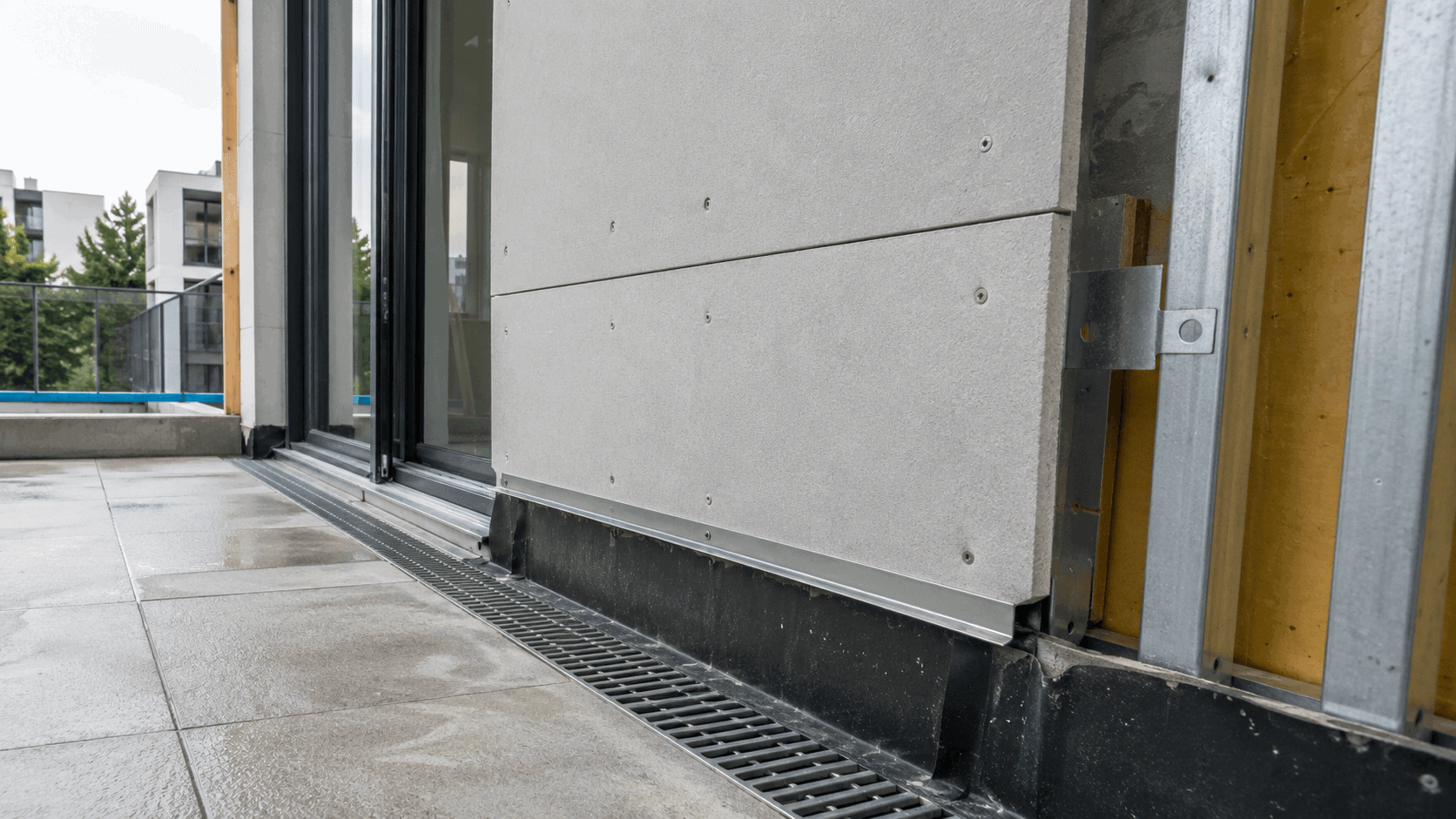
A good fiber cement board balcony detail must consider moisture, drainage, waterproofing, movement, and edge protection from the beginning.
Balconies and terraces are high-risk areas in external wall construction. They are exposed to rain, wind, standing water, splashback, cleaning water, temperature changes, and regular foot traffic.
Fiber cement boards can be used successfully around balcony and terrace wall areas. They may be used as external sheathing, façade backing boards, wall lining boards, or substrate boards behind cladding, render, or other finishes.
However, these areas need careful detailing. A balcony wall is not the same as a simple flat wall. It often includes floor junctions, drainage points, waterproofing layers, door thresholds, parapets, railings, corners, and different materials meeting in the same area.
For architects, contractors, installers, and specifiers, the key point is simple: fiber cement boards can be a reliable solution around balconies and terraces when the moisture details are planned correctly.
Why Balcony and Terrace Details Matter
Balconies and terraces are exposed to more moisture than many other parts of a building.
Rainwater may fall directly onto the terrace surface. It may also collect near the wall base, splash against the lower wall, or move toward door thresholds if drainage is poor.
Common risks include:
- Standing water near the wall
- Rain splashback
- Poor drainage falls
- Damaged waterproofing
- Weak sealant joints
- Moisture trapped behind boards
- Staining near the bottom edge
- Movement cracks
- Poor threshold detailing
- Edge damage around corners
- Water entry around fixings or penetrations
These problems are usually not caused by the board alone. They are often caused by poor coordination between the board, waterproofing, drainage, façade finish, and balcony floor detail.
Fiber Cement Board Balcony Detail: Start With the Full System
A proper fiber cement board balcony detail should not be designed as a single board layer.
It should be considered as part of the full wall and balcony system.
The complete system may include:
- Support frame
- Fiber cement board
- Fixings
- Board joints
- Waterproofing membrane
- Breather membrane
- Flashings
- Sealants
- Base trims
- Drainage outlet
- Terrace floor finish
- Cladding, render, or paint
- Door threshold
- Railing or balustrade fixings
All these elements must work together.
If the board is installed correctly but the waterproofing is poorly detailed, moisture problems can still occur. If waterproofing is correct but the board edge is exposed to standing water, staining or edge damage may still happen.
Keep Boards Away From Standing Water
Fiber cement boards should not be installed where the bottom edge remains in direct contact with standing water.
This is especially important around:
- Terrace floors
- Balcony slabs
- Flat roof terraces
- Door thresholds
- Drainage channels
- Upstands
- Parapet bases
- Raised floor areas
The board should have suitable clearance from the finished surface where required by the system.
The goal is to prevent the board from sitting in water or constantly absorbing splashback from poor drainage.
Good detailing should direct water away from the wall, not toward it.
Check the Balcony Floor Fall
A balcony or terrace surface should be designed so water drains away properly.
If the floor fall is wrong, water may collect near the wall. This can increase moisture exposure at the lower edge of the board.
Before installing fiber cement boards around balconies and terraces, check:
- Direction of water flow
- Floor slope
- Drainage outlet location
- Risk of ponding
- Finished floor level
- Door threshold level
- Waterproofing upstand height
- Junction with wall base
A fiber cement board wall detail cannot solve a badly drained terrace on its own.
Drainage must be designed correctly before the wall finish is completed.
Protect the Bottom Edge of the Board
The bottom edge of the board is one of the most sensitive areas around balconies and terraces.
It can be exposed to rainwater, cleaning water, dirt, foot traffic, and splashback.
Protection may include:
- Suitable clearance
- Base trim
- Drip detail
- Flashing
- Edge sealing where required
- Compatible coating
- Proper drainage
- Ventilation opening where needed
- Protection from direct floor contact
Cut edges need extra attention. If boards are cut on site, the cut edge should be prepared according to the board and system requirements.
Leaving the bottom edge exposed to repeated wetting is poor practice.
Coordinate With Waterproofing Upstands
Balcony and terrace areas usually need waterproofing.
Waterproofing upstands are used to protect the junction between the horizontal balcony floor and the vertical wall.
The fiber cement board detail must not damage or block the waterproofing layer.
Specifiers and installers should check:
- Waterproofing upstand height
- Membrane position
- Compatibility with board system
- Protection of the membrane during board fixing
- Flashing detail
- Sealant detail
- Termination point of the membrane
- Drainage path
The board should not be fixed in a way that punctures or weakens critical waterproofing layers unless the system is designed for it.
Waterproofing should be treated as a key performance layer, not as a hidden afterthought.
Be Careful Around Door Thresholds
Balcony and terrace doors are common problem areas.
The door threshold must manage water, movement, insulation, air sealing, and foot traffic.
Fiber cement boards around door thresholds should be detailed carefully because these areas often include several materials meeting together.
Check:
- Finished floor level
- Threshold height
- Drainage channel
- Door frame sealant
- Flashing
- Board edge clearance
- Movement gap
- Waterproofing connection
- Lower reveal detail
- Side reveal detail
Do not force the board tightly against the threshold frame.
There should be a planned detail that manages movement and moisture.
Avoid Trapping Moisture Behind the Board
Balcony and terrace wall areas often include cladding, render, or other finishes over fiber cement boards.
In these systems, moisture can become a problem if it gets behind the finish and cannot escape.
The wall design should consider:
- Drainage route
- Ventilation cavity where required
- Breather membrane
- Base opening
- Top opening
- Flashing
- Insect mesh
- Weep path
- Sealant durability
Moisture control is not only about stopping water. It is also about allowing the system to dry safely.
A completely sealed but poorly drained wall can create hidden moisture problems.
Use Suitable Flashings and Drip Details
Flashings help direct water away from vulnerable junctions.
Around balconies and terraces, flashing may be needed at:
- Wall base
- Door threshold
- Terrace upstand
- Parapet junction
- Cladding transition
- Window or door sill
- Roof terrace edge
- Board-to-floor junction
A good drip detail prevents water from running back toward the board edge or wall surface.
Poor flashing can allow water to sit against the board or run behind the finish.
The flashing must be compatible with the full wall system and installed before the final finish hides the detail.
Consider Splashback From Terrace Surfaces
Splashback is common on balconies and terraces.
Rain can hit the terrace surface and splash dirt or water onto the lower wall.
This is especially likely when the surface is:
- Concrete
- Stone paving
- Ceramic tile
- Composite decking
- Gravel
- Poorly drained
- Close to the wall base
Splashback can cause staining, dirt marks, and repeated wetting.
To reduce splashback risk, consider:
- Proper clearance
- Drip details
- Drainage falls
- Gravel or drainage zones where suitable
- Protective base trims
- Durable lower wall finish
- Easy-clean coating where appropriate
The lower balcony wall area should be treated as a higher-exposure zone.
Check Movement Between Materials
Balconies and terraces often bring different materials together.
For example, fiber cement board may meet:
- Concrete slab
- Steel railing
- Aluminium door frame
- Waterproofing membrane
- Render
- Cladding
- Timber decking
- Tile finish
- Metal flashing
- Sealant joint
These materials may move differently due to temperature, moisture, building movement, and structural movement.
Movement must be allowed for in the detail.
Rigid connections between different materials can lead to cracks, sealant failure, or board stress.
Railing and Balustrade Fixings Need Special Care
Balcony railings and balustrades should not be fixed casually through fiber cement boards without proper support and waterproofing details.
These fixings may create:
- Point loads
- Water entry points
- Movement stress
- Cracking around holes
- Damage to waterproofing
- Corrosion risk
- Sealant failure
Structural railing fixings should be connected to the appropriate structural support, not just the board surface.
If fixings pass through the board system, the openings must be sealed correctly and coordinated with waterproofing.
This is a detail that should be planned before installation, not solved later on site.
Support the Board Around Openings and Junctions
Balcony and terrace walls often include openings, service penetrations, lighting points, drainage outlets, and railing brackets.
The board should be properly supported around these areas.
Check support around:
- Door openings
- Window openings
- Drain outlets
- Service pipes
- Electrical points
- Lighting brackets
- Railing fixings
- External corners
- Parapet returns
- Wall junctions
Unsupported board edges around these details can move, crack, or create weak points in the finish.
Rendered Balcony Walls Need Reinforcement
If fiber cement board is used behind render around balconies and terraces, reinforcement becomes very important.
Rendered systems may need:
- Primer
- Base coat
- Reinforcement mesh
- Corner beads
- Joint treatment
- Movement joints
- Diagonal mesh around openings
- Compatible render finish
Balcony and terrace areas are exposed to moisture and movement, so the render system must be compatible with the board and the exposure level.
Render should not be used to hide poor board fixing, weak joints, or bad moisture detailing.
Cladded Balcony Walls Need Drainage and Ventilation
If fiber cement board is used behind cladding around balconies or terraces, the cavity detail must be clear.
A ventilated or drained cavity may need:
- Vertical battens or rails
- Air gap
- Drainage path
- Base opening
- Top opening
- Insect mesh
- Flashing
- Weep path
- Protection from blocked cavities
Do not block the cavity at balcony level with mortar, sealant, insulation, or debris.
If water enters the cavity, it must be able to escape.
Painted Boards Need Good Surface Protection
Fiber cement boards may be painted or coated in some balcony and terrace wall applications.
If the board will be painted, the surface must be properly prepared.
Check:
- Surface cleanliness
- Dust removal
- Dryness
- Primer requirement
- Edge sealing where needed
- Compatible exterior paint
- Protection from rain during curing
- Lower wall splashback risk
Paint performance depends heavily on surface preparation and exposure conditions.
Painting over damp, dusty, or contaminated board surfaces can lead to poor finish quality.
Base of Balcony Walls Should Be Easy to Inspect
A good balcony wall detail should allow future inspection where possible.
If the lower edge, drainage zone, or sealant joint is completely hidden, small issues can become bigger before anyone notices them.
Useful inspection areas include:
- Wall base
- Door threshold
- Drain outlets
- Sealant joints
- Flashing edges
- Railing fixings
- Movement joints
- Cladding cavity openings
Design should make maintenance realistic.
A balcony detail that cannot be inspected or maintained may create long-term problems.
Protect Boards During Construction
Balcony and terrace areas are often busy during construction.
Boards may be exposed to:
- Rain
- Cement slurry
- Tile adhesive
- Waterproofing products
- Metal tools
- Foot traffic
- Scaffold dirt
- Cleaning water
- Other trades
- Stored materials
Installed boards should be protected before final finishing.
Avoid leaning tools, tiles, railing parts, or metal profiles against installed board surfaces.
Do not allow cement or render splashes to dry on the board if the surface will remain visible or receive a finish.
Common Mistakes to Avoid
Avoid these common mistakes when using fiber cement boards around balconies and terraces:
- Installing boards too close to standing water
- Ignoring terrace drainage falls
- Blocking drainage or ventilation paths
- Damaging waterproofing upstands
- Fixing through waterproofing without proper detailing
- Leaving bottom edges exposed to repeated wetting
- Treating door thresholds as simple wall joints
- Using rigid filler where movement is expected
- Forgetting splashback from terrace surfaces
- Ignoring railing and balustrade fixing details
- Leaving board edges unsupported around openings
- Applying render without compatible reinforcement
- Blocking cladding cavities at balcony level
- Painting over damp or dusty boards
- Forgetting future inspection and maintenance
Most balcony and terrace problems happen because moisture and movement were not considered early enough.
Site Checklist for Balcony and Terrace Details
Before approving or installing fiber cement boards around balconies and terraces, check the following:
- Is the balcony or terrace drainage direction correct?
- Is standing water kept away from the wall base?
- Is there suitable clearance from the finished floor?
- Is the bottom edge protected?
- Are waterproofing upstands coordinated with the board detail?
- Are flashings and drip details included?
- Are door thresholds properly detailed?
- Are board joints and movement joints planned?
- Are railings fixed to proper structural support?
- Are fixing penetrations sealed correctly?
- Are openings and service penetrations supported?
- Is splashback considered?
- Is the final finish compatible with balcony exposure?
- Is the cavity drained or ventilated where required?
- Can critical details be inspected later?
This checklist helps reduce moisture risk before problems appear.
When Fiber Cement Board Works Best Around Balconies and Terraces
Fiber cement board works best around balconies and terraces when:
- The board is kept away from standing water
- Drainage is designed correctly
- Waterproofing is coordinated
- Door thresholds are properly detailed
- Board edges are protected
- Movement is allowed for
- Flashings and drip details are used
- Support is provided around openings
- Final finishes are compatible
- The wall system can drain and dry
- Installation guidance is followed
In these conditions, fiber cement boards can provide a stable and dependable wall or façade substrate in balcony and terrace areas.
Final Thoughts
Balconies and terraces are demanding parts of a building.
They combine moisture, movement, drainage, waterproofing, thresholds, railings, and different materials in one area.
Fiber cement boards can perform reliably around balconies and terraces when they are used as part of a properly detailed wall system.
The most important points are clear: keep boards away from standing water, protect the lower edge, coordinate waterproofing, maintain drainage, allow movement, and use compatible finishes.
When these details are handled correctly, fiber cement board can support durable, clean, and practical balcony and terrace wall construction.
Need pricing, technical documents, or loading guidance for fiber cement boards? Contact Smartcon with your required thickness, dimensions, quantity, and delivery destination. Our team will help you review the suitable options and provide practical export support from Turkey.
👉 Visit the Smartfiber Fiber Cement Board page to explore specs, sizes, and delivery options.
Authored by Smartcon Int’l. Trade & Marketing Ltd. on 24.06.2026. All rights reserved.
Façade specification
Need the right board for your façade system?
Share the façade build-up, exposure conditions, finish and documentation requirements. We can help assess the appropriate board and coordinate supply.