
Blog
Exterior Sheathing Boards in Modular and Prefabricated Wall Systems: What to Know
Introduction
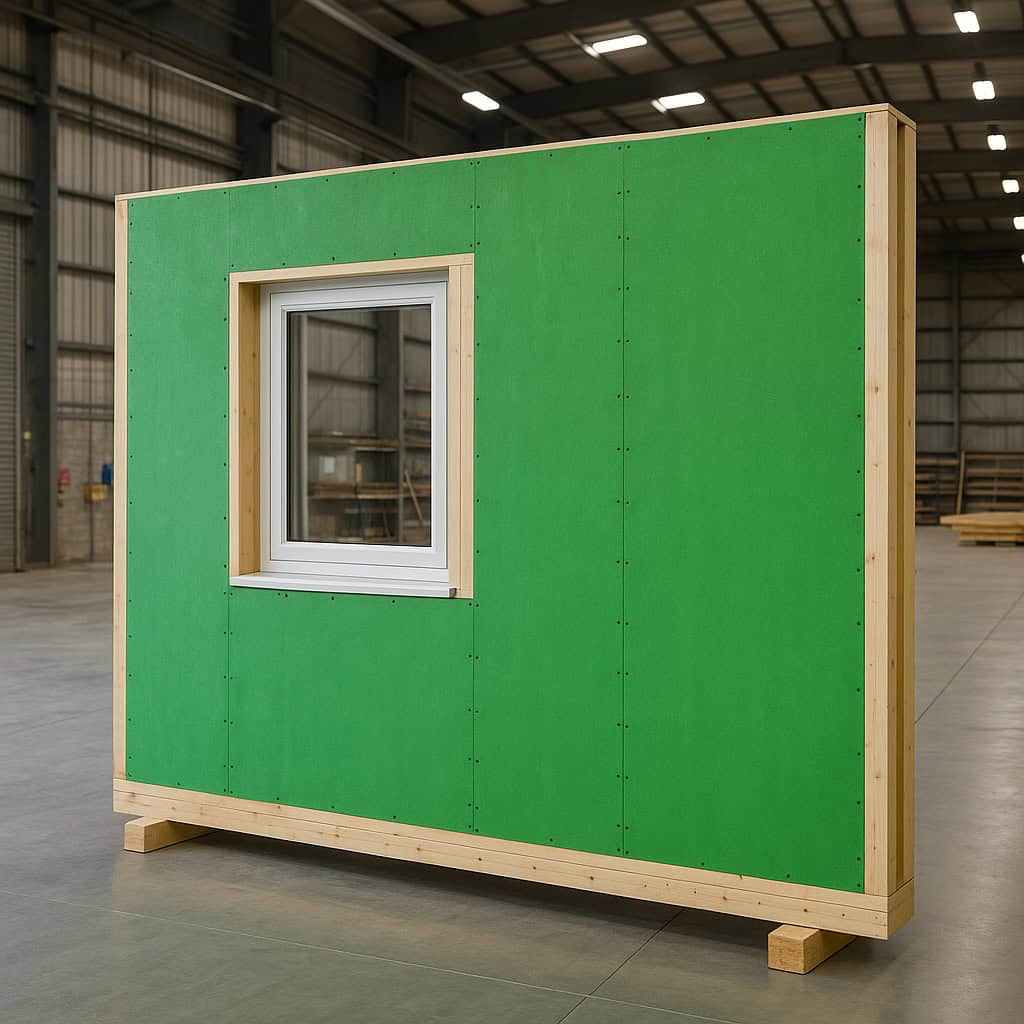
Modular and prefabricated building systems demand materials that are not only strong and durable but also dimensionally stable, lightweight, and compliant with global fire and energy regulations. Exterior sheathing boards play a critical role in these systems — serving as the outer structural layer that supports thermal, fire, impact, and moisture performance.
This article explains how exterior sheathing boards function in modular construction, and what architects, engineers, and off-site manufacturers must consider before selecting one.
What Is the Role of Sheathing in Modular Systems?
In modular and prefabricated walls, exterior sheathing boards are installed directly onto steel or engineered timber framing. Their function is multi-layered:
- Provides external reinforcement against wind load and impact
- Creates a stable base for cladding or façade materials
- Protects insulation layers from moisture and UV exposure
- Improves fire resistance and thermal stability of the wall system
- Ensures airtightness and prevents deformation during transport and assembly
Unlike traditional construction, modular units are built fully off-site, which means sheathing must withstand factory lifting, transportation vibration, and on-site installation stress — before the façade even arrives.
Why Fiber Cement Is Favored in Modular Prefab Systems
Fiber cement exterior sheathing boards are increasingly preferred due to their superior stability and safety ratings.
Key advantages include:
- Non-combustible (Class A1/A2 fire rating)
- High dimensional stability — no warping or swelling
- Resistant to moisture during transport and installation
- Compatible with ventilated façade and insulation systems
- Performs well in Passive House and energy-efficient builds
They are considered a safer and more durable alternative to OSB, plywood, and paper-faced gypsum in modular applications.
Critical Specification Factors to Check
Before selecting sheathing boards for modular construction, engineers must verify:
- Fire rating compliance — EN 13501-1 Class A2 or ASTM E84 Class A
- Moisture resistance during both factory and transport stages
- Weight compatibility with crane lifting systems
- Deflection performance under racking and wind load
- Compatibility with external insulation and final façade systems
- BREATHABILITY vs FULL SEALING — depending on local climate
The wrong sheathing board can compromise an entire modular system — especially when transported across multiple climate zones.
Conclusion
In modular and prefabricated wall systems, exterior sheathing boards are not optional — they are foundational to performance, safety, and durability. Fiber cement sheathing is now the preferred solution for fire safety, dimensional stability, moisture control, and compatibility with ventilated façades.
When correctly specified, exterior sheathing boards ensure that factory-built modules remain structurally stable during transport, weather-resistant on site, and compliant with long-term building standards — from energy performance to fire protection.
For high-performance sheathing that is engineered to withstand moisture and enhance façade systems, explore the Smartcon Exterior Sheathing Board.
Authored by Smartcon Int’l. Trade & Marketing Ltd. on 19.10.2025. All rights reserved.
Exterior wall system
Specifying an exterior wall system?
Share the wall build-up, exposure, framing and fire-performance requirements. We can help assess the sheathing specification and next steps.