
Blog
Best Installation Practices for Exterior Sheathing Boards to Avoid Structural Failures
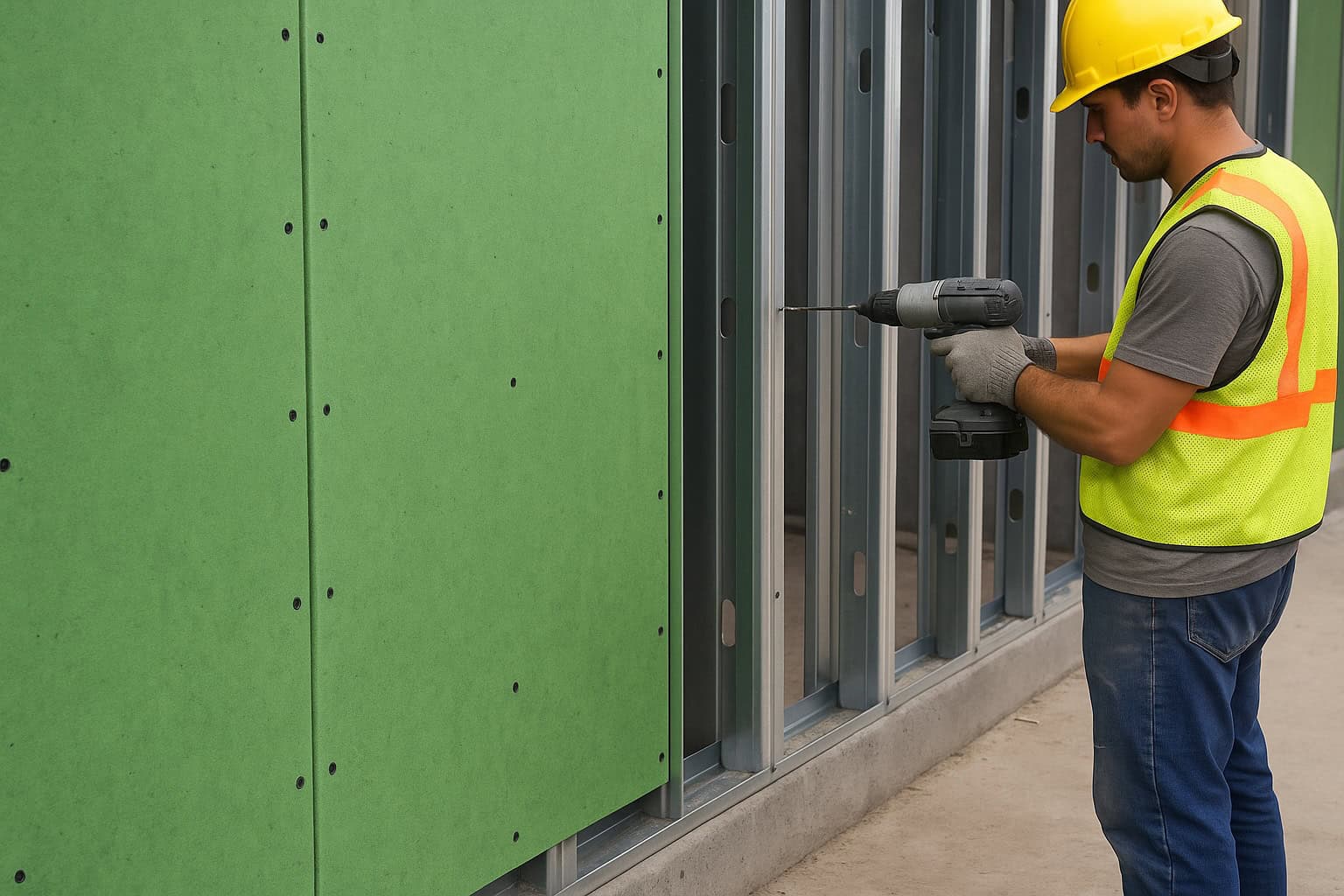
Introduction: Most Sheathing Failures Are Caused on Day One — Not Year Ten
In most cases, exterior sheathing boards do not fail because the material is weak — they fail because they were installed incorrectly.
Boards crack, absorb moisture, warp, delaminate, or even collapse behind the façade — and the mistake is traced back to poor handling, wrong screws, lack of expansion gaps, or leaving them exposed too long.
This is not a surface problem — it becomes a legal, financial, and project reputation problem.
The entire façade system is compromised before the cladding even arrives.
That is why exterior sheathing must never be treated as “just a backing board.” It is a structural safety layer — and must be installed accordingly.
What Goes Wrong When Installation Is Not Taken Seriously
These are the real-world failures we see over and over again:
- Boards crack or snap because screws were over-tightened or fixed too close to the edges.
- Panels bulge or warp because installers did not leave 2–3 mm movement gaps.
- Moisture gets trapped inside walls because cut edges were not sealed immediately.
- OSB or gypsum sheathing swells like a sponge because it was left exposed to rain.
- Whole façade surfaces visibly sag or deform after strong wind, because the substructure was uneven.
- On-site teams mix different screw types, causing stress imbalance that shows up months later as cracks.
These problems are completely avoidable — if the correct practices are followed from the moment the boards arrive on site.
The Correct Way to Install Exterior Sheathing Boards — No Exceptions
1- Storage and Handling — How You Start Determines How You Finish
- Always store flat and elevated — never leaning against walls.
- Keep them covered but ventilated — never sealed airtight with plastic.
- Lift, never drag — dragging damages edges and surface coating instantly.
- If the edges absorb moisture before installation — the board is already compromised.
2- Substructure Must Be Perfectly Aligned — Not “Good Enough”
- Use galvanized steel or aluminum framing, not untreated timber.
- Make sure the frame is 100% straight and level — sheathing will reveal imperfections later.
- Follow manufacturer max stud spacing — usually 400 mm (interior) or 600 mm (exterior).
- If the frame is unstable, no sheathing board will “fix it later.”
3- Fastening — This is Where Most Installers Make Fatal Mistakes
- Use only approved corrosion-resistant screws — NO drywall screws, NO wood screws.
- Screws must sit flush — NOT countersunk and NOT protruding.
- Minimum 20–30 mm distance from edges — anything closer will cause cracking.
- Maintain consistent spacing (typically 200–300 mm) — do not “eyeball it.”
4- Expansion Gaps Are NOT Optional
- Leave a 2–3 mm gap between every panel — ALWAYS.
- Without these gaps, boards will expand from humidity and crack violently.
- One tight-fitted install = guaranteed future failure.
5- Seal All Cut Edges Immediately
- Any saw-cut or factory-damaged edge must be sealed on the spot — do not leave it “for later.”
- Unsealed edges absorb moisture from only air humidity, not just rain.
- This single step determines long-term success or disaster.
6- Do NOT Leave Installed Boards Fully Exposed to Weather
- Most sheathing boards allow temporary exposure — 30 to 90 days max (check spec sheet).
- If cladding is delayed, cover with breathable facade membrane.
- Never allow standing water or pooling — this is the biggest real-world killer of OSB/gypsum boards.
If This Is Done Right — The Sheathing Will Outperform the Structure
When exterior sheathing is installed correctly, it will:
- Remain stable for decades — not months
- Protect insulation and framing from wind load, humidity, UV, and fire
- Allow seamless installation of façade cladding without cost overruns
- Pass insurance, certification, compliance, and site inspection with zero questions
When done incorrectly — you will see failures within 6–18 months — and the cost will be far more than fixing it right from day one.
Conclusion
Exterior sheathing is not decoration — it is structural protection.
Installing it with shortcuts or assumptions is the fastest way to guarantee future system failure.
When installation follows the correct method — the façade system becomes stronger, safer, and future-proof.
The difference is not the material — it is the execution.
For high-performance sheathing that is engineered to withstand moisture and enhance façade systems, explore the Smartcon Exterior Sheathing Board.
Authored by Smartcon Int’l. Trade & Marketing Ltd. on 19.10.2025. All rights reserved.
Exterior wall system
Specifying an exterior wall system?
Share the wall build-up, exposure, framing and fire-performance requirements. We can help assess the sheathing specification and next steps.