
Blog
How to Drill Fiber Cement Boards Without Cracking or Burning the Surface
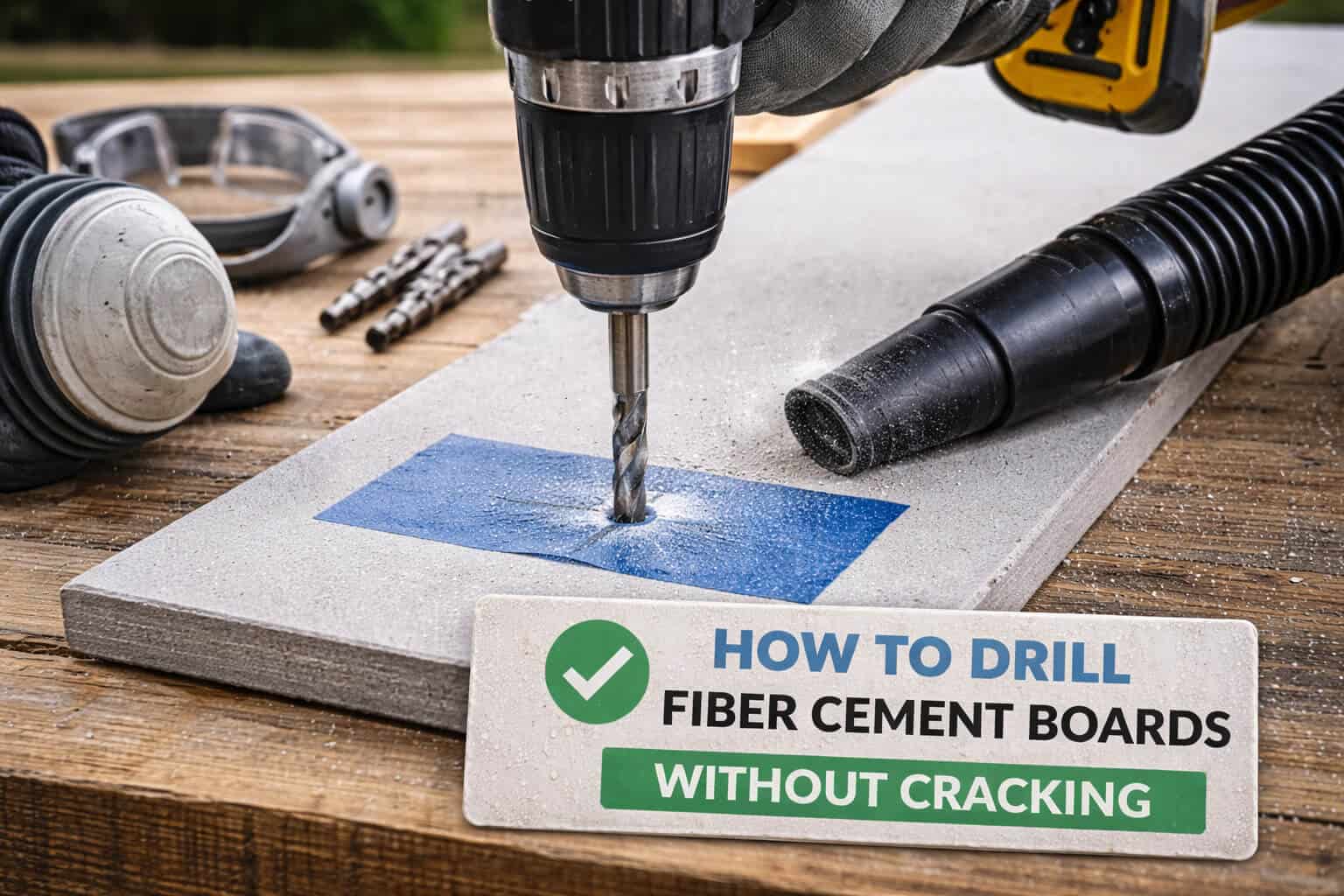
Drilling fiber cement boards is not difficult, but it does require the right method. If you rush the job, use the wrong bit, or apply too much pressure, you can chip the face, crack the board, or burn the surface. The good news is that most of these problems are avoidable with the correct setup, proper support, and a clean drilling technique. Fiber cement products also contain crystalline silica, so dust control is a serious safety issue, not an optional extra. OSHA requires employers to limit respirable crystalline silica exposure in construction and provides task-specific controls for silica-generating work.
Why fiber cement boards crack or burn during drilling
Most drilling problems come from one of four mistakes. The board is unsupported near the hole. The bit is dull or wrong for the material. The drill speed is too aggressive. Or the installer pushes too hard and lets heat build up. Fiber cement is dense and abrasive, so tools wear faster than they would on softer boards. Manufacturers consistently recommend fiber-cement-specific or carbide-tipped cutting tools for related operations, which reinforces the same principle for drilling: use hard, sharp tooling and control dust carefully.
Use the right tools first
For small holes, use a sharp carbide-tipped masonry bit or a high-quality multi-material bit rated for cementitious products. For larger penetrations, use a carbide-grit or diamond-grit hole saw rather than trying to force a standard wood hole saw through the board. Avoid cheap HSS bits for repeated drilling because fiber cement is abrasive and can dull them quickly, which increases heat, surface damage, and chipping. Current manufacturer guidance for fiber cement products repeatedly points toward carbide- or diamond-tipped tooling for cutting operations, and the same logic applies when drilling clean holes in a dense cementitious board.
Control dust before you start
Before you drill anything, think about dust. Fiber cement dust can contain respirable crystalline silica. OSHA’s construction silica standard applies to occupational exposure, and OSHA’s guidance repeatedly emphasizes using the tool and dust-control method recommended by the manufacturer to minimize emissions. For fiber-cement cutting tasks, OSHA’s published control methods center on dust collection systems, proper airflow, and high-efficiency filtration. In practice, for drilling, that means working outdoors when possible, using dust extraction when feasible, and cleaning with a HEPA vacuum rather than dry sweeping.
Step 1: Support the board properly
Lay the board flat on a stable work surface. Support the area around the drilling point so the panel does not vibrate or flex. Do not let the board hang loose in the air near the edge or the corner. If the board moves while drilling, the risk of breakout and cracking rises sharply. This is especially important with thinner sheets and with holes near edges. The drilling process should feel controlled and steady, not bouncy or forced.
Step 2: Mark the hole clearly
Mark the drilling point with a pencil or masking tape. Tape can help reduce surface chipping, especially on finished or coated faces. If appearance matters, drill from the visible face and support the back side with a sacrificial board. That gives the bit a cleaner exit and reduces breakout on the rear face. Keep the hole location sensible and avoid drilling too close to edges or corners unless the product manufacturer specifically allows it.
Step 3: Start slowly
Do not start at full speed. Place the bit square to the surface and begin at a slow, controlled speed so the bit seats properly. Once the bit has established itself, keep the drill steady and let the tool do the work. Do not lean on the drill. Too much pressure creates friction, more heat, faster bit wear, and a higher chance of surface burning or edge damage. The cleaner approach is a slow start, moderate speed, and consistent control.
Step 4: Keep heat under control
If you see scorching, smell burning, or notice the surface darkening around the hole, stop and check the setup. Usually the cause is a dull bit, too much RPM, or too much force. Fiber cement should not be bullied. It should be drilled with patience. Back the bit out occasionally on deeper holes to clear dust and reduce heat buildup. This also helps the cut stay cleaner.
Step 5: Use the correct technique for larger holes
For pipe penetrations, vents, and service openings, a hole saw is usually the best option. Use a carbide-grit or diamond-grit hole saw designed for abrasive materials. Start slowly, keep the tool square, and avoid wobbling. Do not try to rush large holes. If the board has a finished face, protect the visible surface and support the back side. For very large or irregular openings, it may be better to drill a starter hole and complete the cut with a fiber-cement-appropriate cutting tool while still following the same dust-control precautions manufacturers require for cutting outside and with dust collection.
For larger or irregular openings, our guide on how to cut fiber cement boards cleanly on site explains the correct tools, support, dust control, and cutting technique in more detail.
Pipes, cables, ducts, and other openings also need correct support and sealing. See our detailed guide to fiber cement board service penetrations before completing these areas.
Should you use hammer mode?
No, not for this job. Hammer mode is for masonry drilling into concrete or brick. It is not the right approach for drilling a clean hole in a fiber cement board. The impact action can chip the face, enlarge the hole unevenly, and increase the risk of cracking, especially near edges. Use standard rotary drilling with the right bit instead.
How to avoid cracking near edges
Edge drilling is where many installers get into trouble. Keep the hole far enough away from the edge to avoid concentrating stress in a weak area. The exact edge distance depends on the board, hole size, and manufacturer guidance, but the practical rule is simple: do not crowd the edge unless you have a specific reason and product approval to do so. Support the board well, start slowly, and never force the last part of the hole.
If the hole is being drilled for a fixing, review the correct edge distance and fixing patterns before marking its position.
When the hole is intended for a fixing, it is equally important to choose the correct screws for fiber cement boards and avoid overtightening.
How to keep the surface clean
If the board is decorative, prefinished, or intended for visible use, appearance matters. Use masking tape over the drilling location, drill slowly, and clean dust off the surface promptly. Nichiha’s installation guidance says fiber cement dust can bind to the panel finish and recommends HEPA vacuuming after cutting. The same lesson applies after drilling: do not leave dust sitting on the face longer than necessary.
In moisture-exposed or exterior applications, check whether the specification requires you to seal drilled holes and cut edges where required.
Common mistakes to avoid
The most common mistakes are easy to spot:
- using a dull bit
- drilling too fast
- pushing too hard
- drilling without supporting the board
- using the wrong tool for large holes
- ignoring silica dust control
- leaving dust on the finished face
If you avoid those mistakes, most drilling jobs become straightforward.
A simple drilling checklist
Before drilling fiber cement boards, make sure you have:
- a sharp carbide-tipped or suitable abrasive-material bit
- a stable, well-supported work surface
- moderate drill speed, not maximum RPM
- light, controlled pressure
- dust control and cleanup plan
- a HEPA vacuum if possible
- eye protection, hearing protection, and appropriate respiratory protection when required
OSHA’s silica materials and employer guidance stress that engineering controls, manufacturer instructions, and appropriate respiratory protection are part of compliant silica risk management in construction.
For a broader review before closing or finishing the wall, use our fiber cement board installation checklist for site managers.
Dust should also be removed from the hole and surrounding surface before sealing or finishing. Learn why it is important to remove fiber cement board dust before finishing.
The practical takeaway
If you want to drill fiber cement boards without cracking or burning the surface, the formula is simple: use the right bit, support the board, start slowly, avoid too much pressure, and control dust properly. Most damage happens when the installer treats fiber cement like a soft wood board or tries to work too fast. With the correct method, you can get clean, professional holes with much less risk of chipping, scorching, or cracking.
👉 Visit the Smartfiber Fiber Cement Board page to explore specs, sizes, and delivery options.
Authored by Smartcon Int’l. Trade & Marketing Ltd. on 18.04.2026. All rights reserved.
Façade specification
Need the right board for your façade system?
Share the façade build-up, exposure conditions, finish and documentation requirements. We can help assess the appropriate board and coordinate supply.