
Blog
Does Fiber Cement Board Need a Breather Membrane Behind It?
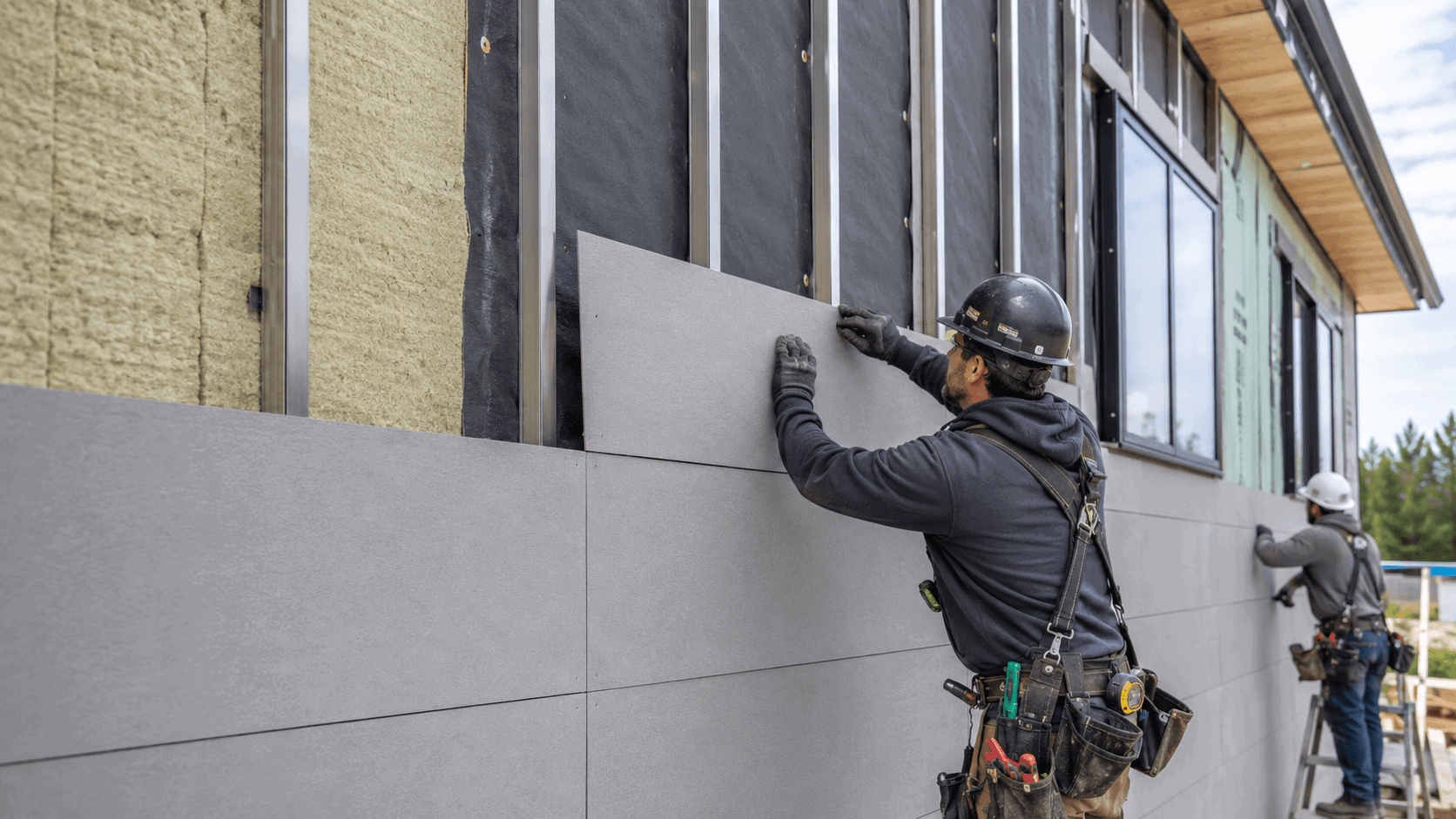
Fiber cement board is often used in external walls, façades, sheathing systems, ventilated façades, modular buildings, dry construction, and rainscreen applications.
One common question from architects, contractors, installers, and buyers is:
Does fiber cement board need a breather membrane behind it?
The short answer is: in many external wall systems, a breather membrane or weather-resistant barrier may be required behind the fiber cement board, but it depends on the full wall build-up, exposure level, board application, and project specification.
Fiber cement board is a strong and reliable construction board, but it should not always be treated as the only weather protection layer in an external wall. In many applications, it works best as part of a complete system that may include framing, insulation, membranes, ventilation gaps, fixings, trims, flashings, and final cladding or coating.
This guide explains when a breather membrane may be needed behind fiber cement board, what it does, and what to check before installation.
What Is a Breather Membrane?
A breather membrane is a protective sheet used in external wall and roof systems.
Its main purpose is to help protect the wall build-up from external moisture while allowing water vapour to escape from inside the construction. This helps reduce the risk of trapped moisture inside the wall.
In simple terms, a breather membrane helps the wall manage moisture.
It can help to:
- Protect insulation and framing from wind-driven rain
- Reduce moisture entering the wall cavity
- Allow water vapour to pass out of the build-up
- Improve weather protection behind cladding
- Support better long-term wall performance
- Reduce the risk of trapped moisture
- Provide an extra layer of protection during construction
A breather membrane is not a decorative finish. It is a functional layer within the wall system.
Fiber Cement Board Is Part of the Wall System
Fiber cement board is a durable board material, but it is only one part of the wall.
An external wall may include:
- Structural frame
- Battens or metal studs
- Insulation
- Sheathing board
- Breather membrane
- Vapour control layer
- Ventilation cavity
- Fixing rails
- Cladding panels
- Render system
- Sealants
- Flashings
- Corner profiles
- Window and door trims
The correct build-up depends on the project.
This is why the answer is not always the same. The need for a breather membrane depends on where the fiber cement board is placed in the wall and what role it is expected to perform.
When a Breather Membrane Is Usually Needed
A breather membrane is commonly used when fiber cement board forms part of an external wall build-up and there is a need to protect the layers behind it.
This is especially common in external sheathing, ventilated façades, rainscreen cladding, timber-frame walls, light steel frame systems, modular buildings, and walls with insulation behind the board.
A membrane may be required when:
- The board is used as external sheathing
- The board sits in front of insulation or framing
- The wall is exposed to wind-driven rain
- The façade has open or ventilated joints
- The board is part of a rainscreen system
- The wall build-up needs a secondary weather barrier
- The project specification requires it
- The façade system supplier recommends it
In these cases, the membrane helps protect the wall behind the board.
When a Breather Membrane May Not Be Required
A breather membrane may not always be needed.
For example, it may not be required when the fiber cement board is used indoors, in a dry internal partition, as a tile backing board in a controlled system, or in a hidden application where another approved weather barrier already exists.
It may also not be needed if the full façade system has another tested and approved method for managing moisture.
A membrane may not be necessary when:
- The board is used internally
- The board is not part of an external wall build-up
- Another weather protection layer is already installed
- The system is designed without a breather membrane
- The board is used only as a backing layer in a dry area
- The project specification confirms that no membrane is required
The key point is simple: do not guess. Check the full wall system before deciding.
Why Fiber Cement Board Alone May Not Be Enough
Fiber cement board is resistant, durable, and suitable for demanding construction use. However, external walls face many moisture risks.
Rainwater can enter through joints, open gaps, poorly sealed edges, corners, fixings, window details, façade profiles, roof edges, or installation mistakes.
Even a well-installed board may not be designed to act as the only weather barrier for the entire wall.
A breather membrane can provide a second line of defence behind the outer layer.
This is especially important because moisture problems often happen at details, not in the middle of the board.
Common risk areas include:
- Board joints
- External corners
- Window openings
- Door openings
- Parapets
- Balconies
- Service penetrations
- Soffits
- Roof edges
- Base of external walls
A good wall system should manage these areas carefully.
Breather Membrane Behind Fiber Cement Cladding
When fiber cement board is used as part of a cladding or façade system, the membrane can be very important.
In many rainscreen or ventilated façade systems, the outer cladding is not expected to stop every drop of rain. Instead, the façade is designed so that any water that passes the outer surface can drain away safely.
In this type of system, the breather membrane helps protect the wall behind the cladding.
The membrane works together with:
- Ventilation cavity
- Drainage path
- Battens or rails
- Cladding panels
- Open or sealed joints
- Flashings and trims
- Window and door details
This is why a breather membrane is often used behind cladding boards, especially where the façade has open joints or exposed details.
Breather Membrane Behind Fiber Cement Sheathing
Fiber cement board may also be used as an external sheathing board.
In this case, the board may sit behind another layer such as insulation, cladding, render carrier systems, or façade panels.
A breather membrane may be placed over the sheathing or in another correct position within the wall build-up, depending on the system design.
The aim is to protect the structure and insulation while allowing moisture vapour to escape.
For external sheathing applications, check:
- Wall type
- Frame material
- Insulation position
- Membrane position
- Vapour control requirements
- Cladding or render system
- Drainage and ventilation design
- Local project specification
The membrane location should be planned before installation starts.
Do Not Confuse Breather Membrane With Vapour Control Layer
A breather membrane and a vapour control layer are not the same thing.
A breather membrane is normally used toward the outer side of the wall build-up. It helps protect against external moisture while allowing vapour to escape.
A vapour control layer is usually placed toward the warm side of the insulation in certain wall systems. Its role is to reduce the amount of water vapour entering the construction from inside the building.
The correct position depends on climate, building use, insulation type, wall design, and project specification.
Do not replace one with the other without checking the system design.
Using the wrong layer in the wrong place can trap moisture instead of managing it.
Ventilation Gap and Breather Membrane Are Different Details
A ventilation gap and a breather membrane are also different.
The ventilation gap allows air movement and drainage behind cladding or façade boards. It helps moisture escape and allows any water that gets behind the outer surface to drain away.
The breather membrane protects the wall build-up behind the cavity.
In many façade systems, both may be needed.
The ventilation gap manages air and drainage. The breather membrane protects the inner wall layers.
One does not automatically replace the other.
What Happens If No Membrane Is Used?
If a breather membrane is needed but not installed, the wall may become more vulnerable to moisture.
Possible problems include:
- Wet insulation
- Damp framing
- Staining
- Condensation risk
- Reduced thermal performance
- Moisture marks
- Mould risk in some conditions
- Damage around joints and openings
- Poor long-term wall performance
These problems may not appear immediately. They can develop slowly after repeated rain, seasonal changes, or poor drying conditions.
This is why moisture control should be planned at the design stage, not after the wall is finished.
Can the Membrane Be Installed Directly Behind the Board?
In many systems, the membrane is installed behind the external board or cladding layer, but the exact position depends on the wall design.
Sometimes it is fixed over sheathing. Sometimes it sits behind battens. Sometimes it works with a ventilated cavity. Sometimes the fiber cement board itself is behind another cladding or render system.
The correct position should be confirmed by the system design or project specification.
Before installation, check:
- Which layer the membrane should cover
- Whether the membrane should be taped
- How laps should be formed
- How openings should be sealed
- How corners should be detailed
- How penetrations should be protected
- Whether battens create a drainage cavity
- Whether the membrane is compatible with the façade system
A membrane installed in the wrong position may not perform as intended.
Pay Special Attention Around Windows and Doors
Windows and doors are high-risk areas for moisture entry.
Even if the wall has a breather membrane, poor detailing around openings can allow water to enter behind the façade.
Around openings, the membrane should work with flashings, tapes, trims, sills, reveal details, and the board layout.
Important checks include:
- Membrane continuity around openings
- Correct laps and overlaps
- Proper sill and head details
- Sealed corners
- Compatible tapes or sealants
- Clean drainage path
- No trapped water behind trims
A good membrane detail should direct water out of the wall, not trap it inside.
Pay Attention to Board Joints and Open-Joint Façades
If the fiber cement board façade has open joints or visible gaps, a membrane behind the board becomes even more important.
Open-joint systems can allow some rainwater or wind-driven moisture to pass behind the outer face. This is not necessarily a problem if the system is designed correctly.
However, the wall behind the boards must be protected.
For open-joint façades, the membrane should be suitable for the exposure level. In some cases, a UV-resistant membrane may be required if sunlight can reach the membrane through the joints.
This should be checked before installation.
Membrane Colour and UV Exposure Can Matter
In some façade systems, especially open-joint designs, the membrane may be partly visible through the gaps.
In these cases, the membrane colour and UV resistance can matter.
A standard membrane may not be suitable for long-term UV exposure. If the joints are open, the selected membrane should be suitable for that condition.
This is not only an appearance issue. It can also affect long-term performance.
Before installing an open-joint fiber cement façade, check whether the membrane is designed for:
- UV exposure
- Open joints
- External wall use
- Wind load conditions
- Correct fixing method
- Long-term durability
The board, membrane, cavity, and joint design should work together.
Do Interior Fiber Cement Boards Need a Breather Membrane?
In most normal interior applications, a breather membrane is not needed behind fiber cement board.
Interior boards are usually used for partitions, wall linings, ceilings, backing boards, or dry construction details. These areas are not normally exposed to external rain or wind-driven moisture.
However, wet areas such as bathrooms, kitchens, laundry rooms, and commercial wash areas may need waterproofing systems, tanking membranes, sealants, or tile backing preparation.
This is different from an external breather membrane.
For interior wet areas, the question is usually not “Do I need a breather membrane?” but “Do I need waterproofing or a suitable tile backing system?”
What to Check Before Installation
Before deciding whether fiber cement board needs a breather membrane behind it, check the full application.
Ask these practical questions:
- Is the board used indoors or outdoors?
- Is it part of an external wall system?
- Is it used as sheathing or cladding?
- Is insulation behind the board?
- Is the façade ventilated?
- Are the joints open or sealed?
- Is the building exposed to heavy rain or wind?
- Are there many windows, doors, corners, or penetrations?
- Does the project specification require a membrane?
- Does the façade system recommend a membrane?
- Is a vapour control layer also needed elsewhere in the wall?
If the wall is external and moisture-sensitive layers sit behind the board, a membrane is often a sensible and commonly specified protection layer.
Common Mistakes to Avoid
Do not assume fiber cement board alone replaces a full weather barrier.
Do not ignore the wall build-up behind the board.
Do not confuse a breather membrane with a vapour control layer.
Do not block the ventilation cavity with poor detailing.
Do not leave membrane laps, corners, or openings unfinished.
Do not use a membrane that is unsuitable for open-joint or UV-exposed façades.
Do not place the membrane in the wrong layer of the wall.
Do not decide membrane requirements after the boards are already installed.
These mistakes can cause moisture problems that are difficult and expensive to correct later.
Practical Recommendation
For internal dry applications, a breather membrane is usually not required.
For external sheathing, ventilated façades, rainscreen cladding, timber-frame walls, light steel frame walls, modular construction, and insulation-backed wall systems, a breather membrane is often required or strongly recommended.
The exact requirement depends on the wall system, climate exposure, building design, and project specification.
The safest approach is to treat fiber cement board as one part of the external wall system, not as the only weather protection layer.
Final Thoughts
Fiber cement board is a dependable and practical board for modern construction. It can be used successfully in many external wall and façade applications.
However, external walls need more than a strong board. They also need correct moisture control, drainage, ventilation, flashing, sealing, and system detailing.
A breather membrane behind fiber cement board may be required when the board is used in an external wall system, especially where insulation, framing, open joints, or ventilated façade details are involved.
The key is to check the full wall build-up before installation.
When fiber cement board, breather membrane, ventilation cavity, fixings, trims, and finishes are designed together, the wall becomes safer, more durable, and more reliable in real construction conditions.
👉 Visit the Smartfiber Fiber Cement Board page to explore specs, sizes, and delivery options.
Authored by Smartcon Int’l. Trade & Marketing Ltd. on 02.07.2026. All rights reserved.
Façade specification
Need the right board for your façade system?
Share the façade build-up, exposure conditions, finish and documentation requirements. We can help assess the appropriate board and coordinate supply.