
Blog
Common Aluminium Composite Panel Problems and How to Avoid Them
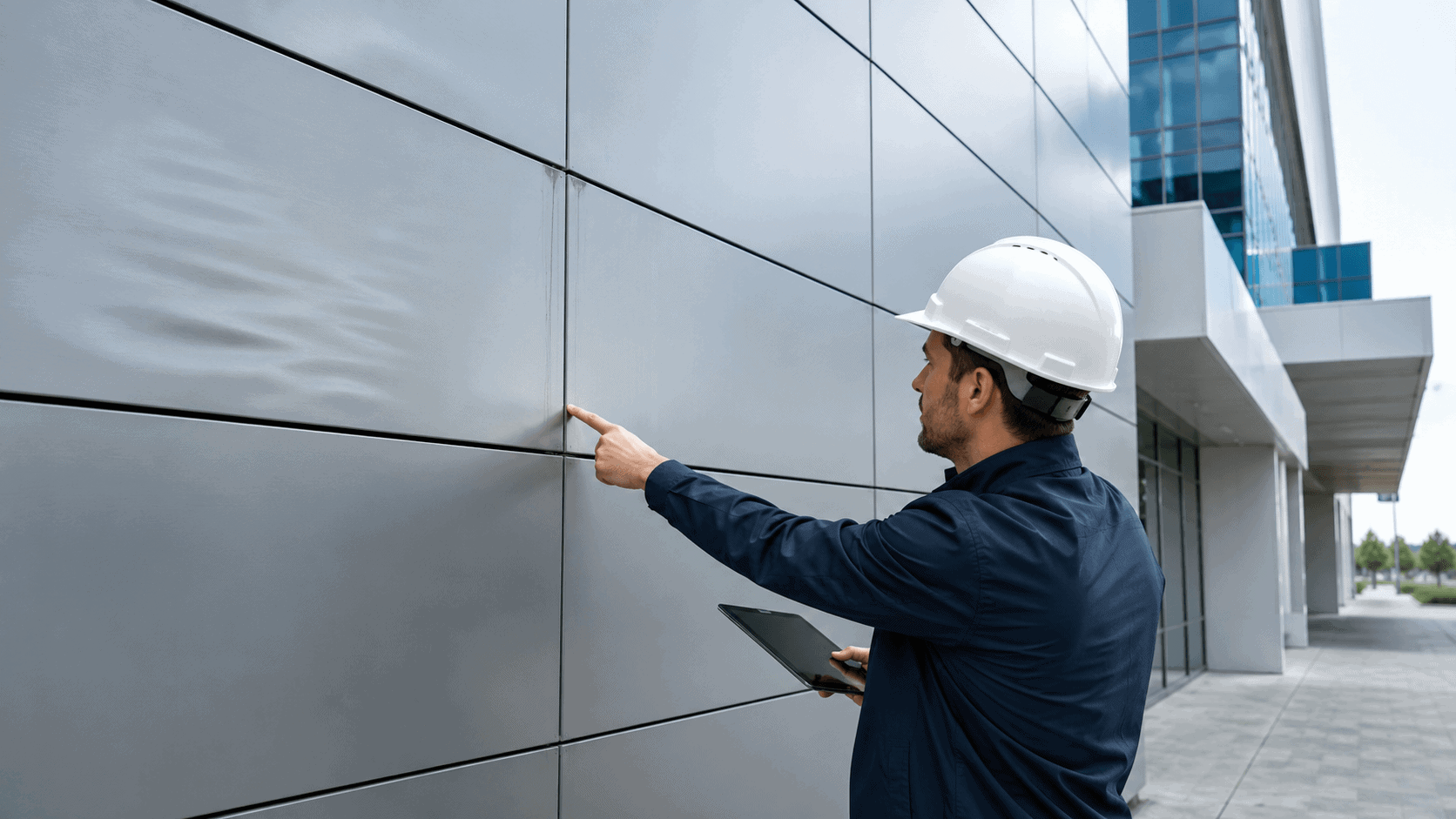
Aluminium composite panel problems are usually not caused by the panel alone. In many cases, defects happen because of poor material selection, incorrect installation, weak substructure preparation, unsuitable fixing methods, or lack of maintenance.
Aluminium composite panels, also known as ACP panels, are widely used in façades, cladding systems, shopfronts, signage, interior walls, and commercial buildings. They are lightweight, modern-looking, and easy to fabricate.
However, like every building material, ACP panels must be selected, handled, installed, and maintained correctly.
This guide explains the most common aluminium composite panel problems and how to avoid them before they become expensive project issues.
Why Do Aluminium Composite Panel Problems Happen?
Most ACP panel problems happen for one of four reasons.
The first reason is wrong product selection. Not every ACP panel is suitable for every application. A panel used for indoor signage may not be suitable for an exterior façade.
The second reason is poor installation. Even a good-quality panel can fail if it is fixed incorrectly.
The third reason is weak detailing. Poor joint design, insufficient ventilation, or bad edge protection can lead to water ingress, movement, and staining.
The fourth reason is lack of maintenance. ACP façades are low-maintenance, but they are not maintenance-free.
Understanding these points helps architects, contractors, and buyers avoid common mistakes.
- Wrong ACP Panel Type
One of the biggest aluminium composite panel problems is choosing the wrong panel type for the application.
ACP panels may look similar from the outside. However, their core type, coating, thickness, aluminium skin thickness, and fire performance can be very different.
For example, a basic PE core panel may be suitable for some signage or interior applications. However, it may not be appropriate for demanding façade projects where higher fire performance is required.
For exterior cladding, buyers should check:
- core type
- fire rating
- total panel thickness
- aluminium skin thickness
- coating type
- UV resistance
- technical data sheet
- intended application
A low-cost panel can become expensive if it causes compliance issues, colour fading, installation failure, or consultant rejection.
- Poor Fire Rating Selection
Fire performance is one of the most important factors in ACP panel selection.
A common mistake is asking only for “ACP panels” without specifying the required fire rating. This can lead to the wrong core type being supplied.
ACP panels are commonly available with different core types, such as PE, FR, and A2 mineral-filled cores. These cores have very different fire performance levels.
For façade and cladding applications, project teams should always check the required fire classification before placing an order.
Generic claims such as “fireproof” or “fire-rated” are not enough. Buyers should ask for proper technical documentation and test reports.
For more detail, link this sentence to your fire rating article:
Read our guide on aluminium composite panel fire rating, PE, FR and A2 cores.
- Incorrect Panel Thickness
Another common issue is choosing the wrong ACP panel thickness.
ACP panels are available in different total thicknesses, such as 3 mm, 4 mm, and 6 mm. The right thickness depends on the application, panel size, wind load, fixing system, and project requirements.
If the panel is too thin for the application, it may suffer from poor flatness, vibration, deformation, or visible movement.
For exterior cladding, panel thickness should not be selected only based on price. The complete façade system must be considered.
Important factors include:
- panel dimensions
- wind exposure
- building height
- fixing method
- substructure spacing
- edge detailing
- local regulations
The cheapest panel is not always the most economical choice in the long term.
- Poor Substructure Alignment
ACP panels need a stable and properly aligned substructure.
If the substructure is uneven, weak, or incorrectly spaced, the panels may not sit flat. This can create visible waves, misalignment, joint irregularities, or fixing stress.
Poor substructure alignment can also increase the risk of oil-canning.
Before installation, contractors should check:
- vertical and horizontal alignment
- fixing points
- support spacing
- structural stability
- movement allowance
- compatibility with the selected panel system
Good panel appearance starts behind the panel, not on the surface.
- Oil-Canning and Surface Waves
Oil-canning is a visible waviness or distortion on the surface of metal panels.
This is one of the most frustrating ACP façade problems because it affects appearance, especially on large smooth surfaces.
Oil-canning may be caused by:
- poor substructure alignment
- excessive panel size
- thermal movement
- incorrect fixing
- insufficient expansion gaps
- uneven stress during installation
- poor handling or storage
To reduce the risk, installers should avoid forcing panels into position. Panels should be installed with proper tolerances and according to the recommended fixing system.
Large panels should be carefully designed, especially on highly visible façades.
- Water Ingress Around Joints
Water ingress is another common ACP cladding issue.
ACP panels themselves are not usually the main problem. The problem often comes from poor joint detailing, bad sealing, weak flashing, or incorrect installation.
Water may enter through:
- poorly sealed joints
- open panel edges
- failed sealants
- incorrect flashing details
- badly designed corners
- poor window interfaces
- damaged panel edges
To avoid water ingress, the façade system should be designed with proper drainage, ventilation, and joint detailing.
Installers should also make sure that sealants, gaskets, flashings, and support profiles are compatible with the ACP system.
- Poor Fixing Method
The fixing method has a major effect on ACP panel performance.
Wrong screws, rivets, adhesives, or cassette details can lead to movement problems, loose panels, visible defects, or long-term failure.
Common fixing mistakes include:
- using unsuitable fasteners
- over-tightening screws
- ignoring thermal expansion
- using poor-quality rivets
- weak adhesive application
- incorrect cassette fabrication
- poor edge distance
- lack of movement allowance
ACP panels expand and contract with temperature changes. The fixing method must allow for this movement.
If movement is restricted, the panel may warp, deform, or place stress on the fixing points.
- Coating Damage During Handling
ACP panels often have high-quality coated surfaces, such as PE or PVDF coatings.
However, coating damage can happen before the panel is even installed.
Common causes include:
- dragging panels on rough surfaces
- poor storage
- incorrect stacking
- impact during transport
- cutting without protection
- removing protective film too late
- using sharp tools carelessly
To avoid coating damage, ACP panels should be stored flat, dry, and protected. Workers should handle the panels carefully and avoid dragging them across each other.
The protective film should also be removed according to the manufacturer’s guidance. Leaving it on for too long, especially under sunlight, may cause adhesive residue or removal problems.
- Colour Fading and Poor Coating Selection
Colour fading can become a problem when the wrong coating is used for the environment.
For exterior façades, coating quality is very important. ACP panels exposed to sunlight, rain, pollution, and coastal conditions need suitable coating performance.
PVDF-coated ACP panels are often preferred for exterior applications because they provide better weather resistance and colour retention than standard coatings.
However, coating choice should depend on:
- building location
- UV exposure
- climate
- pollution level
- coastal exposure
- colour choice
- maintenance plan
Darker colours may show fading, dust, and surface marks more visibly than lighter colours.
- Delamination
Delamination happens when layers of the panel start separating.
This is a serious issue and may be linked to poor manufacturing quality, unsuitable adhesive bonding, water exposure, impact damage, or incorrect use.
High-quality ACP panels should have strong bonding between the aluminium sheets and the core.
To reduce delamination risk, buyers should work with reliable suppliers and request technical data before ordering.
Contractors should also avoid damaging panel edges during cutting, routing, or installation.
- Poor Cutting and Routing
ACP panels are often cut, grooved, bent, or routed during fabrication.
If this is done incorrectly, it may weaken the panel or damage the coating.
Common fabrication mistakes include:
- cutting with unsuitable tools
- rough panel edges
- incorrect routing depth
- damaging the aluminium skin
- poor corner folding
- lack of edge protection
- excessive force during bending
Correct fabrication is especially important for cassette systems and folded panel details.
Workshops should use suitable tools, clean cutting methods, and trained operators.
- Thermal Expansion Problems
Aluminium expands and contracts with temperature changes.
If this movement is ignored, ACP panels may deform, buckle, or create stress around fixings.
This is especially important in exterior façades exposed to direct sunlight.
To avoid thermal movement problems:
- leave proper expansion gaps
- use compatible fixing systems
- avoid over-tightening
- follow recommended joint spacing
- consider panel size and orientation
- use suitable substructure design
Thermal movement is not a defect. It is a normal material behaviour that must be managed through good design and installation.
- Lack of Maintenance
Aluminium composite panels are often described as low-maintenance materials. This is true, but low maintenance does not mean no maintenance.
ACP façades should be inspected and cleaned periodically.
Maintenance should include checking:
- panel surface condition
- coating damage
- sealant condition
- joints
- fixings
- stains
- impact damage
- water drainage points
Cleaning should be done with suitable non-abrasive methods. Harsh chemicals or rough tools may damage the coating.
Regular inspection helps detect small problems before they become expensive repairs.
How to Avoid Aluminium Composite Panel Problems
Most aluminium composite panel problems can be avoided by taking the right steps before installation begins.
First, choose the correct panel for the application. Do not use interior-grade or signage-grade panels for demanding exterior façades.
Second, check the fire rating and core type. The panel must match the project’s safety and regulatory requirements.
Third, select the correct thickness and coating. Exterior applications usually require stronger performance than indoor decorative uses.
Fourth, prepare the substructure properly. A weak or uneven substructure can ruin the final appearance.
Fifth, use trained installers. ACP panels are easy to work with, but façade quality still depends on workmanship.
Finally, maintain the façade after installation. Cleaning and inspection protect both appearance and long-term performance.
Questions to Ask Before Ordering ACP Panels
Before buying ACP panels, ask these questions:
- What is the core type?
- What is the fire rating?
- What is the total panel thickness?
- What is the aluminium skin thickness?
- What coating is used?
- Is the panel suitable for exterior use?
- Is technical documentation available?
- What fixing method is recommended?
- What maintenance is required?
- Is the panel suitable for the project location?
These questions help reduce risk and make supplier comparisons more accurate.
Conclusion
Aluminium composite panel problems are usually preventable.
Most issues come from poor product selection, weak substructure preparation, incorrect fixing, unsuitable coating choice, or lack of maintenance.
ACP panels can provide excellent results in façades, cladding systems, signage, interiors, and commercial buildings. However, they must be selected and installed correctly.
For long-term performance, buyers should check the core type, fire rating, thickness, coating, installation method, and project requirements before ordering.
Smartcon can support international buyers with aluminium composite panels for façade, cladding, architectural, and commercial applications, together with export documentation and technical guidance.
For reliable façade, cladding, signage, and architectural applications, explore SmartACP Aluminium Composite Panels by Smartcon.
Authored by Smartcon Int’l. Trade & Marketing Ltd. on 26.05.2026. All rights reserved.
Façade specification
Selecting aluminium cladding for a façade?
Share the application, finish, fire classification and fabrication requirements. We can help assess the appropriate panel specification and supply route.