
Blog
Colour Consistency in Aluminium Composite Panels: How to Avoid Visible Shade Differences
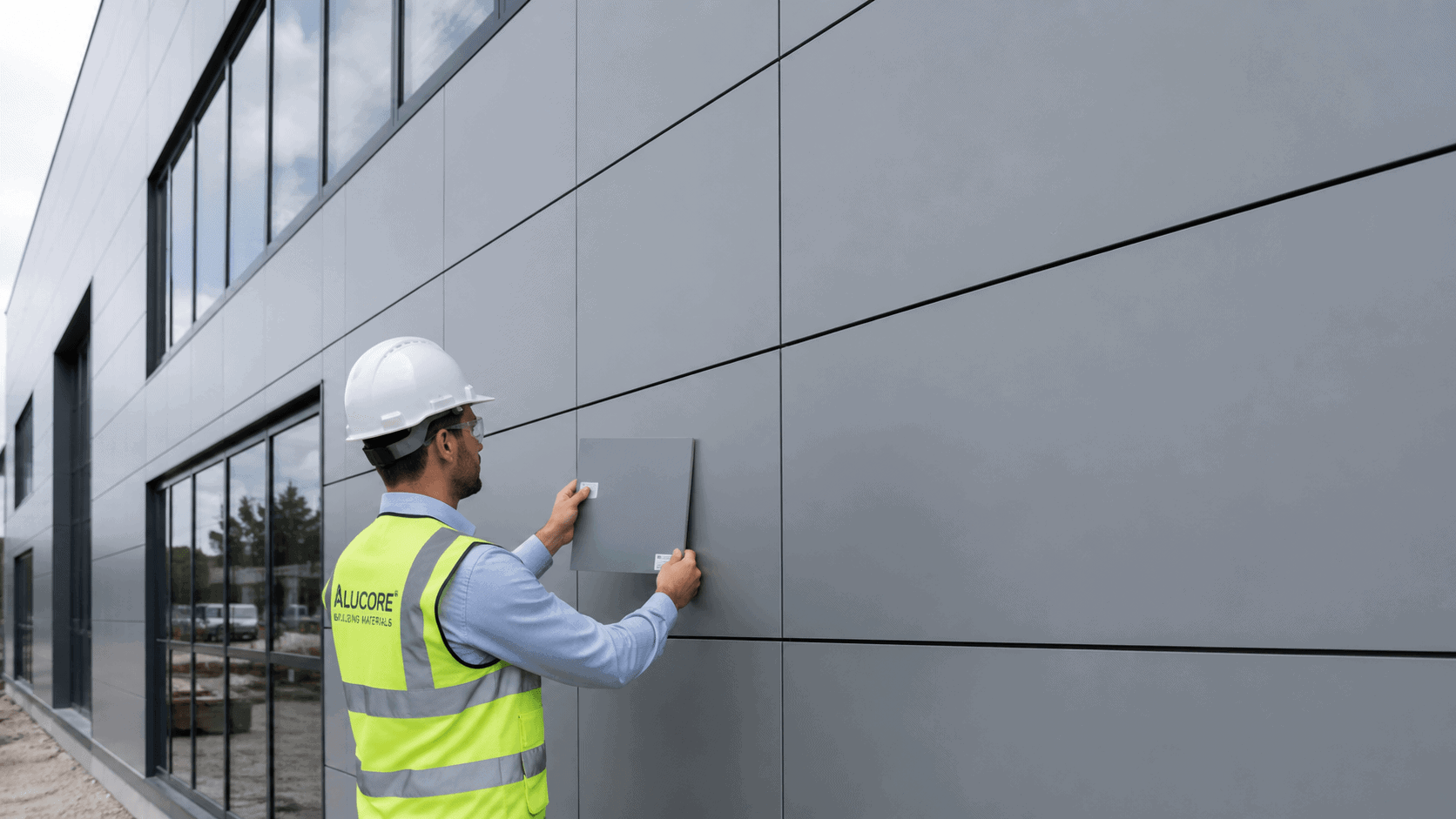
Aluminium composite panels are often selected for façades, shopfronts, signage, canopies, and architectural details because they create a clean and modern surface. However, colour consistency is an important detail in ACP projects. If panels from different batches, directions, or deliveries are mixed carelessly, visible shade differences may appear after installation.
However, one common concern in aluminium composite panel projects is colour consistency. If panels from different batches, directions, or production runs are mixed carelessly, visible shade differences may appear after installation.
These differences can affect the final appearance of the façade. Even small colour variations may become noticeable under natural light, especially on large elevations.
The good news is simple: most colour consistency problems can be reduced with proper planning, correct ordering, careful handling, and good installation practice.
This article explains how to avoid visible shade differences in aluminium composite panels and what contractors, architects, façade installers, sign makers, and procurement teams should check before installation.
Why Colour Consistency Matters in Aluminium Composite Panel Projects
Colour consistency is important because aluminium composite panels are usually installed across large visible surfaces. On a façade, shopfront, or signboard, the eye quickly notices differences in tone, reflection, gloss, or shade.
A colour mismatch can make a building look unfinished or poorly installed. It may also create unnecessary disputes between the buyer, installer, and supplier.
Consistent colour helps create:
- A cleaner façade appearance
- Better visual harmony
- A more professional finish
- Stronger project confidence
- Fewer complaints after installation
- Better long-term satisfaction
For this reason, colour planning should start before the panels are ordered, not after they arrive on site.
What Causes Colour Differences in Aluminium Composite Panels?
Visible shade differences can happen for several reasons. In many cases, the issue is not caused by one single mistake. It is usually the result of several small decisions made during ordering, storage, fabrication, or installation.
Common causes include:
- Panels from different production batches
- Different coating lots
- Incorrect installation direction
- Mixing panels from separate deliveries
- Different gloss levels
- Uneven surface reflection
- Poor storage conditions
- Protective film left on too long
- Dirt, dust, or residue on the panel surface
- Different viewing angles and lighting conditions
Understanding these causes helps project teams prevent the problem before it appears on the façade.
Use Panels from the Same Batch Whenever Possible
One of the most important rules is to use panels from the same production batch for the same visible elevation.
Even when the colour code is the same, panels from different production batches may show slight differences in tone or gloss. This is especially important for metallic colours, grey tones, dark colours, champagne colours, brushed finishes, and special architectural colours.
For large façade areas, it is better to calculate the required quantity carefully and order enough material for the full elevation.
If additional panels are ordered later, they may not perfectly match the first delivery.
Best Practice Tip
For large or highly visible projects, order all panels for the same elevation together. Also keep a small reserve quantity for replacement or site damage.
Pay Attention to Panel Direction
Many aluminium composite panels have a directional finish. This is especially common with metallic, brushed, mirror, wood-effect, stone-effect, and special coated panels.
If one panel is installed in a different direction from the others, it may look like a different shade. In reality, the colour may be the same, but the reflection changes because the panel direction is different.
This is why protective films often include arrows showing the installation direction.
Installers should follow these arrows carefully during cutting, routing, fabrication, and installation.
Why Direction Matters
Panel direction can affect:
- Light reflection
- Colour appearance
- Gloss perception
- Texture alignment
- Metallic effect
- Surface uniformity
On a large façade, even one incorrectly rotated panel can become very visible.
Best Practice Tip
Before installation begins, check the direction arrows on the protective film. Make sure all panels on the same elevation follow the same direction unless the design intentionally requires otherwise.
Approve Samples Before Ordering
Samples are important in aluminium composite panel projects. However, a small sample may look different from a large installed façade.
Colour can appear different depending on light, viewing distance, surrounding materials, and panel angle.
Before placing a large order, architects, contractors, or clients should review and approve the selected colour under realistic conditions.
Where possible, check the sample:
- In natural daylight
- Near the project location
- Next to glass, stone, concrete, or other façade materials
- From different viewing angles
- At different times of the day
This helps avoid disappointment after installation.
Best Practice Tip
Do not rely only on digital colour images or screen visuals. Screens do not show real coating colour, gloss, or reflection accurately.
Avoid Mixing Deliveries on the Same Elevation
Sometimes panels are ordered in separate deliveries. This may happen because of phased construction, budget planning, storage limitations, or quantity miscalculation.
However, mixing panels from separate deliveries on the same visible elevation can increase the risk of shade difference.
If separate deliveries are unavoidable, they should be planned carefully.
For example, one batch can be used on one elevation, and the second batch can be used on another elevation. This reduces the chance of visible colour differences side by side.
Practical Site Advice
If panels from different deliveries must be used, avoid placing them randomly across the same wall. Group them logically by elevation, zone, or less visible area.
Check Colour Before Cutting or Installing
Panels should be inspected before fabrication and installation. Once panels are cut, routed, bent, drilled, or fixed to the façade, solving colour issues becomes much harder.
Before work begins, the installer should check:
- Colour code
- Batch number if available
- Protective film condition
- Direction arrows
- Surface quality
- Gloss consistency
- Visible scratches or stains
- Quantity and dimensions
This simple check can prevent expensive rework.
Best Practice Tip
Open and inspect a few panels from different pallets or packs before installation. Compare them under the same light condition.
Be Careful with Metallic Colours
Metallic aluminium composite panels can look very premium, but they require extra care. Metallic finishes reflect light differently depending on direction and angle.
For this reason, metallic colours are more sensitive to installation direction and batch consistency than plain colours.
This does not mean metallic ACP panels should be avoided. It simply means they should be planned and installed carefully.
Important Points for Metallic ACP Panels
When using metallic colours, remember to:
- Follow direction arrows
- Avoid rotating panels
- Use the same batch on the same elevation
- Check samples in natural light
- Avoid mixing production lots randomly
- Maintain consistent panel orientation during fabrication
A well-installed metallic ACP façade can look clean, modern, and high-value. Poor direction control, however, can create visible patchiness.
Consider Gloss Level, Not Only Colour
Colour consistency is not only about the colour code. Gloss level also matters.
Two panels may have the same colour, but if one has a slightly different gloss level, the façade may still look uneven. This is more noticeable on dark colours, metallic finishes, and large smooth surfaces.
Gloss differences may become visible when sunlight hits the panels at an angle.
For this reason, project teams should confirm both colour and finish type before ordering.
Examples of Finish Details to Confirm
Before ordering, check:
- Colour code
- Gloss level
- Coating type
- Finish type
- Directional effect
- Surface texture
- Protective film marking
Small details can have a big effect on the final appearance.
Store Panels Correctly Before Installation
Poor storage can also affect the appearance of aluminium composite panels. Panels should be stored in clean, dry, and protected conditions.
If panels are exposed to direct sunlight, moisture, dust, or site contamination for a long time, surface problems may occur. Protective film may also become harder to remove if it is exposed to heat and sunlight for too long.
Good storage helps protect both the colour and the surface finish.
Storage Tips for Better Colour and Surface Protection
Store ACP sheets:
- Flat and well supported
- In a dry area
- Away from direct sunlight
- Away from chemicals and wet materials
- With protective film intact before installation
- Away from heavy site traffic
- In original packaging where possible
Poor handling can create scratches, stains, or surface marks that may be mistaken for colour problems.
Remove Protective Film at the Right Time
Protective film is useful because it protects the panel surface during transportation, fabrication, and installation. However, it should not be left on the panels for too long after installation.
If the protective film is exposed to sunlight and weather for a long period, adhesive residue may remain on the panel surface. This can affect the appearance and create visible marks.
The correct removal time may depend on the film type, weather conditions, and supplier recommendations.
Best Practice Tip
Remove protective film according to the supplier’s guidance. Do not leave it exposed to strong sunlight for longer than recommended.
Clean Panels Before Final Inspection
Sometimes panels appear to have shade differences because of dust, fingerprints, adhesive residue, sealant marks, or site dirt.
Before making a final judgement, the surface should be cleaned properly using suitable methods.
Use mild cleaning methods and avoid abrasive tools. Harsh chemicals, rough cloths, or aggressive cleaning can damage the coating.
Cleaning Can Help Identify the Real Problem
Before assuming there is a colour mismatch, check whether the issue is caused by:
- Dust
- Dirt
- Fingerprints
- Water marks
- Adhesive residue
- Sealant stains
- Protective film residue
- Construction contamination
A proper final cleaning can make the façade look more consistent and professional.
Plan Panel Layout Before Installation
Panel layout is another important factor. Large panels, narrow strips, corner returns, and façade breaks can all affect how colour is perceived.
A good layout can reduce the visual impact of minor differences. A poor layout can make small differences more obvious.
Before installation, the team should plan:
- Panel direction
- Joint alignment
- Elevation grouping
- Corner transitions
- Replacement panel locations
- Batch separation if needed
- Less visible areas for reserve panels
Planning is especially important on large commercial façades, shopfronts, and highly visible elevations.
Common Colour Consistency Mistakes to Avoid
Many visible shade problems can be avoided by preventing common mistakes.
Avoid:
- Mixing different batches randomly
- Ignoring direction arrows
- Rotating panels during cutting
- Ordering extra panels much later
- Approving colour only from a screen image
- Installing panels before inspection
- Leaving protective film on too long
- Storing panels under direct sunlight
- Mixing metallic panels without direction control
- Using damaged or stained panels on visible areas
These mistakes are simple, but they can create expensive visual problems.
Colour Consistency Checklist Before Installation
Before installation starts, check:
- Are all panels from the correct colour code?
- Are panels from the same batch where possible?
- Has the sample been approved?
- Are direction arrows visible and understood?
- Are panels stored correctly?
- Are deliveries separated and labelled?
- Has the layout been planned?
- Are panels inspected before cutting?
- Are metallic finishes handled carefully?
- Is protective film removal planned?
- Is final cleaning included before handover?
This checklist can help reduce the risk of visible shade differences.
What to Do If Shade Differences Are Noticed
If colour differences are noticed before installation, stop and check the panels before proceeding.
Compare the panels:
- Under the same light
- From the same angle
- After removing dirt or dust
- With direction arrows aligned
- Against the approved sample
- By batch or delivery group
If the issue is caused by mixed direction, the panels may need to be re-sorted. If it is caused by mixed batches, the layout may need to be adjusted.
The most important point is not to continue installation without checking the cause. Once panels are fixed, solving the issue becomes more difficult.
Final Thoughts
Colour consistency in aluminium composite panels depends on planning, ordering, handling, fabrication, and installation. The panel colour itself is only one part of the process.
To avoid visible shade differences, project teams should use panels from the same batch where possible, follow direction arrows, approve samples properly, avoid random batch mixing, store panels correctly, and inspect the material before installation.
Aluminium composite panels can create a clean, modern, and professional façade finish. However, their visual quality depends on careful attention to detail.
For architects, contractors, façade installers, sign makers, developers, and procurement teams, the key message is simple: colour consistency should be managed before installation begins, not after the façade is complete.
Need pricing, technical documents, or loading guidance for SmartACP aluminium composite panels? Contact Smartcon with your required thickness, dimensions, colour, coating type, fire rating, quantity, and delivery destination. Our team will help you choose the suitable panel option and provide practical export support from Turkey.
Need pricing, technical documents, or loading guidance for aluminium composite panels? Contact Smartcon with your required thickness, panel dimensions, coating type, fire rating, quantity, and delivery destination. Our team will help you review the suitable SmartACP options and provide practical export support from Turkey.
Explore our full range of Smartcon Aluminium Composite Panels, designed for architects and modern projects.
Authored by Smartcon Int’l. Trade & Marketing Ltd. on 06.06.2026. All rights reserved.
Façade specification
Selecting aluminium cladding for a façade?
Share the application, finish, fire classification and fabrication requirements. We can help assess the appropriate panel specification and supply route.