
Blog
Can Fiber Cement Board Be Left Unpainted?
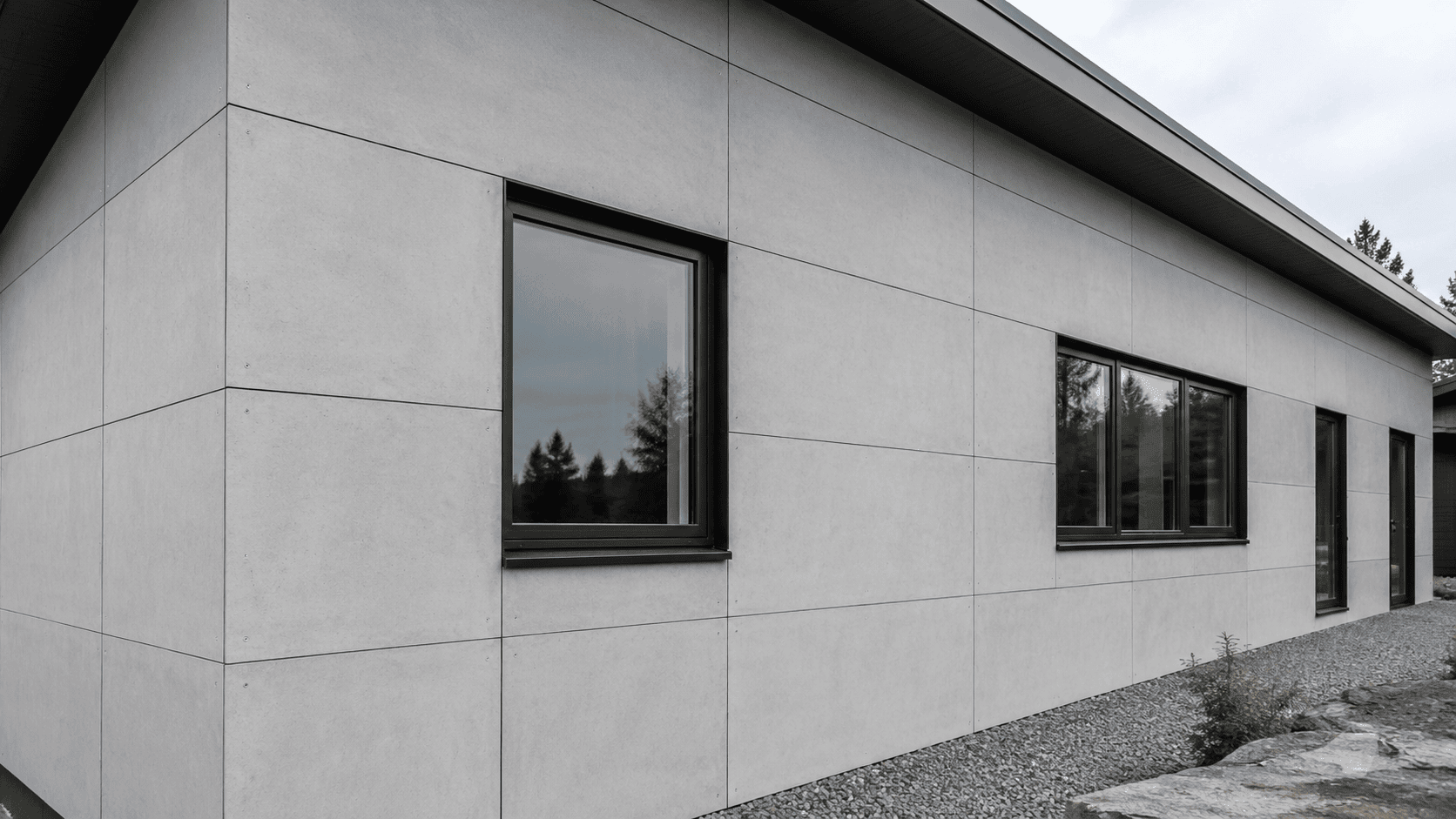
Fiber cement board is widely used in modern construction because it is strong, stable, non-combustible, and suitable for many internal and external applications. It is commonly used for façades, external sheathing, dry construction, partition walls, ceilings, soffits, backing boards, and other building details.
One common question from contractors, installers, architects, and buyers is simple:
Can fiber cement board be left unpainted?
The short answer is: sometimes, but it depends on the board type, project conditions, exposure level, and final appearance required.
Fiber cement board can be highly durable, but leaving it unpainted is not always the best choice. In many projects, painting, coating, sealing, rendering, or cladding over the board is recommended to protect the surface, improve appearance, and support long-term performance.
This guide explains when fiber cement board may be left unpainted, when it should be finished, and what to check before making the decision.
What Does “Unpainted” Mean?
Before deciding whether fiber cement board can be left unpainted, it is important to define what “unpainted” means.
In practice, unpainted can mean different things:
- Boards left exposed temporarily before final finishing
- Boards installed as a backing layer behind another system
- Boards used in hidden or non-visible areas
- Boards used with their natural grey cement surface visible
- Boards left without paint, primer, coating, render, or sealant
These are not all the same situation.
A fiber cement board that is temporarily exposed for a short period is different from a board that is intended to remain permanently visible on an external façade. A hidden sheathing board is different from a decorative exposed board.
For this reason, the correct answer depends on the intended use.
Can Fiber Cement Board Be Temporarily Left Unpainted?
In many construction projects, fiber cement boards may be installed before the final finish is applied. This means the board may remain unpainted for a period of time on site.
This is common in real construction. Boards may be installed first, while painting, rendering, cladding, sealing, or other finishing works are completed later.
However, temporary exposure should still be controlled.
If boards are left unpainted before finishing, they should be protected from unnecessary damage, heavy contamination, standing water, mud, cement splashes, impact, and poor storage conditions.
Temporary exposure does not mean the boards should be ignored after installation.
Before final finishing, the surface should be checked carefully. Dust, stains, moisture marks, chipped edges, damaged corners, loose fixings, or open joints may affect the quality of the final finish.
Can Fiber Cement Board Be Permanently Left Unpainted Outdoors?
Fiber cement board can be used outdoors in suitable systems. However, permanently leaving the board unpainted outdoors should be considered carefully.
External walls and façades are exposed to rain, sun, wind, temperature changes, dirt, pollution, and moisture. Over time, an unfinished surface may show stains, weathering, colour variation, dirt marks, water marks, or surface changes.
In many external applications, the board should be protected with a suitable coating, paint system, render system, façade cladding system, or other approved finish.
This is especially important when the board surface is visible and the final appearance matters.
Leaving fiber cement board unpainted outdoors may be acceptable only if the board type, manufacturer guidance, project specification, and expected appearance all support this decision.
For most visible exterior applications, a planned finish is the safer option.
Can Fiber Cement Board Be Left Unpainted Indoors?
Interior conditions are usually less demanding than exterior conditions. Because of this, fiber cement board may sometimes be left unpainted indoors, especially in hidden technical areas or behind another finish.
For example, unpainted boards may be acceptable in:
- Service areas
- Utility rooms
- Backing layers
- Dry construction build-ups
- Hidden wall zones
- Areas where appearance is not important
However, if the board is visible, painting or finishing is usually recommended. An unfinished board surface may look too raw, uneven, dusty, or industrial for many interior spaces.
In commercial, residential, retail, office, or public areas, the final surface normally needs to look clean and intentional. In these cases, paint, primer, skim coat, coating, tile, render, or another suitable finish may be required.
Appearance Is One of the Main Reasons to Finish the Board
Fiber cement board is a construction board, not always a decorative final surface.
The natural board surface may have cement-based colour variation, handling marks, surface texture, minor shade differences, or visible fixing points. These may be acceptable in some technical applications, but not in every project.
If the board will be visible, ask this question:
Does the project require a clean architectural finish?
If the answer is yes, leaving the board unpainted may not be the best option.
A suitable finish can help to:
- Create a more uniform appearance
- Hide minor shade differences
- Improve surface cleanliness
- Protect the surface from staining
- Cover filled screw heads and joints
- Match the architectural design
- Improve the final presentation of the wall
For projects where appearance matters, the finish should be planned from the beginning.
Moisture Exposure Must Be Considered
Fiber cement board is often selected because it performs well in demanding construction conditions. However, moisture exposure still needs to be managed correctly.
If an unpainted board is exposed to repeated wetting, poor drainage, trapped moisture, or unsealed edges, the wall system may develop problems over time.
The main issue is not only the board itself. The full wall system matters.
Moisture can affect:
- Joints
- Fixings
- Edges
- Coatings
- Sealants
- Subframes
- Insulation
- Timber or metal supports
- Final appearance
For external applications, the system should manage water properly. This may require ventilation, drainage, membranes, flashings, trims, sealants, coatings, or protective finishes depending on the project.
Leaving a board unpainted does not remove the need for proper moisture detailing.
Edges and Cut Areas Need Special Attention
Even if the main surface is left unpainted, board edges and cut areas should be checked carefully.
Cut edges can be more exposed than the factory surface. They may absorb moisture or collect dust more easily, depending on the board type and application.
This is especially important around:
- External corners
- Window openings
- Door openings
- Service penetrations
- Board joints
- Parapets
- Balconies
- Soffits
- Roof edge areas
If edges are exposed, damaged, dusty, or unprotected, the risk of staining, moisture marks, poor finish, or edge deterioration may increase.
For many applications, edge sealing, priming, coating, trimming, or correct joint treatment may be required. Always follow the board and system recommendations.
Fixings May Remain Visible
Another practical point is screw visibility.
If fiber cement board is left unpainted, screw heads, fixing marks, washers, filled holes, or small surface differences may remain visible.
This may be acceptable in some industrial or technical areas. It may not be acceptable in architectural or commercial areas where the surface needs to look clean.
If visible fixings are not desired, the project may need:
- A painted finish
- A coating system
- Filled and sanded screw heads
- Concealed fixing design
- Decorative cladding over the board
- A suitable façade profile system
The decision should be made before installation. If the installer fixes the board without considering the final appearance, it may be difficult to correct later.
Dirt and Site Contamination Can Affect Unpainted Boards
Unpainted boards are more exposed to site marks.
During construction, boards may come into contact with dust, mud, wet mortar, render splashes, adhesive, hand marks, oil, metal particles, packaging dirt, or rainwater stains.
If the board will later be painted or rendered, these marks may need to be cleaned before finishing.
If the board will remain unpainted, these marks may stay visible.
To reduce this risk:
- Keep boards clean during handling
- Store boards correctly before installation
- Avoid placing boards directly on dirty ground
- Protect installed boards from other trades
- Clean dust before final inspection
- Avoid unnecessary water run-off over exposed boards
- Inspect the surface before handover
If a natural unpainted appearance is desired, site protection becomes even more important.
When Painting or Coating Is the Better Choice
Painting or coating fiber cement board is often the better choice when the board is visible, exposed, or part of a finished architectural surface.
A suitable paint or coating system can improve both appearance and protection. It can also help the board match the design requirements of the project.
Painting or coating is usually recommended when:
- The board is visible
- The surface needs a uniform colour
- The wall is exposed to weather
- The project requires a clean final finish
- Screw heads or joints need to be hidden
- The board is used in a commercial or residential area
- Staining or dirt marks would be unacceptable
- The designer wants a specific colour or texture
The coating system should be compatible with the board. Primer, surface preparation, drying time, and application conditions should all be checked before work starts.
When Leaving the Board Unpainted May Be Acceptable
Leaving fiber cement board unpainted may be acceptable in some situations, especially when appearance is not the main priority or the board is not directly exposed.
It may be suitable when:
- The board is used as a hidden backing layer
- The board will be covered by another system
- The board is indoors in a technical area
- The natural cement appearance is intentionally accepted
- The exposure is limited and controlled
- The board type is suitable for the intended use
- The project specification allows it
Even then, the board should still be installed correctly. Proper fixing, edge support, joint gaps, moisture control, and handling remain important.
Unpainted does not mean unfinished in terms of construction quality.
Questions to Ask Before Leaving Fiber Cement Board Unpainted
Before deciding to leave fiber cement board unpainted, ask these practical questions:
- Will the board be indoors or outdoors?
- Will the board be visible?
- Is the natural board appearance acceptable?
- Will the board be exposed to rain, sun, dirt, or impact?
- Are the edges protected?
- Are screw heads and joints acceptable visually?
- Is the board used as a final surface or a backing layer?
- Does the project specification allow an unpainted finish?
- Does the manufacturer recommend a protective finish?
- Will the board be easy to clean and maintain?
If any answer creates doubt, a suitable finish is usually the safer choice.
Common Mistakes to Avoid
Do not assume that fiber cement board should always be left unfinished.
Do not assume that temporary exposure is the same as permanent exposure.
Do not leave visible boards unpainted if the client expects a clean decorative finish.
Do not ignore cut edges, corners, or joints.
Do not allow site dirt, mud, or cement splashes to remain on boards.
Do not paint over dirty, wet, dusty, or damaged surfaces.
Do not choose the final finish after installation without checking screw positions and joint layout.
Do not leave boards exposed outdoors without considering the full wall system.
These mistakes are easy to avoid when the finish is planned early.
Practical Recommendation
For hidden backing layers or temporary construction stages, fiber cement board may often remain unpainted for a controlled period, depending on the project conditions.
For visible internal areas, painting or finishing is usually recommended for a cleaner appearance.
For external façades, exposed walls, and weather-facing applications, a suitable protective finish is usually the safer and more professional choice.
The best decision depends on the board type, exposure level, surface expectation, and full wall system.
Final Thoughts
Fiber cement board can sometimes be left unpainted, but this should be a planned decision, not an accidental result.
If the board is hidden, temporarily exposed, or used in a technical area, an unpainted surface may be acceptable. If the board is visible, exposed to weather, or part of a finished façade or interior wall, painting, coating, rendering, or another suitable finish is often the better choice.
The key is to understand the application.
Fiber cement boards are dependable construction boards when installed and finished correctly. A suitable finish can help protect the surface, improve appearance, reduce staining, and support long-term performance.
Before leaving fiber cement board unpainted, always check the exposure conditions, edge protection, final appearance, and project specification.
Need pricing, technical documents, or loading guidance for fiber cement boards? Contact Smartcon with your required thickness, dimensions, quantity, and delivery destination. Our team will help you review the suitable options and provide practical export support from Turkey.
👉 Visit the Smartfiber Fiber Cement Board page to explore specs, sizes, and delivery options.
Authored by Smartcon Int’l. Trade & Marketing Ltd. on 02.07.2026. All rights reserved.
Façade specification
Need the right board for your façade system?
Share the façade build-up, exposure conditions, finish and documentation requirements. We can help assess the appropriate board and coordinate supply.