
SMARTCON
Blog

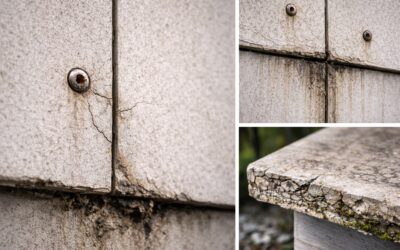
Moisture Cycling Fatigue in Fiber Cement Boards — The Hidden Long-Term Performance Risk
Fiber cement boards are widely specified for their durability, non-combustibility, and resistance to rot. Yet many long-term façade failures attributed to “installation errors” or “paint defects” share a deeper, less discussed root cause: moisture cycling fatigue. This phenomenon rarely causes early failure.
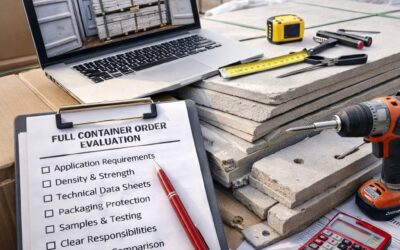
How to Evaluate Fiber Cement Boards Before Ordering a Full Container
Ordering a full container of fiber cement boards is a major commitment. Once production starts and the container is loaded, mistakes become expensive, time-consuming, and difficult to reverse.
Many buyers experience problems not because fiber cement boards are a bad product,
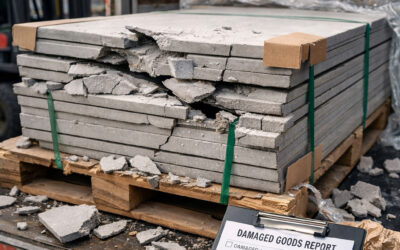
Transport Damage in Fiber Cement Boards: Product Issue or Logistics Mistake?
Fiber cement boards are strong and durable when installed correctly. Yet many projects experience fiber cement board transport damage, where boards arrive cracked, broken, or chipped before installation even begins.
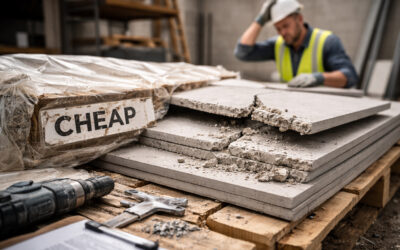
Why Cheap Fiber Cement Boards Cost More in the Long Run
When choosing construction materials, price often feels like the safest decision factor. Fiber cement boards are no exception. At first glance, cheaper boards seem to offer the same thickness, similar appearance, and comparable specifications.
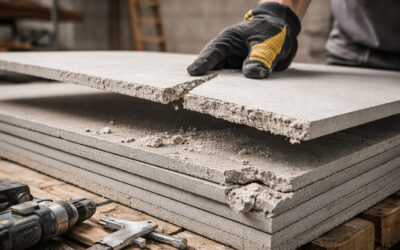
How Poor Density Affects Fiber Cement Board Strength and Performance
Fiber cement boards are widely known for their durability, fire resistance, and long service life. However, many failures on construction sites are not caused by incorrect installation or transport conditions alone, but by poor fiber cement board density.
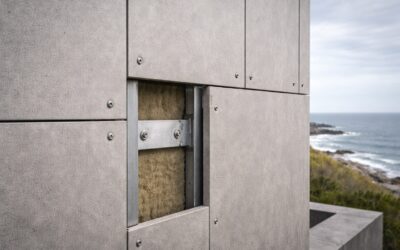
Fixing Fiber Cement Boards in External Applications: Corrosion Classes and Coastal Considerations
When fiber cement boards are used in external applications, fixing selection becomes just as critical as the board itself. Even the highest-quality fiber cement board can fail prematurely if the wrong fasteners are used — particularly in aggressive outdoor environments.
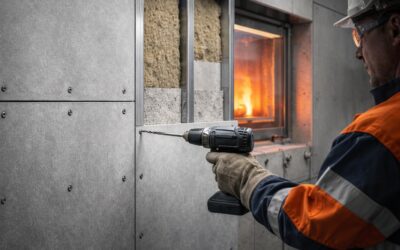
Fire-Rated Fixings for Fiber Cement Boards: What Changes in Fire-Resistant Assemblies
Fire resistance in building assemblies is never achieved by a single material alone. While fiber cement boards are widely specified for their A1 non-combustible performance, the fixings used to install them play a critical role in maintaining fire integrity.
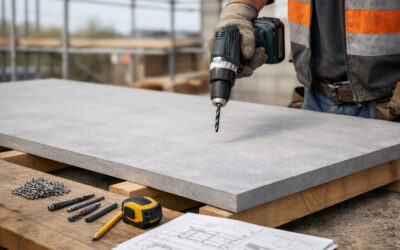
Do Fiber Cement Boards Need Pre-Drilling? Installation Rules Explained for Long-Term Performance
Fiber cement boards are widely specified for façades, interior linings, and high-performance building envelopes due to their durability, fire resistance, and dimensional stability. However, one of the most common installation questions remains:

Edge Distance and Fixing Patterns for Fiber Cement Boards
Fiber cement boards are widely used in façades, exterior walls, soffits, and interior linings because of their non-combustibility, durability, and dimensional stability. However, even the best fiber cement board can fail prematurely if edge distances and fixing patterns are not applied correctly.
Cracking, edge breakage, screw pull-out, and surf