
SMARTCON
Blog

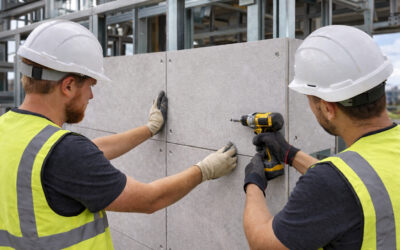
Are Fiber Cement Boards Difficult to Install?
Short answer: no — fiber cement boards are not difficult to install
Fiber cement boards are not considered difficult to install when basic installation rules are followed.
They are widely used by:
Facade contractors
General builders
Modular and LSF installers
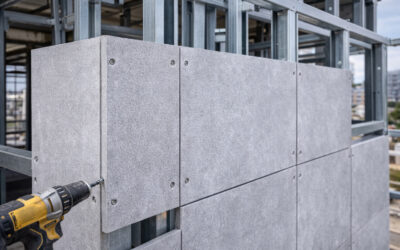
Can Fiber Cement Boards Be Used on Steel Frame Buildings?
Short answer: yes — fiber cement boards work very well with steel frame buildings
Fiber cement boards are widely used on steel frame buildings, including:
Light steel frame (LSF) systems
Modular and volumetric buildings
Hybrid steel–concrete structures
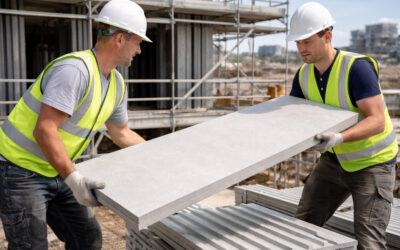
Are Fiber Cement Boards Heavy? What Does That Mean on Site?
Short answer: heavier than some materials, but manageable on site
Yes, fiber cement boards are heavier than lightweight cladding materials.
However, weight alone does not define whether a facade material is difficult to work with.
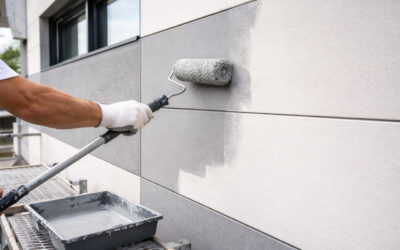
Can Fiber Cement Boards Be Painted or Recoated Later?
Short answer: yes — fiber cement boards can be painted or recoated later
Fiber cement boards are often chosen for their durability and low maintenance.
However, many owners eventually ask a very practical question:
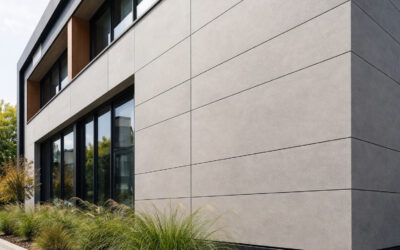
Why Are Fiber Cement Boards Considered a Safe Facade Choice?
Safety is no longer optional in facade design
When people search for a safe facade choice, they are not looking for innovation or aesthetics alone.
They are looking for peace of mind.
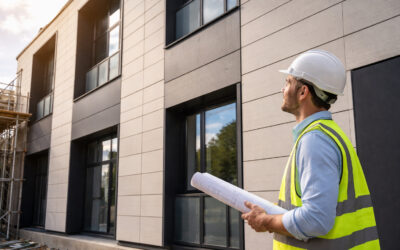
Are Fiber Cement Boards a Good Alternative to Traditional Cladding?
Short answer: yes — in many projects, they are a smarter and safer alternative
When people search for an alternative to traditional cladding, they are usually not chasing trends.
They are looking for something that is safer, more predictable, and easier to approve.
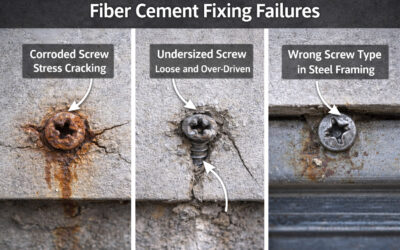
Screw Selection Errors That Cause Invisible Structural Failure in Fiber Cement Installations
In fiber cement installations, visible defects are rarely the first sign of failure.
More often, the problem develops silently—behind intact façades—until cracking, board movement, or fixing loss appears years later.
In many of these cases, the root cause is not board quality or design intent, but incorrect screw selection.
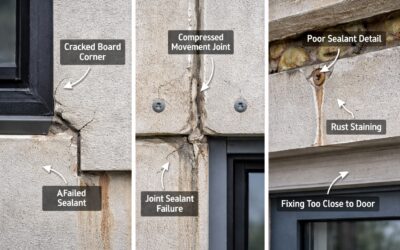
Interface Failures: Fiber Cement Boards at Windows, Doors, and Movement Joints
In fiber cement façade systems, boards rarely fail in isolation.
When defects appear—cracking, staining, water ingress, or distortion—the root cause is most often the interface, not the board.
Windows, doors, and movement joints introduce discontinuities in structure, movement, and moisture behavior. If these interfaces are treated as cosmetic details rather than structural transition zones, long-term failure becomes almost inevitable.
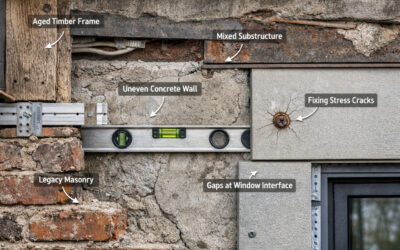
Retrofit Constraints: Using Fiber Cement Boards on Non-Standard Existing Substructures
Retrofitting fiber cement boards onto existing buildings is rarely straightforward. Unlike new-build projects, refurbishment works must adapt to unknown, inconsistent, and often non-compliant substructures that were never designed to receive modern cladding systems.