
Blog
How to Bend Aluminium Composite Panels Without Cracking or Warping
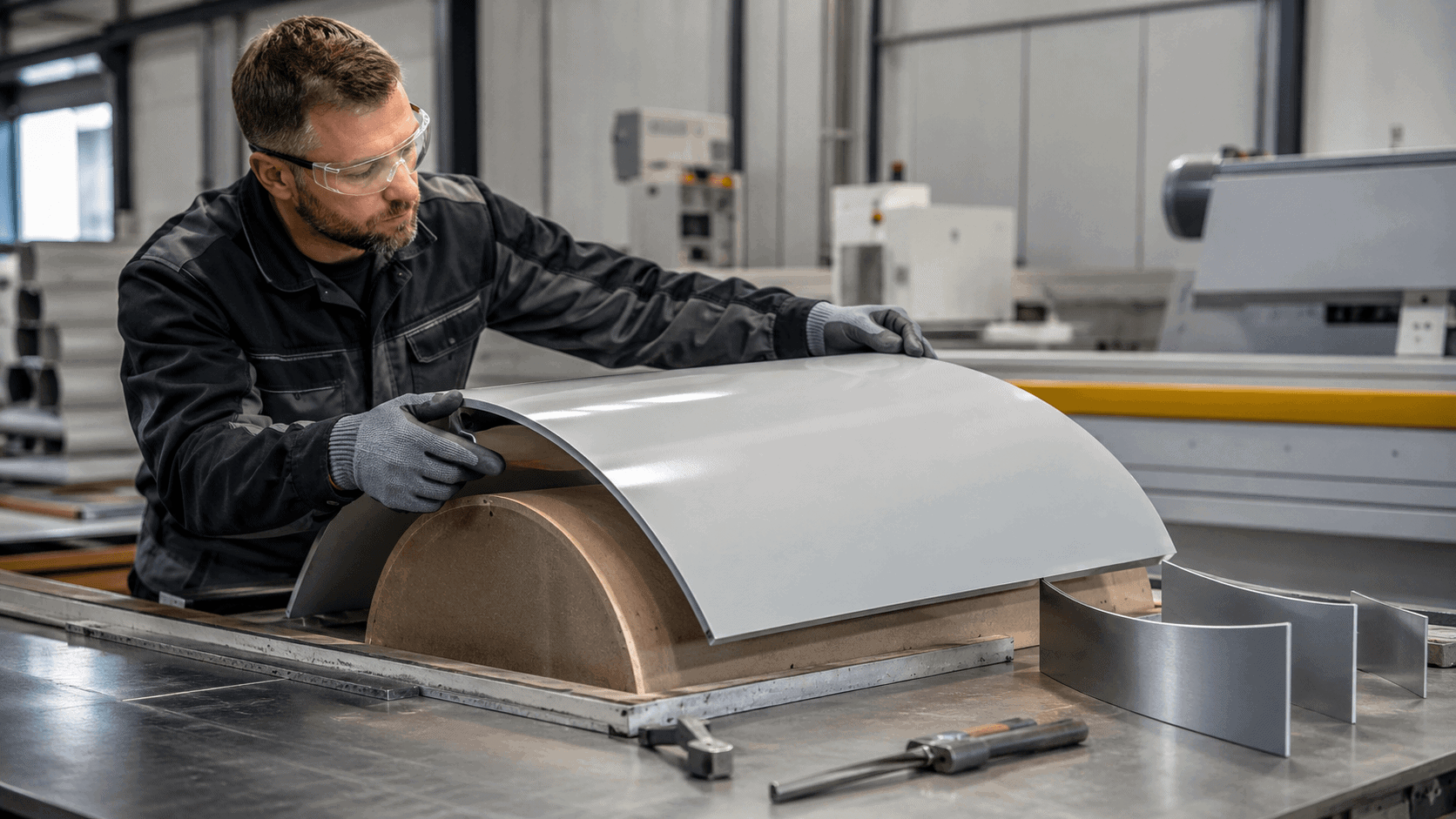
Aluminium composite panels are widely used for façades, shopfronts, signage, canopies, columns, curved details, and decorative architectural features. One reason they are so popular is their fabrication flexibility.
When handled correctly, aluminium composite panels can be cut, routed, folded, and bent to create clean shapes and modern details. However, bending aluminium composite panels requires care. If the panel is forced, bent too tightly, routed incorrectly, or handled without proper support, it may crack, warp, or lose its smooth appearance.
This guide explains how to bend aluminium composite panels more safely and what installers, fabricators, façade contractors, sign makers, architects, and procurement teams should check before bending.
Can Aluminium Composite Panels Be Bent?
Yes, aluminium composite panels can be bent, but the bending method depends on the required shape, panel thickness, core type, aluminium skin thickness, coating, and application.
There are two common approaches:
- Routing and folding for sharp bends
- Gradual bending for curved surfaces
Each method has a different purpose. Routing and folding are usually used for clean 90-degree returns, cassette panels, signage boxes, and sharp edges. Gradual bending is used for curved details, column covers, rounded corners, and architectural features.
The important point is simple: ACP panels should not be bent randomly or forced into shape without planning.
Why Bending Method Matters
The bending method affects the final appearance and long-term performance of the panel. Poor bending can damage the aluminium skin, coating, core, or folded edge.
Incorrect bending may cause:
- Cracks along the bend line
- Surface waviness
- Panel warping
- Coating damage
- Uneven corners
- Stress marks
- Poor alignment
- Loss of visual quality
A good bending method helps the panel keep a clean, smooth, and professional finish.
Routing and Folding for Sharp Bends
For sharp bends, routing and folding is usually the preferred method. In this method, a controlled groove is routed into the back side of the panel. The panel is then folded along the groove.
This method is commonly used for:
- Cassette panels
- Shopfront cladding
- Signage boxes
- Façade returns
- Column cover edges
- Fascia panels
- Corner details
- Architectural trims
Routing and folding help create a sharp, clean edge while keeping the visible front surface continuous.
What to Check Before Routing and Folding
Before routing and folding aluminium composite panels, check:
- Panel thickness
- Aluminium skin thickness
- Core type
- Coating type
- Routing depth
- Cutter angle
- Fold direction
- Finished face direction
- Protective film direction arrows
- Approved fabrication drawing
If the groove is too deep, the folded area may become weak. If the groove is too shallow, the panel may resist folding and create stress.
Best Practice Tip
Always test the routing depth on a sample piece before fabricating the full project. Check the fold angle, surface quality, corner neatness, and signs of cracking.
Gradual Bending for Curved Details
Gradual bending is used when the panel needs to follow a curve instead of forming a sharp corner. This can be useful for round columns, curved walls, display features, shopfront details, and architectural cladding.
Gradual bending usually requires a controlled radius. The panel should be shaped smoothly, without sudden pressure or sharp force.
This method can be suitable for:
- Column cladding
- Curved shopfronts
- Rounded façade details
- Interior feature walls
- Exhibition displays
- Decorative signage
- Canopy details
The curve should be planned before fabrication. Trying to create a tight curve on site without proper tools may damage the panel.
Avoid Bending Too Tightly
One common mistake is bending the panel beyond its practical limit. If the bending radius is too tight, the panel may crack, ripple, or deform.
A tight bend can also create stress in the aluminium skin and coating. This may not always be visible immediately, but it can affect the final appearance.
Before bending, confirm whether the panel is suitable for the required radius. If the design requires a very tight curve, routing, segmented panels, or alternative detailing may be better.
Support the Panel During Bending
ACP sheets should be supported properly during bending. If a panel is bent without even support, it may twist or warp.
Good support helps prevent:
- Uneven curves
- Twisting
- Surface stress
- Corner distortion
- Edge damage
- Panel movement during bending
For larger panels, more than one person may be needed to handle the sheet safely and evenly.
Best Practice Tip
Never bend a large panel by holding only one edge. Support the full sheet properly and apply pressure gradually.
Protect the Coated Surface
The coated surface of an aluminium composite panel can be damaged during bending if it is dragged, pressed against dirty surfaces, or handled with rough tools.
During bending, installers should protect the surface by:
- Keeping protective film in place during fabrication
- Using clean worktables
- Removing metal chips and dust
- Wearing clean gloves
- Avoiding sharp clamps on the face surface
- Using soft supports where needed
- Avoiding unnecessary dragging
Dark, glossy, metallic, mirror, and special finishes may show scratches more easily than light matte colours.
Check Panel Direction Before Bending
Many aluminium composite panels have direction arrows on the protective film. These arrows are especially important for metallic, brushed, mirror, wood-effect, stone-effect, and other directional finishes.
If panels are bent or installed in different directions, they may appear as different shades after installation.
Before bending, check:
- Direction arrows
- Finished face orientation
- Cutting plan
- Fold or bend direction
- Approved layout
- Panel identification numbers
Good direction control helps avoid visible colour and reflection differences.
Consider the Coating Type
Different coatings and finishes may behave differently during bending. Some finishes are more flexible, while others may be more sensitive to tight bending or rough handling.
Before fabrication, confirm:
- Coating type
- Finish type
- Gloss level
- Metallic or directional effect
- Protective film condition
- Supplier guidance for bending
This is especially important for premium architectural finishes.
Avoid Heat Damage
In some fabrication processes, heat may be generated by tools or friction. Excessive heat can damage the coating, soften the core, or affect the panel surface.
To reduce this risk:
- Use sharp tools
- Avoid excessive tool speed
- Keep the work area clean
- Use suitable equipment
- Remove dust and debris
- Do not force the material
A clean and controlled fabrication process helps protect both the panel and the finish.
Bending ACP for Column Cladding
Column cladding is a common use for bent aluminium composite panels. ACP can help create clean circular or curved surfaces around structural columns, shopfront columns, reception areas, and commercial interiors.
For column cladding, the installer should check:
- Column diameter
- Required bending radius
- Panel thickness
- Joint position
- Fixing method
- Direction of the finish
- Edge finishing
- Alignment with nearby panels
For tight circular columns, smaller panel segments may be easier to install than one large piece. This can reduce stress and improve appearance.
Bending ACP for Shopfronts and Signage
Aluminium composite panels are also used for shopfront details and signage. Bending may be required for fascia returns, sign boxes, rounded edges, and decorative features.
For signage applications, check:
- Printed surface direction
- Folded edge appearance
- Lighting details if used
- Fixing points
- Edge finish
- Outdoor exposure
- Coating protection
- Panel flatness
A clean bend can make signage look more professional and premium.
Bending ACP for Façade Details
In façade applications, bending may be used for corners, reveals, returns, soffits, and architectural details. However, external use requires extra attention to fixing, movement, and weather exposure.
For façade bending details, check:
- Joint gaps
- Thermal movement
- Subframe support
- Panel return depth
- Fixing method
- Water drainage
- Ventilation cavity
- Sealant compatibility
Bending should not weaken the façade detail or restrict panel movement.
Common Bending Mistakes to Avoid
Many bending problems can be prevented with careful planning.
Avoid these mistakes:
- Forcing the panel into a tight radius
- Bending without proper support
- Routing too deep
- Routing too shallow
- Bending in the wrong direction
- Ignoring protective film arrows
- Using damaged or dirty worktables
- Dragging the coated surface
- Using blunt tools
- Applying uneven pressure
- Skipping sample testing
- Ignoring coating type
- Using oversized panels for tight curves
- Installing bent panels without checking alignment
These mistakes can cause cracking, warping, surface damage, or poor visual quality.
How to Reduce the Risk of Cracking
To reduce cracking risk:
- Use the correct bending method
- Test on a sample first
- Avoid tight bending beyond practical limits
- Keep the coated surface protected
- Use suitable tools
- Support the panel evenly
- Follow the supplier’s guidance
- Check routing depth carefully
- Fold or bend gradually
- Avoid forcing the panel
Cracking is easier to prevent than repair. Once the visible face is damaged, the panel may need to be replaced.
How to Reduce the Risk of Warping
Warping often happens when the panel is stressed, unsupported, overheated, or installed without movement allowance.
To reduce warping risk:
- Store panels flat before fabrication
- Support panels during bending
- Avoid uneven pressure
- Use correct fixing methods
- Allow for thermal movement
- Avoid over-tight fixing
- Use a suitable subframe
- Keep panel sizes practical
- Avoid forcing panels into position
A panel should not be bent to compensate for poor subframe alignment. The support structure should be corrected before installation.
Bending Checklist Before Fabrication
Before bending aluminium composite panels, check:
- Is the panel thickness suitable?
- Is the required bend radius realistic?
- Is routing needed for a sharp fold?
- Is gradual bending more suitable?
- Has a sample been tested?
- Is the finished face protected?
- Are direction arrows followed?
- Is the worktable clean?
- Are tools sharp and suitable?
- Is the panel supported evenly?
- Is the coating suitable for the bend?
- Are joint gaps and fixings planned?
- Is the panel layout approved?
- Are installers clear about the bending method?
This checklist helps reduce mistakes and improve the final appearance.
When Not to Bend Aluminium Composite Panels
Sometimes bending is not the best solution. If the design requires a very tight radius, heavy stress, or complex geometry, another detail may be safer.
Instead of forcing the panel, consider:
- Using routed folds
- Using smaller segments
- Changing the joint position
- Using trims or profiles
- Revising the detail
- Using cassette-style fabrication
- Consulting the panel supplier
A small design adjustment can prevent major installation problems.
Final Thoughts
Aluminium composite panels can be bent successfully for many façade, cladding, shopfront, signage, column, and architectural applications. However, the method must match the required shape.
Routing and folding are useful for sharp bends and clean returns. Gradual bending is better for curved surfaces and rounded details. In both cases, the panel should be supported properly, protected during fabrication, and handled with care.
To avoid cracking or warping, installers should plan the bend, check panel direction, test samples, use suitable tools, and avoid forcing the material.
For architects, contractors, façade installers, sign makers, developers, and procurement teams, the key message is simple: aluminium composite panels offer excellent design flexibility, but clean bending depends on correct fabrication practice.
Need pricing, technical documents, or loading guidance for SmartACP aluminium composite panels? Contact Smartcon with your required thickness, dimensions, colour, coating type, fire rating, quantity, and delivery destination. Our team will help you choose the suitable panel option and provide practical export support from Turkey.
Need pricing, technical documents, or loading guidance for aluminium composite panels? Contact Smartcon with your required thickness, panel dimensions, coating type, fire rating, quantity, and delivery destination. Our team will help you review the suitable SmartACP options and provide practical export support from Turkey.
Explore our full range of Smartcon Aluminium Composite Panels, designed for architects and modern projects.
Authored by Smartcon Int’l. Trade & Marketing Ltd. on 06.06.2026. All rights reserved.
Façade specification
Selecting aluminium cladding for a façade?
Share the application, finish, fire classification and fabrication requirements. We can help assess the appropriate panel specification and supply route.