
Blog
Aluminium Composite Panels vs Fibre Cement Boards: Which Is Better for Your Project?
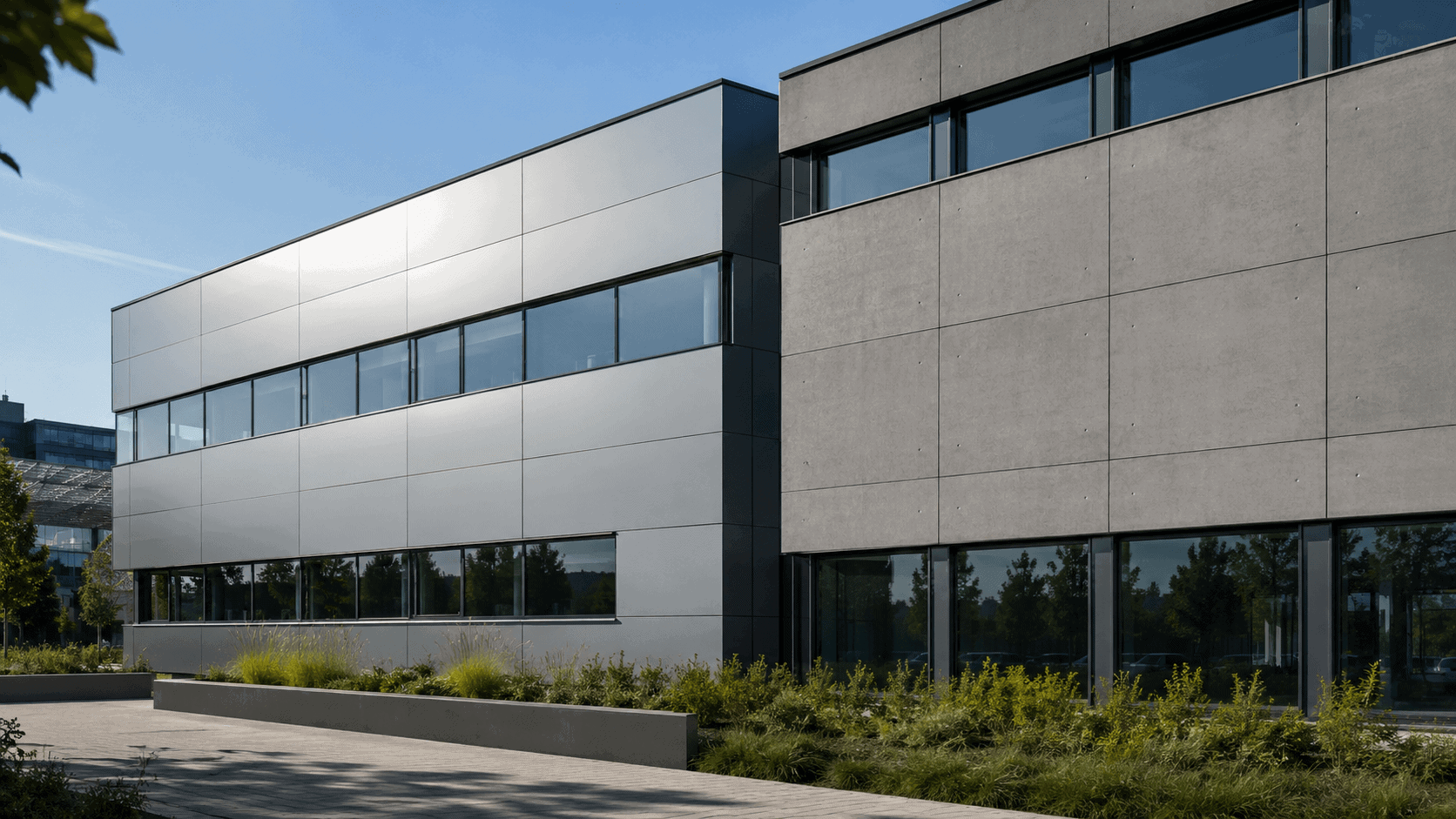
Aluminium composite panels vs fibre cement boards is a common comparison in façade, cladding, sheathing, and architectural projects. Both materials are widely used in modern construction. Both can improve the appearance and performance of a building envelope. However, they are very different materials.
Aluminium composite panels, also known as ACP panels, are lightweight sandwich panels made from aluminium sheets and a central core. Fibre cement boards are cement-based boards reinforced with fibres and used in many interior and exterior construction applications.
The right choice depends on the project’s design, fire requirements, durability expectations, budget, fixing method, and application area.
This guide compares aluminium composite panels and fibre cement boards to help architects, contractors, façade installers, and buyers make a more informed decision.
What Are Aluminium Composite Panels?
Aluminium composite panels are made from two thin aluminium sheets bonded to a core material.
The core can vary depending on the required performance. Common ACP core types include PE, FR, and A2 mineral-filled cores.
ACP panels are commonly used in:
- exterior façades
- commercial cladding
- shopfronts
- signage
- petrol stations
- retail buildings
- office buildings
- hotels
- interior decorative walls
- architectural feature areas
They are popular because they are lightweight, smooth, easy to fabricate, and available in many colours and finishes.
What Are Fibre Cement Boards?
Fibre cement boards are cement-based boards made from cement, fibres, and mineral additives.
They are strong, stable, and suitable for many construction applications. Unlike ACP panels, fibre cement boards are not metal-faced sandwich panels. They are solid cement-based boards.
Fibre cement boards are commonly used for:
- external sheathing
- façade backing
- ventilated façade systems
- cladding substrates
- modular construction
- timber-frame buildings
- light steel frame buildings
- SIP and offsite construction systems
- wet-area backing boards
- soffits
- internal wall linings
Fibre cement boards are often selected where strength, fire performance, moisture resistance, and substrate performance are important.
Main Difference Between ACP and Fibre Cement Boards
The main difference is material structure.
Aluminium composite panels are finished cladding panels with aluminium faces and a core. They are often used as a visible external surface.
Fibre cement boards are cement-based construction boards. They may be used as visible cladding in some systems, but they are also widely used behind other finishes as sheathing, backing, or substrate boards.
This difference affects:
- weight
- fire performance
- impact resistance
- moisture behaviour
- fixing method
- surface appearance
- flexibility
- cutting
- coating
- maintenance
- application area
For this reason, ACP and fibre cement should not be compared only by price. They should be compared according to the role they will play in the building system.
Appearance and Design Flexibility
Aluminium composite panels usually offer a smooth, modern, and corporate appearance.
They are available in many finishes, including:
- solid colours
- metallic finishes
- brushed aluminium
- mirror finishes
- wood effects
- stone effects
- special architectural colours
ACP panels are often preferred when the project requires a clean, sharp, modern façade with consistent colour and surface finish.
Fibre cement boards have a different visual character. They can be painted, coated, textured, or used as backing boards behind other materials.
Depending on the product type, fibre cement boards may offer:
- natural cement appearance
- painted surface
- textured finish
- render backing
- tile backing
- ventilated façade backing
- cladding substrate use
If the goal is a sleek finished façade surface, ACP may be more suitable.
If the goal is a durable construction board, backing board, or fire-safe substrate, fibre cement may be the better option.
Fire Performance
Fire performance is one of the most important factors when comparing aluminium composite panels and fibre cement boards.
ACP fire performance depends heavily on the core type. PE core, FR core, and A2 core aluminium composite panels can behave very differently in fire conditions.
This means buyers must check the fire classification of the specific ACP product, not only the panel name.
Fibre cement boards are cement-based materials. Many fibre cement boards are classified as non-combustible or achieve strong reaction-to-fire performance, depending on the product and certification.
However, buyers should never rely on assumptions. Fire performance must always be confirmed with the technical data sheet and test documentation.
Before choosing either material, ask:
- What fire class is required?
- Is the product suitable for the building type?
- Is the material used as visible cladding or backing board?
- What is the full wall build-up?
- What insulation will be used?
- Are cavity barriers required?
- What do local regulations say?
The complete façade or wall system matters, not only the individual panel.
Weight and Handling
Aluminium composite panels are usually lightweight.
This makes them easy to transport, cut, route, fold, and install. Their low weight is one reason they are commonly used in commercial façades, signage, and shopfronts.
Fibre cement boards are generally heavier than ACP panels because they are cement-based.
This extra weight can increase handling and installation effort. However, it also gives fibre cement boards a solid and robust character.
Weight affects:
- transport cost
- site handling
- labour requirement
- substructure design
- fixing method
- installation speed
- panel size selection
If lightweight handling and fast installation are priorities, ACP panels may offer an advantage.
If the project needs a robust cement-based board for sheathing, backing, or substrate use, fibre cement boards may be more suitable.
Durability and Weather Resistance
Both aluminium composite panels and fibre cement boards can perform well in exterior applications when the correct grade is selected.
ACP panels rely heavily on coating quality. A high-quality PVDF coating can improve UV resistance, colour retention, and weather performance.
This makes ACP panels suitable for many exterior façade and cladding applications.
Fibre cement boards offer strong resistance to moisture, weather exposure, and dimensional movement when installed correctly. They are often used in external wall build-ups, sheathing systems, and ventilated façades.
However, both materials require correct detailing.
ACP panels need good joint design, proper fixing, movement allowance, and coating protection.
Fibre cement boards need correct screw fixing, edge sealing where required, joint treatment, and compatible finishing systems.
Good material performance always depends on good installation.
Impact Resistance
Impact resistance depends on product type, thickness, support spacing, and installation method.
Fibre cement boards usually have a strong, dense, cement-based structure. This can make them suitable for backing, sheathing, and construction applications where board strength is important.
ACP panels can also perform well, but they are thinner sandwich panels. Their resistance depends on aluminium skin thickness, total panel thickness, core type, and substructure support.
For high-impact areas, buyers should check:
- board or panel thickness
- support spacing
- fixing method
- project location
- likelihood of public contact
- replacement strategy
- manufacturer guidance
For lower façade zones, public buildings, or areas exposed to physical damage, impact performance should be reviewed carefully.
Installation Differences
ACP panels are often cut, routed, folded, or fabricated into cassette systems.
Common ACP installation methods include:
- cassette systems
- rivet fixing
- screw fixing
- tray panels
- adhesive systems
- mechanical fixing systems
ACP installation is usually focused on creating a clean finished façade surface.
Fibre cement boards are installed differently. They are usually fixed with screws, nails, or mechanical fasteners, depending on the system. They may then be painted, coated, rendered, tiled, or covered by another cladding material.
Fibre cement board installation is common in:
- sheathing systems
- façade backing systems
- ventilated cladding systems
- wet areas
- modular wall panels
- timber-frame construction
- light steel frame construction
For both materials, poor installation can cause problems. Incorrect fixing, weak substructure, poor joint detailing, and ignored movement gaps can reduce long-term performance.
Cutting and Fabrication
ACP panels are easy to cut, route, groove, and fold. This makes them useful for sharp corners, folded edges, signage, and modern architectural detailing.
Fibre cement boards can also be cut on site, but they require suitable tools and dust control. Because they are cement-based, cutting produces dust and should be handled with proper safety measures.
Fabrication differences matter because they affect labour, speed, site equipment, and finishing quality.
ACP is usually easier for folded visual façade details.
Fibre cement is often better for strong, flat construction board applications where substrate performance matters more than folded metal aesthetics.
Maintenance Requirements
Aluminium composite panels are generally low-maintenance.
Maintenance usually includes:
- periodic cleaning
- checking joints
- inspecting fixings
- removing pollutants
- avoiding abrasive cleaners
- checking coating damage
Fibre cement boards also need maintenance depending on their finish. Painted fibre cement boards may need repainting over time. Boards used behind other systems may require less visible maintenance but still need correct detailing.
For both materials, maintenance depends on exposure conditions.
Coastal areas, high-UV climates, polluted environments, and heavy rainfall can increase maintenance needs.
Cost Considerations
Cost depends on specification.
ACP panel price depends on:
- core type
- fire rating
- coating type
- aluminium skin thickness
- total panel thickness
- colour and finish
- order quantity
- fabrication method
Fibre cement board price depends on:
- board thickness
- density
- fire rating
- dimensions
- surface finish
- certification
- application type
- order quantity
The cheaper material is not always the better choice.
A low-cost ACP panel with unsuitable fire rating or poor coating may create problems later.
A low-cost fibre cement board without the right specification may also fail to meet project requirements.
The correct comparison should include product price, installation cost, maintenance, lifespan, and risk.
When Should You Choose Aluminium Composite Panels?
Aluminium composite panels may be the better choice when the project requires:
- smooth modern façade appearance
- lightweight cladding
- metallic or corporate finishes
- folded edges and sharp detailing
- signage or shopfront applications
- fast installation
- large colour range
- clean commercial building design
ACP panels are especially suitable for visible façade and architectural surface applications.
When Should You Choose Fibre Cement Boards?
Fibre cement boards may be the better choice when the project requires:
- cement-based board performance
- external sheathing
- façade backing
- A1 or strong fire performance, depending on certification
- moisture-resistant backing board
- ventilated façade substrate
- modular or offsite construction
- timber-frame or light steel frame wall systems
- wet-area applications
- robust board structure
Fibre cement boards are especially useful where the board is part of the wall build-up, not only the visible surface.
Which Material Is Better?
There is no single winner.
Aluminium composite panels are often better for sleek visible cladding, modern commercial façades, signage, shopfronts, and lightweight architectural surfaces.
Fibre cement boards are often better for sheathing, backing, substrate, fire-safe wall build-ups, modular construction, and applications that need a strong cement-based board.
In some projects, both materials can even be used together. Fibre cement board may be used as part of the wall build-up, while ACP panels may be used as the final visible cladding.
The right decision depends on the project’s technical and commercial needs.
Questions to Ask Before Choosing ACP or Fibre Cement
Before selecting a material, ask:
- Is the material used as visible cladding or backing board?
- What fire rating is required?
- Is the project interior or exterior?
- What appearance is needed?
- What is the expected weather exposure?
- What fixing method will be used?
- Is impact resistance important?
- Is lightweight handling important?
- What maintenance is expected?
- Are technical documents available?
- Does the material comply with local regulations?
These questions help buyers avoid choosing a material based only on price or appearance.
Conclusion
Aluminium composite panels vs fibre cement boards is not a simple “better or worse” comparison.
They serve different purposes.
ACP panels are lightweight, smooth, and highly suitable for modern visible façades, signage, shopfronts, and commercial cladding.
Fibre cement boards are cement-based, robust, and highly suitable for sheathing, façade backing, ventilated façade systems, modular construction, and fire-safe wall applications.
For the best result, buyers should compare fire rating, application area, weather exposure, fixing method, maintenance, and the complete wall system.
For façade, cladding, signage, and architectural applications, Smartcon supplies SmartACP Aluminium Composite Panels with export documentation and international delivery support.
For external sheathing, façade backing, modular construction, and cement-based board applications, Smartcon also supplies Smartfiber Fibre Cement Boards for international building projects.
For reliable façade, cladding, signage, and architectural applications, explore SmartACP Aluminium Composite Panels by Smartcon.
Authored by Smartcon Int’l. Trade & Marketing Ltd. on 26.05.2026. All rights reserved.
Façade specification
Selecting aluminium cladding for a façade?
Share the application, finish, fire classification and fabrication requirements. We can help assess the appropriate panel specification and supply route.