
Blog
Aluminium Composite Panels for Shopfronts: Practical Design and Installation Tips
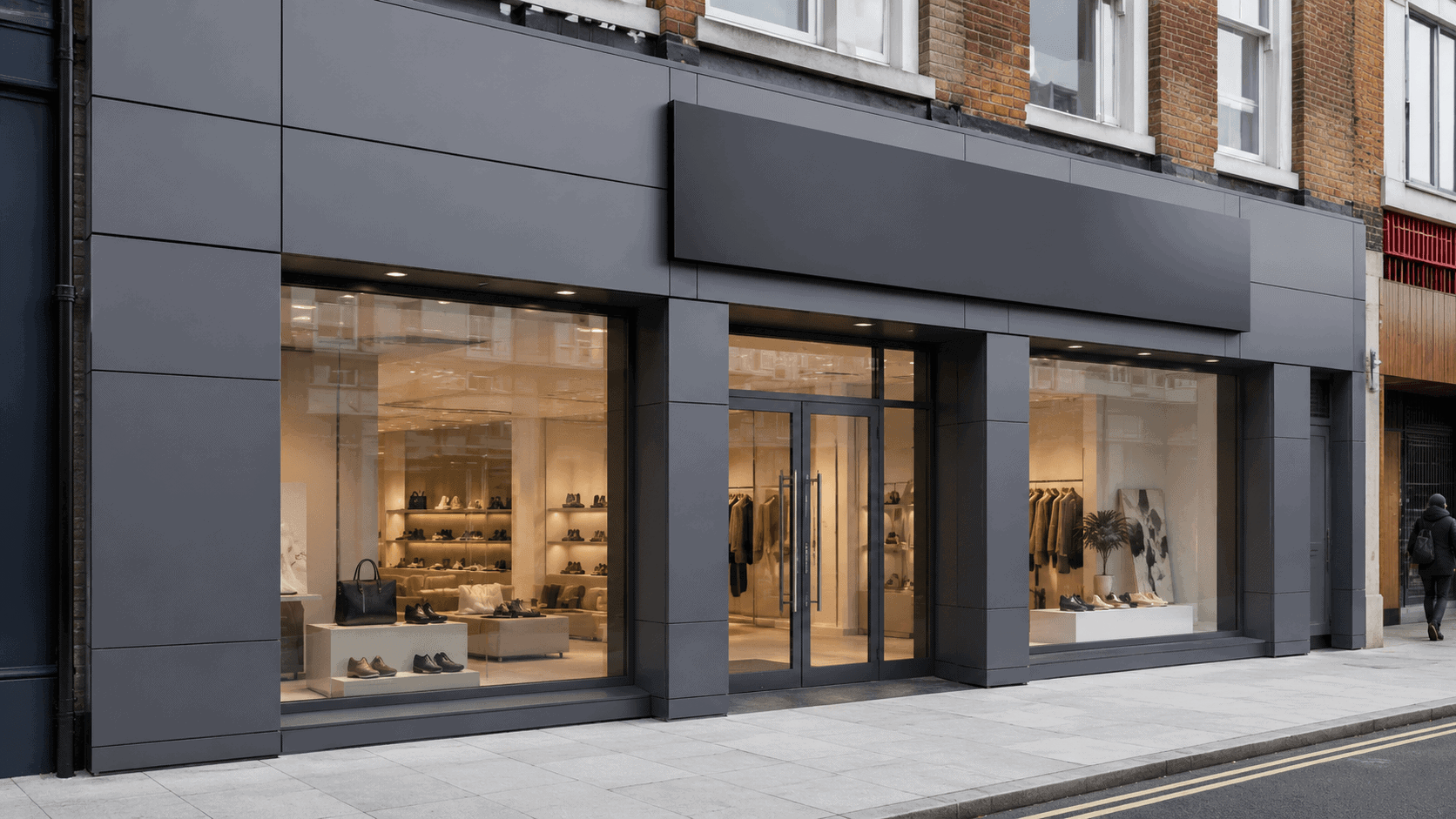
Aluminium composite panels are widely used for shopfronts because they offer a clean, modern, lightweight, and professional appearance. They are suitable for retail façades, entrance areas, signage backgrounds, fascia panels, window surrounds, door returns, soffits, canopies, and branded exterior details.
For shopfront projects, appearance matters a lot. Customers usually see the panels from close distance. This means colour, flatness, joints, corners, trims, sealant lines, and signage integration all need careful planning.
When aluminium composite panels are selected and installed correctly, they can help create a sharp and premium shopfront. However, poor detailing or rushed installation can make the façade look uneven, messy, or unfinished.
This guide explains practical design and installation tips for using aluminium composite panels in shopfront applications.
Why Aluminium Composite Panels Are Popular for Shopfronts
Shopfronts need to look clean, durable, and professional. They also need to support signage, lighting, entrance details, and daily exposure to people, weather, dust, and cleaning.
Aluminium composite panels are popular for shopfronts because they are:
- Lightweight
- Smooth and visually clean
- Easy to cut and fabricate
- Suitable for folded edges and returns
- Available in many colours and finishes
- Practical for signage backgrounds
- Suitable for modern retail design
- Easy to combine with glass, aluminium, steel, and lighting
This makes ACP a practical material for retail buildings, shopping centres, showrooms, cafés, restaurants, offices, service businesses, and commercial entrances.
Start with the Shopfront Design Intent
Before selecting panels, the design intent should be clear. A luxury showroom, a pharmacy, a café, a supermarket, and a car rental office may all need different visual styles.
The design should consider:
- Brand colour
- Building style
- Signage position
- Lighting design
- Entrance visibility
- Window and door layout
- Surrounding materials
- Long-term maintenance
- Local regulations
- Required fire performance
A good shopfront is not only about covering the surface. It should support the brand and make the entrance look clear, clean, and trustworthy.
Choose the Right Panel Thickness
Panel thickness affects stiffness, handling, fabrication, and appearance. For many shopfront applications, ACP is often selected in practical thicknesses depending on panel size, support, fixing method, and exposure.
Before choosing thickness, check:
- Panel size
- Fixing method
- Subframe spacing
- Wind exposure
- Height of installation
- Required flatness
- Whether panels will be routed or folded
- Fire-rating requirement
- Expected impact or public contact
Choosing thickness only by price can create problems. Very thin panels may not provide the right stiffness for larger shopfront areas. On the other hand, a thicker panel may not always be necessary for small interior or decorative details.
The best choice depends on the project.
Select the Right Finish for the Brand
Finish selection is very important in shopfront design. The panel finish affects how the shop looks from the street and how well it supports the brand identity.
Common ACP finishes include:
- Matte finishes
- Glossy finishes
- Metallic finishes
- Brushed finishes
- Mirror finishes
- Wood-effect finishes
- Stone-effect finishes
- Solid colours
Each finish has a different visual effect. Matte finishes can look elegant and calm. Glossy or metallic finishes can look more modern and reflective. Brushed or special finishes can create a more premium architectural look.
Practical Finish Tip
For shopfronts that are seen from close distance, consider scratches, fingerprints, cleaning frequency, and lighting reflection before choosing a very dark, glossy, or mirror-like finish.
Plan Colour Consistency Carefully
Shopfront panels are often viewed from a short distance. This makes colour consistency very important.
Panels from different production batches may show slight shade differences. Directional finishes may also look different if panels are installed in different directions.
To reduce the risk of visible shade variation:
- Use panels from the same batch where possible
- Follow direction arrows on the protective film
- Avoid rotating metallic or brushed panels randomly
- Check samples in natural daylight
- Approve the colour before ordering
- Inspect panels before cutting and installation
For branded retail façades, even a small colour mismatch may be noticeable.
Design the Panel Layout Before Installation
Panel layout affects both appearance and cost. Poor layout can create awkward cuts, narrow strips, uneven joints, and unnecessary waste.
Before installation, plan:
- Panel sizes
- Joint positions
- Signage location
- Door and window returns
- Corner details
- Lighting points
- Fixing zones
- Direction arrows
- Cutting sequence
- Reserve panels
A clean panel layout makes the shopfront look more intentional and professional.
Avoid Awkward Narrow Pieces
Very narrow panel pieces can look weak or unplanned, especially around doors, windows, and corners. They can also be harder to fix neatly.
If possible, adjust the layout to create balanced panel sizes and clean joint lines.
A good layout should feel calm and ordered. The joints should support the design instead of distracting from it.
Pay Attention to Window and Door Returns
Window and door returns are important shopfront details. They are very visible and often seen closely by customers.
Poorly finished returns can make the whole shopfront look cheap, even if the main panels are good.
For clean returns, check:
- Return depth
- Corner alignment
- Folded edges
- Edge finishing
- Joint gaps
- Sealant lines
- Fixing method
- Drainage
- Colour direction
- Contact with glass or frames
Returns should be planned before cutting the panels. They should not be solved randomly on site.
Use Clean Corner Details
Corners are one of the most visible parts of a shopfront. ACP panels can be routed and folded to create clean corner returns, or they can be finished with suitable trims or profiles.
Common corner options include:
- Folded panel corners
- Trimmed corners
- Profile corners
- Mitred details
- Separate return pieces
- Cassette-style corners
The best option depends on the design, budget, panel thickness, fixing method, and installer skill.
Corner Detail Tip
Folded corners can look very clean when fabricated properly. However, the routing depth, fold direction, and panel direction must be controlled carefully.
Integrate Signage Early
Many shopfronts use aluminium composite panels as a background for signage. This can look very clean, but the signage should be planned before the panels are installed.
Before installation, check:
- Sign size
- Sign position
- Fixing points
- Electrical cables
- Lighting
- Letters or logo weight
- Access for maintenance
- Drilling locations
- Colour contrast
- Panel support behind the sign
If signage is added later without planning, installers may drill in poor positions or damage the panel surface.
Consider Lighting and Reflection
Lighting can completely change the appearance of ACP shopfronts. Daylight, internal lighting, LED strips, sign lighting, and street lights may all affect how the panel colour and finish appear.
Glossy, metallic, and mirror finishes are more sensitive to reflection.
Before final approval, check the selected panel finish under realistic lighting conditions. If possible, review samples at different times of the day.
Choose the Right Fixing Method
The fixing method affects appearance, replacement, movement, and long-term performance.
Shopfront ACP panels may be fixed using:
- Screws
- Rivets
- Adhesives
- Profiles
- Cassette systems
- Hidden fixing systems
- Hybrid systems
For a clean premium shopfront, visible fixings may not always be preferred. However, hidden fixing or adhesive systems must still be selected and applied correctly.
The right method depends on panel size, support, exposure, fire requirement, and expected appearance.
Prepare the Subframe Properly
A clean shopfront depends heavily on the subframe. Even high-quality panels can look wavy if the support structure is uneven.
Before fixing ACP panels, check that the subframe is:
- Straight
- Level
- Stable
- Properly spaced
- Correctly anchored
- Compatible with the fixing system
- Suitable for the panel size
- Ready for signage loads if needed
The panel should not be used to hide poor subframe alignment. Any major support issue should be corrected before installation.
Allow for Thermal Movement
Aluminium expands and contracts with temperature changes. This movement should be considered in shopfront cladding, especially for exterior applications.
If panels are fixed too tightly or joint gaps are too small, movement can create stress.
This may lead to:
- Waviness
- Joint problems
- Sealant failure
- Fixing stress
- Panel distortion
- Noisy movement
- Poor appearance
Use suitable joint gaps, fixing methods, and movement allowance according to the project conditions.
Keep Joint Lines Clean and Consistent
Joint lines are a major part of the final shopfront appearance. Uneven or messy joints can make the façade look poorly installed.
Good joint planning helps achieve:
- Cleaner appearance
- Better alignment
- Easier sealing
- Better movement control
- More professional detailing
- Easier panel replacement
The joint width should be consistent across the visible elevation. It should also work with thermal movement, sealant, and drainage needs.
Seal Joints Neatly
If joints require sealant, the application must be clean. Messy sealant lines can reduce the quality of the entire shopfront.
For neat joint sealing:
- Clean the joint edges
- Use compatible sealant
- Use primer if required
- Use backing rods where needed
- Avoid overfilling the joint
- Tool the sealant smoothly
- Remove masking tape carefully
- Do not seal over protective film
Sealant colour should also be selected carefully. It should support the overall design rather than draw unwanted attention.
Protect Panels During Installation
Shopfront projects often involve several trades working in the same area. Glass installers, electricians, sign makers, flooring teams, painters, and cleaners may all be active near the panels.
This creates a risk of scratches, dust, stains, adhesive marks, and impact damage.
To protect the panels:
- Keep protective film on during installation where appropriate
- Avoid dragging panels
- Use clean gloves
- Keep worktables clean
- Avoid placing tools on the surface
- Protect panels from cement dust and paint
- Avoid contact with sharp objects
- Remove protective film at the right time
Protection is especially important for dark, glossy, metallic, and mirror finishes.
Remove Protective Film Correctly
Protective film helps protect the panel surface, but it should not be left on for too long after installation. If exposed to sun and weather for a long period, the film may become harder to remove or leave residue.
Before handover, check:
- Film removal timing
- Surface condition
- Adhesive residue
- Direction arrows
- Clean edges
- Sealant lines
- Scratches or marks
Do not apply sealant or adhesive over protective film. The bond should be made to the correct panel surface.
Think About Cleaning and Maintenance
Shopfronts are exposed to dust, pollution, fingerprints, rain, and public contact. Cleaning needs should be considered during design.
For easier maintenance:
- Avoid unnecessary dirt traps
- Use neat joints
- Select suitable finishes
- Avoid rough exposed edges
- Plan access for cleaning
- Use compatible cleaning methods
- Avoid abrasive tools and harsh chemicals
A shopfront should look good not only on the opening day, but also after regular use.
Consider Fire Rating Requirements
Fire performance should be checked before ordering ACP panels for shopfronts, especially for external cladding, public buildings, shopping centres, high-traffic areas, or regulated projects.
Before ordering, confirm:
- Required fire rating
- Core type
- Local regulations
- Building type
- Installation height
- Certificate requirements
- Intended use
- Façade system design
Panel thickness, coating, and colour do not replace fire-rating requirements. Fire performance depends heavily on the core type and certified system suitability.
Shopfront ACP Installation Checklist
Before installation, check:
- Has the panel colour been approved?
- Is the thickness suitable?
- Is the fire rating correct?
- Is the subframe straight and stable?
- Has the panel layout been planned?
- Are direction arrows followed?
- Are signage fixing points prepared?
- Are window and door returns detailed?
- Are corner details clear?
- Are joint gaps consistent?
- Is sealant compatible?
- Are panels protected from scratches?
- Is protective film removal planned?
- Is final cleaning included?
This checklist can help reduce mistakes and improve the final result.
Common Mistakes to Avoid
Avoid these common shopfront ACP mistakes:
- Choosing panel thickness only by price
- Ignoring signage before installation
- Using poor corner details
- Creating uneven joint lines
- Installing panels on an uneven subframe
- Mixing panel directions
- Ignoring colour consistency
- Leaving protective film too long
- Overfilling sealant joints
- Using incompatible sealant
- Not protecting panels from other trades
- Forgetting cleaning and maintenance needs
- Ignoring fire-rating requirements
Most of these problems are preventable with proper planning.
Final Thoughts
Aluminium composite panels are a practical and attractive solution for shopfronts. They can create clean retail façades, strong signage backgrounds, neat entrance details, and modern architectural finishes.
However, the final result depends on more than the panel itself. Thickness, colour, finish, panel layout, subframe quality, fixing method, joint design, signage integration, and surface protection all matter.
When selected and installed correctly, aluminium composite panels can help shopfronts look professional, modern, and durable.
For architects, shopfitters, façade contractors, signage companies, developers, and procurement teams, the key message is simple: a successful ACP shopfront starts with careful planning before installation begins.
Need pricing, technical documents, or loading guidance for aluminium composite panels? Contact Smartcon with your required thickness, panel dimensions, coating type, fire rating, quantity, and delivery destination. Our team will help you review the suitable SmartACP options and provide practical export support from Turkey.
Explore our full range of Smartcon Aluminium Composite Panels, designed for architects and modern projects.
Authored by Smartcon Int’l. Trade & Marketing Ltd. on 11.06.2026. All rights reserved.
Façade specification
Selecting aluminium cladding for a façade?
Share the application, finish, fire classification and fabrication requirements. We can help assess the appropriate panel specification and supply route.