
Blog
Window and Door Returns with Aluminium Composite Panels: Clean Detailing Tips
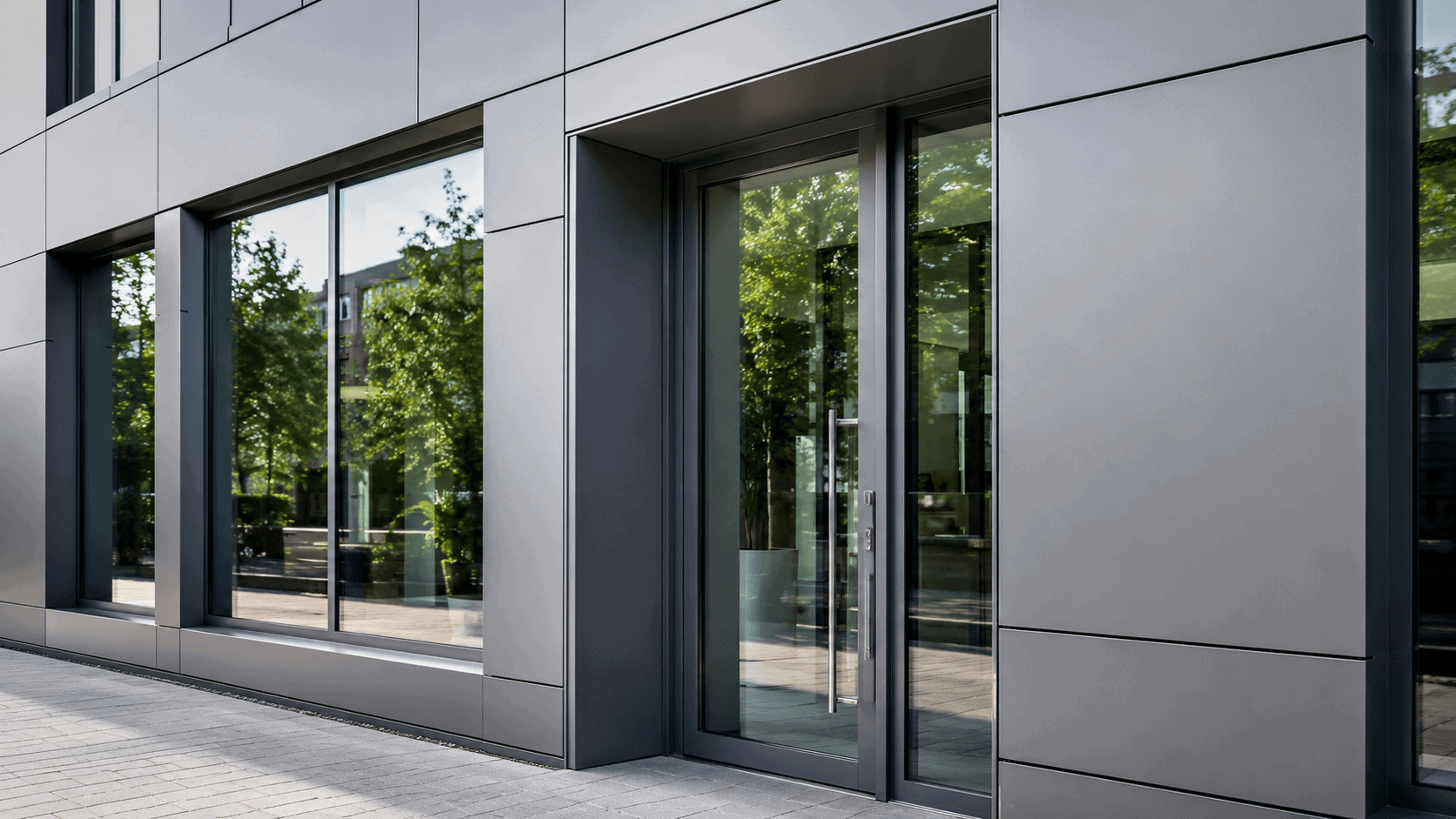
Aluminium composite panels are often used around windows and doors because they can create clean, modern, and visually sharp façade details. They are suitable for shopfronts, commercial façades, office buildings, showrooms, entrance areas, canopies, signage zones, and architectural cladding.
However, window and door returns need careful planning. These areas are highly visible, often seen from close distance, and exposed to movement, rain, cleaning, and daily use. If the return details are poor, even a good aluminium composite panel façade can look unfinished.
This guide explains practical detailing tips for using aluminium composite panels around window and door returns.
Why Window and Door Returns Matter
Window and door returns are not just small finishing details. They affect the final appearance, weather protection, drainage, alignment, and perceived quality of the façade.
Clean returns help create:
- Neat edges around openings
- Better visual continuity
- Cleaner corner details
- Improved façade appearance
- Better integration with glass and frames
- More professional shopfronts and entrances
- Reduced risk of messy sealant lines
- Better long-term maintenance
Because these areas are seen closely, small mistakes can become very noticeable.
Plan the Return Detail Before Cutting Panels
Window and door returns should be planned before panels are cut, routed, folded, or installed. They should not be solved randomly on site.
Before fabrication, check:
- Opening dimensions
- Frame position
- Return depth
- Panel thickness
- Joint locations
- Fixing method
- Fold direction
- Edge finishing
- Sealant lines
- Drainage requirements
- Colour direction
- Subframe support
A clear drawing or cutting plan helps avoid wrong cuts, uneven returns, and awkward panel pieces.
Check the Return Depth
Return depth is one of the most important points. The return should be deep enough to cover the visible side of the opening and meet the window or door frame neatly.
If the return depth is too shallow, the detail may look unfinished. If it is too deep or badly aligned, it may create awkward joints or fixing problems.
Before installation, check:
- Wall build-up depth
- Subframe position
- Window or door frame depth
- Insulation or backing layers
- Sealant space
- Drainage path
- Final visible edge
The return depth should work with the full façade system, not only the ACP sheet.
Use Folded Returns Where Suitable
One of the advantages of aluminium composite panels is that they can be routed and folded. This allows installers to create clean folded returns around windows and doors.
Folded returns can help reduce exposed cut edges and create a smoother appearance.
They are useful for:
- Window reveals
- Door surrounds
- Shopfront entrances
- Fascia returns
- Corner details
- Signage backgrounds
- Commercial façade openings
However, folded returns require accurate routing, correct fold direction, and careful handling.
Best Practice Tip
Test the routed fold on a sample piece before fabricating all return panels. Check the corner sharpness, surface quality, return depth, and alignment.
Avoid Exposed Rough Edges
Exposed rough edges can make a façade look unfinished. This is especially true around windows and doors, where people can see the detail from close range.
To avoid poor edge appearance, consider:
- Folded edges
- Suitable trims
- Clean cut edges
- Proper deburring
- Edge sealing where required
- Neat sealant lines
- Profile systems
- Cassette-style returns
The chosen edge detail should match the project style and installation method.
Keep Joint Lines Consistent
Joint lines around window and door returns should look intentional. Random joints, uneven gaps, or misaligned pieces can make the opening look poorly installed.
Before installation, plan:
- Vertical joint alignment
- Horizontal joint alignment
- Corner transitions
- Panel breaks around openings
- Joint width
- Sealant line position
- Relation to nearby façade joints
- Relation to signage or glazing lines
Good joint planning helps the whole façade look calmer and more professional.
Allow for Thermal Movement
Aluminium expands and contracts with temperature changes. This movement must be considered around window and door returns.
If ACP panels are fixed too tightly around openings, movement stress may appear.
This can cause:
- Waviness
- Joint stress
- Sealant failure
- Fixing pressure
- Corner distortion
- Panel deformation
- Cracking around folds
Use suitable joint gaps, flexible sealant where needed, and correct fixing methods to allow controlled movement.
Do Not Block Drainage Paths
Window and door openings need careful water management. Poor detailing can trap water behind the panels or around the frame.
ACP return details should not block drainage paths, weep holes, or designed ventilation routes.
Before closing the detail, check:
- Water drainage route
- Frame drainage holes
- Flashing position
- Sealant placement
- Ventilation cavity
- Sill detail
- Bottom return detail
- Risk of trapped water
Weatherproofing should work with the full wall system.
Pay Special Attention to Sill Details
The bottom of a window opening is one of the most sensitive areas. Water can collect on sills, ledges, horizontal surfaces, and poorly sloped details.
For sill areas, check:
- Slope direction
- Drip edge
- Sealant line
- Panel support
- Drainage path
- Avoiding standing water
- Compatibility with window frame
- Edge protection
A flat or poorly drained sill detail can lead to staining, water marks, or long-term maintenance issues.
Match ACP Returns with Window and Door Frames
Aluminium composite panels are often installed next to aluminium, PVC, steel, or timber frames. The junction between the panel and frame should look clean and perform correctly.
Before installation, check:
- Frame material
- Frame colour
- Frame depth
- Expansion allowance
- Sealant compatibility
- Fixing access
- Cleaning access
- Finish alignment
The return should not be forced tightly against the frame. A neat, controlled joint usually performs better and looks cleaner.
Use Compatible Sealants
Sealant is often used around window and door returns. It helps create a clean finish and can support weather protection when used correctly.
However, the sealant must be compatible with the ACP coating, window frame, backing material, and expected movement.
Before sealing, check:
- Sealant type
- Primer requirement
- ACP surface compatibility
- Frame compatibility
- Backing rod requirement
- Joint width
- Movement allowance
- Weather conditions
- Tooling method
Do not apply sealant over dust, moisture, or protective film.
Keep Sealant Lines Neat
Messy sealant lines can ruin a clean return detail. Around doors and windows, sealant is often very visible.
For better appearance:
- Clean the joint edges
- Use masking tape where suitable
- Use the correct sealant amount
- Avoid overfilling
- Tool the sealant smoothly
- Remove tape at the right time
- Clean accidental marks quickly
- Avoid smearing the panel face
A neat sealant line makes the whole shopfront or façade look more professional.
Prepare the Subframe Around Openings
Good ACP return detailing depends on proper support. The subframe around windows and doors should be straight, stable, and correctly positioned.
Before fixing panels, check:
- Subframe alignment
- Support around the opening
- Fixing points
- Frame clearance
- Corner support
- Return depth support
- Compatibility with the chosen fixing method
- No loose or weak backing areas
If the subframe is uneven, the return may look twisted or misaligned.
Avoid Narrow Awkward Pieces
Small narrow strips around window and door openings can look weak and unplanned. They can also be harder to cut, fix, and align.
Where possible, design the panel layout to avoid unnecessary narrow pieces.
Better planning can help create:
- Balanced panel proportions
- Cleaner joints
- Stronger visual rhythm
- Easier installation
- Less waste
- Better corner details
The panel layout around openings should be considered together with the full elevation.
Follow Panel Direction
Many aluminium composite panels have direction arrows on the protective film. This is especially important for metallic, brushed, mirror, wood-effect, stone-effect, and other directional finishes.
If return pieces are installed in the wrong direction, they may look like a different shade from the main façade.
Before cutting and installing returns, check:
- Direction arrows
- Finished face orientation
- Cutting plan
- Fold direction
- Panel identification
- Colour consistency
- Batch consistency
This helps reduce visible shade differences around openings.
Protect the Surface During Installation
Window and door returns are often installed in areas where many trades are working. Glass installers, door installers, electricians, sign makers, painters, cleaners, and flooring teams may all work nearby.
This increases the risk of scratches, stains, adhesive marks, or impact damage.
To protect ACP returns:
- Keep protective film on where appropriate
- Avoid dragging panels
- Use clean gloves
- Keep tools away from the panel face
- Protect panels from cement dust
- Avoid paint overspray
- Avoid welding or grinding sparks nearby
- Clean accidental marks carefully
The finished surface should be protected until handover.
Consider Public Contact Areas
Door returns and shopfront entrances may be touched, bumped, or cleaned frequently. These areas need durable detailing and realistic finish choices.
For public contact areas, consider:
- Scratch visibility
- Cleaning frequency
- Impact risk
- Corner protection
- Edge finishing
- Dark or glossy finish sensitivity
- Maintenance access
- Replacement planning
A very delicate finish may look beautiful but may need more care in high-contact areas.
Door Threshold and Entrance Details
Door entrances require extra attention because they combine foot traffic, cleaning, water exposure, frame movement, and public use.
Before finishing door returns, check:
- Threshold detail
- Frame alignment
- Bottom edge protection
- Drainage
- Sealant compatibility
- Clearance for door movement
- Risk of impact damage
- Cleaning access
The entrance should look clean, but it must also remain practical.
Common Mistakes Around Window and Door Returns
Many return-detailing problems come from simple planning or installation mistakes.
Avoid:
- Cutting panels before checking opening dimensions
- Ignoring return depth
- Leaving rough exposed edges
- Using inconsistent joint gaps
- Blocking drainage paths
- Forcing panels tightly against frames
- Ignoring thermal movement
- Applying sealant over protective film
- Installing return pieces in the wrong direction
- Using incompatible sealant
- Not supporting returns properly
- Creating narrow awkward panel strips
- Leaving messy sealant lines
- Forgetting surface protection before handover
Most of these issues can be prevented with early detailing.
Window and Door Return Checklist
Before installing aluminium composite panels around windows and doors, check:
- Are opening dimensions confirmed?
- Is the return depth correct?
- Is the subframe aligned?
- Are joint gaps planned?
- Is thermal movement considered?
- Are drainage paths clear?
- Is the sill detail safe from standing water?
- Are panel directions checked?
- Are folded returns fabricated correctly?
- Are exposed edges finished neatly?
- Is sealant compatible?
- Are backing rods needed?
- Are frame junctions clean?
- Are narrow strips avoided where possible?
- Is surface protection planned?
This checklist helps improve both appearance and installation quality.
How Clean Returns Improve the Whole Façade
Clean window and door returns can make an entire façade look more premium. They create sharper openings, neater transitions, and better visual alignment.
Good return detailing improves:
- Shopfront appearance
- Entrance quality
- Façade rhythm
- Brand presentation
- Weather protection
- Long-term maintenance
- Customer confidence
- Perceived workmanship
Small details around openings often decide how professional the final project looks.
Final Thoughts
Window and door returns with aluminium composite panels should be planned carefully before fabrication and installation. These details are highly visible and affect both appearance and performance.
Clean return detailing depends on correct return depth, proper subframe support, neat edge finishing, consistent joints, compatible sealants, movement allowance, drainage planning, and careful surface protection.
When aluminium composite panels are detailed correctly around windows and doors, they can create modern, clean, and professional façades, shopfronts, entrances, and architectural features.
For façade contractors, shopfront installers, architects, sign makers, developers, and procurement teams, the key message is simple: clean window and door returns are not small details. They are one of the main signs of a well-planned ACP installation.
Need pricing, technical documents, or loading guidance for aluminium composite panels? Contact Smartcon with your required thickness, panel dimensions, coating type, fire rating, quantity, and delivery destination. Our team will help you review the suitable SmartACP options and provide practical export support from Turkey.
Explore our full range of Smartcon Aluminium Composite Panels, designed for architects and modern projects.
Authored by Smartcon Int’l. Trade & Marketing Ltd. on 11.06.2026. All rights reserved.
Façade specification
Selecting aluminium cladding for a façade?
Share the application, finish, fire classification and fabrication requirements. We can help assess the appropriate panel specification and supply route.