
Blog
Subframe Preparation for Aluminium Composite Panel Cladding
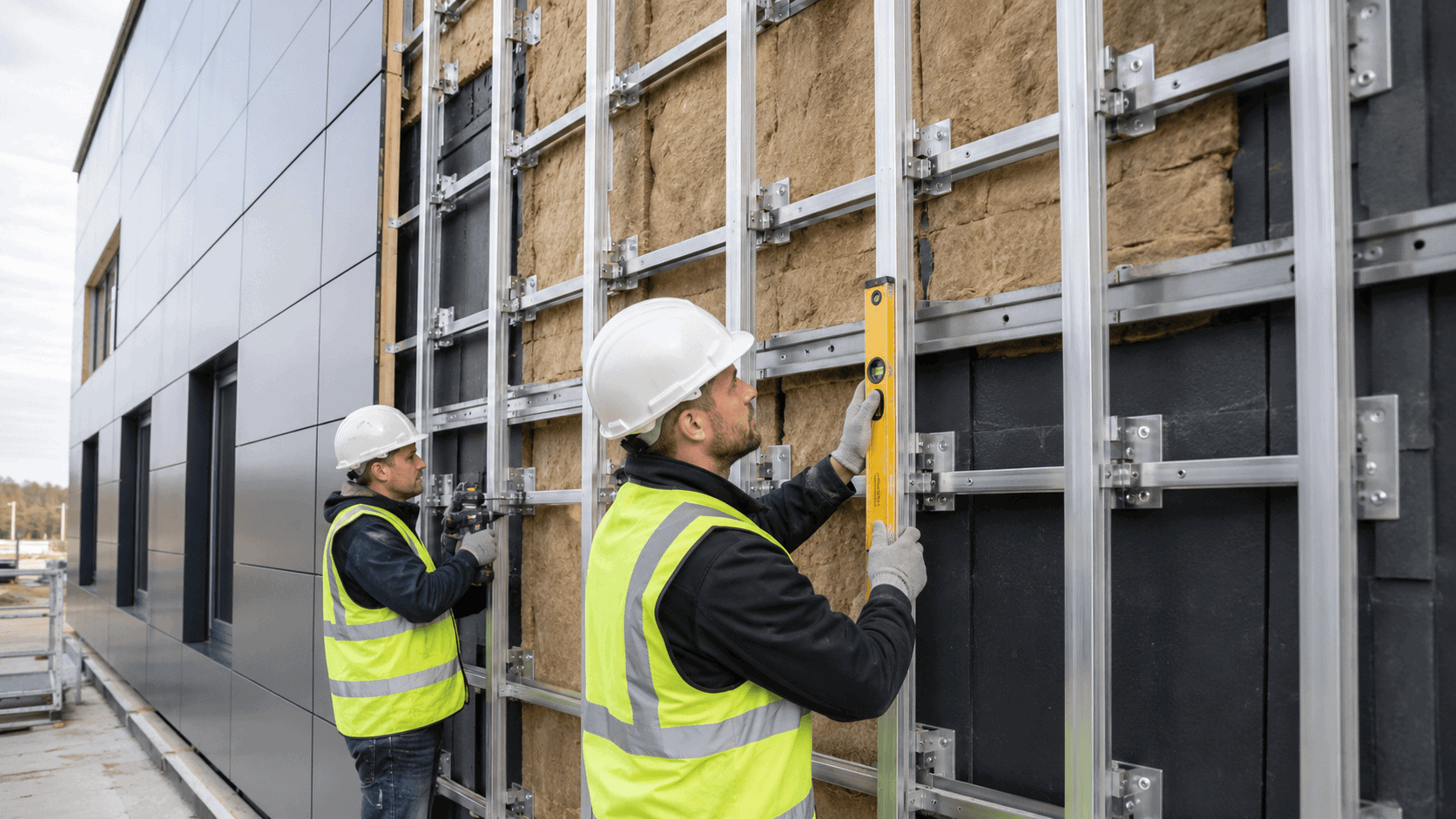
Aluminium composite panel subframe preparation is one of the most important steps in cladding installation. A smooth and professional ACP façade does not depend only on the panel itself. It also depends on the structure behind the panel.
If the subframe is straight, stable, and correctly aligned, aluminium composite panels can achieve a clean and modern finish. However, if the subframe is uneven or poorly prepared, the final façade may show waves, uneven joints, poor alignment, fixing stress, or visible distortion.
For this reason, subframe preparation should never be treated as a minor site detail. It should be planned before installation begins.
This article explains why aluminium composite panel subframe preparation matters and what contractors, façade installers, specifiers, and procurement teams should check before fixing the panels.
What Is an Aluminium Composite Panel Subframe?
An aluminium composite panel subframe is the supporting structure behind the visible cladding panels. It provides the base onto which ACP sheets, cassette panels, or other panel formats are fixed.
The subframe may include:
- Vertical rails
- Horizontal rails
- Brackets
- Profiles
- Anchors
- Fixing clips
- Support battens
- Spacers
- Cavity components
In external cladding systems, the subframe often creates the space needed for ventilation, drainage, insulation, and fixing access.
A good subframe helps the aluminium composite panel sit correctly, remain stable, and achieve consistent joint alignment.
Why Subframe Preparation Matters
Subframe preparation affects almost every part of the finished cladding system.
It influences:
- Panel flatness
- Joint consistency
- Fixing quality
- Thermal movement
- Drainage
- Ventilation
- Installation speed
- Façade appearance
- Long-term performance
Even high-quality aluminium composite panels can look poor if they are installed on an inaccurate subframe.
A flat panel cannot perform well on a twisted or uneven support structure. Therefore, the subframe must be checked before the panels are installed.
Good subframe preparation reduces problems before they appear.
Start With Accurate Setting Out
Good cladding installation starts with setting out.
Setting out means marking and confirming the correct position of the subframe before installation. This helps ensure that panel joints, fixing points, corners, openings, and façade lines match the project design.
Before installing the subframe, contractors should check:
- Building dimensions
- Façade grid lines
- Panel layout
- Window and door positions
- Corner details
- Floor levels
- Tolerance differences
- Fixing positions
- Joint gap planning
This step is important because site conditions may not always match the drawings perfectly.
If setting out is rushed, the installer may face problems later. Panels may not align with openings. Joint gaps may become inconsistent. Corners may look poor. Cassette panels may not fit properly.
Careful setting out saves time during installation.
Check the Main Wall or Background Structure
The subframe is only as reliable as the structure it is fixed to.
Before installing the aluminium composite panel subframe, the background wall or main structure should be checked. It must be suitable for anchoring, fixing, and supporting the cladding system.
Important checks include:
- Wall strength
- Surface condition
- Anchor suitability
- Moisture condition
- Existing cracks or defects
- Insulation build-up
- Load-bearing capacity
- Fixing pull-out resistance where required
For refurbishment projects, this step is especially important. Existing walls may be uneven, damaged, weak, or affected by previous work.
If the background structure is not suitable, the subframe may move or become unstable. This can affect the entire ACP cladding system.
Keep the Subframe Straight and Aligned
Straightness is essential.
Aluminium composite panels have a smooth surface. Because of this, even small subframe errors may become visible after installation.
A poorly aligned subframe can cause:
- Wavy panel surfaces
- Uneven joints
- Poor cassette fit
- Distorted reflections
- Increased oil canning risk
- Fixing stress
- Difficult panel replacement
Installers should check the subframe with suitable tools such as levels, laser lines, straight edges, and measuring devices.
The aim is to create a consistent fixing plane. This means the panels should sit on a clean, straight, and controlled surface.
No panel can fully hide a bad subframe.
Coordinate the Subframe With Panel Layout
The subframe should follow the panel layout, not the other way around.
Before installation, the panel sizes, joint gaps, fixing method, and subframe spacing should be coordinated together. This is especially important for cassette systems and large ACP façade elevations.
Subframe coordination should consider:
- Panel width and height
- Vertical and horizontal joints
- Fixing points
- Cassette hook positions
- Edge returns
- Corner details
- Window reveals
- Door openings
- Soffits and fascia areas
- Replacement access
If the subframe is installed without considering the panel layout, fixing may become difficult. Panels may need site modification, which can reduce accuracy and increase labour time.
A well-coordinated subframe makes installation cleaner and faster.
Allow for Ventilation and Drainage
Many aluminium composite panel cladding systems are installed as part of a rainscreen or ventilated façade.
In these systems, the cavity behind the panels helps air movement and water drainage. This can improve façade performance when detailed correctly.
The subframe should allow:
- Rear ventilation
- Drainage paths
- Cavity continuity
- Moisture escape
- Air movement
- Proper separation from insulation where required
Blocked cavities can create moisture problems. Poor drainage can lead to staining, trapped water, or long-term façade issues.
Ventilation and drainage should be considered before the panels are fixed. They should not be left to chance during installation.
Consider Thermal Movement
Aluminium composite panels can expand and contract with temperature changes. The subframe and fixing method must allow this movement in a controlled way.
If panels are fixed too tightly to a rigid or poorly planned subframe, stress may build up in the system.
This may lead to:
- Surface distortion
- Tight joints
- Fixing stress
- Panel movement noise
- Increased oil canning risk
- Poor long-term appearance
To manage movement, contractors should consider:
- Expansion gaps
- Fixed and sliding points
- Hole sizes
- Panel size
- Fixing spacing
- Subframe material
- Sun exposure
- Local climate conditions
Thermal movement is normal. The aim is not to stop movement, but to allow it safely.
Match the Subframe to the Fixing Method
Different aluminium composite panel fixing methods require different subframe preparation.
For example, screw-fixed panels may need regular support points. Rivet-fixed panels may need accurate hole alignment and movement allowance. Adhesive-fixed panels need compatible bonding surfaces. Cassette systems require precise hooks, brackets, or rail positions.
The subframe must match the selected fixing method.
Common fixing methods include:
- Screw fixing
- Rivet fixing
- Adhesive fixing
- Cassette systems
- Hook-on systems
- Clip systems
If the fixing method changes, the subframe design may also need to change.
This is why the fixing method should be confirmed before the subframe is installed.
Pay Attention to Corners and Returns
Corners and returns are highly visible areas.
If the subframe is not accurate at corners, the finished cladding may look misaligned. Folded ACP returns, cassette panels, and corner details all require careful support.
At corners, the installer should check:
- Alignment between elevations
- Return depth
- Folded panel dimensions
- Fixing access
- Joint gap consistency
- Corner profile position
- Subframe continuity
- Drainage and ventilation paths
Poor corner preparation can make the whole façade look weak, even if the main panel areas are well installed.
Good corners show good workmanship.
Prepare Carefully Around Windows and Doors
Openings are another common source of installation problems.
Windows, doors, and façade penetrations require careful subframe detailing. If the subframe is not prepared correctly around openings, the panels may not align properly.
Common problems include:
- Uneven reveals
- Poor joint alignment
- Narrow or awkward panel pieces
- Inconsistent returns
- Difficult fixing access
- Sealant problems
- Water management issues
Before fabrication and installation, real site dimensions should be checked. Window and door positions should also be compared with the panel layout.
This helps avoid last-minute cutting and poor detailing.
Avoid Forcing Panels Onto the Subframe
Aluminium composite panels should not be forced into place to hide subframe mistakes.
If a panel does not fit properly, the installer should stop and check the reason. The issue may be:
- Subframe misalignment
- Incorrect panel size
- Wrong fixing position
- Poor setting out
- Inaccurate fabrication
- Uneven background wall
- Incorrect joint gap
Forcing panels into position can create stress. This may cause distortion, poor joint lines, or future fixing problems.
The correct approach is to fix the cause, not force the panel.
Common Subframe Preparation Mistakes
Many ACP cladding problems start before the panels are installed.
Common subframe mistakes include:
- Poor setting out
- Ignoring real site dimensions
- Installing rails out of alignment
- Not checking the background wall
- Using unsuitable anchors
- Poor coordination with panel layout
- Blocking ventilation paths
- Not allowing for drainage
- Ignoring thermal movement
- Choosing the fixing method too late
- Poor detailing around windows and doors
- Weak corner preparation
- Installing panels before final subframe checks
Most of these mistakes are avoidable with careful planning and site control.
Aluminium Composite Panel Subframe Checklist
Before installing aluminium composite panels, check the following:
- The panel layout is confirmed
- The fixing method is selected
- The background wall is suitable
- Anchors and brackets are appropriate
- The subframe is straight and stable
- Rails are aligned correctly
- Joint gaps are planned
- Corners and returns are detailed
- Window and door openings are measured
- Ventilation paths are clear
- Drainage paths are maintained
- Thermal movement is considered
- Cassette fixing points are coordinated
- Final alignment is checked before panel fixing
This checklist can help prevent many common façade problems.
Why Good Subframe Preparation Reassures Decision-Makers
Architects, developers, contractors, and procurement teams want façade materials that look good and perform reliably.
Good aluminium composite panel subframe preparation supports both.
It helps the finished façade achieve:
- Better flatness
- Cleaner joint lines
- Reduced oil canning risk
- More accurate fixing
- Improved ventilation
- Better drainage
- Easier installation
- More professional appearance
- Better long-term confidence
This is why the subframe should be seen as part of the façade quality, not just a hidden support system.
A strong façade starts behind the panel.
Final Thoughts
Subframe preparation for aluminium composite panel cladding is essential for a clean, stable, and professional installation. The panels may create the visible finish, but the subframe controls how well they sit, align, and perform.
A straight and stable subframe helps reduce oil canning, supports clean joint gaps, improves fixing quality, and allows proper ventilation and drainage.
Before installing aluminium composite panels, contractors should check the background wall, setting out, fixing method, panel layout, corners, openings, movement allowance, and final alignment.
When aluminium composite panel subframe preparation is done correctly, ACP cladding can deliver a lightweight, modern, precise, and reliable façade finish for commercial buildings, shopfronts, signage, and architectural projects.
Explore our full range of Smartcon Aluminium Composite Panels, designed for architects and modern projects, at: https://smartcongroup.com/products/aluminium-composite-panel/
Authored by Smartcon Int’l. Trade & Marketing Ltd. on 14.05.2026. All rights reserved.
Façade specification
Selecting aluminium cladding for a façade?
Share the application, finish, fire classification and fabrication requirements. We can help assess the appropriate panel specification and supply route.