
Blog
Routing and Folding Aluminium Composite Panel Sheets: How to Create Clean Corners and Returns
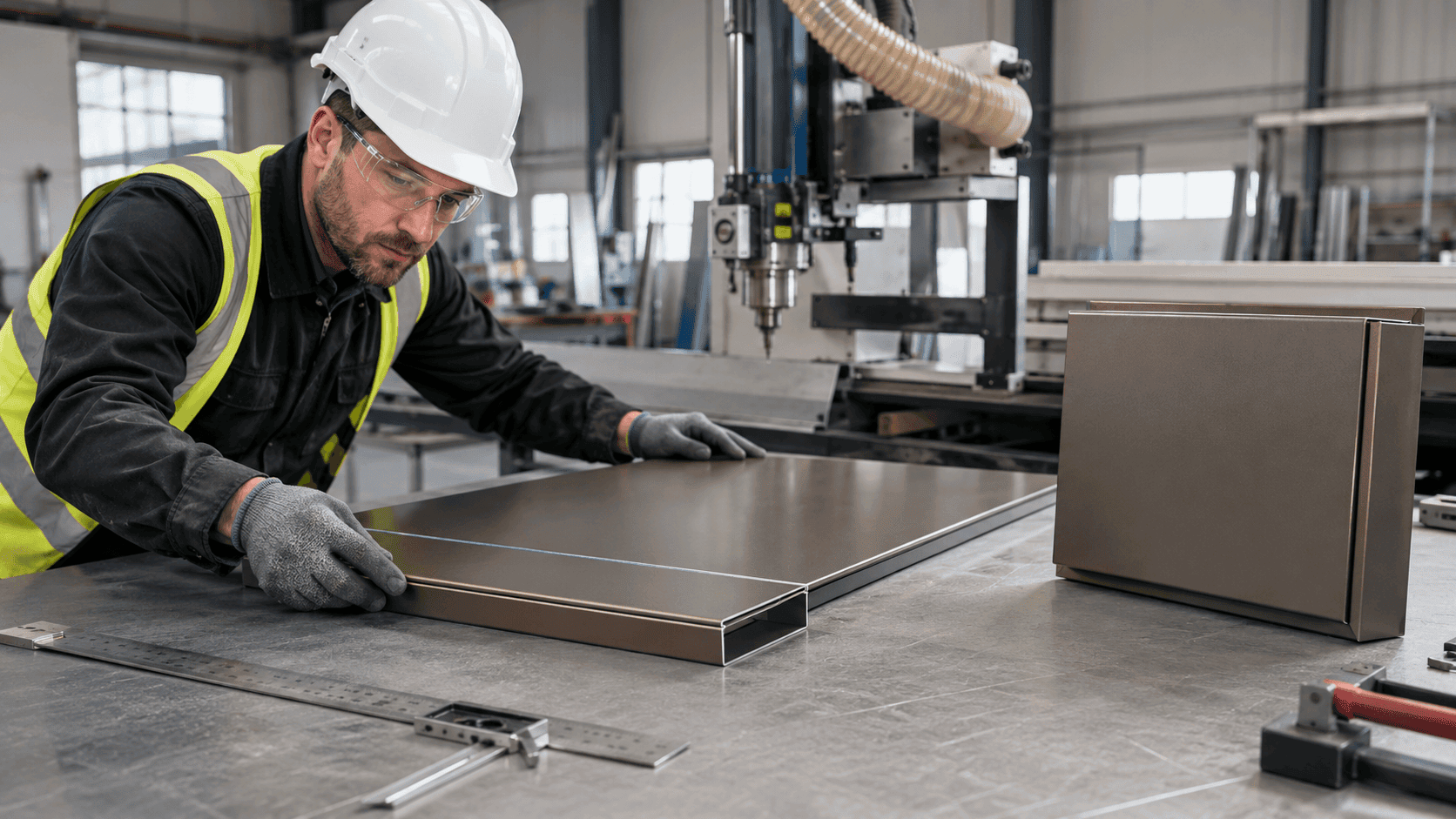
Routing and folding aluminium composite panel sheets is one of the main reasons this material is widely used in façades, shopfronts, signage, columns, soffits, and architectural details. When fabricated correctly, an aluminium composite panel can create sharp corners, clean returns, and smooth cassette-style finishes.
This makes aluminium composite panel a practical choice for projects that need a modern and professional appearance without complicated or heavy fabrication.
However, routing and folding must be done carefully. Poor routing depth, inaccurate cutting, weak folds, or careless handling can affect the final appearance and performance of the panel.
This article explains how aluminium composite panel routing and folding helps create clean corners and returns. It also explains what installers, fabricators, contractors, and specifiers should check before installation.
What Does Aluminium Composite Panel Routing and Folding Mean?
Routing is the process of cutting a controlled groove into the back side of an aluminium composite panel. This groove allows the panel to be folded along a clean and accurate line.
Folding is the process of bending the aluminium composite panel along that routed groove to create a corner, return, edge, cassette, box shape, or architectural detail.
This method is commonly used to create:
- Folded panel edges
- Corner returns
- Window reveals
- Column covers
- Shopfront details
- Sign trays
- Cassette panels
- Soffit panels
- Fascia details
- Decorative cladding features
The front aluminium skin remains visible, while the routed groove is usually hidden behind the fold. This helps the aluminium composite panel keep a clean finished appearance.
Why Aluminium Composite Panel Sheets Are Easy to Shape
Aluminium composite panel sheets are valued because they are lightweight, flat, and easy to fabricate. Routing and folding make them even more versatile.
This process allows an aluminium composite panel to be shaped into precise architectural elements without the need for heavy metal fabrication.
Routing and folding can help create:
- Cleaner corners
- Sharper edges
- Smooth panel returns
- Better cassette detailing
- More professional signage
- Neater shopfront finishes
- Stronger visual continuity
- Less visible edge exposure
For architects and contractors, this is important because the final appearance often depends on the details. Corners, edges, returns, and openings can either improve the façade or make it look poorly finished.
Common Applications for Routed and Folded Aluminium Composite Panel Sheets
Routing and folding aluminium composite panel sheets is useful in many different applications.
Façade cladding
In façade cladding, routed and folded aluminium composite panel sheets are often used to create cassette panels. These cassettes can be installed on a subframe to achieve a clean and modern appearance.
Shopfronts
Shopfront installers use aluminium composite panel sheets to create neat fascia areas, side returns, column wraps, and entrance details.
Signage
Sign makers often use aluminium composite panel for sign trays, folded edges, box signs, and clean perimeter details.
Columns and beams
An aluminium composite panel can be folded around structural columns, beams, and feature areas to create a more finished architectural look.
Window and door reveals
Routed and folded aluminium composite panel sheets can help create cleaner returns around openings, making the façade look more controlled.
This flexibility is one of the strongest advantages of aluminium composite panel as a façade, cladding, and signage material.
Routing Depth Matters in Aluminium Composite Panel Fabrication
Routing depth is one of the most important details in aluminium composite panel fabrication.
If the groove is too shallow, the panel may not fold cleanly. The bend may look forced, uneven, or bulky.
If the groove is too deep, the aluminium composite panel may become weak. It may crack, split, or lose strength along the folded line.
The goal is to remove enough material from the core to allow a clean fold, while keeping the front aluminium skin intact and supported.
Fabricators should always follow the panel supplier’s technical guidance for routing depth, tool type, and groove shape.
A clean fold starts with a correct groove.
Choose the Right Groove Shape
Different groove shapes can be used depending on the fold angle and application.
Common routing profiles include:
- V-grooves
- U-grooves
- Rectangular grooves
- Special grooves for cassette fabrication
V-grooves are often used for sharp bends and clean corners. U-grooves may be used where a softer bend or different fold detail is required.
The correct groove shape depends on:
- Aluminium composite panel thickness
- Fold angle
- Required edge detail
- Application type
- Fabrication equipment
- Project design
- Manufacturer guidance
Choosing the wrong groove can affect the final fold quality.
Cutting Accuracy Comes First
Routing and folding cannot fix poor cutting.
Before routing begins, the aluminium composite panel must be measured and cut accurately. If the panel is not square, the folded return may not align correctly during installation.
This can create problems such as:
- Uneven corners
- Inconsistent returns
- Poor cassette fit
- Misaligned joints
- Difficult installation
- Gaps around windows or doors
- Poor visual finish
Accurate cutting is especially important for cassette panels, shopfront trays, and repeated façade modules.
Small measurement mistakes can become very visible when aluminium composite panel sheets are installed across a large elevation.
How Aluminium Composite Panel Folding Creates Clean Corners
One of the biggest advantages of aluminium composite panel is the ability to create clean folded corners.
Instead of exposing a raw cut edge, the panel can be folded to create a finished return. This makes the detail look more complete and professional.
Folded corners are commonly used for:
- External building corners
- Window reveals
- Door openings
- Column covers
- Fascia returns
- Signage edges
- Soffit transitions
A well-folded aluminium composite panel corner gives the impression of a continuous surface. It can also reduce the need for extra edge trims in many applications.
However, the fold should be straight, smooth, and consistent. A poor fold can make the whole detail look weak.
Aluminium Composite Panel Returns Around Windows and Doors
Window and door openings are critical areas in façade design.
If returns are poorly detailed, the installation may look unfinished. Routed and folded aluminium composite panel sheets can help create clean reveals around these openings.
Good returns around openings should have:
- Straight folded edges
- Consistent joint gaps
- Accurate dimensions
- Clean corner alignment
- Proper drainage consideration
- Suitable fixing access
- Neat connection with frames
Before fabrication, real site dimensions should be checked. Window and door openings may not always match the drawings perfectly.
Measuring before cutting helps avoid awkward gaps, poor alignment, and wasted aluminium composite panel sheets.
Cassette Panels Made from Aluminium Composite Panel Sheets
Cassette panels are one of the most common professional uses of routed and folded aluminium composite panel sheets.
In a cassette system, the aluminium composite panel is routed and folded around its edges to form a tray-like panel. This cassette is then fixed to a metal subframe using hooks, brackets, clips, or other fixing profiles.
Cassette panels are popular because they provide:
- A clean façade appearance
- Concealed or semi-concealed fixing
- Better edge finish
- Controlled joint lines
- More architectural detailing
- Easier panel replacement in some systems
However, cassette fabrication requires accuracy. The folded edges, fixing points, and panel dimensions must match the subframe design.
A cassette system only works well when design, aluminium composite panel fabrication, and installation are coordinated.
Avoid Cracking at Folded Edges
Cracking at folded edges is a sign of poor fabrication or unsuitable folding conditions.
This may happen if:
- The routing depth is incorrect
- The groove shape is wrong
- The aluminium composite panel is folded too aggressively
- The panel is not suitable for the fold radius
- The temperature is too low during fabrication
- The coating is damaged during bending
- The wrong tool is used
To reduce the risk, fabricators should use suitable routing tools, follow the correct fold method, and avoid forcing the panel.
The fold should feel controlled, not stressed.
Protect the Aluminium Composite Panel Surface During Fabrication
Aluminium composite panel sheets usually come with protective film on the surface. This helps protect the coating during handling, cutting, routing, and installation.
However, the surface can still be damaged if panels are handled carelessly.
Common surface damage includes:
- Scratches
- Dents
- Pressure marks
- Tool marks
- Dragging marks
- Adhesive residue
- Film damage
To protect the aluminium composite panel surface:
- Keep panels clean during fabrication
- Do not drag panels across rough surfaces
- Use clean workbenches
- Avoid sharp objects near the front face
- Keep protective film in place during fabrication
- Remove the film at the correct time after installation
A clean façade depends not only on good fabrication, but also on careful handling.
Plan Joint Gaps Before Folding
Joint gaps should be planned before aluminium composite panel sheets are routed and folded.
Once a panel is folded into a cassette or return detail, it becomes harder to adjust on site. If the joint gaps were not considered earlier, the installation may become difficult.
Before fabrication, check:
- Panel layout
- Joint gap width
- Subframe position
- Folded return depth
- Fixing method
- Window and door positions
- Corner details
- Thermal movement allowance
This planning helps ensure that the folded aluminium composite panel sheets fit properly and look consistent after installation.
Good fabrication starts with good detailing.
Match the Folded Aluminium Composite Panel to the Fixing Method
Routed and folded aluminium composite panel sheets must be compatible with the fixing method.
For example, a cassette panel may need specific folded edges to connect with hooks or brackets. A sign tray may need folded returns for screw fixing. A shopfront panel may need access for hidden fixings or adhesive bonding.
The fixing method affects:
- Fold depth
- Return size
- Edge detail
- Hole positions
- Bracket location
- Installation sequence
- Replacement access
If the fixing method is decided too late, the aluminium composite panel may need to be modified after fabrication. This can lead to delays, extra cost, and lower-quality detailing.
Common Aluminium Composite Panel Routing and Folding Mistakes
Many fabrication problems are preventable.
Common mistakes include:
- Routing too deep
- Routing too shallow
- Using the wrong groove shape
- Cutting panels inaccurately
- Folding panels too aggressively
- Ignoring minimum bend requirements
- Damaging the coating during fabrication
- Not checking panel direction
- Forgetting joint gaps before fabrication
- Not coordinating cassette panels with the subframe
- Poor handling during transport
- Removing protective film too early or too late
These mistakes can affect appearance, installation speed, and long-term performance.
The best way to avoid them is to plan the detail before fabrication begins.
Aluminium Composite Panel Routing and Folding Checklist
Before routing and folding aluminium composite panel sheets, check the following:
- Panel type and thickness are suitable
- Fabrication guidance has been reviewed
- Cutting dimensions are confirmed
- Site measurements have been checked
- Groove shape is selected correctly
- Routing depth is controlled
- Fold angle is confirmed
- Protective film is in good condition
- Joint gaps are planned
- Fixing method is confirmed
- Subframe design is coordinated
- Corners and returns are detailed clearly
- Panels are handled and stored properly
This checklist can reduce fabrication errors and improve the final finish.
Why Good Aluminium Composite Panel Fabrication Reassures Decision-Makers
Architects, contractors, developers, and procurement teams do not only care about the panel itself. They care about the final result.
Good aluminium composite panel routing and folding show that the material can deliver:
- Clean architectural details
- Sharp corners
- Consistent panel returns
- Professional shopfront finishes
- Smooth cassette façades
- Practical signage solutions
- Lightweight and modern cladding
This is why fabrication quality is part of material confidence.
When aluminium composite panel sheets can be shaped cleanly and installed properly, decision-makers feel more confident using them on visible projects.
Final Thoughts
Routing and folding aluminium composite panel sheets is an important fabrication method for creating clean corners, returns, cassette panels, shopfront details, signage, soffits, and architectural cladding features.
The process allows each aluminium composite panel to be shaped into precise and modern details while keeping the visible surface smooth and professional.
However, the quality of the final result depends on accurate cutting, correct routing depth, suitable groove shape, careful folding, proper handling, and coordination with the fixing method and subframe.
When aluminium composite panel routing and folding is done correctly, the material becomes a highly practical and versatile solution for façades, cladding, signage, shopfronts, and architectural detailing.
Explore our full range of Smartcon Aluminium Composite Panels, designed for architects and modern projects, at: https://smartcongroup.com/products/aluminium-composite-panel/
Authored by Smartcon Int’l. Trade & Marketing Ltd. on 14.05.2026. All rights reserved.
Façade specification
Selecting aluminium cladding for a façade?
Share the application, finish, fire classification and fabrication requirements. We can help assess the appropriate panel specification and supply route.