
Blog
Aluminium Composite Panel Loading and Unloading: How to Prevent Damage Before Installation
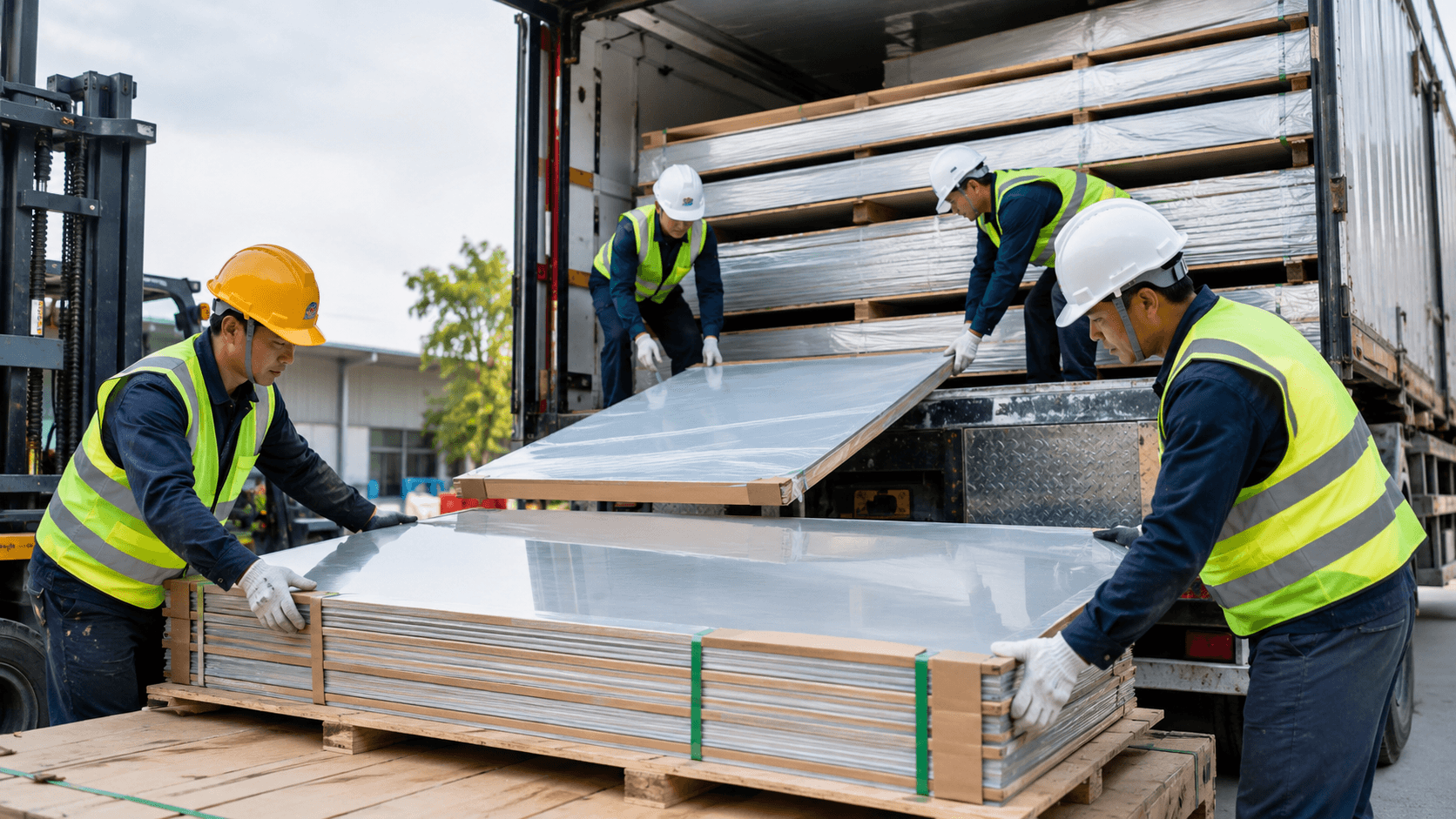
Aluminium composite panels can create a clean, modern, and professional finish for façades, shopfronts, signage, canopies, interiors, and architectural details. However, the final result does not depend only on the panel itself.
Panels can be damaged before installation if they are loaded, transported, unloaded, stored, or handled incorrectly.
Scratches, dents, bending, corner damage, edge damage, protective film problems, and moisture exposure can all happen before the panels even reach the wall. This can create delays, extra costs, complaints, and unnecessary waste.
This guide explains practical loading and unloading tips for aluminium composite panels to help contractors, distributors, procurement teams, sign makers, and façade installers reduce damage before installation begins.
Why Loading and Unloading Matter for Aluminium Composite Panels
Aluminium composite panels usually have a finished coated surface. This surface may be matte, glossy, metallic, brushed, mirror, wood-effect, stone-effect, or solid colour.
Because the surface is visible after installation, damage during handling can affect the final appearance of the project.
Good loading and unloading practice helps prevent:
- Scratches
- Dents
- Bent corners
- Damaged edges
- Surface stains
- Protective film problems
- Panel warping
- Moisture damage
- Site complaints
- Installation delays
A high-quality panel can still look poor if it is damaged during transport or site handling. For this reason, damage prevention should start before the panels leave the warehouse.
Check the Packaging Before Loading
Before loading aluminium composite panels, the packaging should be checked carefully. Panels should be packed in a way that protects the coated surface, edges, and corners during transportation.
Before loading, check:
- Are the panels packed flat?
- Are edges protected?
- Are corners protected?
- Is the protective film intact?
- Is the packaging clean and dry?
- Are pallets strong enough?
- Are the panels properly supported?
- Are the bundles stable?
- Is the quantity correct?
- Are labels visible?
Weak packaging can lead to damage during lifting, truck movement, or unloading.
Use Flat and Stable Support
ACP sheets should be supported properly during loading. If panels are not supported evenly, they may bend, twist, or become stressed during transport.
The panels should remain flat and stable. They should not hang over pallet edges without support.
Poor support can cause:
- Panel bending
- Corner damage
- Edge deformation
- Surface pressure marks
- Difficulty during unloading
- Higher risk of scratches
A flat and stable base is one of the simplest ways to protect aluminium composite panels.
Avoid Dragging Panels
Dragging is one of the most common causes of scratches. Even with protective film, dragging panels across rough surfaces, pallets, metal frames, or other sheets can damage the panel surface or edges.
Panels should be lifted carefully instead of dragged.
Avoid dragging panels across:
- Concrete floors
- Metal frames
- Truck beds
- Pallet edges
- Other panels
- Dirty surfaces
- Sharp objects
- Packaging straps
If panels need to be moved manually, enough people should support the sheet evenly.
Best Practice Tip
Lift panels with clean gloves and support them along the length. Do not pull one corner or drag one edge across the ground.
Use Suitable Lifting Equipment
For large quantities or full pallets, mechanical lifting equipment is usually needed. Forklifts, pallet trucks, cranes, or vacuum lifting equipment may be used depending on the project, site, and panel size.
The lifting method should match the packaging and panel bundle.
When using lifting equipment, check:
- Fork spacing
- Load balance
- Pallet strength
- Bundle stability
- Lifting angle
- Clear movement path
- Trained operator
- Safe unloading area
Incorrect lifting can damage the pallet, bend the sheets, or cause the bundle to shift.
Protect the Edges and Corners
Edges and corners are vulnerable during loading and unloading. Corner damage can make panels difficult to install cleanly, especially around shopfronts, signage, cassette panels, and visible façade details.
To protect edges and corners:
- Use corner protection
- Avoid impact with forklift forks
- Keep panels away from hard objects
- Do not drop bundles
- Do not lean sheets against sharp surfaces
- Handle individual panels carefully
- Protect cut edges after fabrication
Even small edge damage can become visible after installation.
Keep Panels Dry During Transport
Aluminium composite panels should be protected from moisture during transport and storage. Water trapped inside packaging can cause stains, marks, or protective film problems.
During transport, check:
- Truck cover condition
- Protection from rain
- Packaging moisture resistance
- Loading during bad weather
- Water drainage from the truck bed
- Storage after unloading
Panels should not be left exposed to rain or standing water.
Avoid Direct Sunlight During Long Storage
Protective film is useful during transport and installation, but it should not be exposed to strong sunlight for too long. If panels remain under sunlight for an extended period, the film may become difficult to remove or leave adhesive residue.
This is especially important when panels are unloaded on site and stored outdoors.
To reduce risk:
- Store panels in a shaded area
- Avoid long sunlight exposure
- Keep panels in original packaging when possible
- Follow supplier guidance for protective film removal
- Do not leave panels exposed for unnecessary time
Protective film is temporary protection, not long-term outdoor storage covering.
Secure Panels Properly in the Truck
During transport, panels must be secured to prevent movement. If bundles slide, vibrate, or hit other cargo, surface and edge damage may occur.
When securing panels, avoid excessive pressure from straps. Over-tightening straps can create pressure marks or deform packaging.
Good transport securing should:
- Prevent movement
- Avoid sharp contact points
- Protect corners
- Spread pressure evenly
- Keep panels flat
- Avoid direct strap pressure on exposed panel surfaces
- Separate panels from heavy or sharp cargo
Do not place heavy objects directly on ACP bundles unless the packaging and loading plan are designed for it.
Separate Panels from Sharp or Heavy Cargo
Aluminium composite panels should not be loaded carelessly with sharp, dirty, wet, or heavy materials that can damage the surface.
Avoid direct contact with:
- Steel profiles
- Loose metal parts
- Sharp tools
- Wet materials
- Cement bags
- Chemicals
- Stone or tiles
- Unprotected glass
- Heavy equipment
If different materials must be transported together, they should be separated and protected properly.
Inspect Panels When They Arrive
Panels should be inspected as soon as they arrive on site or at the warehouse. This helps identify transport damage before cutting, routing, bending, or installation begins.
Before signing off the delivery, check:
- Packaging condition
- Pallet damage
- Visible dents
- Corner damage
- Edge damage
- Moisture inside packaging
- Protective film condition
- Quantity
- Colour and finish
- Labels and order details
If there is visible damage, take photos before unpacking or moving the panels further.
Document Any Damage Immediately
If panels arrive damaged, documentation is important. Photos and delivery notes help clarify whether the damage happened during transport, unloading, storage, or site handling.
Useful documentation includes:
- Photos of the truck
- Photos of packaging
- Photos of damaged corners or edges
- Photos before unloading if possible
- Delivery note remarks
- Batch or label information
- Quantity affected
- Date and location
Clear documentation helps avoid confusion later.
Unload on a Clean and Level Area
The unloading area should be prepared before the truck arrives. A dirty, uneven, crowded, or wet unloading zone increases the risk of damage.
The unloading area should be:
- Clean
- Dry
- Level
- Spacious
- Free from sharp objects
- Away from heavy site traffic
- Protected from rain where possible
- Suitable for forklifts or lifting equipment
A little preparation can prevent expensive damage.
Do Not Drop or Shock the Panels
ACP panels should not be dropped, thrown, or handled roughly. Sudden impact can damage the core, edges, corners, or coating.
This is especially important for fabricated panels, routed panels, folded panels, cassette panels, and panels with special finishes.
Avoid:
- Dropping bundles
- Dropping individual sheets
- Hitting panels with forklift forks
- Leaning panels too heavily on corners
- Forcing panels into tight storage areas
- Stacking panels on uneven surfaces
Gentle handling helps protect the final appearance.
Store Panels Flat After Unloading
After unloading, aluminium composite panels should be stored flat and supported. Poor storage can cause bending, warping, scratches, or pressure marks.
For better storage:
- Store panels horizontally
- Keep them on a flat base
- Support the full sheet
- Keep packaging clean and dry
- Avoid heavy loads on top
- Keep away from moisture
- Protect from direct sunlight
- Avoid high-traffic areas
Vertical storage may increase the risk of bending or edge pressure if not done correctly.
Keep Panels in Original Packaging Where Possible
Original packaging helps protect panels during short-term storage. It can reduce exposure to dust, moisture, scratches, and site contamination.
However, the packaging should not trap moisture. If packaging becomes wet, the panels should be checked and dried according to safe handling practice.
Do not assume that packaging alone is enough for long-term outdoor storage.
Handle Special Finishes with Extra Care
Some aluminium composite panel finishes show marks more easily than others. Dark colours, glossy panels, metallic finishes, mirror finishes, brushed finishes, and special decorative finishes need extra care.
These finishes may show:
- Fingerprints
- Fine scratches
- Dust marks
- Handling marks
- Reflection differences
- Protective film residue
For special finishes, use clean gloves, clean work surfaces, and careful lifting methods.
Protect Panels from Other Trades
On active construction sites, panels can be damaged by other trades after delivery. Painters, electricians, glass installers, plasterers, welders, cleaners, and signage teams may all work nearby.
Common site risks include:
- Paint overspray
- Cement dust
- Welding sparks
- Tool scratches
- Foot traffic
- Adhesive stains
- Sealant marks
- Impact from ladders
- Poor cleaning methods
Store ACP panels away from active work areas where possible.
Move Panels Only When Needed
Every extra movement increases the risk of damage. Panels should not be moved repeatedly from one area to another without reason.
Plan the site storage location carefully so panels can move from delivery to storage, then from storage to fabrication or installation with minimal handling.
This helps reduce:
- Scratches
- Edge damage
- Labour time
- Confusion
- Lost panels
- Installation delays
Good logistics planning improves site efficiency.
Check Protective Film Before Installation
Protective film should be checked before installation. It should be intact, clean, and easy to remove at the correct time.
Before installation, check:
- Film condition
- Direction arrows
- Adhesive residue risk
- Dirt under damaged film
- Sun exposure
- Torn or loose areas
- Correct removal timing
Protective film helps during handling, but it should not be used as permanent protection.
Remove Protective Film at the Right Time
Protective film should usually be removed according to supplier guidance. If it is removed too early, the panel may be scratched during installation. If it is left too long, it may become difficult to remove.
Before removing film, check:
- Installation stage
- Weather exposure
- Sunlight exposure
- Sealant application
- Cleaning plan
- Handover timing
Do not apply sealant or adhesive over protective film. The bond should be made to the clean panel surface.
Loading and Unloading Checklist
Before loading or unloading aluminium composite panels, check:
- Is the packaging clean and dry?
- Are panels supported flat?
- Are edges and corners protected?
- Is the truck clean and suitable?
- Are panels separated from sharp cargo?
- Are straps applied without excessive pressure?
- Is the unloading area clean and level?
- Is lifting equipment suitable?
- Are workers using clean gloves?
- Are panels lifted instead of dragged?
- Are panels protected from rain?
- Are panels protected from sunlight during storage?
- Is delivery damage documented?
- Are panels stored flat after unloading?
- Is protective film checked before installation?
This checklist can help prevent many common handling problems.
Common Loading and Unloading Mistakes
Avoid these common mistakes:
- Dragging panels across rough surfaces
- Loading panels without edge protection
- Over-tightening straps
- Placing heavy materials on ACP bundles
- Unloading in wet or dirty areas
- Using damaged pallets
- Lifting panels unevenly
- Hitting panels with forklift forks
- Leaving panels under direct sunlight
- Storing panels vertically without proper support
- Ignoring damaged packaging
- Moving panels too many times
- Allowing other trades to work over stored panels
- Removing protective film too early or too late
Most handling damage is preventable with simple site discipline.
Why Handling Quality Protects Project Value
ACP panels are often chosen because they create a clean visual finish. If panels are damaged before installation, the project loses value before work even begins.
Good loading, unloading, and storage help protect:
- Material quality
- Surface finish
- Installation speed
- Customer confidence
- Project schedule
- Final appearance
- Supplier reputation
- Contractor reputation
For export projects, careful loading also helps reduce transport-related complaints and supports smoother delivery.
Final Thoughts
Aluminium composite panel loading and unloading should not be treated as a minor logistics detail. It is an important part of protecting panel quality before installation.
Panels should be packed, loaded, transported, unloaded, stored, and handled with care. Clean surfaces, flat support, edge protection, dry conditions, correct lifting, and careful site storage all help prevent damage.
When aluminium composite panels arrive on site in good condition, installers can work faster and achieve a cleaner final result.
For contractors, distributors, sign makers, procurement teams, and façade installers, the key message is simple: protect the panels before installation, and the final façade, shopfront, or signage project will have a much better chance of looking professional.
Need pricing, technical documents, or loading guidance for aluminium composite panels? Contact Smartcon with your required thickness, panel dimensions, coating type, fire rating, quantity, and delivery destination. Our team will help you review the suitable SmartACP options and provide practical export support from Turkey.
Explore our full range of Smartcon Aluminium Composite Panels, designed for architects and modern projects.
Authored by Smartcon Int’l. Trade & Marketing Ltd. on 11.06.2026. All rights reserved.
Façade specification
Selecting aluminium cladding for a façade?
Share the application, finish, fire classification and fabrication requirements. We can help assess the appropriate panel specification and supply route.