
Blog
Aluminium Composite Panel Joint Gaps: Why Spacing Matters in Cladding Installation
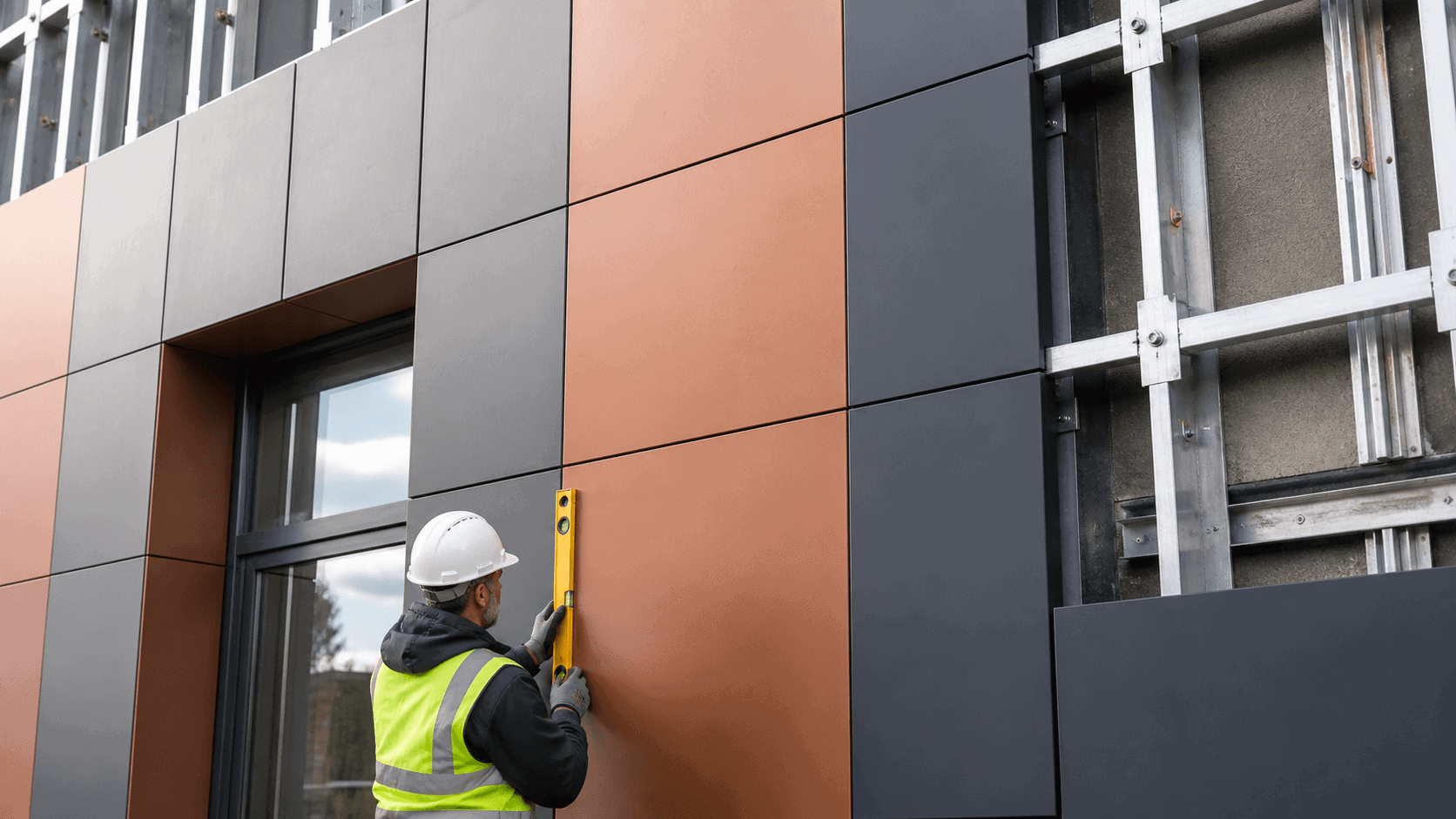
Aluminium composite panel joint gaps play an important role in cladding appearance, movement control, weather protection, and long-term façade performance. Although joint gaps may look like a small visual detail, they can affect how clean, stable, and professional the finished façade appears.
If the gaps are too narrow, panels may not have enough room for movement. If the gaps are uneven, the façade may look poorly installed. If the joint design is not planned properly, water drainage, ventilation, and future maintenance may also become more difficult.
For this reason, joint gaps should never be treated as an afterthought. They should be considered during design, fabrication, subframe preparation, and installation.
This article explains why aluminium composite panel joint gaps matter and how proper spacing helps create a cleaner, safer, and more reliable cladding installation.
What Are Joint Gaps in Aluminium Composite Panel Cladding?
Joint gaps are the visible spaces between aluminium composite panels after installation. These gaps create the panel layout and define the visual rhythm of the façade.
They may appear between:
- Two flat ACP sheets
- Folded cassette panels
- Panels around windows
- Panels around doors
- Corner returns
- Soffits and fascia areas
- Shopfront cladding
- Signage panels
In a good installation, these gaps should look straight, consistent, and intentional. They should not look random or uneven.
Joint gaps also have a functional purpose. They help manage movement, support drainage, allow ventilation in some façade systems, and make installation more controlled.
Why Aluminium Composite Panel Joint Gaps Matter
Aluminium composite panels are often selected because they create a smooth, modern, and clean architectural finish. However, the final appearance depends heavily on the joint layout.
Even if the panels themselves are high quality, poor joint gaps can make the whole façade look weak.
Correct joint gaps help with:
- Clean visual alignment
- Thermal movement
- Water drainage
- Ventilation
- Panel replacement
- Subframe coordination
- Long-term façade appearance
In short, joint gaps affect both appearance and performance.
A well-planned joint makes the façade look professional. A poorly planned joint can make even a premium material look badly installed.
Joint Gaps and Thermal Movement
Aluminium composite panels can expand and contract with temperature changes. This is normal for aluminium-faced materials.
When the weather is hot, the panels may expand slightly. When temperatures fall, they may contract. If there is no space for this movement, stress can build up in the panel.
This may lead to:
- Panel distortion
- Wavy surfaces
- Tight joints
- Fixing stress
- Poor alignment
- Cracking or damage around fixing points
- Increased oil canning risk
Therefore, aluminium composite panel joint gaps should allow for controlled movement. The exact gap depends on the project, panel size, fixing method, climate, and system design.
The key point is simple: panels need space to move naturally.
Joint Gaps and Façade Appearance
Joint gaps are one of the first things people notice on a finished cladding project.
Straight and consistent gaps create a clean architectural look. Uneven gaps create the opposite effect. They make the façade look rushed, cheap, or poorly controlled.
Good joint planning helps create:
- Balanced panel lines
- Neat elevation layouts
- Better symmetry
- Cleaner corners
- More professional detailing
- Stronger visual consistency
This is especially important for commercial buildings, hotels, offices, retail façades, and shopfronts. In these projects, the façade is part of the brand image.
The panel colour and finish also matter. Dark, metallic, or reflective ACP finishes may make joint lines and surface irregularities more visible. This makes careful spacing even more important.
Open Joints and Sealed Joints
Aluminium composite panel cladding can be detailed with different joint approaches. Two common options are open joints and sealed joints.
Open joints are often used in ventilated or rainscreen façade systems. They allow air movement and drainage behind the cladding layer. However, the system behind the panels must be designed to manage water properly.
Sealed joints may be used in some applications where a closed appearance or additional weather protection is needed. These joints usually require suitable sealant, backing material, and careful application.
Both approaches can work, but they must be selected according to the project.
The choice depends on:
- Façade system type
- Weather exposure
- Building design
- Drainage requirements
- Ventilation requirements
- Local regulations
- Manufacturer or system guidance
- Visual expectations
The important point is that joint design should match the full façade system. It should not be decided randomly on site.
Joint Gaps in Cassette Panel Systems
Cassette systems require especially careful joint planning.
In a cassette system, aluminium composite panels are usually routed, folded, and installed onto a subframe. The folded edges create a cleaner and more architectural finish.
However, cassette panels must be fabricated accurately. If the panel dimensions or folded edges are incorrect, the joint gaps may become uneven during installation.
For cassette systems, installers should check:
- Panel dimensions
- Folded edge accuracy
- Hook or bracket positions
- Subframe alignment
- Vertical and horizontal joint lines
- Corner return details
- Movement allowance
- Installation sequence
Cassette systems can create a premium façade finish, but only when fabrication and installation are well coordinated.
Joint Gaps Around Windows and Openings
Windows, doors, and façade openings need special attention.
These areas often create more complicated panel cuts and joint lines. If the joint gaps are not planned carefully, the façade may look uneven around the openings.
Common problems include:
- Narrow gaps on one side
- Wider gaps on the opposite side
- Misaligned panel joints
- Poor corner detailing
- Inconsistent returns
- Difficult sealant application
- Poor water management
Before fabrication, the installer should check the real site dimensions. Drawings may not always match site conditions perfectly.
A good practice is to plan the panel layout around openings before cutting or folding the panels. This helps avoid awkward small pieces and inconsistent gaps.
Joint Gaps at Corners and Returns
Corners are another important area.
Poor corner detailing can damage the visual quality of the whole façade. This is because the eye naturally follows panel lines around the building.
At corners, the joint design should consider:
- Panel return depth
- Folded cassette edges
- Corner alignment
- Gap consistency
- Movement allowance
- Fixing access
- Water drainage
- Visual symmetry
Corners should look intentional and controlled. They should not look like two separate elevations were joined without planning.
For a clean result, corner details should be decided before fabrication starts.
How Subframe Accuracy Affects Joint Gaps
A straight subframe is essential for consistent aluminium composite panel joint gaps.
If the subframe is uneven, twisted, or misaligned, the panels may not sit properly. This can cause gaps to look wider, narrower, or irregular.
Even small subframe errors can become visible on a smooth ACP façade.
Before installing panels, contractors should check that the subframe is:
- Straight
- Stable
- Properly aligned
- Suitable for the selected fixing method
- Installed according to the panel layout
- Ready for drainage and ventilation where required
Good subframe preparation supports better panel flatness, cleaner joints, and easier installation.
No joint design can fully hide a poor subframe.
Do Joint Gaps Help Prevent Oil Canning?
Joint gaps can help reduce the risk of oil canning, but they are not the only factor.
Oil canning is visible waviness or distortion on metal-faced panels. It can be affected by panel size, fixing method, subframe alignment, handling, and thermal movement.
Joint gaps help because they allow panels to move more freely. If panels are forced too tightly together, stress may build up. This can make surface distortion more likely.
To reduce oil canning risk, joint gaps should be planned together with:
- Suitable panel sizes
- Correct fixing points
- Straight subframes
- Movement allowance
- Careful handling
- Accurate fabrication
So, joint gaps are part of the solution. They work best when the whole installation system is properly planned.
Common Joint Gap Mistakes
Many ACP joint problems come from poor planning rather than poor material.
Common mistakes include:
- Leaving joint gaps too narrow
- Creating inconsistent gap widths
- Ignoring thermal movement
- Adjusting gaps randomly on site
- Cutting panels before checking real site dimensions
- Poor subframe alignment
- Poor detailing around windows and doors
- Using the wrong sealant for sealed joints
- Forgetting drainage and ventilation requirements
- Not checking panel direction and layout before installation
These mistakes can affect both the appearance and the performance of the façade.
Most of them can be avoided with better preparation.
Practical Joint Gap Checklist Before Installation
Before installing aluminium composite panels, check the following:
- The panel layout is confirmed
- Joint gaps are clearly defined
- Thermal movement has been considered
- The subframe is straight and stable
- Real site dimensions have been checked
- Window and door openings are measured
- Corner and return details are planned
- Open or sealed joint design is confirmed
- Drainage and ventilation requirements are understood
- Panel sizes match the fixing method
- Fabrication details match the installation plan
- Installers understand the joint layout
This simple checklist helps avoid many common site problems.
Should Joint Gaps Be Decided on Site?
Joint gaps should not be decided casually during installation.
Some small site adjustments may be necessary. However, the main joint design should be planned before fabrication and installation.
This is especially important for:
- Large façades
- Cassette panel systems
- Commercial buildings
- Shopfronts
- Rainscreen cladding
- Projects with many openings
- Projects using metallic or dark ACP finishes
When joint gaps are planned early, the installation becomes more controlled. The result also looks cleaner.
Leaving this decision too late often creates avoidable problems.
Final Thoughts
Aluminium composite panel joint gaps are more than simple spaces between panels. They affect movement, appearance, drainage, ventilation, installation quality, and long-term façade performance.
A good joint design helps the façade look clean and professional. It also allows the panels to move naturally and reduces unnecessary stress on the system.
To achieve the best result, contractors should plan joint gaps before installation, check subframe accuracy, consider thermal movement, measure openings carefully, and coordinate fabrication with the final panel layout.
When aluminium composite panel joint gaps are designed and installed correctly, ACP cladding can provide a clean, modern, lightweight, and reliable finish for commercial buildings, shopfronts, signage, façades, and architectural details.
Explore our full range of Smartcon Aluminium Composite Panels, designed for architects and modern projects, at: https://smartcongroup.com/products/aluminium-composite-panel/
Authored by Smartcon Int’l. Trade & Marketing Ltd. on 02.05.2026. All rights reserved.
Façade specification
Selecting aluminium cladding for a façade?
Share the application, finish, fire classification and fabrication requirements. We can help assess the appropriate panel specification and supply route.