
Blog
Aluminium Composite Panel Fixing Methods: Screws, Rivets, Adhesives, and Cassette Systems
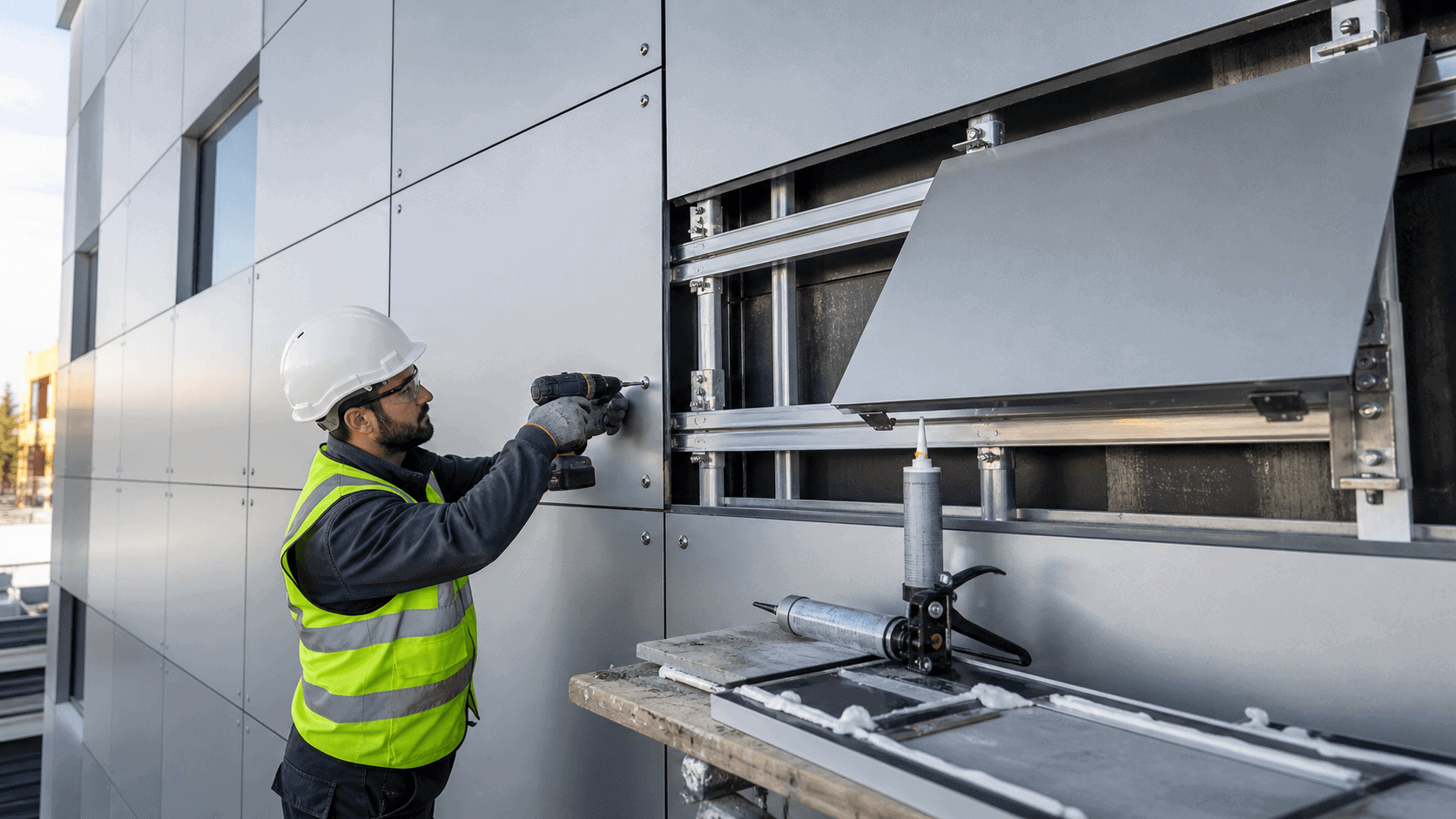
Aluminium composite panel fixing methods play an important role in the final appearance, durability, and performance of a cladding or signage project. Even when the panel itself is lightweight, flat, and easy to fabricate, the fixing method must be selected carefully.
The right fixing method depends on the application, panel size, wind exposure, subframe design, visual expectations, and project budget. For example, a simple shopfront sign may use a different fixing method than a ventilated façade on a commercial building.
In general, aluminium composite panels can be fixed using screws, rivets, adhesives, or cassette systems. Each method has its own advantages. However, each one also requires proper planning and careful installation.
This article explains the main fixing methods in a practical way.
Why the Fixing Method Matters
Aluminium composite panels are widely used because they are lightweight, smooth, modern, and easy to shape. However, the fixing method affects more than just how the panel is attached.
It can influence:
- The final visual appearance
- Panel flatness
- Joint alignment
- Resistance to movement
- Long-term durability
- Maintenance requirements
- Installation speed
- Suitability for façades or signage
Therefore, fixing should not be treated as a small detail. A good fixing method helps the panel perform properly and keeps the project looking clean over time.
Poor fixing, on the other hand, may lead to visible distortion, loose panels, uneven joints, water-related problems, or premature repair work.
1. Screw Fixing for Aluminium Composite Panels
Screw fixing is one of the simplest aluminium composite panel fixing methods. It is often used for signage, shopfronts, interior cladding, temporary installations, and some external applications where visible fixings are acceptable.
In this method, the ACP sheet is fixed directly to a suitable frame, batten, or backing structure using screws.
When screw fixing is suitable
Screw fixing may be suitable for:
- Signage boards
- Shopfront panels
- Interior wall cladding
- Small external panels
- Fascia applications
- Simple refurbishment work
It is practical, fast, and usually cost-effective. It also allows panels to be removed or replaced more easily when needed.
Important points for screw fixing
For a clean result, installers should pay attention to spacing, hole size, screw tightness, and panel movement.
The screws should not be over-tightened. If they are too tight, they may restrict natural movement and create surface stress. In external applications, this can contribute to distortion or fixing-point damage.
It is also important to use suitable washers where required. Washers help distribute pressure and reduce the risk of damaging the panel surface.
Common screw fixing mistakes
Common mistakes include:
- Over-tightening the screws
- Using unsuitable screw types
- Ignoring thermal movement
- Fixing panels to an uneven frame
- Leaving inconsistent fixing spacing
- Damaging the painted surface during installation
Screw fixing is simple, but it still needs discipline. The cleaner the frame and fixing layout, the better the final appearance.
2. Rivet Fixing for Aluminium Composite Panels
Rivet fixing is another common method for ACP installation. It is especially useful where a stronger mechanical fixing is required and where visible fixing heads are acceptable.
Rivets are commonly used in façade cladding, soffits, canopies, shopfronts, and larger external panel applications.
Why rivet fixing is popular
Rivet fixing offers several practical advantages:
- Strong mechanical attachment
- Good installation speed
- Suitable for external cladding
- Works well with metal subframes
- More secure than basic screw fixing in many façade applications
Rivets can also provide a neat and consistent appearance when they are aligned properly.
Thermal movement and rivet fixing
One of the most important details in rivet fixing is movement control. Aluminium composite panels can expand and contract with temperature changes. Therefore, the fixing holes often need to allow controlled movement.
In many cases, installers use a combination of fixed points and sliding points. The fixed point holds the panel position, while the sliding points allow movement.
This helps reduce stress on the panel and supports better long-term performance.
Common rivet fixing mistakes
Common mistakes include:
- Drilling holes too small
- Not allowing for thermal movement
- Poor rivet alignment
- Using the wrong rivet type
- Fixing to a misaligned subframe
- Creating inconsistent panel joints
Rivet fixing can be reliable and practical, but it should be installed with a clear fixing plan.
3. Adhesive Fixing for Aluminium Composite Panels
Adhesive fixing is used when a clean, smooth surface is desired without visible screws or rivets. This method can be attractive for signage, interiors, shopfronts, and selected cladding applications.
However, adhesive fixing must be handled carefully. It is not simply a matter of applying glue and pressing the panel into place.
When adhesive fixing is suitable
Adhesive fixing may be suitable for:
- Interior wall panels
- Signage applications
- Shopfront details
- Smooth decorative surfaces
- Selected external applications with approved systems
The main advantage is appearance. Since there are no visible mechanical fixings on the front face, the panel surface can look very clean.
Surface preparation is critical
Adhesive fixing depends heavily on surface preparation. The backing surface must be clean, dry, stable, and compatible with the adhesive system.
Dust, oil, moisture, loose paint, or uneven surfaces can reduce bond strength. Therefore, installers should follow the adhesive manufacturer’s instructions carefully.
Important checks include:
- Surface cleanliness
- Primer requirements
- Temperature conditions
- Curing time
- Compatibility with ACP coating
- Suitability for indoor or outdoor exposure
Be careful with external façades
For external façades, adhesive fixing should be used only when the full fixing system is suitable for the application. Wind load, temperature changes, moisture, and long-term exposure must be considered.
In many external cladding projects, mechanical fixing or cassette systems may offer better reassurance.
Adhesive fixing can create a beautiful result, but it should never be selected only for visual reasons. Performance and suitability must come first.
4. Cassette Systems for Aluminium Composite Panel Façades
Cassette systems are commonly used for professional façade applications. In this method, aluminium composite panels are routed, folded, and formed into cassette panels. These cassettes are then fixed to a subframe using brackets, hooks, profiles, or concealed fixing systems.
This method is often preferred when a clean architectural façade appearance is required.
Why cassette systems are used
Cassette systems offer several advantages:
- Clean and modern façade appearance
- Concealed or semi-concealed fixings
- Better panel alignment
- Stronger architectural detailing
- Suitable for larger façade projects
- Good control over joints and returns
Because the edges are folded, cassette panels can create a sharper and more premium finish than flat sheets fixed directly to a frame.
Where cassette systems are commonly used
Cassette systems are suitable for:
- Commercial façades
- Office buildings
- Retail projects
- Hotels
- Showrooms
- Large shopfronts
- Rainscreen cladding systems
- Architectural feature walls
They are especially useful where appearance matters as much as function.
Key installation considerations
Cassette systems require accurate fabrication and subframe preparation. The panels must be routed and folded correctly. The subframe must also be level, stable, and aligned.
If the subframe is not accurate, the façade may show uneven joints or poor panel alignment.
For this reason, cassette systems should be planned before fabrication begins. Panel dimensions, joint gaps, fixing profiles, returns, corners, and movement allowances should all be considered together.
Subframe Preparation Is Essential
No fixing method can compensate for a poor subframe.
Whether the panels are fixed with screws, rivets, adhesives, or cassette systems, the supporting structure must be properly prepared.
A good subframe should be:
- Straight
- Stable
- Properly aligned
- Suitable for the selected fixing method
- Compatible with external exposure
- Designed with ventilation and drainage in mind where required
For external façades, ventilation is also important. Aluminium composite panels are often used as part of rainscreen or ventilated façade systems. In these applications, the rear cavity should support air movement and moisture drainage.
Good subframe preparation improves panel flatness, joint consistency, and long-term façade performance.
Joint Gaps and Thermal Movement
ACP sheets can move slightly due to temperature changes. This is normal for aluminium-based materials. Therefore, joint gaps and fixing details must allow controlled movement.
If panels are fixed too tightly or installed without suitable gaps, stress may build up. Over time, this can affect panel flatness and appearance.
Installers should pay attention to:
- Expansion gaps
- Joint consistency
- Fixed and sliding points
- Hole sizes
- Panel size
- Exposure to sunlight
- Local climate conditions
Good joint planning makes the façade look cleaner and helps prevent future problems.
Which Fixing Method Should You Choose?
There is no single best fixing method for every project. The right choice depends on the application.
For simple signage or small panels, screw fixing may be enough.
For stronger external fixing with visible fixing heads, rivets are often practical.
For smooth decorative surfaces, adhesive fixing can be useful if the surface and system are suitable.
For premium architectural façades, cassette systems usually provide the cleanest and most professional result.
Before choosing, consider:
- Is the application internal or external?
- Are visible fixings acceptable?
- Is the panel used for signage or façade cladding?
- Is a ventilated façade required?
- How large are the panels?
- Is thermal movement properly considered?
- What level of appearance is expected?
- Can the subframe support the selected method?
These questions help prevent poor installation decisions.
Common Aluminium Composite Panel Fixing Mistakes
Many ACP installation problems are caused by small mistakes rather than the panel itself.
Common mistakes include:
- Choosing the fixing method too late
- Ignoring thermal movement
- Over-tightening screws or rivets
- Using unsuitable adhesives
- Installing panels on an uneven subframe
- Leaving inconsistent joint gaps
- Removing protective film too late
- Scratching the coating during handling
- Not checking panel direction or colour consistency
- Using the same fixing method for every application
Most of these issues can be avoided with proper planning, trained installers, and clear installation instructions.
Final Checklist Before Installation
Before installing aluminium composite panels, check the following:
- The fixing method is suitable for the application
- The subframe is straight and stable
- Panel dimensions are confirmed
- Joint gaps are planned
- Thermal movement is considered
- Fixing points are marked clearly
- Adhesives, screws, or rivets are compatible
- Protective film is handled correctly
- Panels are stored flat and protected
- Local project requirements are reviewed
This checklist can prevent many common installation and appearance problems.
Conclusion
Aluminium composite panel fixing methods should be selected according to the project type, visual expectations, and installation conditions. Screws, rivets, adhesives, and cassette systems can all be effective when used correctly.
Screw fixing is simple and practical. Rivet fixing provides strong mechanical attachment. Adhesive fixing offers a clean surface when the conditions are suitable. Cassette systems create a premium architectural finish for façades and cladding projects.
The key is not only choosing the right method, but also preparing the subframe, allowing for movement, planning the joints, and following proper installation practice.
When aluminium composite panels are fixed correctly, they provide a lightweight, modern, clean, and versatile solution for façades, cladding, shopfronts, signage, and architectural details.
Explore our full range of Smartcon Aluminium Composite Panels, designed for architects and modern projects, at: https://smartcongroup.com/products/aluminium-composite-panel/
Authored by Smartcon Int’l. Trade & Marketing Ltd. on 02.05.2026. All rights reserved.
Façade specification
Selecting aluminium cladding for a façade?
Share the application, finish, fire classification and fabrication requirements. We can help assess the appropriate panel specification and supply route.