
Blog
Aluminium Composite Panel Fire Rating: PE, FR and A2 Cores Explained
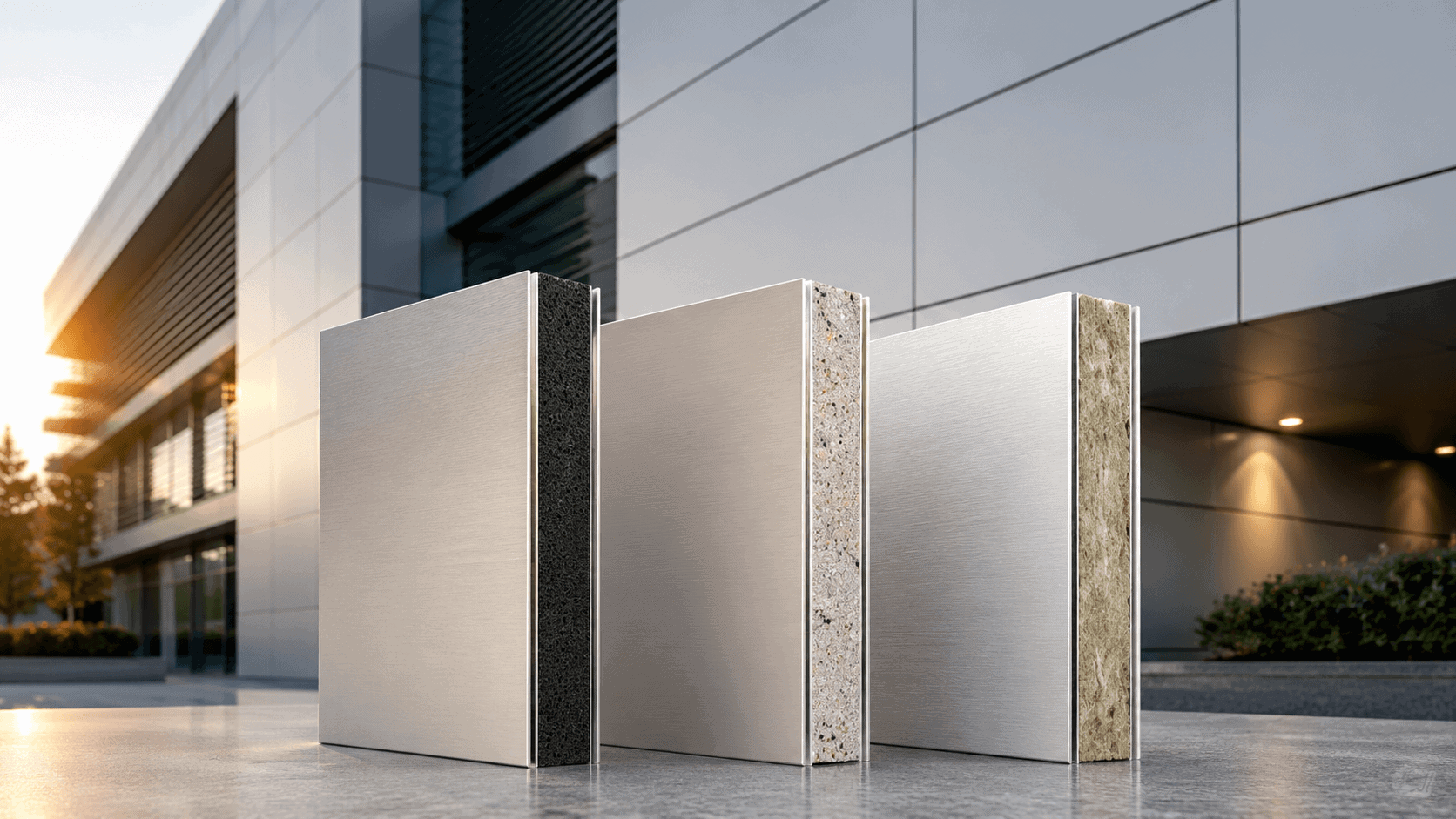
Aluminium composite panel fire rating is one of the most important factors to check before using ACP panels in façade, cladding, or architectural applications. Aluminium composite panels can look very similar from the outside. However, their fire performance can be very different. The key difference is usually inside the panel: the core material.
Some ACP panels have a polyethylene core. Others have fire-retardant mineral-filled cores. Higher-performance panels may use A2-grade mineral cores for improved reaction-to-fire performance.
For architects, contractors, façade installers, and procurement teams, understanding the difference between PE, FR, and A2 cores is essential before selecting aluminium composite panels for a project.
What Is Aluminium Composite Panel Fire Rating?
Aluminium composite panel fire rating refers to how an ACP panel reacts when exposed to fire.
This does not only mean whether the panel burns or not. Fire rating may also consider:
- flame spread
- smoke production
- flaming droplets
- heat release
- contribution to fire growth
- core material behaviour
In Europe, construction products are commonly classified under the EN 13501-1 reaction to fire classification system, which includes classes such as A1, A2, B, C, D, E, and F. The system also uses smoke and flaming droplet ratings such as s1, s2, s3, d0, d1, and d2.
This is why buyers should not only ask, “Is this ACP fire-rated?”
A better question is:
“What is the tested fire classification of this aluminium composite panel?”
Why the Core Material Matters
The fire performance of an aluminium composite panel depends heavily on its core.
The outer aluminium sheets are thin. They provide surface strength, flatness, and appearance. However, the core makes up a large part of the panel’s volume.
This means the core has a major effect on fire behaviour.
The three most common ACP core types are:
- PE core
- FR core
- A2 core
Each type has a different purpose, risk profile, and recommended application area.
PE Core Aluminium Composite Panels
PE core ACP panels use a polyethylene core between two aluminium sheets.
Polyethylene is a plastic-based material. This makes PE core panels lightweight, economical, and easy to fabricate. However, PE core panels generally offer lower fire performance compared with mineral-filled FR or A2 panels.
PE core aluminium composite panels may still be used in certain lower-risk applications, depending on local regulations and project requirements. However, they are generally not suitable for high-risk façade applications where strict fire performance is required.
PE core ACP panels are commonly considered for:
- signage
- shopfronts
- interior decoration
- low-risk applications
- temporary or non-critical uses
They should be avoided where the project requires high fire performance, especially in regulated exterior wall systems.
FR Core Aluminium Composite Panels
FR core ACP panels contain mineral fillers that help reduce flammability compared with standard PE core panels.
FR means fire-retardant. These panels are designed to provide better reaction-to-fire performance than PE core aluminium composite panels.
FR core aluminium composite panels are often used in commercial buildings, façade applications, and projects where improved fire performance is required.
However, not all FR panels are the same. The exact fire classification depends on the core composition, mineral content, panel structure, and test results.
For this reason, buyers should always request:
- fire classification report
- technical data sheet
- core type confirmation
- test standard reference
- intended application guidance
FR core panels can be a practical choice for many façade and cladding projects, but the final decision should always be based on the project’s fire safety requirements and local building regulations.
A2 Core Aluminium Composite Panels
A2 core ACP panels are designed for higher fire performance.
These panels usually contain a high percentage of mineral content in the core. As a result, they offer much lower contribution to fire compared with PE core panels.
In many European projects, A2-s1,d0 is considered a strong classification for façade materials because it indicates very limited contribution to fire, low smoke production, and no flaming droplets under the relevant classification system.
A2 aluminium composite panels are often considered for:
- high-rise buildings
- public buildings
- schools
- hospitals
- hotels
- residential developments
- regulated façade projects
- projects with strict fire safety requirements
However, even A2-rated panels should not be selected in isolation. Fire safety depends on the full wall build-up, including insulation, cavity barriers, substructure, fixings, membranes, and installation quality.
PE vs FR vs A2 ACP Panels
The difference between PE, FR, and A2 aluminium composite panels can be summarised simply:
PE core panels are usually the most economical option, but they have the lowest fire performance.
FR core panels offer improved fire performance due to mineral-filled core content.
A2 core panels provide the highest fire performance commonly available in aluminium composite panel systems.
This does not mean every project needs A2 panels. It means the panel must match the project risk level, building type, height, location, and legal requirements.
For a simple indoor decorative application, PE core may be acceptable in some cases.
For a commercial façade, FR core may be required.
For high-risk or regulated buildings, A2 panels may be necessary.
Do Not Judge ACP Panels by Appearance Alone
One of the biggest mistakes in aluminium composite panel selection is judging the panel only by colour, finish, or price.
Two ACP panels may look almost identical from the outside. Both may have a smooth surface, attractive colour, and similar thickness.
But their fire performance may be completely different.
The difference is often hidden inside the core.
This is why buyers should always check the technical documents before placing an order. A low-cost panel may become expensive if it creates compliance problems, project delays, rejection by consultants, or safety concerns.
What Documents Should Buyers Request?
Before ordering aluminium composite panels, buyers should request proper documentation.
Important documents may include:
- technical data sheet
- fire classification report
- reaction-to-fire test report
- core type declaration
- coating information
- aluminium skin thickness
- total panel thickness
- installation guidance
- warranty conditions
For façade projects, fire classification should be checked carefully. It should also be reviewed together with the full external wall system.
A panel certificate alone may not be enough if the complete façade build-up does not meet the project requirements.
Fire Rating Is Not the Only Safety Factor
Aluminium composite panel fire rating is important, but it is not the only factor in façade safety.
A safe façade system also depends on:
- correct installation
- suitable substructure
- fire barriers
- cavity barriers
- compatible insulation
- proper joint detailing
- correct fixing method
- professional workmanship
- compliance with local regulations
This is especially important in exterior wall systems. The performance of one material does not automatically guarantee the performance of the complete façade.
In the UK, for example, combustible materials have been restricted in external walls of certain high-rise and higher-risk buildings following major fire safety reforms.
Project teams should therefore check local regulations before choosing ACP panels for exterior applications.
Which ACP Fire Rating Should You Choose?
There is no single answer for every project.
The right aluminium composite panel fire rating depends on several factors:
- building height
- building use
- local fire regulations
- façade system design
- insulation type
- location of the panels
- evacuation strategy
- consultant requirements
- insurance requirements
- project budget
For low-risk decorative uses, standard ACP may be enough.
For commercial façades, FR core panels are often preferred.
For high-rise, public, or regulated projects, A2 aluminium composite panels may be required.
The safest approach is to define the fire requirement before requesting prices. This avoids comparing unsuitable panels only based on cost.
Common Mistakes When Buying Fire-Rated ACP Panels
Many project problems begin during the purchasing stage.
Common mistakes include:
- asking only for the cheapest ACP panel
- ignoring the core type
- confusing FR and A2 performance
- accepting vague “fireproof” claims
- failing to request test documents
- checking only panel thickness
- ignoring local façade regulations
- treating the panel separately from the full wall system
- using PE core panels in unsuitable applications
The word “fire-rated” should always be supported by clear documentation. Buyers should avoid generic claims that are not backed by recognised test standards.
Why Fire-Rated ACP Panels Matter for International Buyers
For international buyers, fire rating is not just a technical detail. It can affect customs documentation, project approval, consultant acceptance, insurance, and long-term building safety.
Different countries may have different façade safety rules. A panel accepted in one market may not be suitable in another.
This is why ACP buyers should work with suppliers who understand technical documentation, export requirements, and project-based material selection.
For international façade and cladding projects, it is better to clarify the required fire class at the beginning rather than solving compliance problems after shipment.
Conclusion
Aluminium composite panel fire rating depends mainly on the panel’s core material, tested classification, and intended use.
PE core panels are economical but have limited fire performance. FR core panels provide improved fire resistance through mineral-filled core content. A2 core panels offer the highest fire performance commonly used in ACP façade applications.
However, fire safety should never be judged by the panel alone. The complete façade system, installation method, insulation, cavity barriers, and local regulations must also be considered.
Before choosing aluminium composite panels, buyers should always check the fire classification, core type, technical documents, and project requirements.
For façade, cladding, and architectural projects, Smartcon can support international buyers with aluminium composite panel supply, technical information, documentation, and export experience.
Explore our full range of Smartcon Aluminium Composite Panels, designed for architects and modern projects, at: https://smartcongroup.com/products/aluminium-composite-panel/
Authored by Smartcon Int’l. Trade & Marketing Ltd. on 26.05.2026. All rights reserved.
Façade specification
Selecting aluminium cladding for a façade?
Share the application, finish, fire classification and fabrication requirements. We can help assess the appropriate panel specification and supply route.