
Blog
Adhesive Fixing for Aluminium Composite Panels: When It Works and What to Check
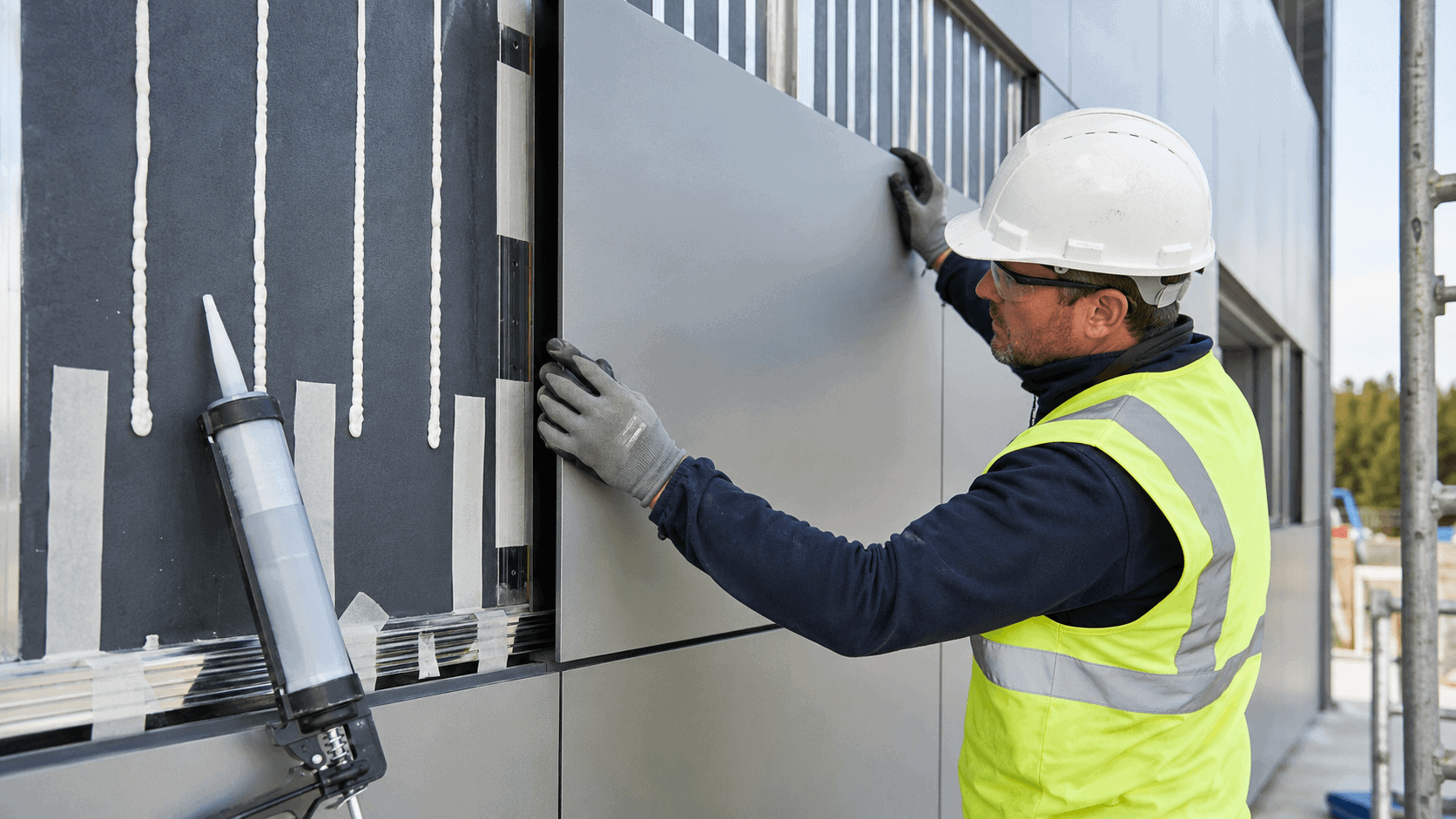
Adhesive fixing for aluminium composite panels can be a useful method when a clean surface is required without visible screws or rivets. It is often considered for shopfronts, signage, interior cladding, decorative panels, and selected architectural details.
The main attraction is visual quality. When adhesive fixing is done correctly, the aluminium composite panel surface can look smooth, clean, and uninterrupted.
However, adhesive fixing should not be treated as a simple “glue and stick” method. The success of the installation depends on surface preparation, adhesive compatibility, panel size, substrate condition, movement allowance, and project exposure.
This article explains when adhesive fixing for aluminium composite panels works, what contractors should check before bonding, and which mistakes should be avoided.
What Is Adhesive Fixing for Aluminium Composite Panels?
Adhesive fixing is a panel installation method where aluminium composite panels are bonded to a suitable backing surface, frame, or support system using a compatible adhesive.
Instead of fixing the panel with visible screws, rivets, or mechanical fasteners through the face, the adhesive holds the panel from behind.
This can create a cleaner appearance, especially in areas where visible fixings would disturb the design.
Adhesive fixing may be used for:
- Interior cladding
- Shopfront panels
- Signage boards
- Retail fit-out projects
- Feature walls
- Decorative panels
- Fascia details
- Selected external applications
- Smooth architectural finishes
The method can work well, but only when the full bonding system is suitable for the project.
Why Adhesive Fixing Is Used
Adhesive fixing is mainly selected for visual reasons. It allows the front face of the aluminium composite panel to remain clean and uninterrupted.
This is useful when the project requires:
- No visible screw heads
- No visible rivets
- A smooth modern surface
- Clean shopfront details
- Neat signage panels
- A premium interior finish
- Faster fixing in suitable applications
- Reduced drilling through the panel face
For retail, showroom, pharmacy, hotel, office, and signage projects, this clean appearance can be important.
A smooth aluminium composite panel surface often looks more refined when the fixing points are hidden.
When Adhesive Fixing Can Work Well
Adhesive fixing can work well when the application is suitable and the installation conditions are controlled.
It is often more suitable for:
- Interior applications
- Small to medium-sized panels
- Stable substrates
- Decorative wall cladding
- Shopfront details
- Signage applications
- Areas with limited structural demand
- Projects where hidden fixing is preferred
It may also be used in some external applications, but only when the adhesive system is specifically suitable for outdoor exposure.
For external façades, the design must consider wind load, temperature changes, moisture, UV exposure, and long-term durability.
The key point is simple: adhesive fixing can be effective, but the adhesive system must match the application.
When Adhesive Fixing May Not Be the Best Choice
Adhesive fixing is not suitable for every aluminium composite panel installation.
It may not be the best choice when:
- Panels are very large
- Wind exposure is high
- The substrate is weak or unstable
- The surface is dusty, damp, oily, or uneven
- The installation is exposed to heavy moisture
- The adhesive is not suitable for outdoor use
- The panel needs regular removal or replacement
- Fire or project requirements demand a different system
- The installer cannot control curing conditions
In some projects, mechanical fixing or cassette systems may provide better reassurance.
Adhesive fixing should be selected for the right reason, not only because visible fixings are unwanted.
Surface Preparation Is Critical
Surface preparation is the most important step in adhesive fixing.
The adhesive can only perform well if the bonding surface is clean, dry, stable, and compatible.
Before bonding, installers should check that the surface is free from:
- Dust
- Oil
- Grease
- Moisture
- Loose paint
- Rust
- Weak plaster
- Dirt
- Silicone residue
- Unstable coatings
A dirty or weak surface can reduce bond strength. This may lead to panel movement, partial detachment, or long-term failure.
In many cases, cleaning, sanding, priming, or surface treatment may be required before bonding.
Installers should always follow the adhesive manufacturer’s instructions.
Check Adhesive Compatibility
Not every adhesive is suitable for aluminium composite panels.
The adhesive must be compatible with:
- The aluminium composite panel coating
- The backing material
- The substrate
- Outdoor or indoor conditions
- Temperature changes
- Moisture exposure
- Expected movement
- Fire and project requirements
Compatibility matters because some adhesives may react poorly with certain coatings or surfaces. Others may not provide enough long-term flexibility or bond strength.
A suitable adhesive system should provide both adhesion and movement tolerance.
Before installation, contractors should confirm that the adhesive is recommended for the specific panel and substrate combination.
Primer and Tape May Be Required
Many professional bonding systems use more than just adhesive.
Depending on the system, installers may need:
- Surface cleaner
- Primer
- Double-sided positioning tape
- Structural adhesive
- Temporary supports
- Spacers
- Controlled adhesive bead thickness
Primer can improve adhesion between the surface and adhesive. Double-sided tape can hold the panel in position while the adhesive cures. Spacers or controlled bead thickness can help maintain consistent bonding.
Skipping these supporting materials can weaken the installation.
Adhesive fixing should be treated as a complete system, not a single product.
Allow for Panel Movement
Aluminium composite panels can expand and contract with temperature changes. This is especially important in external or sun-exposed applications.
If the adhesive is too rigid, or if the panel is bonded without movement allowance, stress may build up.
This may lead to:
- Panel distortion
- Bond failure
- Surface stress
- Waviness
- Joint problems
- Cracking around edges
- Reduced long-term performance
A suitable adhesive should usually have enough flexibility to manage small movements. However, the installation design must also allow movement through joint gaps, panel sizing, and correct support.
Movement cannot be ignored simply because the panel is bonded.
Panel Size and Weight Matter
Adhesive fixing becomes more demanding as panel size increases.
Larger aluminium composite panels may experience more movement, higher wind pressure, and greater installation stress. They may also be more difficult to support during curing.
Before choosing adhesive fixing, contractors should consider:
- Panel dimensions
- Panel weight
- Fixing height
- Wind exposure
- Indoor or outdoor use
- Substrate strength
- Adhesive bead spacing
- Curing support
- Replacement needs
For small signage or decorative panels, adhesive fixing may be straightforward.
For large external cladding panels, the project needs more careful assessment.
Curing Time Should Not Be Rushed
Adhesive systems need time to cure.
During curing, the panel must remain in the correct position. If it moves too early, the bond may weaken or the panel may shift out of alignment.
Installers should check:
- Required curing time
- Temperature conditions
- Humidity conditions
- Temporary support needs
- Minimum and maximum application temperature
- Protection from rain or dust
- Site access during curing
Rushing the curing process can create hidden problems that appear later.
A clean installation needs patience.
Adhesive Fixing for Interior Applications
Adhesive fixing is often useful for interior aluminium composite panel applications.
Interior conditions are usually easier to control than exterior conditions. There is less wind pressure, less moisture exposure, and less thermal movement.
Common interior uses include:
- Feature walls
- Reception areas
- Retail interiors
- Office interiors
- Decorative wall linings
- Lift lobby panels
- Exhibition displays
- Interior signage
For interiors, adhesive fixing can provide a clean and elegant finish when the substrate is suitable.
However, surface preparation is still important. A smooth interior finish can still fail if the backing wall is dusty, weak, or poorly prepared.
Adhesive Fixing for Shopfronts and Signage
Shopfronts and signage are common areas where adhesive fixing may be considered.
It can help create:
- Clean fascia panels
- Smooth sign boards
- Neat returns
- Hidden fixing details
- Premium retail façades
- Lightweight display panels
However, outdoor signage and shopfronts may be exposed to sunlight, moisture, wind, and temperature changes.
For this reason, the adhesive must be suitable for outdoor use. The panel size, fixing height, and substrate must also be checked carefully.
In many cases, adhesive fixing may be combined with mechanical support or hidden fixing details for extra reassurance.
Adhesive Fixing for External Cladding
Adhesive fixing for external cladding should be approached carefully.
External façades face more demanding conditions than interior walls or small signage panels. Wind pressure, rain, heat, cold, UV exposure, and façade movement all affect the bonding system.
Before using adhesive fixing externally, check:
- Is the adhesive approved for exterior use?
- Is the substrate stable and suitable?
- Can the panel movement be controlled?
- Are joint gaps correctly planned?
- Is the curing environment suitable?
- Are wind loads considered?
- Are local regulations and project requirements met?
- Is mechanical backup required?
For many external projects, rivet fixing, screw fixing, cassette systems, or combined fixing methods may be more suitable.
Adhesive fixing can work externally only when the full system is designed and installed correctly.
Common Adhesive Fixing Mistakes
Many adhesive fixing problems come from poor preparation or wrong product selection.
Common mistakes include:
- Using general-purpose adhesive
- Bonding to dusty or damp surfaces
- Ignoring primer requirements
- Skipping surface cleaning
- Applying adhesive in poor weather
- Not allowing curing time
- Using adhesive on weak substrates
- Ignoring panel movement
- Bonding panels that are too large
- Not checking coating compatibility
- Applying uneven adhesive beads
- Removing temporary support too early
These mistakes can affect appearance, safety, and long-term performance.
Most can be avoided with proper planning and manufacturer guidance.
Adhesive Fixing Checklist Before Installation
Before using adhesive fixing for aluminium composite panels, check the following:
- The application is suitable for adhesive fixing
- The adhesive is compatible with the panel
- The adhesive is compatible with the substrate
- The surface is clean, dry, and stable
- Primer requirements are understood
- Panel size and weight are suitable
- Movement allowance is considered
- Joint gaps are planned
- Curing time is allowed
- Temporary support is available if required
- Outdoor exposure has been assessed
- Local project requirements are checked
- Manufacturer instructions are followed
This checklist helps reduce bonding problems and improves installation reliability.
Why Adhesive Fixing Reassures Decision-Makers
Architects, contractors, shopfront installers, sign makers, and procurement teams often want a clean finish. Adhesive fixing can support that goal when the conditions are right.
A well-planned adhesive fixing system can offer:
- Hidden fixing points
- Smooth panel surfaces
- Clean visual details
- Practical installation
- Good interior finish quality
- Neat signage and shopfront results
- Reduced visible drilling
- Modern architectural appearance
However, confidence comes from correct system selection. Adhesive fixing should be chosen because it suits the application, not only because it looks cleaner.
That is the professional approach.
Final Thoughts
Adhesive fixing for aluminium composite panels can be a practical and visually clean installation method for selected applications. It is especially useful for interiors, shopfronts, signage, decorative panels, and controlled installation conditions.
However, successful bonding depends on more than the adhesive itself. Contractors must check surface preparation, compatibility, substrate quality, panel size, movement allowance, curing conditions, and project exposure.
For demanding external cladding, adhesive fixing should be assessed carefully. In some cases, mechanical fixing, cassette systems, or combined fixing methods may offer better long-term reassurance.
When adhesive fixing for aluminium composite panels is selected correctly and installed properly, it can help create clean, modern, and professional cladding, signage, and architectural panel details.
Explore our full range of Smartcon Aluminium Composite Panels, designed for architects and modern projects, at: https://smartcongroup.com/products/aluminium-composite-panel/
Authored by Smartcon Int’l. Trade & Marketing Ltd. on 14.05.2026. All rights reserved.
Façade specification
Selecting aluminium cladding for a façade?
Share the application, finish, fire classification and fabrication requirements. We can help assess the appropriate panel specification and supply route.