
Blog
How to Achieve a Premium Painted Finish on Fiber Cement Boards
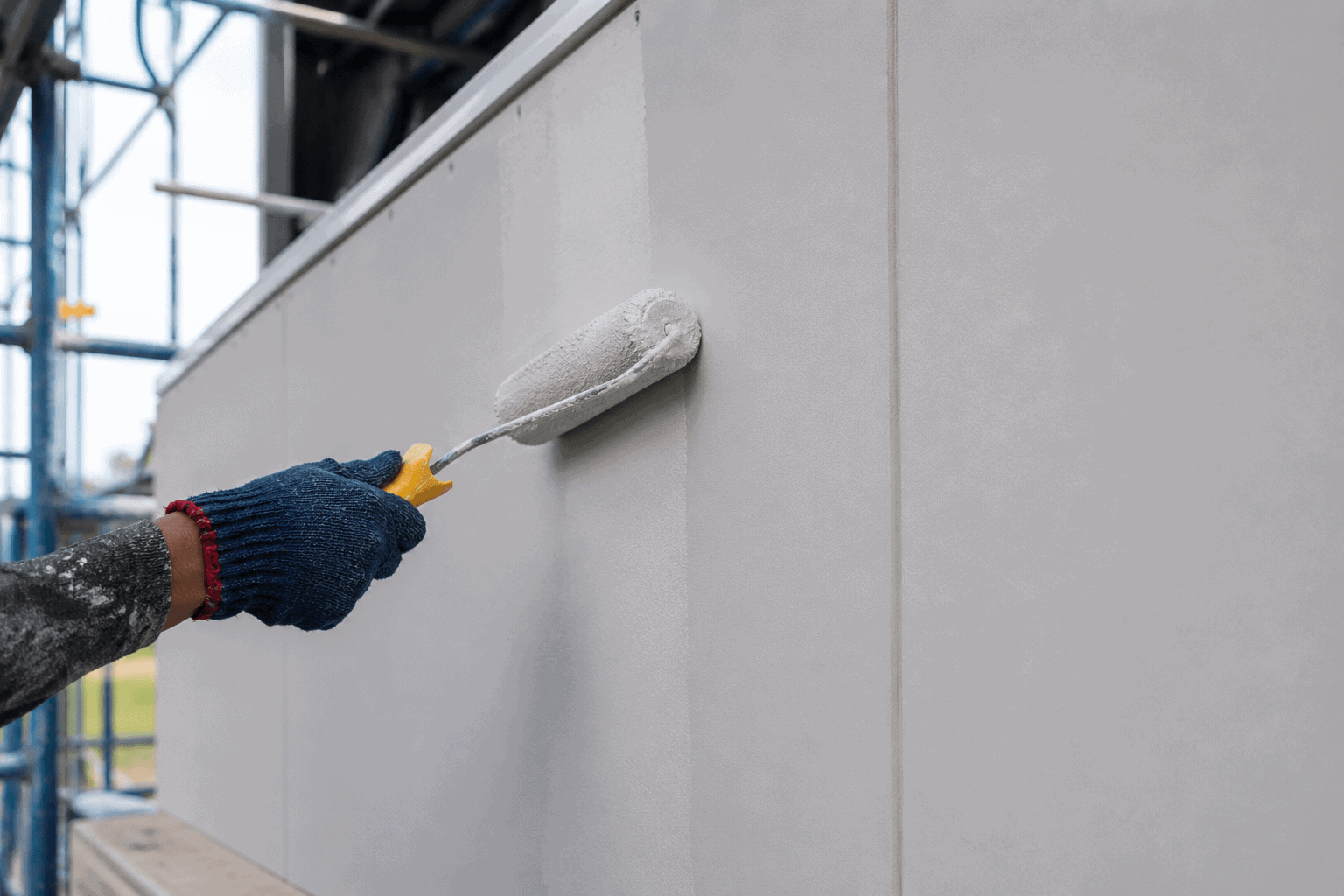
Fiber cement boards are valued for their durability, stability, and versatility. They are used in façades, external sheathing, modular buildings, dry construction, cladding systems, and interior wall applications.
However, performance is only one part of the story.
In many projects, the final appearance matters just as much. A clean painted fiber cement board finish can make a wall, façade, ceiling, or interior lining look sharp, professional, and high quality.
The good news is simple: a premium painted finish is possible when the board surface is prepared correctly.
This article explains how contractors, installers, and specifiers can achieve a smoother, cleaner, and more consistent painted finish on fiber cement boards.
Why the Painted Finish Matters
A painted surface is often the first thing people see.
Even if the board performs well technically, poor finishing can make the project look unfinished or careless. Visible screw heads, dusty surfaces, uneven primer, stains, rough joints, and patchy paint can all reduce the final quality.
A good painted finish helps create:
- A cleaner visual appearance
- Better client confidence
- A more professional wall surface
- Improved colour consistency
- Better protection of the surface
- Fewer finishing complaints
- A higher-value final impression
For architects and developers, the finish supports the design intent. For contractors, it supports workmanship quality.
Start with the Right Board Condition
A premium painted finish starts before the paint is opened.
Before painting, the boards should be checked carefully. The surface should be dry, clean, sound, and suitable for finishing.
Inspect the boards for:
- Surface dust
- Water marks
- Mud or dirt
- Oil or grease
- Damaged corners
- Broken edges
- Loose particles
- Visible cracks
- Uneven fixing
- Moisture trapped between boards
If the board surface is dirty, wet, or damaged, painting should not begin. Surface preparation is the foundation of the finish.
Store Boards Correctly Before Painting
Good painting starts with good site storage.
Fiber cement boards should be stored on a flat, raised, and stable surface before installation. They should be protected from rain, standing water, mud, and site contamination.
If boards become wet, allow them to dry before painting. Do not trap wet boards under sealed plastic. Good ventilation helps the boards dry more evenly.
Correct storage helps prevent:
- Water marks
- Surface stains
- Edge darkening
- Dirt contamination
- Board movement
- Finish delays
A clean board is much easier to paint well.
Remove Dust from the Surface
Dust is one of the biggest enemies of a smooth painted fiber cement board finish.
Cutting, drilling, sanding, handling, and general site activity can leave dust on the board surface. If paint or primer is applied over dust, adhesion and appearance may suffer.
Before painting:
- Brush off loose dust
- Wipe the surface with a clean cloth
- Remove cutting dust from edges
- Clean around screw heads
- Check corners and joints
- Keep the area free from new dust
Do not assume that a board is ready just because it looks clean from a distance. Run a hand or clean cloth over the surface. If dust transfers, the board needs further cleaning.
Check Screw Heads Before Painting
Screw heads can strongly affect the final painted appearance.
If screws are overdriven, they may create depressions. If they are underdriven, they may remain visible under the paint. If screws are inconsistent, the surface may look uneven after finishing.
Before painting, check that screws are:
- Correctly seated
- Not over-tightened
- Not sticking out
- Properly spaced
- Fixed into the correct support
- Not damaging the board surface
A premium finish needs a consistent fixing surface. Small screw defects can become very visible after paint, especially under side lighting.
Prepare Joints and Edges Properly
Joints and edges should be prepared according to the selected finishing system.
Poor joint preparation can create visible lines, cracking, uneven texture, or patchy areas after painting. This is especially important on large surfaces where natural light exposes imperfections.
Before painting, check:
- Joint gaps are consistent
- Joint treatment is complete
- Edges are clean
- Cut edges are prepared if required
- Loose material has been removed
- The surface is dry before coating
The joint area should not look or feel very different from the surrounding board surface. A consistent surface creates a better final result.
Use the Right Primer
Primer is not just an optional extra. In many painted systems, it helps create a more consistent and reliable finish.
A suitable primer can help:
- Improve paint adhesion
- Reduce uneven absorption
- Support colour consistency
- Seal the surface before topcoat
- Reduce patchy appearance
- Improve the durability of the finish
Always choose a primer compatible with fiber cement boards and the selected paint system. Follow the coating manufacturer’s instructions for application, drying time, and coverage rate.
Using the wrong primer can create more problems than using no primer at all.
Choose a Suitable Paint System
The paint system should match the project environment.
A board used indoors does not face the same conditions as a board used on a façade or external soffit. Exterior applications may require coatings with better weather resistance, UV stability, flexibility, and durability.
When choosing paint, consider:
- Interior or exterior use
- Exposure to rain and sun
- Humidity level
- Required finish appearance
- Colour choice
- Maintenance expectations
- Compatibility with primer
- Manufacturer recommendations
A premium finish is not only about appearance on day one. It should also perform well over time.
Apply Thin and Even Coats
Thick paint does not automatically mean better quality.
For a cleaner finish, it is usually better to apply controlled, even coats according to the paint manufacturer’s instructions. Uneven thickness can create texture differences, roller marks, brush marks, or patchy colour.
For better results:
- Apply paint evenly
- Avoid overloading the roller or brush
- Keep a wet edge where possible
- Follow recommended drying times
- Apply additional coats only when suitable
- Avoid painting in unsuitable weather
Rushing the coating process can reduce the final quality.
Pay Attention to Lighting
Lighting can reveal defects that are not visible during installation.
Side lighting, strong sunlight, or interior spotlights can show screw heads, joint lines, roller marks, surface waves, and dust particles more clearly.
Before final approval, inspect the painted surface under realistic lighting conditions.
Check the wall from different angles. Look for visible lines, patches, bumps, or inconsistent colour.
This step is especially useful in:
- Corridors
- Hotel interiors
- Retail spaces
- Offices
- Façades
- Feature walls
- Modular units
- Public buildings
A premium finish should look good not only straight ahead, but also under normal project lighting.
Avoid Painting Wet or Cold Surfaces
Paint needs suitable conditions to perform well.
Painting a damp, cold, dusty, or contaminated surface can lead to poor adhesion, slow drying, patchiness, or early finish problems.
Before painting, check:
- The board surface is dry
- The air temperature is suitable
- The surface temperature is suitable
- The area is ventilated
- Rain is not expected during exterior painting
- The coating system can cure correctly
For exterior work, weather planning is part of quality control. For interior work, ventilation and drying time are equally important.
Protect the Painted Surface After Application
The job is not finished the moment the final coat is applied.
Freshly painted surfaces should be protected from dust, impact, rain, and other trades until the coating has dried or cured properly.
After painting:
- Avoid touching the surface too early
- Protect from site dust
- Keep other trades away if possible
- Avoid leaning materials against the wall
- Prevent water exposure during drying
- Follow the paint manufacturer’s curing guidance
A good finish can be damaged quickly if the site is not controlled after painting.
Quick Checklist for a Premium Painted Finish
Use this checklist before painting fiber cement boards:
- Boards are dry
- Surface is clean
- Dust has been removed
- Stains have been checked
- Edges are sound
- Corners are not damaged
- Screw heads are correctly seated
- Joints are prepared
- Primer is compatible
- Paint system is suitable
- Weather conditions are acceptable
- Drying times are respected
- Final surface is inspected under good lighting
This simple checklist can make the difference between an average finish and a professional result.
Common Mistakes to Avoid
Avoid these common finishing mistakes:
- Painting before the boards are dry
- Ignoring dust after cutting
- Using the wrong primer
- Skipping primer when it is required
- Painting over dirty surfaces
- Leaving screw heads uneven
- Rushing drying times
- Applying paint too thickly
- Ignoring joint preparation
- Failing to protect the finished surface
Most paint problems are preventable with good preparation and patience.
Final Thoughts
A premium painted fiber cement board finish is not only about the paint. It is the result of good storage, careful installation, proper cleaning, correct fixing, suitable primer, and controlled application.
Fiber cement boards can provide a clean and professional painted surface when the preparation is done correctly.
The best results come from a simple principle: do not hide problems under paint. Prepare the surface properly, use compatible coating materials, and inspect the finish carefully.
When these steps are followed, fiber cement boards can deliver a durable, attractive, and high-quality painted finish for many types of construction projects.
Need pricing, technical documents, or loading guidance for fiber cement boards? Contact Smartcon with your required thickness, dimensions, quantity, and delivery destination. Our team will help you review the suitable options and provide practical export support from Turkey.
👉 Visit the Smartfiber Fiber Cement Board page to explore specs, sizes, and delivery options.
Authored by Smartcon Int’l. Trade & Marketing Ltd. on 02.06.2026. All rights reserved.
Façade specification
Need the right board for your façade system?
Share the façade build-up, exposure conditions, finish and documentation requirements. We can help assess the appropriate board and coordinate supply.